10 educational story ideas for kids
10 creative educational story ideas for kids — each with a free AI prompt to generate the full illustrated story instantly.
✦ Key Takeaways
- •Educational stories for kids work because stories make learning meaningful.
- •For toddlers, the best educational stories are simple, repetitive, and sensory.
- •Preschoolers and kindergarteners learn well through stories that blend play with early academic skills.
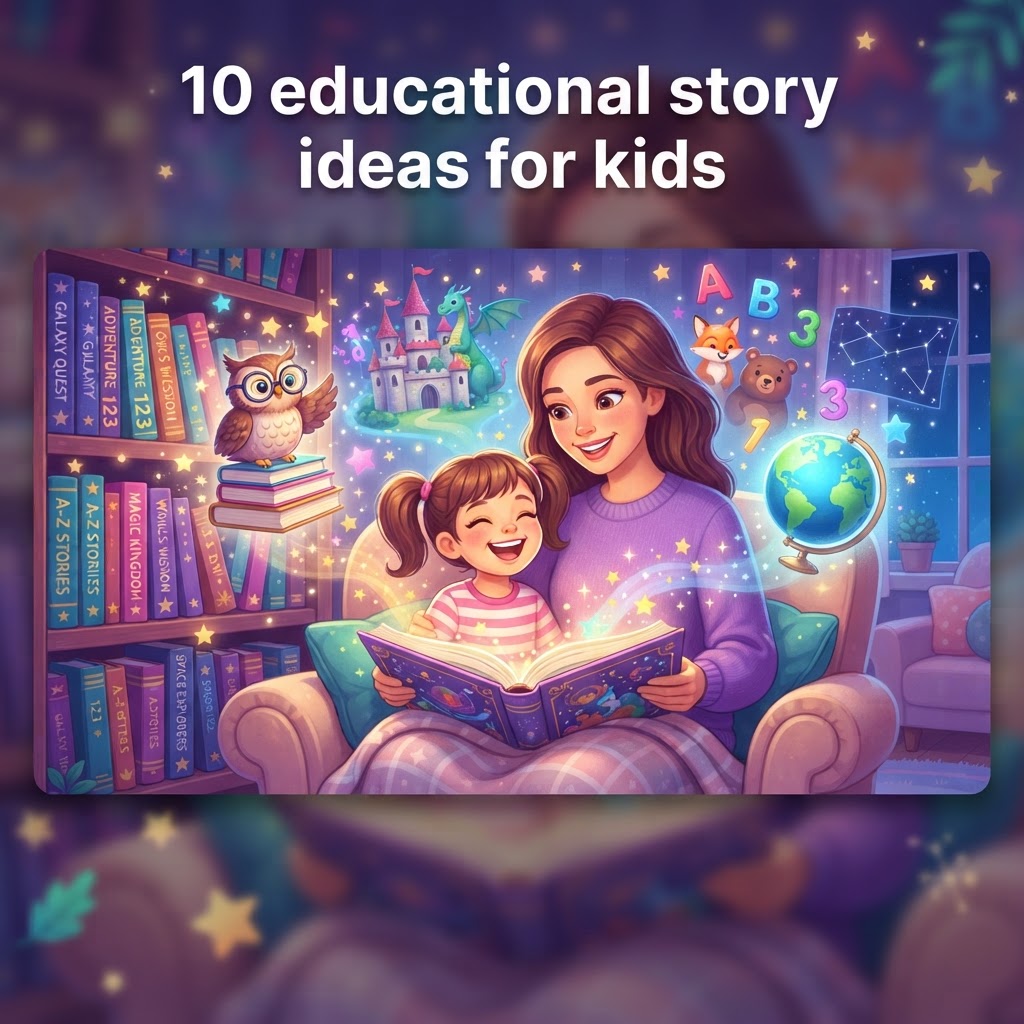
Educational stories do more than fill the last ten minutes before sleep. They help children practice language, memory, problem-solving, and emotional skills in a format that feels safe and fun. If you are looking for educational story ideas, this guide shares 10 ready-to-use concepts for different ages, plus simple educational story prompts you can paste into InstaTales to generate a personalized illustrated story in minutes.
Why are educational stories so effective for children?
Educational stories for kids work because stories make learning meaningful. When a child follows a character through a problem, ideas like counting, kindness, routines, or science become easier to remember than if they were taught as facts alone.
Research consistently supports this. Read-alouds build vocabulary, comprehension, and background knowledge, as explained by Reading Rockets and NAEYC. The Harvard Center on the Developing Child also highlights how back-and-forth conversation strengthens early brain development, which is why the best kids educational stories invite children to predict, point, repeat, and talk.
That is also why personalized stories work so well. When a child hears their own name, favorite animal, or familiar setting, attention goes up and resistance often goes down.
Which educational story ideas work best for ages 1-3?
For toddlers, the best educational stories are simple, repetitive, and sensory. Focus on one skill at a time, use familiar objects, and keep the language concrete.
1. The Color Hunt at Bedtime
A sleepy child looks around the bedroom and finds red, blue, yellow, and green objects before turning out the light. This supports color recognition and early word repetition.
AI prompt:
Create a gentle bedtime story for a 2-year-old about a child named Lily who finds red, blue, yellow, and green things in her room before sleep. Use very simple sentences, repetition, a calm tone, 250-300 words, and soft watercolor-style illustrations. End with Lily snuggling into bed and naming the colors one more time.
2. Benny Bear’s Counting Picnic
A little bear packs 1 apple, 2 sandwiches, 3 strawberries, and more for a picnic, counting each item as he goes. It introduces one-to-ten counting in a natural, playful way.
AI prompt:
Write an illustrated bedtime story for ages 2-3 about Benny Bear packing a picnic and counting from 1 to 10. Use repetition, cheerful nature scenes, and clear number words in the story. Keep it under 350 words and end with a cozy picnic under the stars.
3. The Feelings Faces Parade
A group of animal friends make happy, sad, frustrated, and proud faces during a simple parade through the park. This helps toddlers start naming emotions.
AI prompt:
Generate a warm bedtime story for a 3-year-old about animal friends in a parade who each show a different feeling: happy, sad, angry, scared, and proud. Use simple emotional language, reassuring resolution, and bright but soothing illustrations. Include a final page that recaps each feeling.
Which educational stories for kids support ages 4-6?
Preschoolers and kindergarteners learn well through stories that blend play with early academic skills. At this age, children enjoy problem-solving, pattern spotting, and “helper” characters who model good habits.
4. The Alphabet Treasure Map
A child follows clues from A to Z to find a hidden bedtime treasure. Each stop features a letter sound and a matching object, such as B for boat or M for moon.
AI prompt:
Create an educational adventure story for a 5-year-old about a child using an alphabet treasure map from A to Z. Include one object or action for each letter sound, keep the pacing lively but bedtime-friendly, and add whimsical illustrated scenes. End with the treasure being a special bedtime book.
5. Shape Builders in Block City
Two friends rebuild their toy town using circles, squares, rectangles, and triangles after a windy day. The story teaches shape recognition and spatial thinking.
AI prompt:
Write a bedtime story for ages 4-6 about two friends rebuilding Block City with circles, squares, rectangles, and triangles. Make the shapes part of the plot, use clear visual descriptions for illustration, and keep the story around 400 words. End with the city glowing softly at night.
6. Mila’s Healthy Habit Mission
A young hero completes a morning-to-evening mission: washing hands, drinking water, brushing teeth, and getting enough sleep. This turns daily routines into a story children want to repeat.
AI prompt:
Generate a personalized illustrated story for a 4- to 6-year-old about Mila completing healthy habit missions during the day: handwashing, eating colorful foods, movement, tooth brushing, and bedtime. Use a playful helper character, simple explanations, and a calm ending. Make the tone encouraging, not preachy.
7. The Four Seasons Garden
A curious child visits the same garden in spring, summer, autumn, and winter and notices what changes. This is a gentle way to teach observation and early science vocabulary.
AI prompt:
Create a nature-based educational story for a 5-year-old about visiting one garden across all four seasons. Highlight weather, plants, animals, and seasonal activities in child-friendly language, with beautiful illustrated transitions between seasons. End with the child realizing every season has its own kind of magic.
Which kids educational stories are best for ages 7-10?
Older children are ready for more layered plots and richer facts. The strongest educational stories for kids in this age group mix knowledge with a real challenge, mystery, or mission.
8. The Market Day Math Mystery
A child helps at a market stall and solves small math problems involving coins, totals, and change. It makes everyday math feel useful rather than abstract.
AI prompt:
Write an engaging story for ages 7-9 about a child solving a market day mystery using addition, subtraction, and money skills. Include friendly vendors, clear math moments inside the plot, and colorful illustrated market scenes. Keep the tone adventurous and end with the child confidently helping customers.
9. The Friendship Bridge Around the World
Children from different places work together to build a symbolic bridge, sharing greetings, foods, music, and traditions. This supports cultural awareness, empathy, and respectful curiosity.
AI prompt:
Generate an illustrated story for ages 7-10 about children from different countries building a friendship bridge together. Include age-appropriate details about culture, language, and kindness, while showing teamwork and problem-solving. Use a warm, respectful tone and end with a shared celebration.
10. The Moonlight Science Club
A small club investigates why shadows change, why the moon looks different each night, or how plants grow toward light. This is a strong choice for children who love wonder and questions.
AI prompt:
Create a bedtime science mystery for ages 8-10 about a Moonlight Science Club investigating shadows, moon phases, and plant growth. Blend accurate science with adventure, use clear explanations inside the story, and include dreamy nighttime illustrations. End with the children recording what they learned in a notebook.
How can you turn these educational story prompts into personalized stories?
The easiest way is to start with one idea, then personalize three details: the child, the learning goal, and the tone. That small change makes the story feel made for your reader rather than generic.
Here is a simple process:
- Pick one prompt from the list above.
- Add your child’s name, age, favorite animal, or favorite place.
- Choose the learning focus: numbers, feelings, science, routines, or social skills.
- Set the tone: silly, calming, adventurous, or sleepy.
- Use InstaTales to create your own personalized bedtime story in a few clicks.
- If you want a faster starting point, browse the built-in story templates.
- Save favorites in your story library so children can reread the same story, which is excellent for confidence and retention.
- For classrooms, literacy centers, or writing extensions, explore InstaTales for teachers.
One practical tip from both parenting and classroom experience: reuse the same story structure for a week. Children often learn more from familiar repetition than from constant novelty. And if your child is more motivated by laughter than lessons, you can also borrow character styles from these funny story ideas and layer in the educational goal.
Frequently Asked Questions
What makes a story educational for kids?
A story becomes educational when it teaches a skill, idea, or value through the plot rather than stopping the story for a lesson. Good examples include counting during an adventure, naming feelings in a character conflict, or learning science through curiosity.
How long should educational bedtime stories be?
For ages 1-3, 200-350 words is often enough. For ages 4-6, 300-500 words works well, and ages 7-10 can usually enjoy 500-800 words depending on attention span and bedtime routine.
Are AI-generated educational stories safe to use with children?
They can be, especially when an adult previews the story and adjusts the tone, vocabulary, and topic for the child’s age. The best practice is to treat AI as a drafting tool and keep the parent, caregiver, or teacher as the guide.
How can I match educational story ideas to my child’s age?
Choose one main learning goal and keep it developmentally appropriate. Toddlers do best with repetition and simple concepts, while older children can handle multi-step plots, factual detail, and more complex emotions.
Can teachers use educational story prompts in the classroom?
Yes. These prompts work well for read-alouds, writing warm-ups, SEL lessons, science units, and vocabulary practice. Teachers can also have students compare different versions of the same prompt to build comprehension and critical thinking.
Should educational stories always feel like lessons?
No. In fact, children usually learn better when the story feels enjoyable first and instructional second. The strongest educational story ideas teach naturally through characters, rhythm, and curiosity.
Ready to Create a Personalized Bedtime Story?
Use our free AI bedtime story generator to create a personalized illustrated story for your child in 30 seconds — no credit card needed.
Popular story types:
Maya Rodriguez
Lead Content Editor & Early Literacy Specialist
Maya is a former early childhood educator and literacy specialist with over a decade of experience helping children develop a love of reading. She leads content at InstaTales, where she writes about the science of storytelling, child development, and how families can use personalized AI stories to build literacy and emotional resilience.
instatales.ai