10 sharing story ideas for kids
10 creative sharing story ideas for kids — each with a free AI prompt to generate the full illustrated story instantly.
✦ Key Takeaways
- •Sharing stories help children practice social skills in a safe, low-pressure way.
- •For toddlers and preschoolers, the best sharing stories are short, concrete, and repetitive.
- •For ages 5-8, sharing stories can handle more nuance.
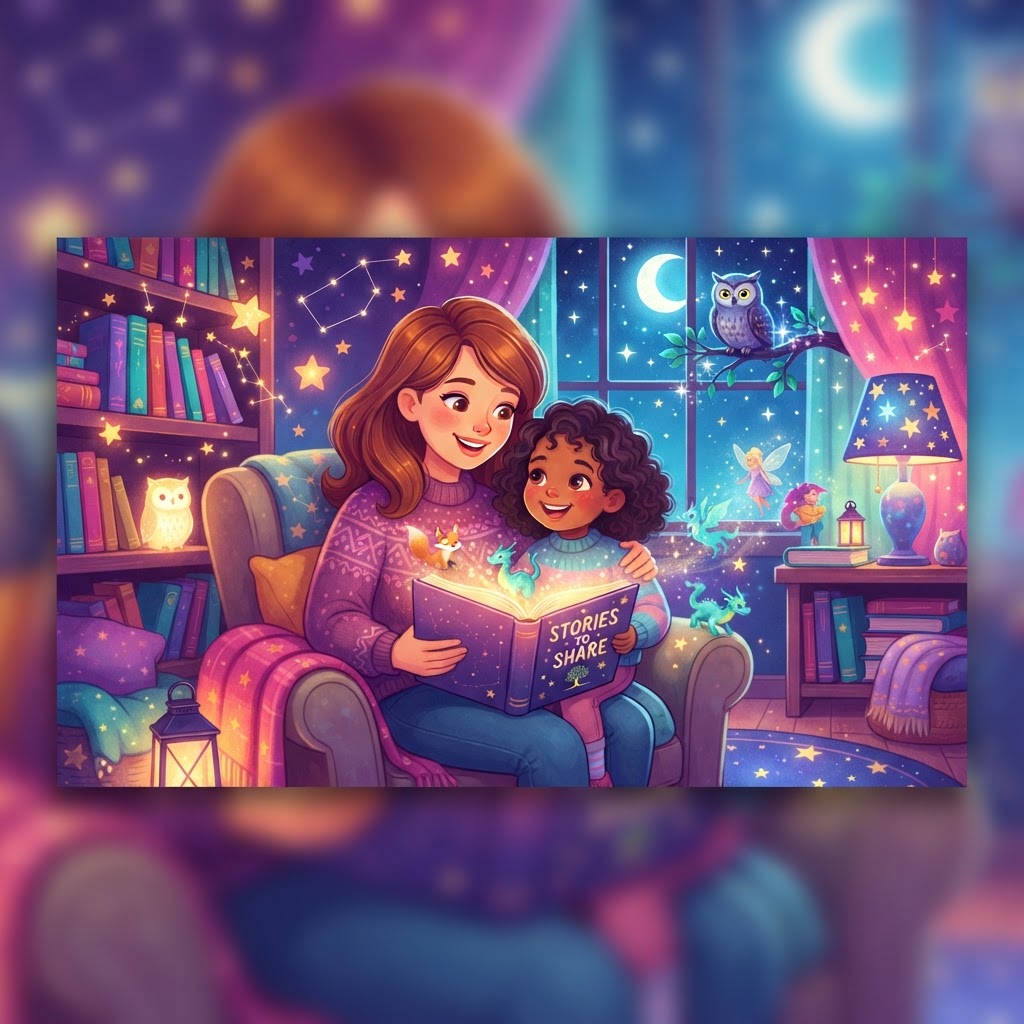
Teaching children to share is rarely about forcing a quick “be nice.” It is usually about helping them build patience, empathy, language, and self-control over time. That is why sharing story ideas can be so useful: stories let children watch a character struggle, make a better choice, and see how sharing can feel good and fair.
Below, you’ll find 10 creative sharing stories for kids, organized by age and stage. Each one includes a simple concept and a ready-to-use sharing story prompt you can paste into InstaTales to generate a personalized, illustrated bedtime story in minutes.
Why are sharing stories so helpful for kids?
Sharing stories help children practice social skills in a safe, low-pressure way. When kids hear about a character who has to wait, lend, or take turns, they rehearse those same decisions emotionally before facing them in real life.
Sharing depends on skills like impulse control, flexible thinking, and perspective-taking. The Center on the Developing Child at Harvard University explains that these executive function skills grow gradually through relationships and repeated practice. The CDC’s developmental milestones also show that social expectations change a lot across early childhood, so it is normal for a 2-year-old and a 7-year-old to need different kinds of support.
As an educator, I’ve found that the best kids sharing stories do three things well:
- Keep the conflict simple and relatable
- Show the child’s feelings without shame
- End with a realistic, gentle solution
The NAEYC also emphasizes that social-emotional learning grows through everyday interactions, guided practice, and warm adult support. A story can be one of those supports.
Which sharing story ideas work best for toddlers and preschoolers?
For toddlers and preschoolers, the best sharing stories are short, concrete, and repetitive. Young children respond best to familiar settings, simple objects, and clear language like “my turn,” “your turn,” and “let’s do it together.”
1. The sandbox bucket
A child and a bunny both want the same bright red bucket at the playground. After tears and a pause, they discover they can build one big castle together.
- AI prompt: “Write a gentle illustrated bedtime story for a 2-4 year-old about [child’s name] and a bunny named Pip who both want the same red sandbox bucket. Use simple repetition, short sentences, and a calm ending where they learn to share and build together. Include 6 illustration scene ideas.”
2. The last purple crayon
During art time, only one purple crayon is left, and two friends need it for their drawings. They solve the problem by taking turns and admiring each other’s pictures.
- AI prompt: “Create a sweet bedtime story for a preschooler about [child’s name] and a friend who both want the last purple crayon. Focus on waiting, taking turns, and feeling proud of sharing. Make it warm, playful, and easy to understand, with picture prompts for each scene.”
3. The picnic strawberries
At a family picnic, a little bear wants to keep all the strawberries on their plate. When they notice everyone else sharing snacks, they decide to pass the bowl around too.
- AI prompt: “Write a cozy sharing story for ages 3-5 about [child’s name] as a little bear at a picnic learning to share strawberries with family and friends. Keep the lesson gentle, not preachy, and end with everyone enjoying the picnic together. Add illustrated scene suggestions.”
4. One swing, two friends
Two children race to the same swing at the park and both want it first. A kind grown-up helps them count turns, and waiting becomes easier once they know their turn is coming.
- AI prompt: “Generate a bedtime story for a 3-5 year-old about [child’s name] learning to share the swing at the park. Include counting, turn-taking, and reassurance from a caring adult. Make the tone calm and bedtime-friendly, with 5-6 illustration prompts.”
5. The blanket fort for two
A child starts building a blanket fort alone and doesn’t want anyone to join. But when a sibling adds pillows, lanterns, and a storybook, the fort becomes even better shared.
- AI prompt: “Write an illustrated bedtime story about [child’s name] building a blanket fort and learning that sharing space can make play more fun. Include sibling cooperation, cozy details, and a happy ending inside the fort. Use simple language for preschoolers.”
Which sharing stories for kids work best for early elementary ages?
For ages 5-8, sharing stories can handle more nuance. Older children can understand fairness, generosity, teamwork, and the difference between sharing by choice and being forced to give something up.
6. The soccer ball at recess
One child brings the best soccer ball to school and wants to control the whole game. By the end, they learn that sharing the ball also means sharing the fun.
- AI prompt: “Write a story for ages 5-8 about [child’s name] bringing a special soccer ball to recess and learning how sharing equipment helps everyone join in. Include realistic feelings, dialogue, and a satisfying team ending. Add illustration directions for each scene.”
7. The cupcake box for class
A child brings cupcakes to celebrate a birthday, but there are fewer decorations than expected. The class works together to make sure everyone still feels included.
- AI prompt: “Create a warm school story about [child’s name] bringing cupcakes to class and learning to share treats fairly when supplies run low. Focus on fairness, problem-solving, and kindness among classmates. Include 6 illustrated scene prompts.”
8. The dragon who shared his fire
A little dragon loves keeping all his warm fire to himself on a snowy day. When forest friends get cold, he discovers that sharing his gift makes the whole valley brighter.
- AI prompt: “Write a magical bedtime story for a 5-8 year-old about [child’s name] as a young dragon who learns to share warmth with others during winter. Blend fantasy, empathy, and a gentle moral. Include colorful illustration ideas.”
9. The library book rescue
Two friends both want the same new library book. Instead of arguing, they create a mini book club and decide to read and discuss it together.
- AI prompt: “Generate a story for early elementary children about [child’s name] wanting the same library book as a friend and learning a creative way to share it. Emphasize friendship, patience, and reading joy. Add scene-by-scene illustration prompts.”
10. The camping flashlight
On a family campout, one flashlight becomes the most important item in the tent. A child learns that sharing tools can help everyone feel safe, included, and brave.
- AI prompt: “Write a cozy nighttime story about [child’s name] on a camping trip learning to share one flashlight with siblings or friends. Include a small problem, teamwork, and a reassuring bedtime ending. Add 5-6 illustration prompts.”
How can you turn these sharing story prompts into personalized InstaTales?
The easiest way to make these ideas meaningful is to personalize them. When a story includes your child’s name, favorite animal, sibling dynamic, or real-life sharing challenge, the lesson feels more relevant and easier to remember.
Here’s a simple way to use InstaTales:
- Pick one of the prompts above or start with ready-made story templates
- Add your child’s name, age, favorite setting, and the exact challenge they’re working on
- Choose a soothing tone and create your own personalized bedtime story
- Save favorites in your story library for re-reading
If your child is also working on empathy or helpfulness, pairing these with more kindness-focused story ideas can be especially effective. In classrooms, these prompts also work well through InstaTales for teachers, where educators can tailor stories for sharing, turn-taking, and group routines.
How can parents and teachers use kids sharing stories in real life?
Stories work best when they are followed by small, real-world practice. Reading alone helps, but children learn faster when adults connect the story to everyday moments without shaming or lecturing.
Try these simple strategies:
- Read a sharing story before playdates, class centers, or sibling play
- Pause and ask, “What could the character do next?”
- Teach scripts like “Can I have a turn when you’re done?”
- Praise progress, not perfection: “You shared for two minutes. That was kind and hard.”
- Re-read the same story several times; repetition supports learning
It also helps to remember that not every conflict is selfishness. Sometimes a child is tired, overwhelmed, or deeply attached to one special object. In those moments, sharing story prompts can open the conversation gently and give children language for next time.
Frequently Asked Questions
What age are sharing stories best for?
Sharing stories can work for children from about age 2 through age 8 and beyond. The key is matching the story’s length, vocabulary, and social complexity to the child’s developmental stage.
What makes a good sharing story prompt?
A strong prompt includes a relatable conflict, clear feelings, and a gentle resolution. It also helps to include your child’s age, favorite characters, and the specific sharing challenge you want the story to reflect.
Can AI-generated sharing stories really support social-emotional learning?
Yes, they can be a helpful tool when used thoughtfully. Personalized stories can make abstract lessons feel concrete, especially when adults discuss the story and connect it to real-life practice.
How long should a sharing story be at bedtime?
For toddlers, aim for 3-5 minutes. For early elementary children, 5-8 minutes is often ideal because it gives enough room for a problem, feelings, and a satisfying resolution without overstimulating before sleep.
Can teachers use sharing stories in the classroom?
Absolutely. Teachers can use them for morning meetings, SEL mini-lessons, conflict repair, or calm-down corners, especially when the story mirrors classroom routines like centers, recess, or group projects.
Should every story end with perfect sharing?
No. In fact, a realistic ending is often more helpful. Children benefit from seeing that sharing can feel hard at first, and that small steps like waiting, trading, or taking turns still count as success.
Ready to Create a Personalized Bedtime Story?
Use our free AI bedtime story generator to create a personalized illustrated story for your child in 30 seconds — no credit card needed.
Popular story types:
Maya Rodriguez
Lead Content Editor & Early Literacy Specialist
Maya is a former early childhood educator and literacy specialist with over a decade of experience helping children develop a love of reading. She leads content at InstaTales, where she writes about the science of storytelling, child development, and how families can use personalized AI stories to build literacy and emotional resilience.
instatales.ai