10 Tips for Reading to an Anxious Child
Reading to a child with anxiety requires a gentle approach. Here are 10 tips for calming, supportive story time.
✦ Key Takeaways
- •The clearest signs are changes in your child’s body and behavior during reading.
- •The best books for anxious kids are emotionally safe, predictable, and reassuring.
- •A familiar routine lowers uncertainty, and uncertainty often fuels anxiety.
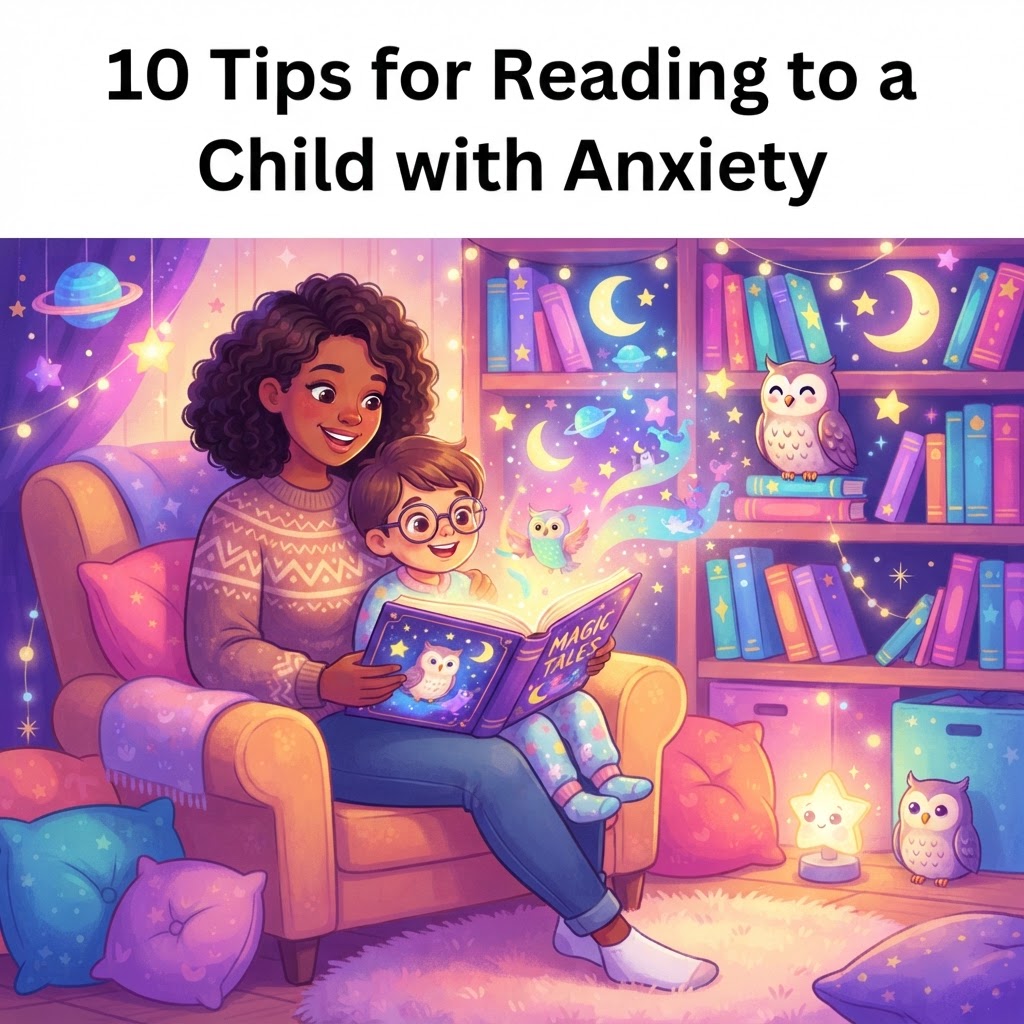
Reading can be a powerful way to help a worried child feel safe, seen, and settled. But reading to an anxious child often works best when story time is slower, gentler, and more predictable than a typical read-aloud. These anxiety reading tips focus on connection first: choosing the right books, pacing carefully, and using simple calming story strategies that support regulation instead of overwhelm. According to the National Institute of Mental Health, anxiety disorders are common in children and teens, so if your child struggles, you are far from alone.
How can you tell if story time is increasing your child’s anxiety?
The clearest signs are changes in your child’s body and behavior during reading. If they suddenly get clingy, shut down, ask to stop, cover their ears, or become unusually restless, the book or the way it is being read may feel too intense.
Watch for subtle cues too. Some anxious children do not say, “I’m scared.” Instead, they:
- ask repetitive questions about what happens next
- insist on skipping pages
- avoid certain characters or scenes
- become silly or argumentative when tension rises
Your job is not to push through. It is to notice and adjust.
What kinds of books are best for a child with anxiety?
The best books for anxious kids are emotionally safe, predictable, and reassuring. Choose stories with clear structure, gentle humor, familiar settings, and endings that bring comfort or resolution.
For bedtime, look for:
- repetitive language
- low-stakes plots
- kind characters
- soothing illustrations
- short chapters or quick scene changes
This does not mean every book must be “happy.” It means the emotional load should match your child’s current capacity. If your child is especially sensitive, start with familiar stories before introducing new ones. Books that support feelings can also pair well with emotional regulation storytelling.
Why does a familiar reading routine help anxious kids?
A familiar routine lowers uncertainty, and uncertainty often fuels anxiety. When a child knows what story time will look like, their nervous system can relax enough to enjoy it.
Keep the routine simple and repeatable:
- same place
- similar time
- same order each night
- a short preview of what you will read
For example: “Two books, one cuddle, lights out.” That kind of consistency matters. The American Academy of Child and Adolescent Psychiatry notes that anxious children often benefit from calm, predictable support.
How should you pace your voice and the story itself?
Read more slowly than you think you need to. A steady voice, short pauses, and a calm rhythm can help regulate breathing and attention.
When using calming story strategies, think co-regulation rather than performance. You do not need funny voices, suspense, or dramatic volume changes if those make your child tense. Try:
- a lower, warmer tone
- pauses after emotional moments
- shorter reading sessions
- stopping before your child gets overwhelmed
For many families, ten calm minutes works better than twenty rushed ones.
What kind of reading environment feels safest and most calming?
A calm environment reduces extra sensory stress. Soft lighting, a comfortable seat, and fewer distractions help anxious children focus on the story instead of scanning for threats.
Useful setup ideas include:
- warm lamp light instead of bright overhead lights
- a favorite blanket or stuffed animal
- phones put away
- no TV in the background
- a seat where your child can lean against you
If your child loves repetition, keep favorite books easy to find in your story library or on a nearby shelf. Familiarity is often soothing, not boring.
Should you talk about worries while you read?
Yes, but gently and indirectly. The book gives you a safe third space, so your child can explore feelings through a character without feeling examined.
Instead of asking, “Are you anxious like this?” try:
- “Why do you think the bear feels nervous?”
- “What helped her body calm down?”
- “What could he do next?”
These questions build emotional language without pressure. If your child is not ready to talk, that is okay too. Brief, supportive comments are enough: “Sometimes worries feel big. This character found help.”
How can bibliotherapy help a child with anxiety?
Bibliotherapy means using books intentionally to help children understand feelings, learn coping skills, and feel less alone. It can be very helpful for mild to moderate anxiety, especially when an adult reads with the child and talks about the story afterward.
Research on CBT-based bibliotherapy has found that guided reading can reduce anxiety symptoms for some children. The strongest results usually happen when books are paired with practical coping tools, such as belly breathing, naming worries, or practicing brave steps. In other words, the book opens the door, but the relationship and follow-up matter just as much.
What should you do if a story includes fear, separation, or mistakes?
You do not need to avoid every difficult theme, but you do need to dose it carefully. Many anxious children benefit from stories that name fears and then show coping, repair, and recovery.
A good rule is this: challenge a little, comfort a lot. You can:
- preview the book first
- skip images that feel too intense
- summarize scary parts briefly
- end with reassurance and connection
Stories about manageable problems can be especially helpful because they show children that hard feelings can be handled. If you want more ideas, these tips on using problem-solving stories can support the same skill.
How can you give your child more control during story time?
Small choices can reduce anxiety because they increase a child’s sense of safety and agency. Letting your child make simple decisions often prevents power struggles before they begin.
Offer limited choices, such as:
- “Do you want the bunny book or the moon book?”
- “One long story or two short ones?”
- “Should we sit in bed or in the reading chair?”
This is especially useful when reading to an anxious child who worries about surprises. Too many choices can feel stressful, so keep options narrow and predictable.
How can personalized stories support anxious children?
Personalized stories can work well because they make the reading experience feel familiar, relevant, and emotionally safer. When a child hears their own name, favorite comfort object, or trusted setting in a gentle story, they often engage more easily.
If you want to create your own personalized bedtime story, keep the plot simple and supportive. Choose soothing themes, clear problem-solving, and a reassuring ending. Starting from guided story templates can make that easier while still keeping the story tailored to your child.
When should reading be paired with extra support?
Books are a support tool, not a full treatment for significant anxiety. If your child’s worries are affecting sleep, school, eating, friendships, or family life, it is time to talk with a pediatrician or child mental health professional.
Look for help if you notice:
- frequent stomachaches or headaches linked to worry
- panic-like symptoms
- intense bedtime distress
- school refusal
- fears that do not ease over time
The American Academy of Pediatrics offers parent-friendly guidance, and your child’s doctor can help you decide on next steps. Story time can still be part of the plan, but it should not carry the whole load.
Frequently Asked Questions
Can reading really help a child with anxiety?
Yes, reading can help by creating connection, routine, and emotional language. It is most effective when the story feels safe and the adult reads in a calm, responsive way.
What kinds of books should I avoid at bedtime?
Avoid books with graphic danger, unresolved tension, harsh conflict, or fast, overstimulating plots right before sleep. Save those for another time of day if your child enjoys them.
Is it okay to read the same book every night?
Absolutely. Repetition often helps anxious children because it lowers uncertainty and gives them a strong sense of mastery and safety.
How long should story time be for an anxious child?
Keep it short enough that your child ends feeling calm, not flooded. For some children, 5 to 10 minutes is enough; others do well with longer reading once the routine feels secure.
Can personalized stories make anxious kids more willing to read?
Often, yes. Familiar names, settings, and gentle plots can make a story feel more predictable and emotionally manageable for a worried child.
Ready to Create a Personalized Bedtime Story?
Use our free AI bedtime story generator to create a personalized illustrated story for your child in 30 seconds — no credit card needed.
Popular story types:
Maya Rodriguez
Lead Content Editor & Early Literacy Specialist
Maya is a former early childhood educator and literacy specialist with over a decade of experience helping children develop a love of reading. She leads content at InstaTales, where she writes about the science of storytelling, child development, and how families can use personalized AI stories to build literacy and emotional resilience.
instatales.ai