10 Tips for Using Stories to Teach Healthy Habits
Want to teach your child healthy habits? Here are 10 tips for using stories to make health fun.
✦ Key Takeaways
- •Stories work because children learn best from examples they can picture and copy.
- •The best health stories teach one habit at a time.
- •Nutrition stories work best when they invite curiosity, not pressure.
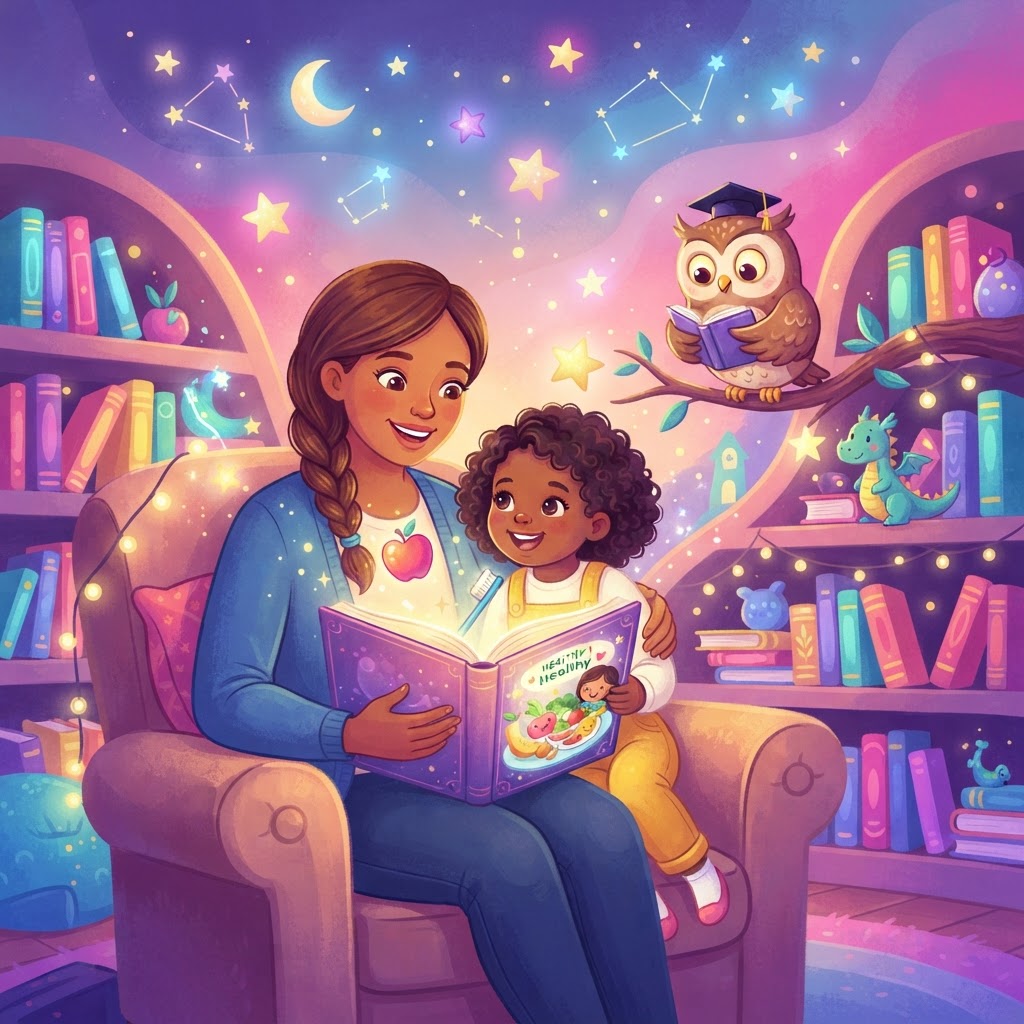
Stories can make health lessons feel safe, concrete, and fun. For young children, a lecture about vegetables, toothbrushing, or bedtime often fades fast, but a memorable character who solves a problem can stick for days. If you are looking for healthy habits stories tips, the key is simple: use stories to show the habit, the reason, and the next small action.
This approach works because children learn through imitation, repetition, and emotion. In fact, research on narrative-based learning and child development shows that kids remember information better when it is embedded in a meaningful sequence. That is why teaching health through stories can support nutrition, exercise, hygiene, sleep, and emotional well-being all at once.
1. Why do stories work so well for teaching healthy habits?
Stories work because children learn best from examples they can picture and copy. A strong story turns an abstract rule like “wash your hands” into a clear sequence with a reason and a result.
This fits what we know from child development research. Bandura’s social learning theory showed that children learn by observing models, and stories provide those models in a safe, low-pressure way. The CDC also emphasizes skills-based health education that helps children practice decisions, not just memorize facts, through age-appropriate learning experiences (CDC school health guidance).
For parents, that means a story should show:
- a relatable child or creature
- a small health challenge
- one healthy choice
- a positive payoff
2. How can you keep a healthy habit story simple enough for young children?
The best health stories teach one habit at a time. When a story tries to cover food, sleep, exercise, manners, and feelings all at once, children may enjoy it but remember very little.
Pick one goal for each story. For example:
- trying one new vegetable
- brushing teeth for two minutes
- putting pajamas on after bath
- taking three deep breaths when upset
If you want a quick starting point, use story templates to build a focused plot around one skill. You can also create your own personalized bedtime story with your child’s name, favorite animal, or daily routine to make the message feel personal and easier to remember.
3. How can characters teach nutrition without creating food battles?
Nutrition stories work best when they invite curiosity, not pressure. A child is more likely to try a “crunchy superhero carrot” than respond to a speech about vitamins.
Research on picky eating shows that children often need repeated, low-pressure exposure to new foods before accepting them. So in health storytelling, let the character explore food with their senses: color, smell, crunch, warmth, or sweetness. Keep the win small. Maybe the character tastes one bite, helps wash berries, or chooses between two healthy snacks.
A simple nutrition plot might include:
- a lunchbox problem
- two or three colorful food choices
- a friendly role model
- a proud but realistic ending
4. What makes exercise stories feel fun instead of forced?
Exercise stories motivate children when movement feels like play. Instead of “You must work out,” the story says, “Let’s hop across the moon rocks before the dragon wakes up.”
This matters because children respond better to imagination and action than to adult-style fitness language. Build movement into the plot:
- jumping over puddles
- stretching like a cat
- marching with explorers
- dancing to wake up sleepy stars
Use vivid verbs and short action scenes. In classrooms, this can also support transitions and movement breaks, which is one reason many educators use story-based activities through InstaTales for teachers as part of daily routines.
5. How do hygiene stories build routines without nagging?
Hygiene stories are most effective when they follow the same sequence every time. Children thrive on predictability, so a story that always goes “soap, scrub, rinse, dry” can become a mental script.
Make the routine visible in the plot. A character might notice sticky hands, wash before snack, and feel ready to eat. The American Academy of Pediatrics regularly highlights the value of consistent daily care routines for health and development (HealthyChildren.org).
For hygiene themes, try:
- handwashing before meals
- toothbrushing after breakfast and before bed
- covering coughs and sneezes
- bath or hair-washing routines
Avoid using shame. A warm, matter-of-fact tone teaches more than “Yuck, that’s dirty.”
6. Why should sleep stories sound different from daytime health stories?
Sleep stories should feel calm, repetitive, and emotionally safe. A fast, exciting plot can work against the habit you are trying to build.
Good bedtime teaching health through stories uses soft language, gentle pacing, and predictable patterns. That supports what sleep experts recommend: consistent routines, low stimulation, and comforting cues before bed (National Sleep Foundation). A sleep story can include a bath, pajamas, one yawn, one cuddle, and lights dimming across the story world.
Helpful sleep-story features include:
- slow rhythm
- repeated phrases
- low-stakes conflict
- a soothing ending
7. How can you include emotional health in stories about healthy habits?
Emotional health belongs in health stories because children’s bodies and feelings are deeply connected. A child who can name “frustrated,” “worried,” or “proud” is better able to manage behavior too.
The most useful emotional health stories do three things:
- name the feeling
- show the body signal
- model one coping tool
For example, a character might feel a hot face and tight fists, then use belly breathing, ask for help, or take a break. If you want more ideas, our guide to emotional regulation storytelling pairs especially well with health storytelling because self-regulation supports sleep, hygiene, and eating routines.
8. Why is repetition so important in health storytelling?
Repetition helps children store the message and use it later. When the same line, choice, or routine appears across several readings, the story becomes a cue for action.
Repeated read-alouds support memory, language growth, and confidence. That is especially helpful for young children who need many exposures before a habit feels automatic. Try keeping favorite habit stories in your story library so you can reread them during the week and notice what your child remembers on their own.
Useful elements to repeat include:
- a catchphrase: “Brush, shine, smile”
- a sequence: “wash, wipe, rest”
- a coping script: “stop, breathe, choose”
9. What questions help children connect the story to real life?
Short, open-ended questions help children transfer the lesson from the page to their own day. The goal is not to quiz them, but to help them notice when the habit matters.
Ask questions like:
- “What helped Leo remember to wash his hands?”
- “When do you feel thirsty after playing?”
- “What could we do tonight like the bunny did before bed?”
Keep it brief and concrete. In group settings, these post-story discussions also build reasoning and language skills, much like the strategies used in problem-based learning and story-based problem solving.
10. How do you turn story lessons into real-life healthy habits?
A story becomes a habit when you pair it with one tiny action right away. Read the story, then do the behavior while the character is still fresh in your child’s mind.
This “story-to-life bridge” can be very simple:
- read a handwashing story, then go wash hands together
- finish a food story, then let your child choose one fruit
- read a bedtime story, then start the same calm routine
- read about feelings, then practice one deep breath
The best healthy habits stories tips are practical, not perfect. Children do not need flawless behavior. They need repeated, encouraging chances to practice healthy choices in a way that feels meaningful.
Stories will not replace modeling, routines, or patience. But they can make those daily lessons easier, gentler, and far more memorable for both children and adults.
Frequently Asked Questions
What age is best for teaching healthy habits through stories?
Stories can support healthy habits from toddlerhood through the early primary years. Younger children need very simple plots and repetition, while older children can handle more problem-solving and emotional detail.
How long should a healthy habit story be?
For most children ages 1-6, short is best: about 3-7 minutes. Older children may enjoy longer stories if the plot stays focused on one clear habit.
Can stories really help with picky eating?
Yes, stories can help reduce pressure and increase curiosity around food. They work best when paired with repeated, low-stress exposure to healthy foods in real life.
Should health stories use scary consequences?
Usually no. Fear can grab attention, but it often increases anxiety or resistance in young children. A calm story with a clear cause and effect is usually more effective.
How often should we repeat the same story?
Repeat it as often as your child enjoys it, especially when building a new routine. Re-reading the same story for several days can strengthen memory and make the habit easier to recall.
Explore More Stories
Ready for more? - free AI bedtime story generator
Get a new bedtime story every week
Free, personalized, and delivered to your inbox. No spam, ever.
Ready to Create a Personalized Bedtime Story?
Use our free AI bedtime story generator to create a personalized illustrated story for your child in 30 seconds — no credit card needed.
Popular story types:
Maya Rodriguez
Lead Content Editor & Early Literacy Specialist
Maya is a former early childhood educator and literacy specialist with over a decade of experience helping children develop a love of reading. She leads content at InstaTales, where she writes about the science of storytelling, child development, and how families can use personalized AI stories to build literacy and emotional resilience.
instatales.ai