15 magic story ideas for kids
15 creative magic story ideas for kids — each with a free AI prompt to generate the full illustrated story instantly.
✦ Key Takeaways
- •Magic stories for kids support emotional growth, language development, and imaginative thinking.
- •For toddlers and preschoolers, the best kids magic stories are simple, repetitive, and emotionally safe.
- •Children ages 5-7 often enjoy clearer plots, funny surprises, and magical rules they can follow.
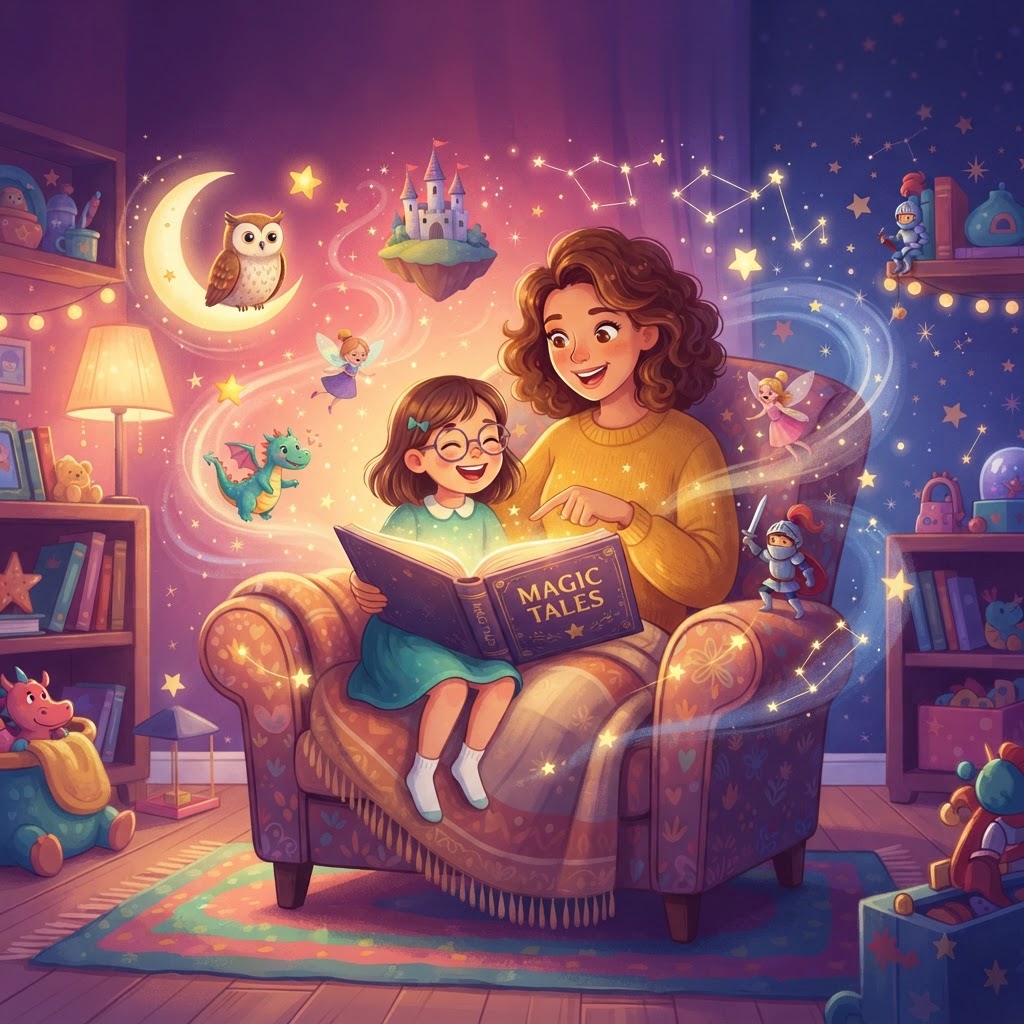
Magic stories help children make sense of big feelings, practice imagination, and settle into bedtime with a sense of wonder. If you are looking for magic story ideas, this guide shares 15 age-matched concepts, each with a ready-to-use AI prompt you can turn into a full story in minutes. For even more inspiration, you can also browse more magical story ideas or explore extra bedtime story ideas.
Why do magic stories matter for kids?
Magic stories for kids support emotional growth, language development, and imaginative thinking. A well-chosen fantasy story gives children a safe way to explore bravery, kindness, jealousy, mistakes, and problem-solving through characters and symbols.
This is not just a cute bedtime tradition. The American Academy of Pediatrics explains that play and imagination support healthy development, while NAEYC highlights how pretend play builds language and self-regulation. Storytelling also supports vocabulary and comprehension, especially when adults ask simple questions and invite children to predict what happens next, a practice often linked to dialogic reading research and recommended by Reading Rockets.
Which magic story ideas are best for ages 1-4?
For toddlers and preschoolers, the best kids magic stories are simple, repetitive, and emotionally safe. Choose soft stakes, comforting patterns, and magical helpers rather than scary villains.
1. The Moonlight Teddy
A child’s teddy bear glows only at bedtime and leads tiny moonbeams back to the sky. The repeating mission makes the story soothing and predictable.
AI prompt: Write a gentle bedtime story for ages 2-4 about a child and a glowing teddy who helps moonbeams return to the sky before sleep. Use simple language, repetition, and a calm happy ending.
2. The Bubble Wand That Grants Kindness
Every bubble from a magical wand helps someone in a small way: tying a shoe, finding a toy, or cheering up a friend. This idea teaches empathy through easy everyday moments.
AI prompt: Create a warm story for ages 3-5 about a child who finds a magic bubble wand that solves little problems with kindness. Keep the scenes short, sweet, and bedtime-friendly.
3. The Sleepy Dragon’s Missing Yawn
A tiny dragon cannot fall asleep because it has lost its golden yawn. A child helps search through clouds, pillows, and stars to find it.
AI prompt: Write a cozy illustrated story for preschoolers about a child helping a baby dragon find its missing golden yawn before bedtime. Include gentle humor and a sleepy ending.
4. The Garden of Singing Flowers
A backyard garden wakes up at dusk, and each flower sings one clue to help a child find a hidden bedtime wish. The magic feels musical and reassuring.
AI prompt: Write a magical bedtime story for ages 2-4 about singing flowers in a twilight garden guiding a child to a hidden wish. Use sensory details, soft rhythm, and a peaceful finish.
5. The Little Cloud With a Lantern
A small cloud loses its way at night, and a child uses a star lantern to guide it home. This story works well for children who like helping roles.
AI prompt: Create a simple magic story for kids ages 1-4 about a child helping a lost cloud get home with a glowing lantern. Make it calm, repetitive, and comforting.
Which kids magic stories spark imagination for ages 5-7?
Children ages 5-7 often enjoy clearer plots, funny surprises, and magical rules they can follow. At this age, the best magic stories for kids mix adventure with friendship, responsibility, and small choices.
6. The Library Book That Whispers Spells
A library book whispers one tiny spell each afternoon, but every spell only works if the child uses it kindly. This concept blends wonder with consequences.
AI prompt: Write a 700-word story for ages 5-7 about a child who borrows a library book that whispers one gentle spell a day. Show how kindness makes the magic stronger.
7. The Invisible Paintbrush
Anything painted with the brush becomes real for one hour. A child learns that drawing snacks and toys is fun, but drawing solutions for others feels even better.
AI prompt: Create a fun story for early readers about a child who finds an invisible paintbrush that makes drawings real for one hour. Include a lesson about creativity and helping others.
8. The Clocktower of Lost Minutes
Whenever children waste a moment being grumpy, the missing minute flies to a magical clocktower. A brave child must gather the minutes back by changing small choices.
AI prompt: Write an imaginative story for ages 6-7 about a magical clocktower that collects lost minutes and a child who must earn them back through patience, courage, and kindness.
9. The Friendship Potion Mix-Up
Two friends try to brew a confidence potion, but they accidentally create giggles, floating socks, and dancing backpacks. The story ends with the children realizing friendship was the real magic.
AI prompt: Write a lighthearted story for kids ages 5-7 about two friends whose magic potion goes wrong in funny ways. Focus on teamwork, laughter, and a warm ending.
10. The Map to the Hidden Rainbow Door
A torn map appears inside a lunchbox and leads to a secret door only children can see after a kind act. Each clue encourages curiosity and moral choice.
AI prompt: Create a magical adventure for ages 5-7 about a child following clues to a hidden rainbow door that appears after acts of kindness. Keep the tone playful and hopeful.
Which magic story prompts engage older kids ages 8-10?
Older children usually want richer world-building, stronger stakes, and more layered characters. The best magic story prompts for this age group still feel playful, but they also invite mystery, decision-making, and emotional growth.
11. The Apprentice Who Can Only Cast Mistakes
A young wizard’s spells always come out wrong: umbrellas bloom into flowers and cats speak in rhymes. When a real problem appears, those “mistakes” become the perfect solution.
AI prompt: Write a fantasy story for ages 8-10 about an apprentice whose magic always misfires in strange but harmless ways, until those mistakes help save the day. Add humor, heart, and a confident ending.
12. The Secret Market Under the Playground
Beneath the swings is a hidden market where children trade memories, moonstones, and impossible pets. A child must decide what is worth giving up and what should never be sold.
AI prompt: Create a magical mystery for kids ages 8-10 about a secret underground market below a playground. Focus on wonder, suspense, and a lesson about what truly matters.
13. The River That Remembers Names
A silver river remembers every name ever whispered to it, including one name the child has never heard before. Following the mystery leads to a family secret and a brave choice.
AI prompt: Write an emotionally rich magic story for ages 8-10 about a river that remembers names and helps a child uncover a hidden family story. Keep it adventurous but age-appropriate.
14. The Moon School for Midnight Creatures
A child accidentally enrolls in a moonlit school where bats study music, owls teach history, and dragons learn manners. To stay, the child must solve a magical challenge before dawn.
AI prompt: Write an imaginative school fantasy for ages 8-10 about a child attending a secret moon school for magical creatures. Include vivid world-building, humor, and a satisfying challenge.
15. The Cloak That Shows True Courage
A magical cloak turns invisible whenever someone pretends to be brave and shines only when courage is real. The child hero learns that bravery can look quiet, gentle, and ordinary.
AI prompt: Create a heartfelt adventure for ages 8-10 about a child who finds a cloak that reveals true courage. Show different kinds of bravery and end with a meaningful victory.
How can you turn these magic story ideas into personalized bedtime stories with InstaTales?
The easiest way to use these ideas is to personalize one prompt with your child’s name, age, favorite theme, and preferred tone. That gives you a story that feels familiar enough to comfort and fresh enough to hold attention.
A simple method works best:
- Pick one idea that matches your child’s age and current interests.
- Add personal details like their name, favorite animal, sibling, or bedtime comfort item.
- Choose the mood: sleepy, silly, adventurous, or gentle.
- Keep the ending reassuring, especially for bedtime.
With InstaTales, you can create your own personalized bedtime story from any of these prompts in a few clicks. If you want a faster starting point, browse the built-in story templates, then save favorites in your story library for easy rereading. Repetition matters: children often ask for the same stories because familiarity helps them feel secure and supports language learning.
You can also mix themes. For example, if your child loves both magic and friendship, combine one of these prompts with ideas from friendship-based stories to create a more meaningful bedtime routine.
Frequently Asked Questions
What makes a good magic story for kids?
A good magic story feels wondrous without becoming confusing or frightening. The best ones match the child’s age, use clear emotional themes, and end with safety, comfort, or hope.
How long should bedtime magic stories be?
For ages 1-4, shorter is usually better: around 300-600 words. Children ages 5-10 can often enjoy 600-1000 words, depending on attention span and how close it is to bedtime.
Are AI-generated magic stories safe for children?
They can be, as long as an adult reviews the story and chooses age-appropriate prompts. It helps to ask for a gentle tone, a positive resolution, and no scary imagery if the story is for bedtime.
How can I personalize magic story prompts?
Add your child’s name, age, favorite animal, favorite color, or a familiar place like home or school. Personalized details make kids magic stories feel more engaging and often increase listening attention.
Can teachers use magic story prompts in class?
Yes. Teachers can use them for creative writing, reading response, vocabulary work, or social-emotional learning. Magic themes are especially useful for modeling problem-solving, character traits, and cause-and-effect.
Why do children want the same story again and again?
Repetition helps children process language, predict what comes next, and feel secure. Hearing a favorite story many times is developmentally normal and often beneficial for comprehension and emotional comfort.
Ready to Create a Personalized Bedtime Story?
Use our free AI bedtime story generator to create a personalized illustrated story for your child in 30 seconds — no credit card needed.
Popular story types:
Maya Rodriguez
Lead Content Editor & Early Literacy Specialist
Maya is a former early childhood educator and literacy specialist with over a decade of experience helping children develop a love of reading. She leads content at InstaTales, where she writes about the science of storytelling, child development, and how families can use personalized AI stories to build literacy and emotional resilience.
instatales.ai