25 brave story ideas for kids
25 creative brave story ideas for kids — each with a free AI prompt to generate the full illustrated story instantly.
✦ Key Takeaways
- •Brave stories for kids help children rehearse hard moments before they happen in real life.
- •The best brave story ideas match a child’s stage of development.
- •The strongest brave stories for kids pair a relatable fear with a hopeful win.
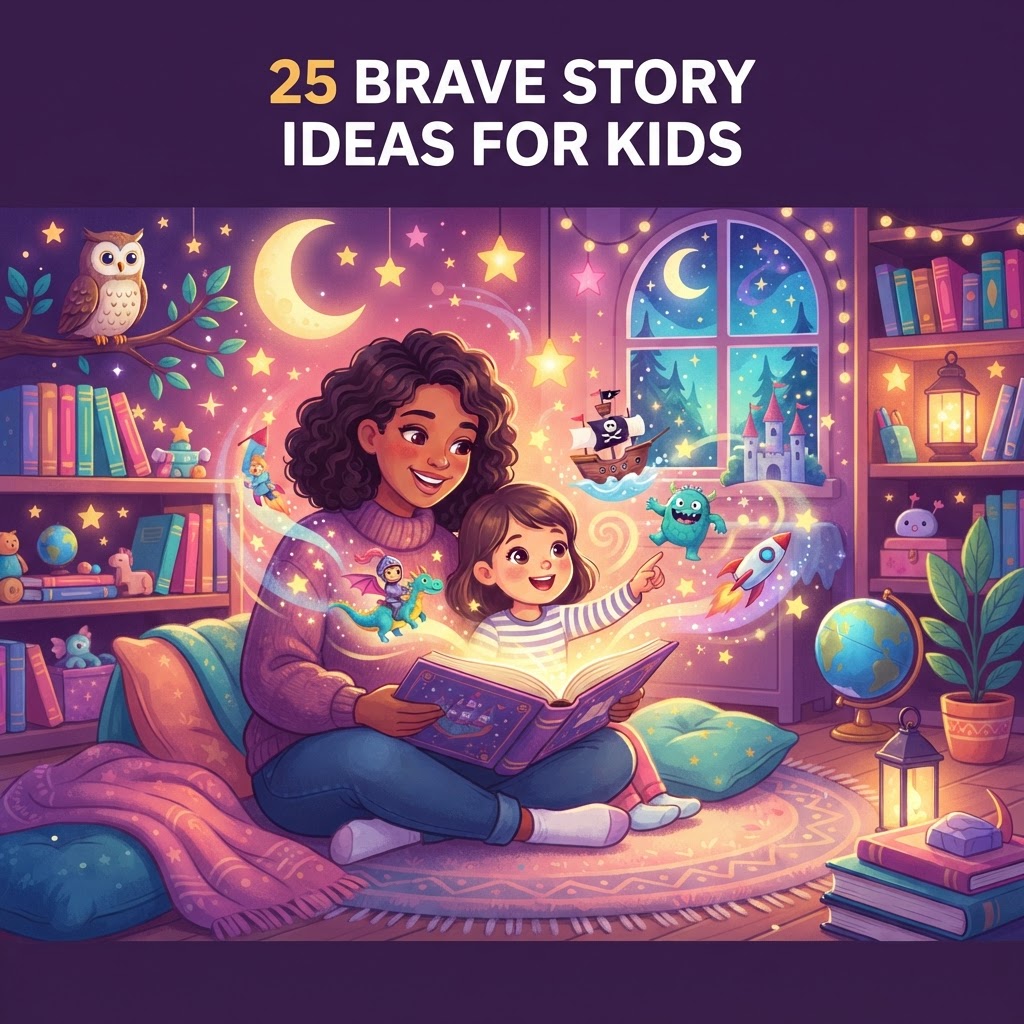
Bravery does not always look like slaying dragons. For children, courage often means trying the big slide, speaking up for a friend, sleeping in their own bed, or walking into a new classroom with shaky knees. That is why brave story ideas work so well at bedtime: they let kids practice courage in a safe, hopeful way before they face real-life challenges.
Why do brave stories help kids grow?
Brave stories for kids help children rehearse hard moments before they happen in real life. When kids hear a character face fear and still move forward, they build language for courage, confidence, and problem-solving.
This matters for development. The CDC highlights social-emotional growth as a key part of early childhood, and the American Academy of Pediatrics notes that reading aloud supports language, bonding, and emotional learning. Albert Bandura’s work on modeling and self-efficacy also helps explain why kids brave stories are powerful: children learn by watching what characters do.
In practice, the best brave stories:
- name a fear clearly
- keep the challenge manageable
- show support from caring adults or friends
- end with effort, not perfection
Which brave story ideas fit each age best?
The best brave story ideas match a child’s stage of development. Younger children need small, concrete challenges, while older kids can handle bigger plots, moral choices, and longer adventures.
A simple guide:
- Ages 1-3: gentle bravery, routines, noises, separation, first tries
- Ages 4-6: school, friendships, doctors, storms, speaking up
- Ages 6-8: teamwork, mistakes, exploration, problem-solving
- Ages 8-10: leadership, honesty, resilience, protecting others
If you want even more inspiration after this list, explore these extra brave bedtime ideas.
What are 25 brave story ideas for kids?
The strongest brave stories for kids pair a relatable fear with a hopeful win. Below are 25 brave story prompts organized by age and theme, each ready to paste into an AI story generator.
Gentle brave stories for ages 1-3
-
1. Teddy and the Dim Hallway: A child walks to the bathroom at night with a favorite teddy and learns shadows are not so scary. AI prompt: “Write a cozy bedtime story for a 2-year-old about [child’s name] and a teddy bravely walking down a dim hallway.”
-
2. The Bunny on the Big Slide: A nervous bunny climbs the tallest slide one careful step at a time. AI prompt: “Create a gentle story for a toddler about a bunny and [child’s name] trying the big slide with encouragement.”
-
3. Rainboot Rescue: A small child helps a snail reach a dry leaf during a rainy day. AI prompt: “Write a sweet illustrated story about [child’s name] rescuing a tiny snail in the rain and feeling brave.”
-
4. First Splash: A child is unsure about swim class but smiles after dipping one toe, then one foot, then jumping in. AI prompt: “Tell a calm bedtime story about [child’s name] being brave at their first swim lesson.”
-
5. The Vacuum’s Friendly Song: A loud vacuum seems scary until a child imagines it as a silly singing machine. AI prompt: “Write a playful story for ages 1-3 where [child’s name] learns not to fear a noisy vacuum.”
Everyday courage stories for ages 4-6
-
6. The First Day Cape: A child wears an invisible cape to school and discovers bravery can be quiet. AI prompt: “Create a reassuring school story where [child’s name] feels nervous on day one but finds their brave cape.”
-
7. The Missing Library Card: A child admits they lost a library card and helps solve the problem. AI prompt: “Write a story about [child’s name] telling the truth about a lost library card and learning honesty is brave.”
-
8. Mila Speaks Up: A child kindly defends a classmate left out of a game. AI prompt: “Tell a warm story where [child’s name] notices someone alone at recess and bravely invites them to play.”
-
9. Dentist Day Dragon Breath: A child imagines breathing like a calm dragon during a dental visit. AI prompt: “Write a funny, comforting story about [child’s name] using dragon breaths to feel brave at the dentist.”
-
10. The Thunder Tent: During a storm, siblings build a blanket fort and turn thunder into a counting game. AI prompt: “Create a bedtime story where [child’s name] faces a thunderstorm by building a cozy courage tent.”
-
11. Show-and-Tell Seed: A shy child shares one tiny seed and ends up telling a big story. AI prompt: “Write a story about [child’s name] being nervous for show-and-tell, then speaking bravely to the class.”
-
12. Firefly Night Walk: A child takes a short walk outside after dark and follows glowing fireflies. AI prompt: “Tell a gentle nighttime story where [child’s name] learns to feel safe and brave outdoors with fireflies.”
Adventure bravery stories for ages 6-8
-
13. The Bridge of Wobbly Boards: Friends must cross a shaky bridge to return a baby fox to its den. AI prompt: “Write an adventure story where [child’s name] crosses a wobbly bridge to help a lost fox.”
-
14. Captain Noor and the Sea Fog: A young captain guides a boat through fog by listening, thinking, and staying calm. AI prompt: “Create a sea adventure starring [child’s name] bravely navigating thick fog with wisdom, not force.”
-
15. The Cave of Echoes: A child enters a cave and learns the scary voice is only their own echo. AI prompt: “Tell an adventurous story where [child’s name] explores an echoing cave and turns fear into curiosity.”
-
16. The Robot Who Feared Mistakes: A robot freezes whenever it gets an answer wrong until a child teaches it to try again. AI prompt: “Write a story about [child’s name] helping a robot learn that making mistakes can be brave.”
-
17. The Mountain Message: A child must deliver a note before sunset, even when the path gets steep. AI prompt: “Create a heroic mountain story where [child’s name] keeps going step by step to deliver an important message.”
-
18. Recess Rescue Team: Kids work together when the playground climber gets blocked and younger children feel stuck. AI prompt: “Write a teamwork story where [child’s name] leads a calm, brave recess rescue.”
-
19. The Moonlight Map: A map only appears under moonlight, and a child must trust clues instead of fear. AI prompt: “Tell a magical adventure where [child’s name] follows a moonlit map and discovers inner courage.”
Big-hearted hero tales for ages 8-10
-
20. The Broken Shield Keeper: A child inherits a cracked shield and learns bravery is protecting others, not looking perfect. AI prompt: “Write a fantasy story where [child’s name] uses a broken shield to defend a village with courage and kindness.”
-
21. The Truth-Telling Tournament: Contestants win not by strength but by honest choices. AI prompt: “Create a story in which [child’s name] enters a tournament and learns that telling the truth is the bravest act.”
-
22. The Forest of Rumors: A child must stop hurtful whispers spreading through an enchanted forest. AI prompt: “Write a thoughtful adventure where [child’s name] faces rumors, stands up for fairness, and restores trust.”
-
23. The Time-Travel Lunchbox: A child visits different moments in history and sees ordinary kids doing brave things. AI prompt: “Tell a time-travel story where [child’s name] learns courage from children in the past.”
-
24. The Snowstorm Signal: During a blizzard, a child helps send a light signal that guides neighbors to safety. AI prompt: “Create a winter rescue story where [child’s name] stays calm in a snowstorm and helps the community.”
-
25. The Star Lion’s Roar: A child must find their voice to wake a sleeping star lion and save the night sky. AI prompt: “Write an epic bedtime tale where [child’s name] discovers their brave voice and wakes the star lion.”
How can you turn these brave story prompts into personalized bedtime stories?
The easiest way to use these brave story prompts is to personalize one detail at a time. Start with your child’s name, age, favorite animal, or real-life fear, then keep the ending calm and reassuring.
With InstaTales, you can create your own personalized bedtime story from any idea above in minutes. If you want a faster start, use the built-in story templates, then save favorites in your story library for easy re-reading.
A few educator-tested tips:
- match the story stakes to your child’s age
- let the hero feel scared first
- include one trusted helper
- end with relief, pride, and rest
For classrooms, social-emotional stories can support discussion, journaling, and role-play. Teachers can adapt these brave stories for kids through InstaTales for teachers, especially for topics like friendship, resilience, and trying new things. For older children who love dragons, quests, and magic worlds, our other brave story collections can pair well with courage themes.
Research from the Harvard Center on the Developing Child also reminds us that children build self-regulation and flexible thinking through repeated practice. A good story gives them exactly that: a safe practice space.
Frequently Asked Questions
What makes a good brave story for kids?
A good brave story gives a child-sized challenge, a clear feeling, and a hopeful ending. The character does not need to be fearless; they only need to try.
Are brave stories helpful for anxious children?
Yes, if the story stays gentle and age-appropriate. Start with everyday fears, keep the tone warm, and avoid overwhelming danger or long suspense.
How long should brave bedtime stories be?
For toddlers, 3-5 minutes is often enough. Older children may enjoy 7-10 minute stories with more plot, dialogue, and problem-solving.
Can I use these brave story prompts in the classroom?
Absolutely. Teachers can use them for read-alouds, SEL lessons, writing practice, or partner retelling, especially when students create different endings.
How can I personalize brave stories without making them too intense?
Use familiar settings and small steps. Instead of a huge battle, try a new school, a dark room, a storm, or speaking in front of others.
Should brave stories always end happily?
They should end with safety, comfort, and growth. A child does not need a perfect victory; they need to feel that courage helped and support was available.
Ready to Create a Personalized Bedtime Story?
Use our free AI bedtime story generator to create a personalized illustrated story for your child in 30 seconds — no credit card needed.
Popular story types:
Maya Rodriguez
Lead Content Editor & Early Literacy Specialist
Maya is a former early childhood educator and literacy specialist with over a decade of experience helping children develop a love of reading. She leads content at InstaTales, where she writes about the science of storytelling, child development, and how families can use personalized AI stories to build literacy and emotional resilience.
instatales.ai