25 courage story ideas for kids
25 creative courage story ideas for kids — each with a free AI prompt to generate the full illustrated story instantly.
✦ Key Takeaways
- •Courage stories help children rehearse brave choices in a safe way.
- •For ages 1-4, the best courage story ideas are short, warm, and focused on familiar situations.
- •For ages 5-7, strong courage stories for kids often center on school, friendships, trying new skills, and recovering from mistakes.
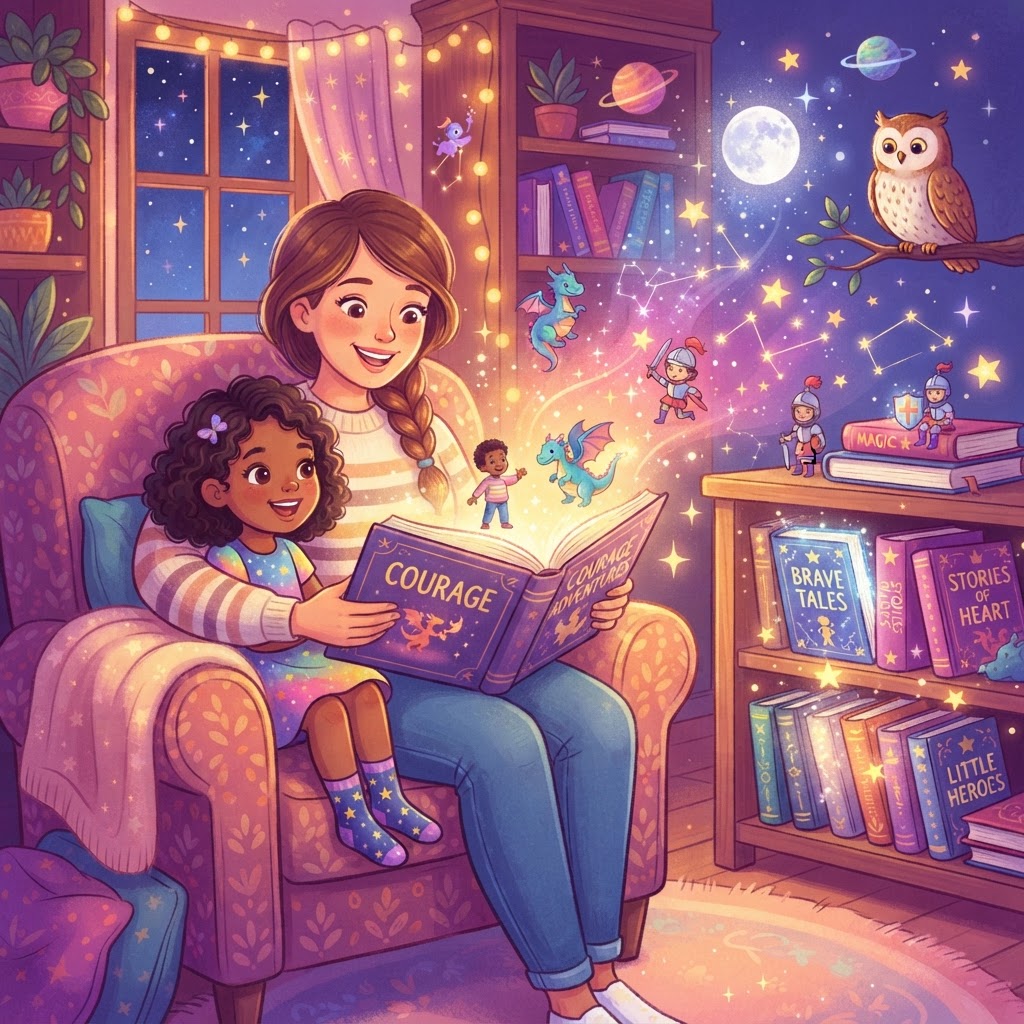
Courage grows in small, everyday moments: trying a new food, speaking up in class, sleeping in a dark room, or making a new friend. That is why courage story ideas work so well for children ages 1-10—they turn big feelings into safe, memorable adventures kids can explore at their own pace.
Well-chosen courage stories for kids can support social-emotional learning, build language, and give children a simple script for handling fear. Research from the Center on the Developing Child at Harvard University and guidance from the CDC both highlight how supportive relationships and practice with emotions help children build resilience. Below, you will find 25 creative kids courage stories, each with a ready-to-use courage story prompt you can paste into InstaTales to generate a full personalized story.
Why are courage stories so helpful for children?
Courage stories help children rehearse brave choices in a safe way. When kids see a character feel scared and still take one small step forward, they learn that bravery does not mean “not afraid”—it means trying anyway.
This matters for child development. Early childhood experts at NAEYC often emphasize that social-emotional learning grows through relationships, repetition, and play. Stories offer all three. They also give parents and teachers simple language for talking about fear, confidence, mistakes, and persistence.
What are the best courage story ideas for toddlers and preschoolers?
For ages 1-4, the best courage story ideas are short, warm, and focused on familiar situations. Think bedtime fears, first separations, loud noises, or trying something new.
1. The Night-Light Explorer
A little bunny feels nervous when the room gets dark, but a glowing night-light helps them discover that bedtime can feel cozy and safe. The story ends with the bunny naming three things that make them feel brave.
AI prompt: Write a gentle bedtime story for a 2-4-year-old about a bunny who feels scared of the dark but learns to feel brave with a glowing night-light. Use simple language, a calm tone, and a reassuring happy ending.
2. The Brave First Day Shoes
A child’s favorite shoes “whisper courage” on the first day of preschool and remind them how to say hello, hang up their bag, and join playtime. Keep the feeling encouraging and playful.
AI prompt: Create a preschool story about a child on their first day of school whose special shoes help them take brave little steps. Make it warm, age-appropriate, and confidence-building.
3. Milo and the Noisy Vacuum
A toddler is frightened by the loud vacuum cleaner, but learns what it is, how it works, and how to stand nearby with a grown-up. The story should normalize sound sensitivity and end with relief.
AI prompt: Write a story for ages 1-3 about a child who is scared of the vacuum cleaner and slowly learns it is just a noisy helper. Use repetition, comfort, and a soothing ending.
4. The Tiny Taste Test
A hesitant bear cub does not want to try new foods, but takes one brave nibble at a time. The focus is courage, not pressure.
AI prompt: Generate a story for a preschooler about a bear cub who practices bravery by trying one tiny bite of a new food. Keep it playful, supportive, and never forceful.
5. The Splashy Lesson
A child feels unsure about putting their face in the water during swim class, but learns to blow bubbles and celebrate small progress. The message is that bravery can be gradual.
AI prompt: Write a story for ages 3-5 about a child who feels nervous in swim class but becomes brave step by step. Include encouragement, small wins, and a happy ending.
Which courage stories work best for early elementary kids?
For ages 5-7, strong courage stories for kids often center on school, friendships, trying new skills, and recovering from mistakes. At this age, children enjoy stories with action, humor, and a clear emotional payoff.
6. The Hand-Raiser Hero
A quiet student knows the answer but feels shy about speaking in class. One brave hand raise changes their whole day.
AI prompt: Create a school story for a 5-7-year-old about a child who feels shy in class and practices courage by raising their hand once. Make it realistic, kind, and empowering.
7. The New Friend on the Bench
A child notices someone sitting alone at recess and bravely walks over to say hello. The story shows that friendship often starts with one small act of courage.
AI prompt: Write a story for early elementary kids about a child who bravely introduces themselves to a lonely classmate at recess. Focus on empathy, courage, and kindness.
8. The Wobbly Bike Ride
After a fall, a child worries about getting back on their bike. With patience and support, they try again.
AI prompt: Generate a story about a child learning to ride a bike after being scared by a fall. Show that courage means trying again even when you feel nervous.
9. The Talent Show Trembles
A child wants to sing in the school talent show but gets stage fright. They learn a calming trick and finish proudly.
AI prompt: Write a story for ages 6-8 about a child with stage fright who still performs in a talent show. Include breathing, encouragement, and a joyful ending.
10. The Lost Library Book
A student loses a library book and feels afraid to tell the truth. The story shows that honesty takes courage too.
AI prompt: Create a story for kids about losing a library book and bravely telling the librarian the truth. Emphasize honesty, problem-solving, and emotional growth.
How can fantasy adventures teach kids about bravery?
Fantasy lets children practice courage at a safe distance. A dragon, moonbeam, or talking tree can stand in for very real feelings like anxiety, shyness, or self-doubt.
11. The Dragon Who Was Afraid to Roar
A young dragon hides their tiny roar because it sounds silly. By the end, they learn their voice matters.
AI prompt: Write a fantasy story for ages 4-7 about a dragon who is scared to use their voice and discovers that even a small roar can be brave. Keep it funny and uplifting.
12. The Moon Bridge Crossing
A child must cross a glowing moon bridge to return a lost star. Each step teaches a new brave thought.
AI prompt: Generate a magical story about a child crossing a moonlit bridge even though they feel afraid. Use vivid imagery, gentle suspense, and a reassuring ending.
13. The Cave of Echoing Worries
A young explorer hears all their worries repeated back in a cave, then learns to answer them with brave words. This is a helpful metaphor for self-talk.
AI prompt: Create a story for children about an explorer in a cave where worries echo out loud, and the child learns to answer them with courage. Make it imaginative and emotionally smart.
14. The Unicorn’s First Flight
A winged unicorn is scared to fly higher than the treetops. With a friend beside them, they take one brave glide at a time.
AI prompt: Write a story about a unicorn afraid to fly who gains confidence through small steps and a supportive friend. Aim for ages 5-8.
15. The Shield of Kindness
A knight thinks bravery means fighting, but learns that apologizing, helping others, and telling the truth are powerful forms of courage too.
AI prompt: Generate a fairy-tale story where a young knight discovers that kindness and honesty are forms of bravery. Make the lesson clear but gentle.
What everyday courage story prompts help kids handle real life?
The most useful courage story prompts often mirror daily challenges children already face. When a story reflects real life, it becomes easier for a child to transfer the lesson outside the book.
16. The Haircut Chair Quest
A child is nervous about getting a haircut, especially the buzzing clippers. The barber turns it into a brave mission.
AI prompt: Write a realistic story for a young child who feels scared about getting a haircut and learns how to stay calm and brave. Use friendly adults and a positive ending.
17. The Dentist Treasure Map
A child imagines the dentist visit as a treasure hunt with clues, tools, and a shiny reward at the end. The story makes the unfamiliar feel manageable.
AI prompt: Create a story for ages 4-7 about a child who is nervous about the dentist and turns the visit into a treasure adventure. Make it reassuring and fun.
18. The Big Slide Try
At the playground, a child wants to try the tallest slide but feels frozen at the top. They decide whether to go now or come back later—and both choices are okay.
AI prompt: Generate a story about a child facing fear on a big playground slide and learning that bravery can mean trying now or preparing for later. Keep it balanced and encouraging.
19. The Stormy Night Snuggle Plan
A child feels scared during thunder and lightning, then makes a brave plan with a parent: blanket, deep breaths, and counting between booms. The focus is coping skills.
AI prompt: Write a bedtime story for kids who are afraid of storms, showing a child using a comfort plan with a grown-up to feel brave and safe.
20. The Team Tryout
A child worries they are not good enough to join a team, but learns that showing up is a brave success on its own.
AI prompt: Create a story for ages 6-9 about a child nervous about sports tryouts who learns that courage matters more than perfection. Make it motivating and realistic.
Which deeper courage stories support older kids best?
For ages 8-10, kids courage stories can include more nuance. Older children can understand moral courage, persistence, self-advocacy, and standing up for others.
21. The Truth in the Group Chat
A child sees teasing in a class group chat and must decide whether to speak up, get help, or stay silent. The story explores digital courage in an age-appropriate way.
AI prompt: Write a story for ages 8-10 about a child who notices mean messages in a group chat and bravely chooses to do the right thing. Keep it thoughtful, safe, and hopeful.
22. The Science Fair Mistake
A project goes wrong the night before the science fair, and a student wants to quit. Instead, they present what they learned from the failure.
AI prompt: Generate a story about a child whose science fair project fails but who finds the courage to present anyway. Focus on resilience, honesty, and growth mindset.
23. The Voice at the Lunch Table
A student hears someone being excluded and bravely makes room. The story shows social courage in a realistic school setting.
AI prompt: Create a school story for older kids about including a classmate who is left out at lunch. Show how small social choices can be brave and meaningful.
24. The Audition That Almost Didn’t Happen
A child prepares for an audition, panics, and nearly walks away. They choose to try, even if they do not win.
AI prompt: Write a story for ages 8-10 about a child overcoming fear before an audition. Emphasize effort, self-belief, and courage over outcomes.
25. The Speech for the Earth
A student feels nervous speaking at a school assembly about helping the planet, but discovers that standing up for what matters is a form of courage. This can spark meaningful classroom conversations.
AI prompt: Generate a story about a child giving a brave speech at school about protecting nature. Make it inspiring, age-appropriate, and emotionally grounded.
How can you turn these courage story ideas into personalized stories with InstaTales?
The easiest way to use these ideas is to pick one prompt, add your child’s name, age, favorite animal, or favorite setting, and then create your own personalized bedtime story. Personal details make the story feel more relevant, which often helps children connect more deeply with the brave choice in the plot.
A simple process works well:
- Choose a story idea that matches your child’s current fear or challenge.
- Paste the prompt into InstaTales and personalize the main character.
- Adjust the tone for bedtime, classroom reading, or independent reading.
- Save favorites in your story library for re-reading.
- If you want more structure, start with ready-made story templates.
Parents often rotate themes over time. You might begin with bedtime or school-based courage stories for kids, then branch into related topics like kindness and sharing. For more inspiration, explore these extra lists of brave bedtime story ideas, short courage prompts for younger readers, or even sharing story ideas for kids when you want to build multiple social-emotional skills together.
Teachers can also use personalized courage stories for discussion, journaling, and read-alouds. If you are planning classroom SEL activities, InstaTales for teachers and the InstaTales blog offer more ways to turn story prompts into meaningful literacy practice.
Frequently Asked Questions
What makes a good courage story for kids?
A good courage story gives a child-sized challenge, a relatable feeling, and one clear brave action. The best stories show that courage can be small, practical, and imperfect.
How do I choose the right courage story idea for my child?
Start with a fear, transition, or challenge your child is already facing, such as school, sleep, new foods, or speaking up. When the story mirrors real life, children usually engage more deeply.
Can AI-generated courage stories support social-emotional learning?
Yes, when used thoughtfully, they can support SEL by helping children name feelings, imagine solutions, and practice empathy. Personalization can make the lesson feel more concrete and memorable.
Are courage stories helpful in classrooms?
Absolutely. Teachers can use them for read-alouds, writing prompts, role-play, and class discussion about feelings, friendship, and resilience. Personalized stories can also help reluctant readers feel more invested.
How often should children hear courage stories?
Repetition helps. Reading the same story several times across a week can strengthen comprehension, emotional safety, and the child’s ability to remember the brave strategy later.
Ready to Create a Personalized Bedtime Story?
Use our free AI bedtime story generator to create a personalized illustrated story for your child in 30 seconds — no credit card needed.
Popular story types:
Maya Rodriguez
Lead Content Editor & Early Literacy Specialist
Maya is a former early childhood educator and literacy specialist with over a decade of experience helping children develop a love of reading. She leads content at InstaTales, where she writes about the science of storytelling, child development, and how families can use personalized AI stories to build literacy and emotional resilience.
instatales.ai