5-Minute Bedtime Stories for Busy Parents
Short on time? These 5-minute bedtime stories are perfect for busy parents who want to keep the story time tradition alive.
✦ Key Takeaways
- •Yes, short bedtime reading sessions work very well, especially when they happen consistently.
- •You can make five minutes count by focusing on connection, not performance.
- •A great quick bedtime story is simple, soothing, and emotionally satisfying.
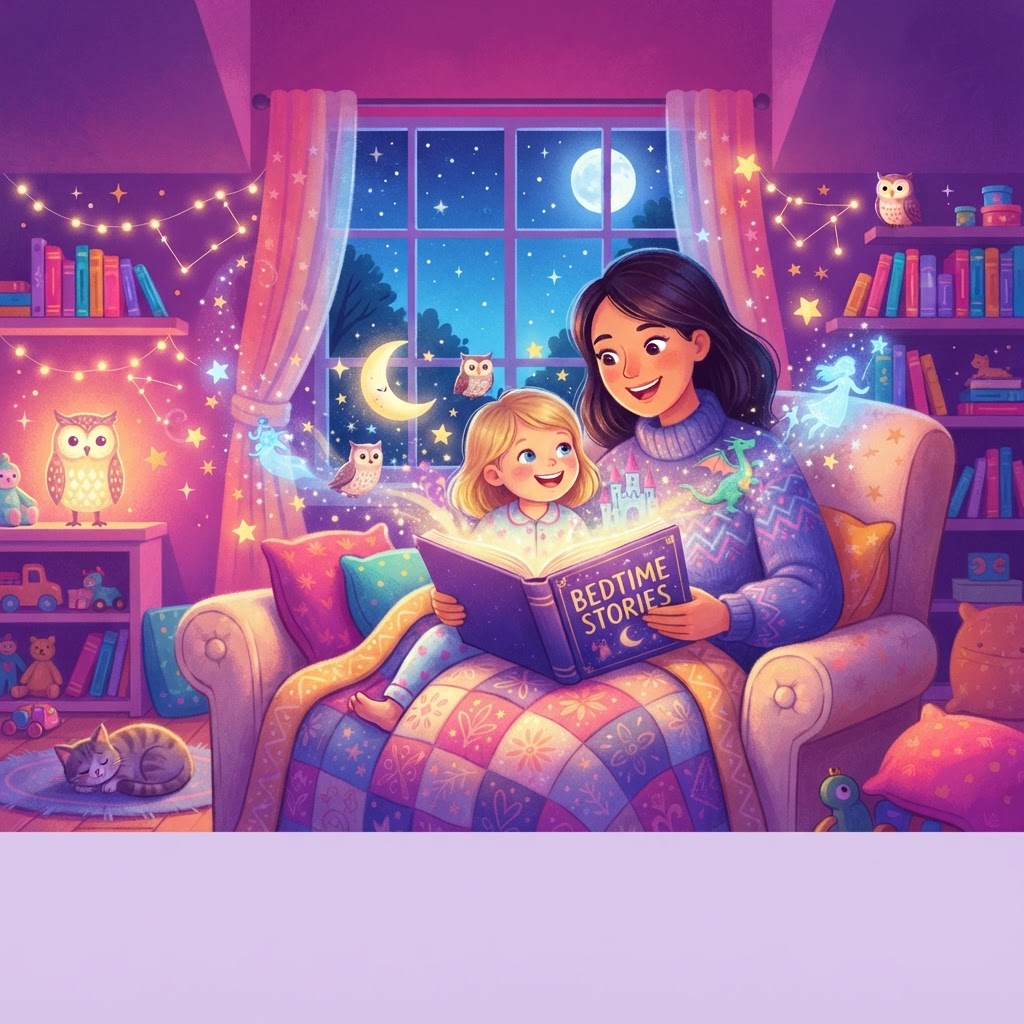
When the day runs long, 5 minute bedtime stories can keep your family’s reading routine alive without adding stress. A short, calming story still gives children what they need most at bedtime: connection, language, comfort, and a gentle bridge from busy day to restful night.
For many parents, the hardest part is not wanting to read. It is finding the time and energy. The good news is that quick bedtime stories really do count. With the right story shape, a few minutes can feel warm, complete, and memorable.
Why do 5-minute bedtime stories work so well?
Yes, short bedtime reading sessions work very well, especially when they happen consistently. Children benefit more from a predictable daily reading habit than from occasional “perfect” story times.
The American Academy of Pediatrics recommends reading together every day from infancy because shared reading supports early language, literacy, and parent-child bonding (AAP guidance). That does not mean every session must be long. For babies, toddlers, and many preschoolers, short sessions often match attention spans better than lengthy ones.
Research on interactive read-alouds also shows that children learn more when adults pause, point, ask simple questions, and respond to what the child notices. Reading Rockets highlights how back-and-forth reading builds vocabulary and comprehension, even in brief sessions (dialogic reading overview). In other words, five focused minutes can be more powerful than fifteen distracted ones.
Short stories also help at bedtime because they:
- fit real family schedules
- reduce pressure on tired parents
- give children a clear routine
- end before kids get overstimulated
- make nightly reading easier to sustain
For children ages 1-10, routine matters. A calm, repeated pattern signals safety and helps the brain shift toward sleep.
How can busy parents make five minutes of story time count?
You can make five minutes count by focusing on connection, not performance. A calm voice, one short story, and a tiny bit of interaction are enough.
Think of bedtime reading as a ritual, not a lesson. You do not need to ask many questions or “teach” every page. Instead, try this simple structure:
- 1 minute to settle: dim lights, cuddle up, and take a breath
- 3 minutes to read: choose one short story with a clear beginning, middle, and end
- 1 minute to connect: say goodnight to the character, ask one easy question, or repeat a favorite line
A few small habits make short stories for bedtime even more effective:
- Pick stories with soothing endings
- Use repeated phrases children can join in with
- Let your child choose between two options
- Re-read favorites on extra-tired nights
- Keep books or stories beside the bed
For very young children, naming pictures and using gentle repetition is enough. For older children, a quick prediction question like “What do you think will happen next?” can boost engagement without stretching the routine.
Experts at Zero to Three also emphasize that everyday reading supports early literacy best when it feels warm and responsive. That is encouraging news for busy families: a short, loving routine is developmentally meaningful.
What makes a great quick bedtime story?
A great quick bedtime story is simple, soothing, and emotionally satisfying. In just a few minutes, children need a story that feels complete rather than rushed.
The best quick bedtime stories usually have these features:
- One main problem: a lost teddy, a sleepy moon, a missing sock
- Few characters: easier to follow when children are tired
- Gentle pacing: enough action to hold attention, but not too much excitement
- Clear ending: bedtime stories should land softly
- Comforting language: rhythm, repetition, and familiar patterns help children relax
For ages 1-3, the strongest short stories often center on routine: bath, pajamas, cuddles, saying goodnight. For ages 4-6, simple adventures work well, especially if they end in safety and rest. For ages 7-10, children often enjoy short imaginative plots with humor, problem-solving, or a calm twist ending.
If you want to create your own personalized bedtime story quickly, a short prompt can help: “A sleepy fox who cannot find his pillow,” or “A brave child who helps the stars get tucked into the sky.” Starting with one bedtime-friendly idea makes a shorter story feel polished instead of abrupt.
Which 5-minute bedtime story ideas work best on hectic nights?
The best story ideas for hectic nights are familiar, low-stress, and easy to finish. Stories with warmth, repetition, and one small emotional win work especially well.
Here are five reliable ideas parents can use again and again.
The sleepy animal search
A small animal needs one last thing before bed: a blanket, a nest feather, a moonbeam, or a bedtime hug. The search gives the story movement, and the ending feels naturally calming.
The tiny problem that gets solved
A character loses a slipper, cannot find the coziest cloud, or worries about a small bedtime sound. Short stories like this reassure children that problems can be handled safely before sleep.
The goodnight journey
A child, toy, or animal says goodnight to different parts of the world: the garden, the moon, the teddy, the window, the stars. This format is perfect for toddlers and preschoolers because the repetition is soothing.
The magical bedtime helper
A kind dragon, moon fairy, sleepy robot, or glowing firefly helps everyone get ready for bed. This is a strong choice when your child loves fantasy but still needs a calm ending.
The “best part of my day” story
Turn your child’s real day into a mini story. Mention one proud moment, one funny moment, and one peaceful goodnight ending. Personalized retellings help children process emotions and feel seen.
If you want even faster starts, browse story templates for ready-made structures you can adapt in seconds. And when your child falls in love with a favorite short read, save it to your story library so you can revisit it on future busy evenings.
How can InstaTales help you create short stories for bedtime in seconds?
InstaTales can make bedtime easier by helping you generate personalized, short-length stories fast. When energy is low, having a tool that fits your time limit can protect the reading habit instead of replacing it.
If you are using InstaTales for 5 minute bedtime stories, keep the setup simple:
- choose a calm bedtime theme
- select a short story length setting
- include one main character and one small problem
- ask for a gentle, sleepy ending
- save favorites for repeat use
For example, you might enter: “A 5-minute bedtime story about Maya and her bunny looking for the quietest star.” That gives you a focused story idea with a bedtime-friendly tone. You can also create your own personalized bedtime story when your child wants to see themselves, a sibling, or a favorite pet in the tale.
A few practical tips help parents get better results:
- Use bedtime words like sleepy, cozy, moonlight, and gentle
- Avoid prompts with battles, villains, or high suspense
- Keep the cast small
- Ask for a reassuring final line
If you want more reading ideas, seasonal prompts, or family literacy tips, the InstaTales blog is a helpful next stop. And if your family likes playful consistency, weekly reading challenges can turn short nightly reading into an easy routine.
When should you choose a short story instead of a longer read?
Choose a short story when your child is tired, your evening is packed, or the goal is calm connection rather than extended entertainment. On many nights, short stories for bedtime are the smarter choice.
A five-minute story is often ideal when:
- bedtime is already running late
- your child is overtired or overstimulated
- you are trying to rebuild a reading routine
- siblings need turns
- travel or schedule changes disrupt the evening
Longer books still have a place, of course. But many families do better when they stop thinking in all-or-nothing terms. A short story keeps the habit alive. And once the habit is steady, longer reads can fit naturally on weekends or calmer nights.
From an educator’s perspective, consistency is the real win. Children build vocabulary, comprehension, listening stamina, and positive reading associations through repeated exposure over time. Five calm minutes, night after night, can shape a child’s relationship with books in lasting ways.
Frequently Asked Questions
Are 5 minute bedtime stories enough for young children?
Yes, they can be enough, especially on busy nights. A short daily reading routine supports connection and literacy better than skipping story time because it feels too hard to do perfectly.
What age are quick bedtime stories best for?
Quick bedtime stories work well for children ages 1-10, though the style should change by age. Toddlers often prefer repetition and pictures, while older children enjoy short plots with humor, imagination, or gentle problem-solving.
How many bedtime stories should I read each night?
One is enough if that is what fits your family. The best number is the one you can do consistently without bedtime becoming stressful.
Can personalized stories help children sleep better?
They can help some children settle because personalized stories feel familiar and emotionally safe. Calm language, predictable structure, and a soothing ending matter more than length alone.
What should I avoid in short stories for bedtime?
Avoid high suspense, scary villains, loud action, or complicated plots right before sleep. Bedtime stories work best when they help children feel secure, relaxed, and ready to rest.
Can short bedtime stories still support learning?
Absolutely. Even brief shared reading builds vocabulary, listening skills, story understanding, and positive reading habits, especially when it happens regularly and feels warm and interactive.
Ready to Create a Personalized Bedtime Story?
Use our free AI bedtime story generator to create a personalized illustrated story for your child in 30 seconds — no credit card needed.
Popular story types:
Maya Rodriguez
Lead Content Editor & Early Literacy Specialist
Maya is a former early childhood educator and literacy specialist with over a decade of experience helping children develop a love of reading. She leads content at InstaTales, where she writes about the science of storytelling, child development, and how families can use personalized AI stories to build literacy and emotional resilience.
instatales.ai