Can Bedtime Stories Help Children Overcome Fear of the Dark and Bedtime Anxiety?
Can bedtime stories help children overcome fear of the dark and bedtime anxiety? How bibliotherapy and personalized narrative exposure reduce childhood fears.
✦ Key Takeaways
- •Fear of the dark is common and developmentally normal, peaking around ages 2–6.
- •Bibliotherapy is the therapeutic use of stories to help people process emotions and fears — used clinically with children for decades.
- •Yes — personalization makes bibliotherapy markedly more effective, because the child processes the resolution self-referentially.
Can Bedtime Stories Help Children Overcome Fear of the Dark and Bedtime Anxiety?
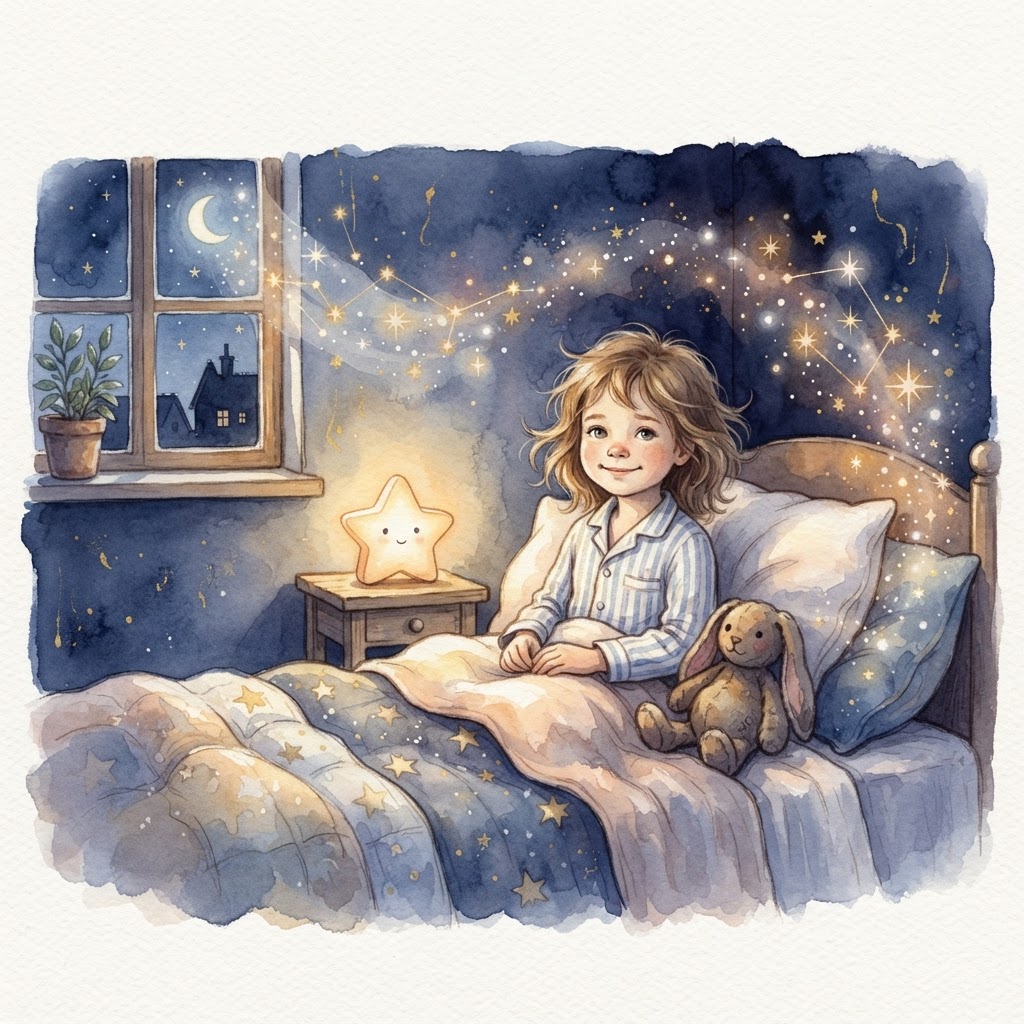
Yes. Bedtime stories in which a relatable character faces and resolves the same fear — using a calming strategy — reduce bedtime anxiety through modeling and narrative exposure, a technique supported by bibliotherapy research. Stories give children a safe rehearsal of the exact situation that scares them, with a successful outcome.
How do bedtime stories reduce fear of the dark?
Fear of the dark is common and developmentally normal, peaking around ages 2–6. A story in which a relatable character feels afraid of the dark, then discovers the dark is safe (or befriends what they feared), gives the child a model and a new frame. This works through narrative exposure: the child repeatedly encounters the feared situation in a safe, controlled story context with a positive resolution, which gradually lowers the anxiety response. The Child Mind Institute recommends this kind of gentle, modeling-based approach for childhood fears, distinguishing normal developmental fears from anxiety that needs professional support.
What is bibliotherapy and how does it apply to bedtime anxiety?
Bibliotherapy is the therapeutic use of stories to help people process emotions and fears — used clinically with children for decades. A story matched to a child's specific fear lets them externalize the problem (it's happening to the character, not them), see it resolved, and internalize the coping strategy. For bedtime anxiety, a personalized story where the child-character uses a concrete technique — slow breathing, a comfort object, a calming phrase — and then falls asleep brave is a textbook bibliotherapy application, delivered nightly at no clinical cost.
Should the child be the protagonist in fear-resolution stories?
Yes — personalization makes bibliotherapy markedly more effective, because the child processes the resolution self-referentially. A generic character overcoming the dark helps; the child themselves overcoming the dark, in their own bedroom, with their own comfort bear, helps far more. This is why personalized story tools like InstaTales are particularly powerful for fear and anxiety: the story maps exactly onto the child's real situation, maximizing the self-referential processing that drives the effect.
What story elements help children with bedtime anxiety?
Four elements make a fear-resolution story effective: (1) the fear is named honestly, not dismissed — the character says 'I feel scared'; (2) the character uses a concrete coping strategy the child can copy (slow breathing, a phrase, a comfort object); (3) the character resolves the fear through their own effort, not an adult rescuing them — agency builds the child's belief they can do it too; (4) the ending is calm and safe, modeling the sleep outcome you want. Avoid stories that introduce new fear elements or rely on 'defeating' a scary monster, which can backfire.
When should parents seek professional help for bedtime anxiety?
Stories help with normal developmental fear of the dark. Seek professional support if the anxiety is severe and persistent (lasting weeks with no improvement), causes significant sleep disruption or daytime impairment, involves panic symptoms, or extends well beyond the typical age range. The American Academy of Pediatrics and child mental health organizations provide guidance on distinguishing typical childhood fears from anxiety disorders. Stories are a gentle first step and a complement to — not a replacement for — professional care when needed.
Frequently Asked Questions
Can a bedtime story really help a child not be afraid of the dark?
Yes. A story where a relatable character faces the dark and finds it safe uses narrative exposure to lower the anxiety response — a technique supported by bibliotherapy research.
Should the scary story feature monsters?
Generally no. Stories that 'defeat' a monster can introduce new fears. Better to model the dark as safe and the child as brave and calm.
Does personalizing the fear story make it work better?
Yes. When the child is the protagonist in their own bedroom, the self-referential processing deepens the modeling effect, making the coping strategy more likely to transfer.
When is bedtime anxiety more than a story can fix?
If anxiety is severe, persistent, disrupts sleep or daily life, or involves panic, consult a pediatrician or child mental health professional. Stories complement, but don't replace, professional support.
Related: Addressing Childhood Fears Through Stories · AI Stories That Help Children Process Emotions · Bedtime Routine for Toddlers with Stories
Ready to Create a Personalized Bedtime Story?
Use our free AI bedtime story generator to create a personalized illustrated story for your child in 30 seconds — no credit card needed.
Popular story types:
Maya Rodriguez
Lead Content Editor & Early Literacy Specialist
Maya is a former early childhood educator and literacy specialist with over a decade of experience helping children develop a love of reading. She leads content at InstaTales, where she writes about the science of storytelling, child development, and how families can use personalized AI stories to build literacy and emotional resilience.
instatales.ai