Best Bedtime Stories When Your Child Are Too Shy
When your child are too shy, bedtime can be tough. These bedtime stories and strategies can help turn things around.
✦ Key Takeaways
- •Bedtime often feels harder for shy children because the day gets quieter, separations feel bigger, and worries get louder.
- •Bedtime stories help shy children by creating emotional distance, safety, and repetition.
- •The best bedtime stories for shy children are low-pressure, emotionally safe, and easy to predict.
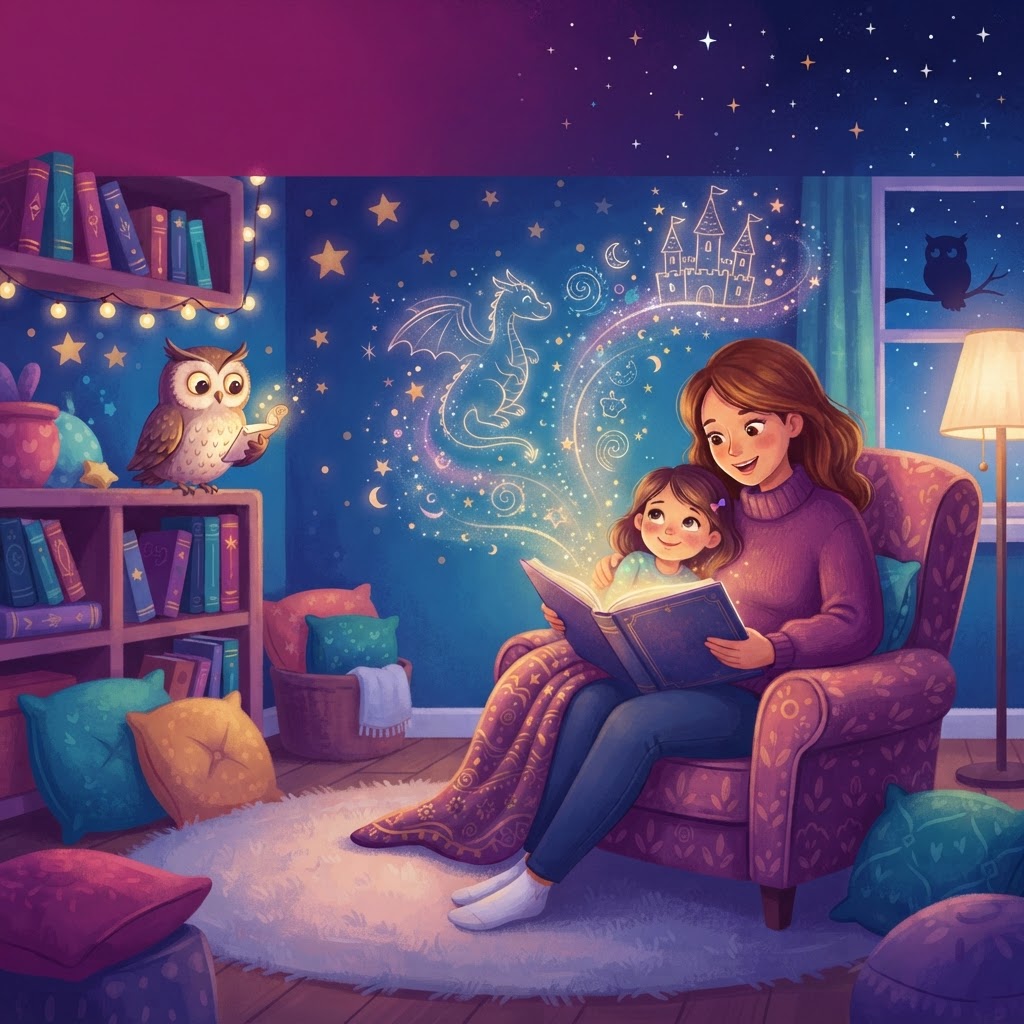
When your child is quiet, clingy, or hesitant at night, bedtime can feel surprisingly emotional. A shy child may seem calm all day, then suddenly resist pajamas, whisper “stay with me,” or shut down the moment the lights go low.
That pattern is common. If you have searched for bedtime stories are too shy or even the awkward phrase are too shy bedtime, you are likely looking for one simple thing: a gentler way to help your child feel safe, seen, and ready to sleep. Bedtime stories can do exactly that when they are calm, predictable, and matched to your child’s temperament.
Why can bedtime feel harder when your child is too shy?
Bedtime often feels harder for shy children because the day gets quieter, separations feel bigger, and worries get louder. A child who is slow to warm up may handle school or play well enough, then release all that tension at night.
Developmental researchers, including Jerome Kagan, described this pattern as behavioral inhibition: some children are naturally more cautious in new, uncertain, or emotionally loaded moments. Bedtime includes several of those triggers at once—transition, darkness, separation, and less distraction.
You may notice:
- more stalling at bedtime
- whispered worries instead of direct questions
- clinginess with one parent
- fear of “doing bedtime wrong”
- reluctance to speak during story time
This does not mean anything is “wrong” with your child. Shyness is a temperament, not a flaw. What matters is building routines that reduce pressure and increase safety.
Sleep also matters. The CDC’s sleep guidance and HealthyChildren.org from the American Academy of Pediatrics both stress that predictable routines help children settle more easily and sleep better.
How can bedtime stories help when your child are too shy at bedtime?
Bedtime stories help shy children by creating emotional distance, safety, and repetition. A story lets a child explore big feelings through a character, without having to explain those feelings directly.
That is why stories work so well for children who are too shy at bedtime. Instead of asking, “Why are you upset?” you can read about a bunny who hides behind a curtain, a fox who needs a soft song, or a child who takes three deep breaths before saying goodnight. Your child can listen, identify, and regulate without pressure.
Stories support bedtime in several ways:
- They lower performance pressure. Your child does not have to “talk about feelings” on demand.
- They model coping. Characters can whisper, pause, ask for help, or choose a comfort object.
- They add predictability. Repeated story patterns calm the nervous system.
- They strengthen connection. Shared reading is a form of co-regulation; your voice becomes part of the soothing.
This is especially helpful if your child is also sensitive, keyed-up, or resistant to transitions. If that sounds familiar, our guide to bedtime stories for calming down can help you build an even gentler wind-down.
What kinds of bedtime stories work best for shy children?
The best bedtime stories for shy children are low-pressure, emotionally safe, and easy to predict. Choose stories with gentle stakes, kind helpers, and endings that feel secure rather than dramatic.
Here are 5 calming story ideas that work especially well.
1. The quiet animal who finds a brave whisper
A small animal—like a mouse, bunny, or fawn—feels too shy to speak loudly at bedtime. A caring grown-up teaches them that a whisper is still a brave voice.
Why it works:
- validates quiet communication
- gives your child a script
- shows courage in a soft, realistic way
2. The bedroom that turns into a safe little world
The child’s own room becomes a cozy moon garden, cloud boat, or star nest. Nothing scary happens; the room simply becomes warmer, softer, and more magical.
Why it works:
- makes the real sleep space feel friendly
- reduces fear of darkness or separation
- keeps the story grounded in bedtime
3. The child who needs one kind friend
A shy child worries about tomorrow, but one gentle friend, sibling, pet, or stuffed animal stays beside them. Together they do one simple brave thing, like saying hello, taking a breath, or walking to the door.
Why it works:
- shy children often do best with one safe relationship
- teaches connection without social overload
- lowers next-day bedtime anxiety
4. The slow-to-warm-up adventure
The hero does not jump in right away. They watch, wait, and join when ready. The story celebrates observation as a strength, not a weakness.
Why it works:
- reframes shyness positively
- reduces the feeling that your child must “be bold”
- matches how many cautious children actually function
5. The lullaby story with repeating comfort lines
A sleepy story repeats phrases like “You are safe, you are loved, you can rest now.” The plot is minimal, and the rhythm matters more than action.
Why it works:
- repetition supports regulation
- predictable language helps sleepy brains
- ideal for children who freeze when stories feel too busy
If your child’s shyness at night blends with fear, our article on bedtime stories for kids who have nightmares may also be useful.
How can you use InstaTales’ lullaby type and kind tone well?
Use InstaTales’ lullaby type and kind tone when you want a story to soothe, not stimulate. For shy children, those settings are especially effective because they reduce emotional intensity and keep the story soft, predictable, and warm.
When you create your own personalized bedtime story, try these choices:
- Story type: Lullaby
- Tone: Kind
- Length: Short to medium
- Main character: Your child, a favorite animal, or a comfort toy
- Setting: Home, bedroom, moon garden, or a familiar safe place
What to include in your prompt:
- one small feeling, like “too shy to say goodnight”
- one gentle coping action, like breathing, whispering, or holding a blanket
- one trusted helper, like a parent, pet, or stuffed bear
- a repeated calming line
- a very peaceful ending
A simple prompt might look like this:
Create a lullaby bedtime story in a kind tone about Mia, age 5, who feels shy at bedtime and does not want to say what is wrong. A little rabbit helps her use whisper words, hold her blanket, and feel safe in her room. Use soft repetition and end with sleep.
If you want a faster starting point, browse the story templates and adapt one with a shy, slow-to-warm-up character. When you find a story that works, save it in your story library so you can reread the same calming story for several nights. Repetition is often the secret ingredient.
What is a gentle bedtime routine for a child who is too shy?
A gentle bedtime routine for a shy child should be predictable, low-demand, and easy to repeat. Parents often search phrases like bedtime routine are too shy when what they really need is a simple sequence their child can trust every night.
Here is a sample 25-minute bedtime routine:
- 25 minutes before bed: Dim lights and say the plan out loud: “Bath, pajamas, story, cuddle, sleep.”
- 20 minutes before bed: Offer one safe choice: blue pajamas or yellow pajamas, one stuffed animal or two.
- 15 minutes before bed: Keep conversation light. Do not push for a full emotional recap of the day.
- 10 minutes before bed: Read one short story using a calm voice and slow pace.
- 5 minutes before bed: Repeat one comfort phrase: “Your body can rest now. I’m close by.”
- Lights out: Use a brief check-in, not a long negotiation.
A few practical tips help:
- Keep bedtime at roughly the same time each night.
- Avoid exciting plots, rough play, or big corrections right before bed.
- Let your child listen without talking if they prefer.
- Use whispering, touch, and rhythm more than questions.
If your child resists because bedtime feels dull or avoidable, this guide to when kids are bored at bedtime can help you adjust the routine without making it overstimulating.
When should you get extra support for bedtime shyness?
Get extra support if bedtime shyness becomes intense, long-lasting, or starts affecting daytime life. Shyness is common, but panic, frequent sleep loss, or strong avoidance may need more than a story routine.
Consider speaking with your pediatrician if your child:
- regularly takes more than an hour to settle
- seems panicked at separation every night
- has frequent stomachaches, headaches, or crying around bedtime
- avoids school, play, or speaking in other settings too
- seems distressed for several weeks despite a consistent routine
Resources from the Child Mind Institute can also help parents understand the difference between typical shyness and anxiety. The goal is not to make a quiet child louder; it is to help them feel secure enough to rest.
Frequently Asked Questions
Can bedtime stories really help a shy child?
Yes. Bedtime stories help by lowering pressure and giving children a safe way to process feelings through a character instead of direct conversation. For many shy children, that feels easier and more calming.
What if my child will not talk during the story?
That is completely fine. Listening quietly is still engagement, and many shy children process internally before they ever respond out loud.
Should the main character be exactly like my child?
Usually, “similar but not identical” works best. A character who shares your child’s feeling but has a little emotional distance can feel safer and less exposing.
How long should a bedtime story be for a shy child?
Short is usually better at first. Aim for 5 to 10 minutes, especially if your child gets overwhelmed, frozen, or clingy late in the evening.
Is it okay to read the same story every night?
Yes. Repetition is soothing for young children, and it is often especially regulating for a child who feels uncertain or shy at bedtime.
When is shyness at bedtime a sign of anxiety?
It may be more than typical shyness if your child shows intense fear, major sleep disruption, or strong avoidance across many settings. If bedtime struggles are persistent or severe, talk with your pediatrician or a child mental health professional.
Ready to Create a Personalized Bedtime Story?
Use our free AI bedtime story generator to create a personalized illustrated story for your child in 30 seconds — no credit card needed.
Popular story types:
Maya Rodriguez
Lead Content Editor & Early Literacy Specialist
Maya is a former early childhood educator and literacy specialist with over a decade of experience helping children develop a love of reading. She leads content at InstaTales, where she writes about the science of storytelling, child development, and how families can use personalized AI stories to build literacy and emotional resilience.
instatales.ai