Best animals bedtime stories for 1-year-olds
Discover the best animals bedtime stories for 1-year-olds — themes, tips, and story ideas that will delight your child at bedtime.
✦ Key Takeaways
- •At age 1, children are usually learning through sound, repetition, and shared attention more than through complex storylines.
- •Animals stories for 1 year olds work so well because animals are easy to recognize, fun to imitate, and naturally soothing when presented gently.
- •For most 1-year-olds, the ideal bedtime story is very short—usually 2 to 5 minutes.
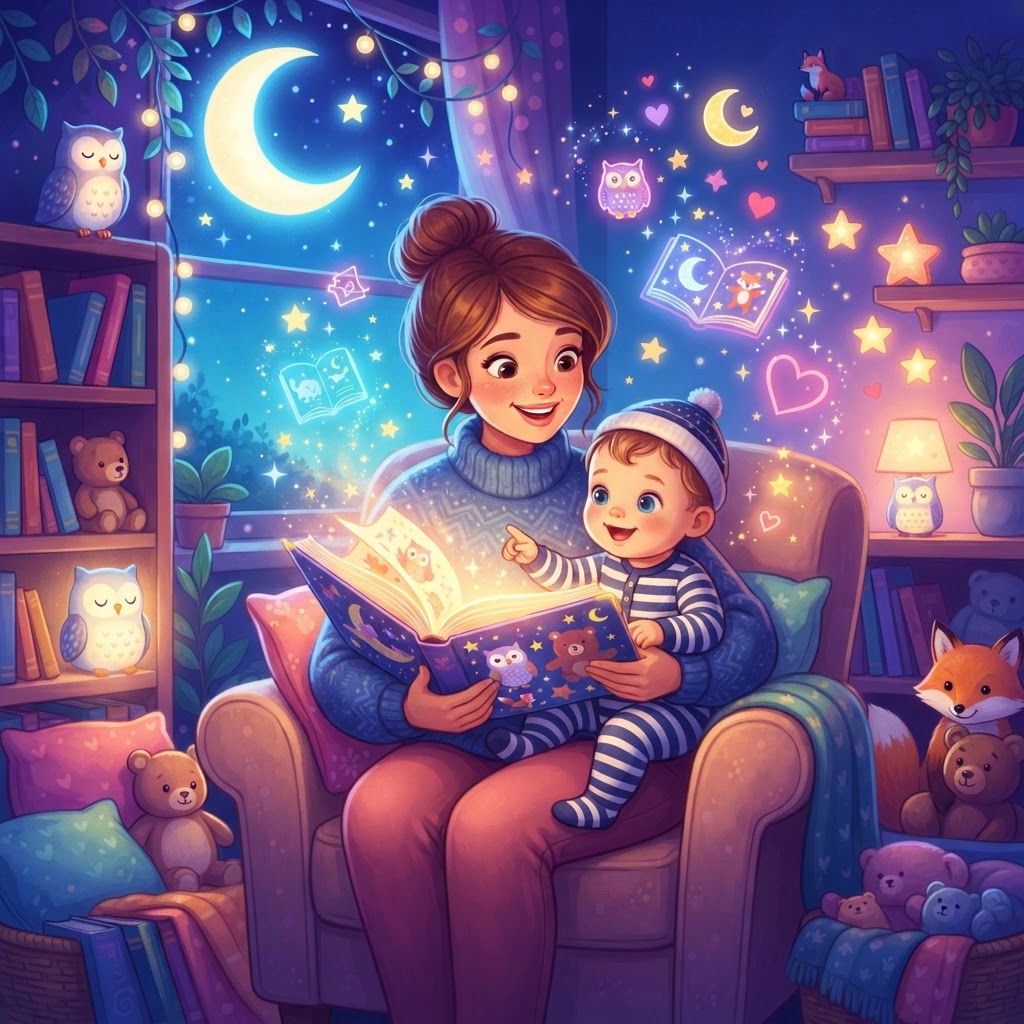
Finding the best animals bedtime stories for a 1-year-old is less about plot and more about comfort, rhythm, and connection. At this age, the most effective bedtime stories for 1 year olds are short, predictable, and full of familiar things—like sleepy bunnies, soft bears, and little ducks going home. If you are looking for animals stories for 1 year olds that support language, calm the evening routine, and genuinely delight your child, this guide will help you choose themes, avoid common mistakes, and even create personalized stories that fit your toddler perfectly.
What developmental milestones matter most when choosing bedtime stories for a 1-year-old?
At age 1, children are usually learning through sound, repetition, and shared attention more than through complex storylines. The best stories match that stage by being simple, sensory, and easy to follow.
Around the first birthday, many children begin to say a few words, respond to familiar names, point at pictures, copy sounds, and understand simple routines. The CDC developmental milestones highlight skills like gestures, imitation, and increasing awareness of everyday objects. That means stories about a puppy, a bird, or a sleepy lamb often work better than stories with lots of characters or big twists.
For parents, this matters because a 1-year-old does not need a “full plot” to benefit from story time. They benefit most from:
- hearing the same comforting words again and again
- seeing familiar animals and actions
- listening to a calm, expressive voice
- pointing to pictures or reacting to sounds
- enjoying a predictable bedtime routine
The American Academy of Pediatrics also encourages reading aloud from infancy because it supports language growth, bonding, and early literacy habits. In practice, that means the best kids animals stories for this age feel more like a warm interaction than a performance.
Why do animals stories appeal so strongly to 1-year-olds?
Animals stories for 1 year olds work so well because animals are easy to recognize, fun to imitate, and naturally soothing when presented gently. A duck says quack, a cat says meow, and a bunny hops—those simple patterns make sense to a young toddler.
Animals also connect to how 1-year-olds learn. Toddlers love repetition, movement, and sound play. When you say, “The little owl blinked slowly,” or “The baby bear cuddled close,” your child can attach words to actions and emotions. That supports comprehension even before they can fully speak.
There is also a strong emotional reason animal stories work at bedtime. Many animal characters mirror a toddler’s world: staying close to a parent, getting sleepy, exploring safely, and returning home. Early childhood experts at Zero to Three note that babies and toddlers learn best through warm, responsive interactions. Gentle animals bedtime stories naturally create those moments.
In short, animal stories feel safe, familiar, and playful. That is exactly what many 1-year-olds need before sleep.
How long should bedtime stories be for 1-year-olds?
For most 1-year-olds, the ideal bedtime story is very short—usually 2 to 5 minutes. A short story is easier to enjoy, easier to repeat, and much less likely to overstimulate your child before sleep.
A good rule of thumb is to keep the story focused on one main animal, one small action, and one calming ending. For example: a baby bunny looks for the moon, finds Mama Bunny, and snuggles into bed. That is enough.
Shorter stories work well because 1-year-olds often have limited attention spans, especially at the end of the day. Repetition matters more than length. You can read the same short story twice and get more benefit than pushing through a longer one once.
Useful signs your story length is right:
- your child stays engaged or calm
- they point, smile, or listen quietly
- they do not become restless halfway through
- the story fits naturally into pajamas, cuddles, and lights-out
If your child enjoys slightly more action, you can also explore gentle, simple tales with movement and discovery, like these adventure-style bedtime stories for 1-year-olds. The key is keeping the pace soft and the ending restful.
Which themes are best in animals bedtime stories for 1-year-olds?
The best themes for 1-year-olds are comfort, routine, and gentle discovery. Stories should help children feel secure, not challenged.
Strong bedtime themes include:
- Going to sleep: a bear yawning, a fox finding its den, or ducklings settling into the nest
- Parent-child closeness: a baby koala hugging mama or a kitten curling beside a parent
- Simple exploration: a lamb walking through soft grass, then coming back home
- Nighttime calm: stars, moonlight, quiet forests, and soft sounds
- Kindness and safety: animals helping each other in small, reassuring ways
- Sensory details: soft fur, warm hay, gentle rain, and slow rocking
These themes work because they connect to a 1-year-old’s daily life. Even if the character is a tiny owl instead of your child, the emotional message is the same: “You are safe. The day is ending. It is time to rest.”
The best bedtime stories for 1 year olds also often use repeating phrases such as “night-night, little bunny” or “home to bed, sleepy duck.” Repetition supports memory, language, and a calming rhythm.
What should parents avoid in bedtime stories for 1-year-olds?
Parents should avoid anything too intense, too busy, or too abstract. At bedtime, simple and soothing is almost always better than exciting and clever.
Here are the main things to skip in animals bedtime stories for this age:
- Scary or sad separation: lost animals, danger, or long searches can feel upsetting
- Fast-paced action: chasing, loud conflict, or too much excitement can make winding down harder
- Too many characters: one or two animals are easier to follow than a whole forest cast
- Complicated language: long descriptions and advanced vocabulary can interrupt the flow
- Moral-heavy lessons: bedtime is better for comfort than correction
- Bright-screen storytelling right before sleep: if using digital stories, keep the setting dim and calm
A common mistake is assuming a child needs more “story” to stay interested. Most 1-year-olds actually do better with less plot and more rhythm. The soothing pattern matters more than the surprise ending.
What are five gentle animals bedtime story ideas for 1-year-olds?
The best story ideas for this age are simple, repetitive, and easy to personalize. These five examples can work as read-aloud prompts, homemade stories, or AI-generated bedtime tales.
-
Sleepy Bunny and the Moon
A little bunny hops outside, sees the moon, yawns, and returns to Mama Bunny for cuddles. Repeat a line like, “Hop, hop, yawn, snuggle.” -
Little Bear’s Cozy Cave
A baby bear says goodnight to a star, a tree, and a soft blanket before curling up to sleep. This works well for children who love bedtime routines. -
Duckling Finds the Nest
A tiny duckling paddles beside a parent, listens to quiet water, and settles into a warm nest. The gentle water imagery is especially calming. -
Owl Blinks Goodnight
A baby owl looks at fireflies, blinks slowly, and tucks its head under a wing. This is a lovely choice for a slower, quieter bedtime tone. -
Kitten’s Soft Pillow
A kitten stretches, drinks warm milk, kneads a pillow, and falls asleep while purring. Repeating “soft, soft, sleepy” helps create a soothing rhythm.
These kids animals stories can be even more effective when you add your child’s name, favorite animal, or familiar bedtime details like a blanket, a stuffed toy, or a night-light.
How can parents personalize animals bedtime stories with InstaTales?
Personalized stories can make bedtime feel more familiar, engaging, and comforting for a 1-year-old. When a story includes your child’s name, favorite animal, or bedtime routine, it becomes easier for them to connect with it.
With InstaTales, parents can create your own personalized bedtime story using simple prompts like “sleepy panda,” “gentle moon,” or “my child’s blue blanket.” You can keep the language short, the tone calm, and the plot very simple—ideal for animals stories for 1 year olds.
Helpful ways to use it well:
- start with one animal and one bedtime action
- choose soft, repetitive phrases
- include familiar details from your child’s real routine
- save favorites in your story library for easy rereading
- use ready-made story templates when you want a quick start
If you want more age-based reading ideas, sleep-friendly prompts, or theme guides, you can also browse the InstaTales blog. The goal is not to make bedtime more elaborate. It is to make it more personal, calm, and consistent.
Frequently Asked Questions
Are animals bedtime stories good for 1-year-olds?
Yes. Gentle animal stories are often an excellent fit because they use familiar sounds, simple actions, and comforting themes that match a 1-year-old’s stage of development.
How many bedtime stories should I read to a 1-year-old?
One or two short stories is usually enough. If your child wants the same story repeated, that is completely normal and often very beneficial for language learning and emotional comfort.
Can a 1-year-old understand a story?
A 1-year-old may not follow a full plot, but they can absolutely understand tone, rhythm, familiar words, and simple sequences. That is why short, repetitive stories work best.
What if my child only wants the same animal story every night?
That is very common and usually a good sign. Repetition helps toddlers predict what comes next, which supports language growth and makes bedtime feel safe.
Are AI-generated bedtime stories safe for toddlers?
They can be, as long as a parent guides the content. Keep stories short, gentle, age-appropriate, and screen-light, and always review the tone so it matches your child’s bedtime needs.
Ready to Create a Personalized Bedtime Story?
Use our free AI bedtime story generator to create a personalized illustrated story for your child in 30 seconds — no credit card needed.
Popular story types:
Maya Rodriguez
Lead Content Editor & Early Literacy Specialist
Maya is a former early childhood educator and literacy specialist with over a decade of experience helping children develop a love of reading. She leads content at InstaTales, where she writes about the science of storytelling, child development, and how families can use personalized AI stories to build literacy and emotional resilience.
instatales.ai