Best animals bedtime stories for 9-year-olds
Discover the best animals bedtime stories for 9-year-olds — themes, tips, and story ideas that will delight your child at bedtime.
✦ Key Takeaways
- •Animals bedtime stories are a great fit for 9-year-olds because they combine emotional safety with more advanced storytelling.
- •The best bedtime stories for 9 year olds match their growing independence, logic, and emotional insight.
- •For most 9-year-olds, the ideal bedtime story length is about 10 to 20 minutes.
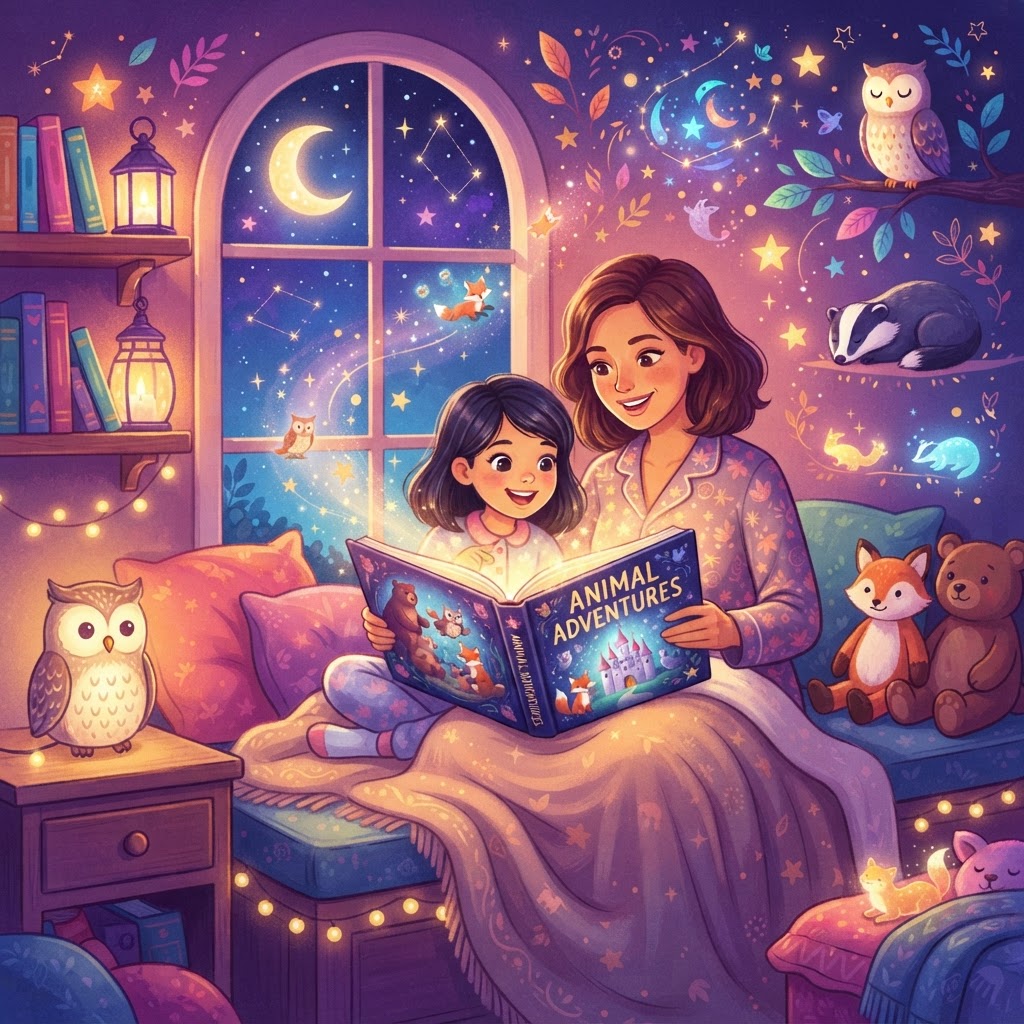
If you’re looking for the best animals stories for 9 year olds, you’re in a sweet spot. At this age, children still love the comfort of bedtime reading, but they also want richer plots, clever characters, and stories that respect how much they understand about the world.
That is why animals bedtime stories work so well. Animal characters create enough distance for children to explore big feelings, friendship problems, bravery, fairness, and responsibility—without a story feeling too heavy right before sleep. For many families, they are the ideal blend of imagination, warmth, and calm.
Why are animals bedtime stories such a good fit for 9-year-olds?
Animals bedtime stories are a great fit for 9-year-olds because they combine emotional safety with more advanced storytelling. A child can relate deeply to a fox, dolphin, owl, or bear while still enjoying the fantasy of another world.
At age 9, many children are ready for more nuanced characters. They understand that a “good” character can make a mistake and learn from it. Animal stories make those lessons feel gentle rather than preachy.
Animal characters also support empathy. When a child follows the thoughts of a worried wolf pup or a determined penguin, they practice perspective-taking. That matters, because organizations such as the Harvard Center on the Developing Child highlight middle childhood as an important period for building self-regulation, flexible thinking, and social understanding.
For parents, animal stories are especially helpful at bedtime because they can be:
- adventurous without being overstimulating
- meaningful without feeling like a lecture
- imaginative while still emotionally grounded
If your child has enjoyed animal stories at younger ages, you may also like these guides for animal tales for 8-year-olds and animal stories for 7-year-olds.
What developmental milestones matter when choosing bedtime stories for 9-year-olds?
The best bedtime stories for 9 year olds match their growing independence, logic, and emotional insight. Nine-year-olds are usually moving beyond simple good-versus-bad plots and toward stories with choices, consequences, and character growth.
Many 9-year-olds can:
- follow longer plots with subplots or small twists
- understand cause and effect more clearly
- enjoy humor, irony, and wordplay
- care deeply about fairness and rules
- notice social dynamics, like inclusion and exclusion
The CDC’s child development guidance and the American Academy of Pediatrics both emphasize that school-age children are developing stronger reasoning skills and a deeper understanding of other people’s feelings. In story terms, that means kids animals stories can go beyond “the bunny found a carrot” and into “the bunny had to decide whether to share, speak up, or try again.”
This is also an age when children may question a story if it feels too young. They still want comfort, but they want it wrapped in a plot that feels worthy of them. A talking animal story can absolutely work—as long as the conflict, humor, and emotional stakes feel age-appropriate.
How long should animals bedtime stories be for 9-year-olds?
For most 9-year-olds, the ideal bedtime story length is about 10 to 20 minutes. That usually means roughly 1,200 to 2,000 words when read aloud, depending on pacing and discussion.
The right length depends on your child’s energy level. Some children want a quick, cozy story after a busy school day. Others love a longer chapter-style read-aloud with a clear stopping point.
A good rule of thumb:
- 8-10 minutes: best for tired nights or sensitive sleepers
- 10-15 minutes: ideal for most bedtime routines
- 15-20 minutes: works well for confident listeners who enjoy richer plots
Keep the emotional arc calm by the end. A 9-year-old can handle suspense, but the story should settle before lights-out. You want resolution, safety, and a sense of emotional closure.
If your child likes slightly more action before bed, you might also explore adventure-style bedtime picks for 9-year-olds, then balance them with gentler animal-centered stories on school nights.
What themes work best in animals stories for 9 year olds?
The strongest themes for animals stories for 9 year olds are friendship, courage, fairness, belonging, and problem-solving. These themes match what many children are actively navigating in school, activities, and friendships.
Here are some especially effective themes:
Friendship and loyalty
Stories about animal friends working through misunderstandings feel very relevant at age 9. A child this age often cares deeply about who is included, who is left out, and how to repair a friendship.
Courage in everyday situations
Courage does not need to mean fighting a dragon. It can mean speaking up, trying again, admitting a mistake, or helping someone smaller. That makes the lesson feel realistic.
Identity and belonging
Nine-year-olds often ask, “Where do I fit?” Animal stories about migration, finding a herd, joining a team, or being different in a good way can be powerful.
Responsibility and teamwork
Children this age like competence. They enjoy seeing characters solve problems, make plans, and contribute to a group.
Wonder and nature connection
Many children are fascinated by real animals and habitats. Stories rooted in forests, oceans, deserts, or snowy landscapes can spark curiosity about the natural world while still feeling magical.
This is where personalized storytelling can shine. With InstaTales, families can create your own personalized bedtime story using a child’s favorite animal, setting, and bedtime mood. You can make the main character a brave red panda, a thoughtful sea turtle, or a shy wolf learning to trust a friend.
What should parents avoid in animals bedtime stories?
Avoid stories that are too babyish, too intense, or too unresolved for bedtime. A 9-year-old wants emotional depth, but bedtime still calls for safety and calm.
Watch out for these common mismatches:
- Overly simple plots: If nothing interesting happens, a 9-year-old may tune out.
- Heavy moralizing: Children this age spot “the lesson” quickly. Let the message emerge through the story.
- Graphic danger or loss: Mild suspense is fine, but bedtime is not the best time for frightening imagery.
- Chaotic humor right before sleep: Silly stories are great, but nonstop noise and absurdity can overstimulate some children.
- Endings without closure: Open endings can work in daytime reading, but bedtime usually goes better with reassurance.
It also helps to avoid stories that make the child feel “talked down to.” If your child has younger siblings, you may notice that a story perfect for animal-loving 6-year-olds or 5-year-olds just building story stamina may feel too simple now.
A practical tip from many reading specialists: preview the emotional tone, not just the topic. A story about a lost fox can be comforting if the pacing is gentle and the reunion comes before the end.
What are five great animals bedtime story ideas for 9-year-olds?
The best story ideas for this age combine heart, gentle suspense, and a clear emotional payoff. Here are five strong concepts parents can use tonight.
1. The snow leopard who mapped the stars
A young snow leopard wants to prove she is observant like the older cats, so she begins charting the night sky. When fog rolls in and a friend gets lost, her quiet skill becomes the key to guiding everyone home.
2. The otter who could not work alone
A clever river otter solves every puzzle by himself—until a storm damages the stream. He must learn that teamwork is not weakness, and each animal has a different kind of intelligence.
3. The fox and the forgotten apology
After a sharp-tongued fox hurts his friend’s feelings, he sets out to make things right. Along the way, he learns that saying sorry is only the first step; listening and repairing matter too.
4. The hummingbird’s long journey
A small hummingbird fears she is too tiny for migration. Through rest stops, helpers, and brave choices, she discovers that endurance often looks quiet.
5. The bear who kept everyone’s stories
A young bear in the forest becomes known for remembering everyone’s tales. When animals start forgetting what makes them special, the bear helps them reclaim their strengths by retelling their stories.
These ideas also work well in personalized formats. If your child enjoys re-reading favorites, you can save them in your story library or start faster with ready-made story templates.
How can parents use personalized animal stories well at bedtime?
Personalized stories work best when they support connection, not just novelty. A child is more likely to engage when the story reflects their interests, but the bedtime goal is still calm, comfort, and shared attention.
A good personalized animal story for a 9-year-old might include:
- their favorite animal or habitat
- a challenge that mirrors real life in a gentle way
- strengths they are building, like patience or confidence
- a peaceful ending that lowers emotional intensity
For example, if your child is nervous about a new club or school project, a story about a lynx joining a forest inventors’ group can feel supportive without being too obvious. That balance matters.
InstaTales can help parents generate bedtime stories for 9 year olds that feel fresh while staying age-appropriate. You can tailor the tone, theme, and main character, then build a small family ritual around re-reading favorites, talking about the lesson, or exploring more ideas through the InstaTales blog.
Frequently Asked Questions
What makes animal stories especially appealing to 9-year-olds?
Animal stories give children emotional distance while still feeling relatable. That makes it easier for 9-year-olds to explore friendship, mistakes, courage, and fairness in a safe way.
How long should bedtime stories for 9 year olds be?
Most 9-year-olds do well with stories that last 10 to 20 minutes. On busy nights, shorter stories often work better because they leave time for winding down.
Are animals bedtime stories good for strong readers too?
Yes. Even strong readers benefit from being read to, especially at bedtime. Read-aloud time supports vocabulary, connection, and comprehension without the pressure of independent reading.
What themes should I look for in kids animals stories?
Look for friendship, problem-solving, belonging, responsibility, and gentle courage. These themes fit the social and emotional growth many 9-year-olds are experiencing.
Can personalized animal stories help reluctant readers?
Yes, often they can. When a story includes a child’s favorite animal, hobby, or challenge, it feels more relevant and easier to connect with.
Should bedtime stories always have a happy ending?
They do not need a perfect ending, but they should offer emotional safety. For bedtime, it helps if the main conflict is resolved and the final feeling is calm or hopeful.
Ready to Create a Personalized Bedtime Story?
Use our free AI bedtime story generator to create a personalized illustrated story for your child in 30 seconds — no credit card needed.
Popular story types:
Maya Rodriguez
Lead Content Editor & Early Literacy Specialist
Maya is a former early childhood educator and literacy specialist with over a decade of experience helping children develop a love of reading. She leads content at InstaTales, where she writes about the science of storytelling, child development, and how families can use personalized AI stories to build literacy and emotional resilience.
instatales.ai