Best courage bedtime stories for 10-year-olds
Discover the best courage bedtime stories for 10-year-olds — themes, tips, and story ideas that will delight your child at bedtime.
✦ Key Takeaways
- •At age 10, children are ready for more layered bedtime stories for 10 year olds because they can follow bigger plots, understand mixed emotions, and think more deeply about fairness.
- •Courage bedtime stories appeal to 10-year-olds because they help children rehearse bravery in a safe, low-pressure way.
- •For most 10-year-olds, the ideal bedtime story length is 10 to 20 minutes aloud.
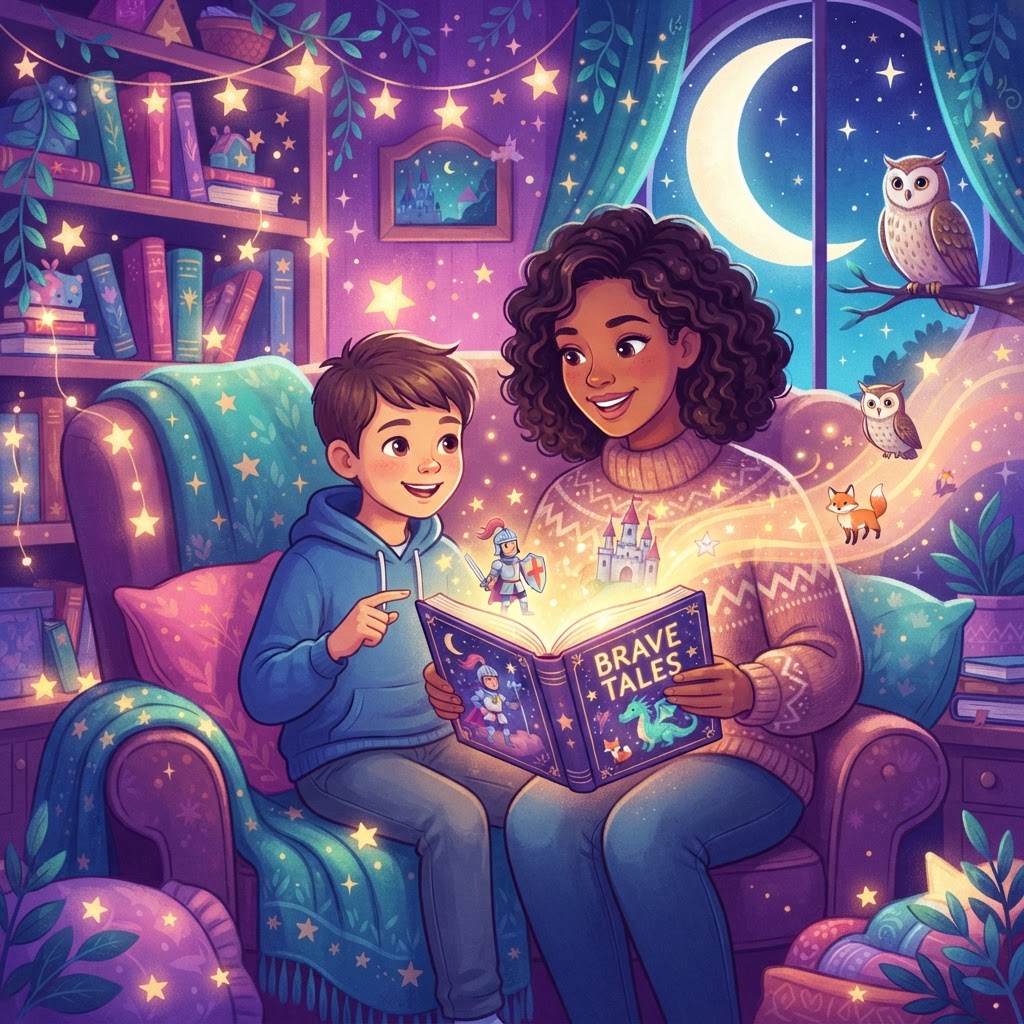
If you are looking for the best courage bedtime stories for 10-year-olds, focus on stories that feel exciting, emotionally real, and reassuring before sleep. The strongest courage stories for 10 year olds do more than feature dragons or daring rescues—they help children practice bravery in everyday life, from speaking up in class to trying again after failure.
What developmental milestones shape bedtime reading for 10-year-olds?
At age 10, children are ready for more layered bedtime stories for 10 year olds because they can follow bigger plots, understand mixed emotions, and think more deeply about fairness. They are still children, though, so they also need comfort, emotional safety, and a satisfying ending at bedtime.
This age sits in the later part of middle childhood. According to the CDC’s guidance on middle childhood, children in this stage grow in independence, build stronger peer relationships, and become more aware of how others see them. That matters for story choice: courage at 10 often looks less like “fighting monsters” and more like “handling pressure, friendship problems, and self-doubt.”
Many 10-year-olds are also developing stronger moral reasoning. They can understand that a character may feel scared and brave at the same time. That emotional complexity makes kids courage stories especially powerful.
Look for stories that match these age-related needs:
- Clear but layered plots
- Characters who make mistakes and learn
- Realistic feelings, even in fantasy settings
- Problems involving friendships, school, family, or identity
- Endings that feel calm, hopeful, and earned
Why do courage bedtime stories appeal so strongly to 10-year-olds?
Courage bedtime stories appeal to 10-year-olds because they help children rehearse bravery in a safe, low-pressure way. A good story lets a child imagine, “What would I do?” without having to face the risk in real life.
At 10, children often care deeply about competence and belonging. They want to be seen as capable, but they may also feel nervous about new expectations at school, sports, or friendships. Stories about courage normalize that tension. They show that bravery is not the absence of fear—it is acting with fear and still making a good choice.
This fits with what the Collaborative for Academic, Social, and Emotional Learning (CASEL) describes as core social-emotional skills, including self-awareness, self-management, and relationship skills. In practical terms, courage stories support children as they learn to manage nerves, speak honestly, and recover from setbacks.
Parents often find that courage stories work best when they include:
- A challenge that feels meaningful
- A character children can identify with
- One supportive adult, friend, or mentor
- A brave choice with emotional consequences
- Relief and resolution before lights out
If your child enjoys action-forward themes, you might also like these brave bedtime stories, which often overlap with courage in a slightly more adventurous style.
How long should bedtime stories for 10-year-olds be?
For most 10-year-olds, the ideal bedtime story length is 10 to 20 minutes aloud. That is usually long enough for a full emotional arc, but short enough to keep bedtime calm and predictable.
On school nights, aim for roughly 1,000 to 1,800 words if you are reading aloud. On weekends, some children enjoy longer chapter-style stories, especially if you pause at a gentle stopping point rather than a cliffhanger. The goal is not maximum length. The goal is a story that feels complete and soothing.
A useful pattern is:
- Opening: one or two minutes to set the scene
- Challenge: a problem or fear to face
- Brave action: one important decision
- Ending: a reassuring, emotionally settled resolution
If your child likes richer worlds, courage themes can work beautifully inside fantasy bedtime adventures, as long as the tone stays warm enough for bedtime.
Which courage themes work best for 10-year-olds?
The best courage themes for 10-year-olds are the ones that connect to real life. Children this age usually respond most strongly to stories about social courage, moral courage, and the bravery to keep going after disappointment.
Here are five themes worth exploring:
- Speaking up kindly: A character asks for help, shares an idea, or tells the truth.
- Standing up for someone else: A child notices unfairness and chooses compassion over silence.
- Trying again after failure: The brave act is persistence, not perfection.
- Owning a mistake: A character apologizes, repairs trust, and learns that honesty takes courage.
- Facing change: Moving schools, joining a team, sleeping away from home, or entering a new social group.
These themes support resilience. The Harvard Center on the Developing Child emphasizes that resilience grows when children face manageable challenges with support. Stories can model exactly that: a challenge big enough to matter, but not so overwhelming that it feels hopeless.
Courage also pairs well with kindness and values. If you want stories that emphasize empathy alongside bravery, see these kind bedtime stories and moral stories for 10-year-olds.
What should parents avoid in courage stories for this age?
Parents should avoid stories that confuse courage with recklessness. The best courage bedtime stories show thoughtful bravery, not dangerous impulse or emotional overload.
At bedtime, especially, skip stories that rely on:
- Graphic danger, injury, or frightening imagery
- Humiliation-based plots
- Heavy moral lectures
- Heroes who never doubt themselves
- Endings that stay unresolved or tense
Ten-year-olds can handle suspense, but bedtime is not the ideal time for high distress. A character can feel afraid, embarrassed, or uncertain without the story becoming overwhelming. In fact, that balance is what makes a story genuinely helpful.
Also avoid making courage look “big” all the time. For many children, the bravest moment of the day may be apologizing, joining a new game, or admitting they are worried about a test. Those quieter forms of courage often resonate more deeply than dramatic acts.
What are five great courage bedtime story ideas for 10-year-olds?
The best story ideas combine emotional realism with a satisfying brave choice. Here are five parent-friendly ideas you can use tonight.
-
The Science Fair Switch
A child is assigned to work with a classmate they do not know well. When the classmate freezes during the presentation, the hero finds the courage to support them instead of taking over. -
The Bridge of Whispering Wind
In a gentle fantasy world, a young mapmaker must cross a bridge that echoes everyone’s fears back to them. The brave act is not fighting magic, but naming what they are afraid of and walking on anyway. -
The Audition in the Empty Music Room
A child wants a solo but worries everyone is better. The story centers on stage fright, preparation, and the courage to try even without a guaranteed win. -
The Day I Said I Was Wrong
After blaming a friend for a mistake, a child has to choose between protecting their pride and telling the truth. This is a strong bedtime plot because the resolution is emotional, warm, and relationship-focused. -
The Bench by the Football Field
A child notices a new student eating alone after practice. The act of courage is simple but meaningful: walking over, starting a conversation, and risking awkwardness to show kindness.
These ideas work well because they keep the brave moment clear. They also leave room for different tones—school-based, family-centered, or imaginative.
How can parents use personalized courage bedtime stories with InstaTales?
Personalized stories can make courage feel more relevant because the child sees their own world reflected in the plot. When a story includes familiar worries, interests, or settings, children often engage more deeply and remember the message better.
With InstaTales, you can create your own personalized bedtime story built around your child’s age, favorite themes, and everyday challenges. For a 10-year-old, that might mean a story about joining a new team, speaking up in class, or helping a friend. Personalization is especially useful when you want courage to feel practical rather than abstract.
A few smart ways to use personalized stories:
- Include one real-life challenge your child is working through
- Keep the tone reassuring, not intense
- Choose an ending that restores calm before sleep
- Let your child help pick the setting or sidekick
- Re-read favorite stories to reinforce the lesson
If you want a fast starting point, prompt the story around “everyday bravery,” “friendship courage,” or “trying again after failure.” You can also mix courage with school, fantasy, or problem-solving themes to match your child’s interests.
How can parents make courage stories more effective at bedtime?
Parents can make courage stories more effective by turning them into a short conversation, not a lecture. One or two gentle follow-up questions help children connect the story to their own lives without making bedtime feel like school.
Try asking:
- “Which part felt brave to you?”
- “Was the character scared and brave at the same time?”
- “Have you ever done something like that?”
- “What helped the character keep going?”
Keep the tone curious and brief. If your child wants more stories in this style, reading across related themes can help. For example, courage often grows alongside kindness, honesty, and imagination, so it is worth exploring connected story types over time.
Frequently Asked Questions
What makes a good courage story for a 10-year-old?
A good courage story for this age has a relatable problem, believable feelings, and one meaningful brave choice. It should feel emotionally true and end in a calm, hopeful way.
Are courage bedtime stories too exciting before sleep?
Not if they are written well. The best ones include challenge and suspense, but they resolve clearly and leave the child feeling safe, settled, and encouraged.
Should courage stories for 10 year olds be realistic or fantasy-based?
Both can work well. Realistic stories help children apply the lesson directly, while fantasy stories create emotional distance that can make hard topics easier to explore.
How often should I read courage bedtime stories?
A few times a week is plenty, especially if courage is a skill your child is actively practicing. Re-reading favorite stories can be just as helpful as constantly introducing new ones.
Can personalized stories really help children build confidence?
They can help when used thoughtfully. Personalized stories make themes feel more relevant, and that can support reflection, emotional language, and confidence-building over time.
Ready to Create a Personalized Bedtime Story?
Use our free AI bedtime story generator to create a personalized illustrated story for your child in 30 seconds — no credit card needed.
Popular story types:
Maya Rodriguez
Lead Content Editor & Early Literacy Specialist
Maya is a former early childhood educator and literacy specialist with over a decade of experience helping children develop a love of reading. She leads content at InstaTales, where she writes about the science of storytelling, child development, and how families can use personalized AI stories to build literacy and emotional resilience.
instatales.ai