Best ocean bedtime stories for 8-year-olds
Discover the best ocean bedtime stories for 8-year-olds — themes, tips, and story ideas that will delight your child at bedtime.
✦ Key Takeaways
- •Ocean bedtime stories work especially well for 8-year-olds because they combine wonder, discovery, and gentle problem-solving.
- •At age 8, children are usually ready for more complex plots, richer vocabulary, and deeper emotions than younger listeners.
- •For most 8-year-olds, the ideal bedtime story length is about 10 to 20 minutes.
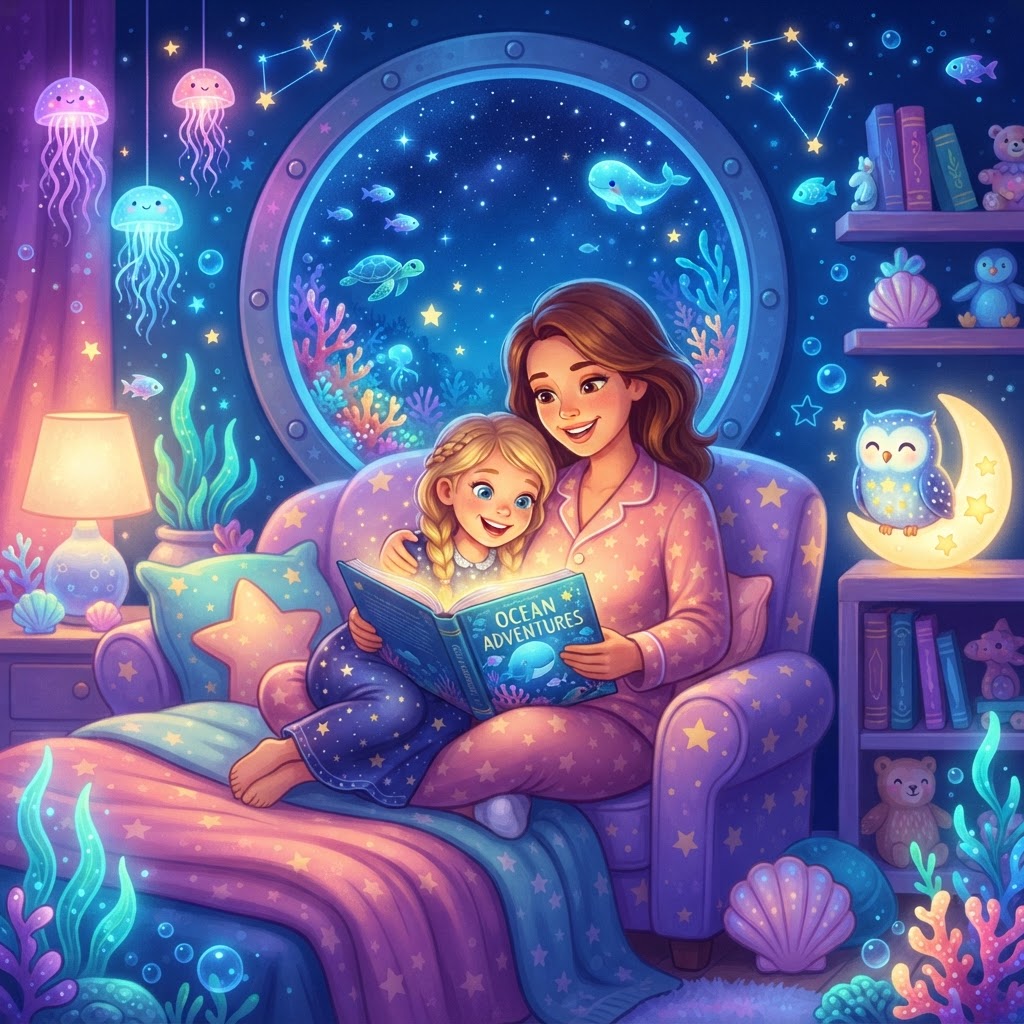
If your child is eight, ocean bedtime stories can be a perfect match for bedtime: calm, imaginative, and rich enough to satisfy a growing mind. The best ocean stories for 8 year olds blend adventure with emotional safety, giving children a chance to explore coral reefs, sea creatures, and underwater mysteries without making bedtime feel too exciting. For parents choosing bedtime stories for 8 year olds, the sweet spot is a story that feels meaningful, age-respectful, and soothing enough to end the day well.
Why are ocean bedtime stories such a good fit for 8-year-olds?
Ocean bedtime stories work especially well for 8-year-olds because they combine wonder, discovery, and gentle problem-solving. At this age, many children want more than a very simple tale, but they still enjoy comfort, routine, and a sense of magic before sleep.
The ocean gives writers and parents a lot to work with. It offers vivid settings, clear stakes, and natural curiosity: hidden coves, glowing fish, map fragments, tides, and talking turtles can all feel exciting without becoming overwhelming.
Ocean themes also support a child’s developing imagination. Unlike faster-paced media, bedtime stories invite children to picture the underwater world in their own minds. That slower style helps the transition to sleep.
For families who already enjoy nature-themed bedtime stories, ocean tales often feel like a natural next step because they keep the same sense of wonder while adding mystery and adventure.
What developmental milestones matter when choosing bedtime stories for 8-year-olds?
At age 8, children are usually ready for more complex plots, richer vocabulary, and deeper emotions than younger listeners. They still need reassurance, but they can follow layered stories and understand character motives more clearly.
According to the Center on the Developing Child at Harvard University, school-age children continue building executive function skills such as attention, memory, and flexible thinking. That matters at bedtime because a good story for this age can include a puzzle, a choice, or a character lesson without becoming confusing.
Many 8-year-olds also show traits commonly associated with middle childhood development, including:
- Stronger empathy for other people and animals
- Interest in fairness, rules, and consequences
- Better understanding of cause and effect
- Longer attention spans than younger children
- A growing desire to feel capable and independent
This is why kids ocean stories for this age often work best when the main character solves a problem, helps a sea creature, or learns something meaningful. A child of eight usually enjoys being treated like a thoughtful listener, not a toddler.
Shared reading still matters, too. The American Academy of Pediatrics has long emphasized the value of reading aloud for language, connection, and routine. Even strong independent readers still benefit from hearing a parent’s voice at bedtime.
How long should ocean bedtime stories be for 8-year-olds?
For most 8-year-olds, the ideal bedtime story length is about 10 to 20 minutes. That is usually enough time for a satisfying plot while still supporting a calm wind-down.
In practical terms, that often means:
- 1,200 to 2,000 words for a read-aloud
- 3 to 5 short scenes
- One clear problem and one clear resolution
- A peaceful ending, even if the middle has suspense
If your child is tired after school, activities, and homework, shorter is often better. A 12-minute story with a cozy ending will usually work better than a 25-minute story that introduces too many twists.
Serialized stories can also be a great fit. Instead of one long tale, try a chaptered ocean adventure where each night ends at a natural stopping point. That keeps bedtime predictable while still giving older children something to look forward to.
Which ocean themes work best for kids ocean stories at this age?
The best ocean themes for 8-year-olds are adventurous but emotionally safe. Children this age love discovery, but bedtime stories should still leave them feeling settled.
Here are some especially strong themes for ocean stories for 8 year olds:
- Exploration and discovery: secret reefs, underwater caves, tide pools, or old maps
- Friendship and teamwork: a child, dolphin, or crab working together to solve a problem
- Ocean conservation: caring for coral, cleaning a beach, or helping a trapped animal
- Courage in small steps: facing a fear of deep water, darkness, or getting lost
- Gentle fantasy: sea dragons, moonlit mermaids, or singing shells without scary elements
- Animal perspectives: stories told by turtles, whales, or octopuses
These themes work because they match what many 8-year-olds are already developing: empathy, curiosity, and a wish to feel competent. If your child enjoys connection-centered plots, you might also like friendship bedtime stories. If marine life is the main draw, animal bedtime stories can be another good source of inspiration.
Ocean conservation can be especially meaningful. The NOAA Ocean Service offers child-friendly educational resources that show just how many fascinating real-world details can inspire stories without turning them into a lesson.
What should parents avoid in ocean stories for 8 year olds?
Parents should avoid stories that are too frightening, too chaotic, or too heavy on facts right before sleep. A story can be exciting, but bedtime is not the best time for intense danger or emotional overload.
Watch out for these common pitfalls:
- Graphic peril: shipwrecks, drowning scenes, or scary predator attacks
- Overstimulating pacing: constant action with no quiet moments
- Too much gloom: polluted oceans, trapped animals, or sad endings without hope
- Fact-dumping: long educational passages that stop the story cold
- Babyish language: oversimplified plots that feel too young for an 8-year-old
- Unresolved tension: mysteries or dangers that are not wrapped up before sleep
Some children are especially sensitive to deep-sea imagery, darkness, or sharks. If that sounds like your child, choose stories set in bright lagoons, warm tide pools, or friendly coastal villages instead of the open ocean at night.
A good rule is simple: bedtime stories should stretch the imagination, not spike adrenaline.
What are five great ocean bedtime story ideas for 8-year-olds?
The best story ideas for this age combine gentle adventure with emotional payoff. Each of these concepts can become a memorable bedtime tale or a personalized prompt.
1. The Shell Map Under Grandpa’s Porch
An 8-year-old finds a shell etched with a tiny map that appears only when moonlight hits it. The map leads to a hidden cove where lost sea creatures leave messages for children who listen carefully.
2. The Turtle Who Needed a Team
A young sea turtle is trying to reach a safe nesting beach, but floating debris blocks the way. A child and three unlikely ocean friends work together to clear a path, making this a strong choice for empathy and teamwork.
3. The Coral Garden Repair Club
After a storm tangles the reef, a curious child joins a group of fish, crabs, and a shy octopus to help restore the coral garden. This idea is ideal if you want ocean bedtime stories with a soft environmental message.
4. The Lighthouse That Sang to the Sea
A child hears mysterious songs drifting from an old lighthouse and discovers that the music helps guide sea creatures home. The story can include wonder, rhythm, and a calm ending as the whole bay settles to sleep.
5. The Night the Waves Delivered a Secret
Each wave brings one clue to a puzzle: a pearl button, a sea-glass key, a whispering note, and finally a message meant just for the child. This makes a lovely bedtime structure because every clue can build suspense without feeling scary.
These ideas are also easy to personalize by changing the child’s name, favorite sea animal, hometown beach, or the kind of challenge they want the hero to solve.
How can parents use personalized ocean bedtime stories to support reading and connection?
Personalized stories can make bedtime more engaging because they place your child inside a world that already interests them. For many 8-year-olds, hearing their own name in a story increases attention, emotional connection, and motivation to listen.
With InstaTales, parents can create your own personalized bedtime story around ocean themes such as underwater quests, marine animal friendships, or calming beach adventures. This is especially helpful when your child wants a story that matches a specific interest, fear, or bedtime mood.
A strong personalized prompt might include:
- Your child’s name and age
- A favorite sea animal
- A bedtime goal, like “make it calming” or “help with bravery”
- A preferred tone, such as funny, cozy, or magical
- A simple lesson, like teamwork or caring for nature
You can also save favorites in your story library so children can revisit the same comforting tale again. Re-reading matters: familiar stories reduce cognitive effort, which can help children relax more easily at bedtime.
For families exploring different genres, it can be useful to rotate ocean tales with other calming options from the InstaTales blog’s bedtime story ideas for 8-year-olds. Variety keeps reading fresh, while a familiar structure keeps bedtime steady.
Frequently Asked Questions
Are ocean bedtime stories good for reluctant readers?
Yes, they often are. Ocean settings naturally create curiosity, and many 8-year-olds are drawn to sea creatures, treasure clues, and underwater mysteries. That interest can make listening or reading feel easier and more fun.
What makes a bedtime story age-appropriate for an 8-year-old?
An age-appropriate story for an 8-year-old has a fuller plot, richer vocabulary, and a character who shows problem-solving or empathy. It should still end with emotional safety and a clear resolution.
Can ocean stories be educational without feeling like school?
Absolutely. The best kids ocean stories weave facts lightly into the plot through setting, animals, or a simple challenge rather than long explanations. Children learn more easily when information supports the adventure.
What if my child is afraid of sharks or deep water?
Choose bright, reassuring stories set near shore, in tide pools, or with friendly sea animals. Avoid dark open-water scenes, predator attacks, or anything that leaves danger unresolved before sleep.
Should 8-year-olds read bedtime stories alone or with a parent?
Both can work, but shared reading still offers unique benefits. Reading together supports connection, conversation, and a calm bedtime rhythm, even for children who can read independently.
How often should we repeat the same ocean bedtime story?
As often as your child wants, as long as it still feels soothing. Repetition builds familiarity and comfort, which is one reason favorite bedtime stories for 8 year olds can become such a powerful part of the nighttime routine.
Get a new bedtime story every week
Free, personalized, and delivered to your inbox. No spam, ever.
Ready to Create a Personalized Bedtime Story?
Use our free AI bedtime story generator to create a personalized illustrated story for your child in 30 seconds — no credit card needed.
Popular story types:
Maya Rodriguez
Lead Content Editor & Early Literacy Specialist
Maya is a former early childhood educator and literacy specialist with over a decade of experience helping children develop a love of reading. She leads content at InstaTales, where she writes about the science of storytelling, child development, and how families can use personalized AI stories to build literacy and emotional resilience.
instatales.ai