Best space bedtime stories for 9-year-olds
Discover the best space bedtime stories for 9-year-olds — themes, tips, and story ideas that will delight your child at bedtime.
✦ Key Takeaways
- •Nine-year-olds usually need bedtime stories that respect their growing maturity while still feeling comforting.
- •Space bedtime stories are especially appealing to 9-year-olds because they match this age group’s natural curiosity.
- •For most families, the ideal length is 10 to 20 minutes.
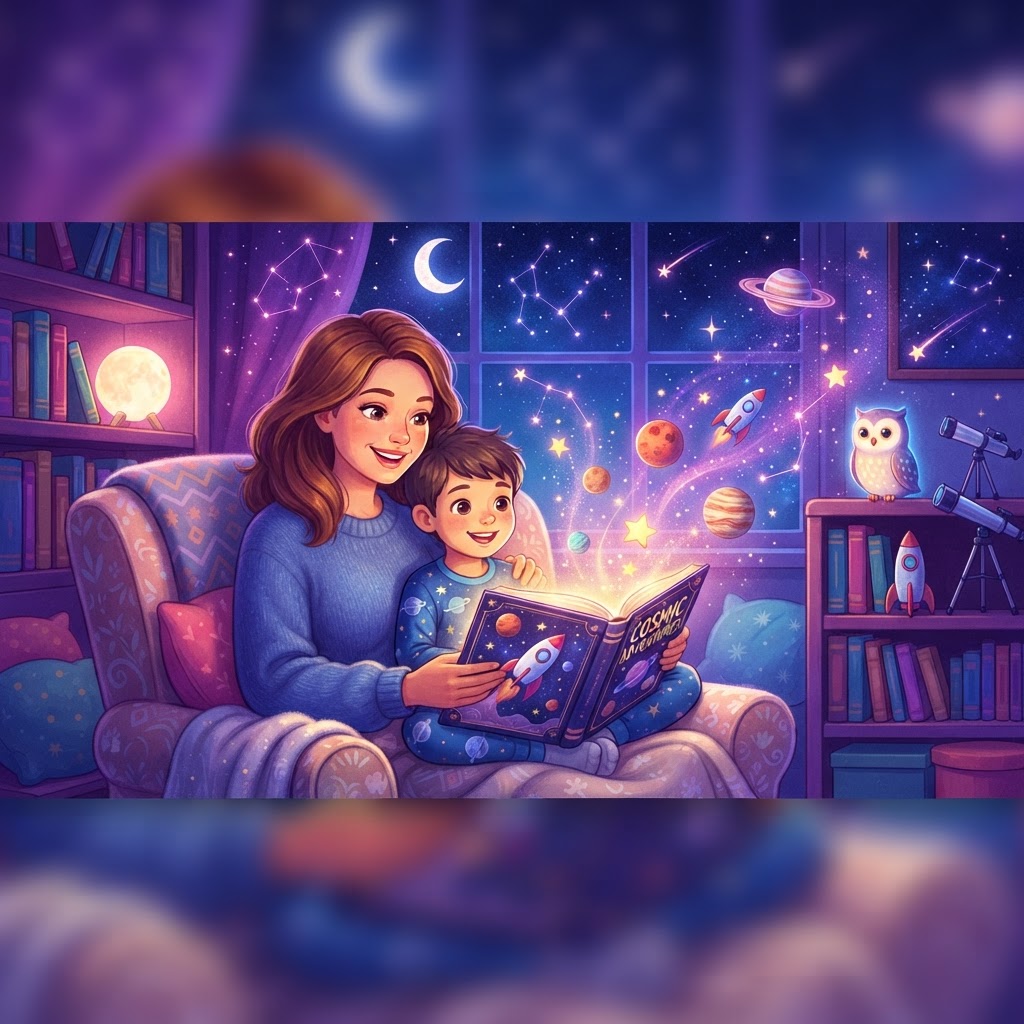
Finding the right bedtime story at age 9 can be tricky. Children this age still love wonder and imagination, but they also want richer plots, clever characters, and ideas that feel a little bigger than “little kid” stories. If you are searching for the best space stories for 9 year olds, this guide will help you choose space bedtime stories that feel exciting, age-appropriate, and calm enough for the end of the day.
What do 9-year-olds need from bedtime stories?
Nine-year-olds usually need bedtime stories that respect their growing maturity while still feeling comforting. The best bedtime stories for 9 year olds offer stronger plots, more realistic emotions, and a sense of discovery without becoming too intense.
At this age, many children are in what developmental experts call middle childhood. According to the CDC’s guide to middle childhood development, children are building independence, perspective-taking, and problem-solving skills. In story terms, that means a 9-year-old often enjoys:
- Characters who make decisions and solve problems
- Stories with humor, teamwork, and meaningful stakes
- Clear cause-and-effect plots
- Themes about bravery, friendship, curiosity, and responsibility
They can also follow longer narratives than younger children. Unlike toddler stories that rely on repetition alone, kids space stories for this age should have a beginning, middle, and satisfying resolution.
A good bedtime story for a 9-year-old should still feel emotionally safe. The plot can include mystery or challenge, but bedtime is usually not the best moment for overwhelming fear, sad endings, or chaotic pacing.
Why do space bedtime stories appeal so strongly to 9-year-olds?
Space bedtime stories are especially appealing to 9-year-olds because they match this age group’s natural curiosity. Space feels big, mysterious, and full of questions, which is exactly what many children this age love.
Around 9, children often become fascinated by real-world facts. They want to know how planets move, whether life exists elsewhere, what astronauts eat, and how rockets work. Space stories let parents combine imagination with learning. That blend is powerful.
Space also offers emotional distance in a helpful way. A child can explore courage, loneliness, teamwork, and problem-solving through a moon mission or star rescue without feeling like the story is “about them.” That makes it easier to discuss big feelings in a gentle format.
There is also a calming bedtime advantage. The night sky, stars, planets, and moonlight naturally fit the tone of winding down. A story can feel adventurous while still being soothing. If your child also enjoys quests and action, you might pair this genre with adventure bedtime stories for 9-year-olds.
How long should space stories for 9 year olds be at bedtime?
For most families, the ideal length is 10 to 20 minutes. That is usually long enough to include a satisfying story arc, but short enough to support a calm bedtime routine.
Children aged 6 to 12 generally need 9 to 12 hours of sleep, according to the American Academy of Pediatrics via HealthyChildren.org. A story that runs too long can delay sleep, especially if the plot is packed with cliffhangers or too many new ideas.
A good structure for bedtime stories for 9 year olds is:
- A quick setup in the first minute or two
- One main problem or mission
- A few exciting but manageable obstacles
- A calm, reassuring ending
If your child wants more, it often works better to read a short series over several nights rather than one very long story. That gives them something to look forward to without overstimulating them before bed. You can also browse best bedtime stories for 9-year-olds if you want more length and format ideas.
Which space themes work best in kids space stories for age 9?
The best themes for kids space stories at this age mix wonder with emotional relevance. Children are ready for bigger concepts, but they still connect most deeply when the story reflects real feelings and relationships.
Here are some especially effective themes:
-
Exploration and discovery
A child astronaut finding a new moon, a hidden map of the stars, or a secret garden on a distant planet works beautifully for this age. -
Teamwork in space
Nine-year-olds are learning how to cooperate, negotiate, and see other viewpoints. Crews, missions, and shared goals make great story frameworks. -
Friendship across differences
A child befriending an alien, robot, or space creature can gently explore empathy and belonging. If your child loves relationship-driven stories, try these friendship stories for 9-year-olds. -
Science mixed with imagination
Stories feel especially rich when they include real planets, constellations, or astronaut details. For kid-friendly facts and inspiration, NASA’s Space Place is a wonderful resource. -
Responsibility and courage
Space missions naturally create moments where characters must stay calm, think clearly, and help others.
The strongest space stories balance fact and fantasy. A story can include talking stars or moon dragons, but grounding it with recognizable details like telescopes, planets, or gravity makes it more satisfying for 9-year-olds.
What should parents avoid in space bedtime stories for 9-year-olds?
Parents should avoid stories that are too frightening, too complicated, or too stimulating right before sleep. The goal at bedtime is not just engagement, but emotional settling.
Common pitfalls include:
-
High-intensity danger with no emotional safety Meteor storms, lost astronauts, or alien chases can work, but the tone should stay reassuring.
-
Heavy scientific explanation Nine-year-olds can enjoy facts, but bedtime is not the best time for textbook-style detail dumps.
-
Bleak endings A bedtime story should end with comfort, hope, or peaceful wonder.
-
Too many characters or plot twists Complex world-building is great in daytime reading, but bedtime stories usually work best with one main mission.
-
Overly babyish language Children this age notice when a story feels too young for them. They often want stories that sound more capable and intelligent.
As a simple rule, think gentle suspense, not stress. A good space bedtime story can still include a challenge, but the child should go to sleep feeling safe, not unsettled.
What are five great space bedtime story ideas for 9-year-olds?
The best story ideas for this age combine mystery, heart, and a satisfying ending. These five prompts are ideal for parents, teachers, or anyone creating space stories for 9 year olds.
1. The Moon Mail Delivery
A 9-year-old joins a nighttime crew that delivers lost letters to children on the moon. Along the way, they discover one letter was written by a child on Earth who needs courage for a big challenge the next day.
2. The Planet That Sang Softly
A young explorer lands on a quiet planet where the mountains hum lullabies. To help the planet heal, the child must listen carefully, solve a sound puzzle, and learn why calm matters more than speed.
3. The Star Map in the Attic
A child finds an old telescope and a hidden star map that only appears at bedtime. Each night, the map reveals one new constellation and one small mission, leading to a final discovery about a family member who once loved the sky.
4. The Alien Who Wanted a Friend
A shy alien crash-lands in a backyard observatory and needs help repairing a starlight engine. The real heart of the story is friendship, trust, and learning how to understand someone very different.
5. The Sleepy Space Station Rescue
On a floating station where everyone has forgotten how to sleep, one child must travel through dream clouds to restore the missing “night light star.” This is a strong option if your child likes a little adventure with a very soothing resolution.
These ideas also work well if you want to create your own personalized bedtime story based on your child’s name, favorite planet, pet, or biggest interests.
How can parents use personalized space bedtime stories at home?
Personalized stories can make bedtime more engaging because the child feels seen inside the story. For many 9-year-olds, hearing their own name, interests, or questions woven into the plot increases both attention and emotional connection.
This is where InstaTales can be especially helpful. Parents can generate custom space bedtime stories tailored to a child who loves Mars rovers, alien friendships, rocket launches, or calm moonlit journeys. You can make the story adventurous, funny, gentle, or educational depending on your child’s needs that night.
Personalization works best when you include details such as:
- Your child’s name or nickname
- A favorite planet, astronaut, or space vehicle
- A real worry or goal, like starting school confidently or handling friendship problems
- The mood you want at bedtime: cozy, funny, inspiring, or sleepy
If your child likes hearing favorite stories again, saving them in your story library makes rereading easy. Repetition is not just comforting; it also supports comprehension, vocabulary, and confidence.
Personalized space stories can even branch into related interests over time. One week your child may want galaxies and comets; the next, they may be ready for animal astronauts, friendship plots, or bigger quests.
Frequently Asked Questions
What makes a good space bedtime story for a 9-year-old?
A good story balances imagination with emotional safety. It should include a clear plot, age-respectful language, and a calm ending that helps your child settle down.
How long should bedtime stories for 9 year olds be?
Most 9-year-olds do well with stories that last about 10 to 20 minutes. That length is usually enough for a full story arc without pushing bedtime too late.
Are space bedtime stories too exciting before sleep?
Not if the tone is handled well. Gentle exploration, soft mystery, and reassuring endings make space stories ideal for bedtime, while intense peril or cliffhangers are better avoided.
Should space stories for 9 year olds be scientifically accurate?
They do not need to be perfectly accurate, but some real details help. Mixing imagination with familiar facts about planets, stars, or astronauts often makes the story more believable and engaging.
Can personalized AI stories help reluctant readers?
Yes, they often can. When children hear stories built around their own name, interests, and questions, they are more likely to stay engaged and feel motivated to read or listen again.
Ready to Create a Personalized Bedtime Story?
Use our free AI bedtime story generator to create a personalized illustrated story for your child in 30 seconds — no credit card needed.
Popular story types:
Maya Rodriguez
Lead Content Editor & Early Literacy Specialist
Maya is a former early childhood educator and literacy specialist with over a decade of experience helping children develop a love of reading. She leads content at InstaTales, where she writes about the science of storytelling, child development, and how families can use personalized AI stories to build literacy and emotional resilience.
instatales.ai