Best Valentines Day Bedtime Stories for Kids
The best Valentines Day bedtime stories for children — cozy, festive tales that make the season magical at storytime.
✦ Key Takeaways
- •The best Valentines Day bedtime stories for children are soft, comforting, and emotionally clear.
- •Seasonal bedtime reading matters because it helps children understand the world through familiar routines and joyful repetition.
- •The best themes for Valentines Day stories for kids are not romance-focused.
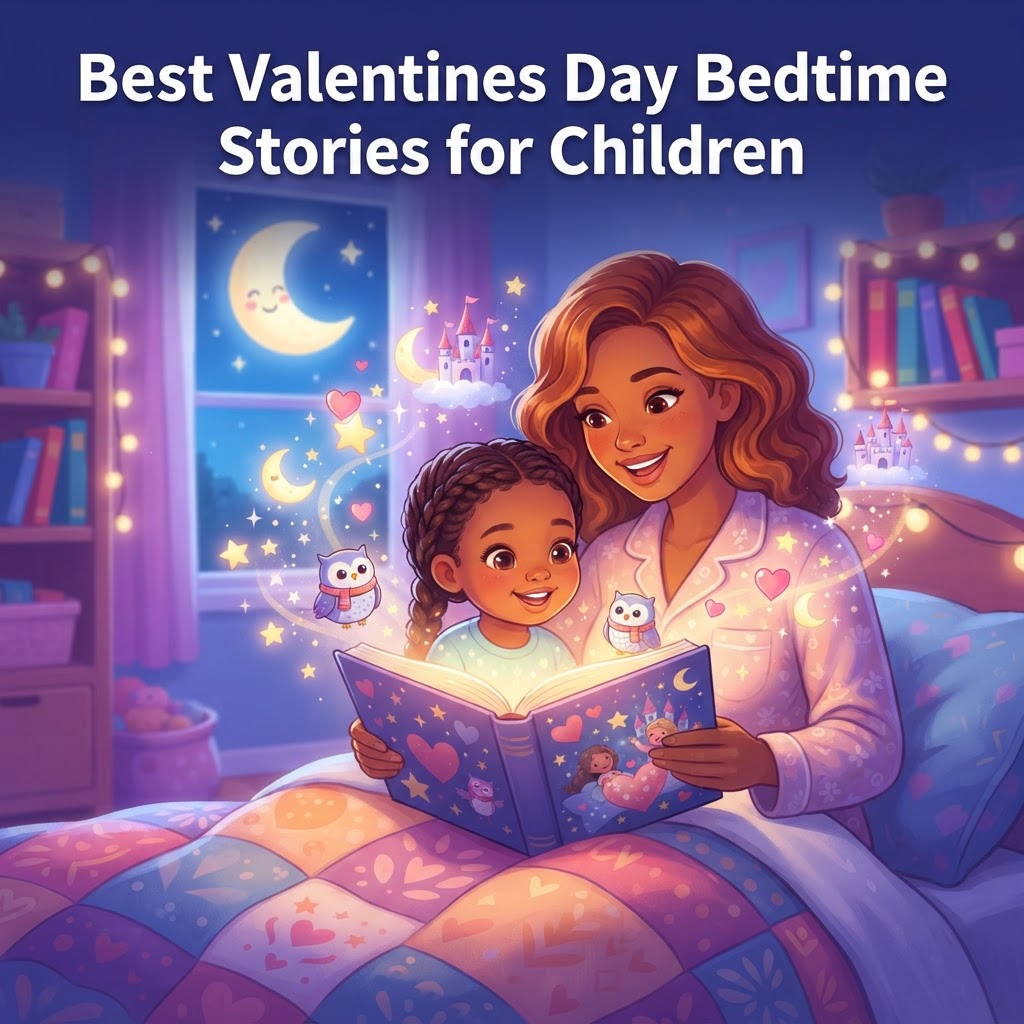
The best Valentines Day bedtime stories do more than mention hearts and cards. They help children feel loved, calm, and connected at the end of the day through gentle plots, warm characters, and reassuring endings.
For babies, toddlers, preschoolers, and early readers, Valentines Day bedtime reading works best when it centers on kindness, friendship, family love, and small acts of care. In this guide, you’ll find what makes a great holiday story, the themes children respond to most, five sweet story ideas, and simple ways to create custom adventures with InstaTales.
What makes the best Valentines Day bedtime stories for children?
The best Valentines Day bedtime stories for children are soft, comforting, and emotionally clear. They should feel festive without becoming too exciting for bedtime.
A strong Valentines story for kids usually includes a simple problem, a caring solution, and a peaceful ending. Young children especially enjoy repetition, familiar routines, and predictable story beats that help them relax.
Look for these features in children Valentines Day books or bedtime tales:
- Gentle pacing that winds down rather than revs up
- Age-appropriate emotions like shyness, kindness, gratitude, or friendship
- Short, vivid scenes children can picture easily
- Reassuring endings that leave kids feeling safe
- Warm seasonal details such as cards, heart cookies, pink skies, or cozy crafts
Child development experts consistently note that read-aloud time supports language and connection. The American Academy of Pediatrics recommends reading aloud regularly because it helps build early literacy, attention, and parent-child bonding (AAP guidance).
That matters at bedtime. A seasonal story is not just entertainment; it is also a calming ritual that helps children transition from busy daytime energy into rest.
Why does seasonal bedtime reading matter for young children?
Seasonal bedtime reading matters because it helps children understand the world through familiar routines and joyful repetition. It gives shape to time, builds anticipation, and creates comforting family traditions.
For young children, holidays are easier to understand through stories than through abstract explanations. A Valentines Day bedtime story can show what the season means in a child-friendly way: making a card for Grandma, helping a friend feel included, or noticing acts of love in everyday life.
Seasonal reading also supports early literacy. Organizations like the National Association for the Education of Young Children emphasize that meaningful, engaging reading experiences help children build language and comprehension (NAEYC early literacy resources). Story conversations—“Why was the bunny sad?” or “Who showed kindness?”—also strengthen comprehension and emotional vocabulary.
Another benefit is consistency. Families who enjoy holiday stories throughout the year often create a reading rhythm children look forward to. If your child enjoys themed storytime, you might also like exploring Christmas bedtime favorites or cozy Halloween bedtime reads when those seasons come around.
Which themes capture the spirit of Valentines Day stories for kids?
The best themes for Valentines Day stories for kids are not romance-focused. They are about love in its broadest, most child-friendly form: kindness, belonging, family connection, friendship, and care.
These themes work especially well at bedtime:
- Friendship: sharing, helping, making someone feel welcome
- Family love: hugs, traditions, handmade gifts, bedtime gratitude
- Kindness: noticing others, using gentle words, thoughtful actions
- Inclusion: making sure no one feels left out on a class party day
- Community: neighbors, classmates, grandparents, pets, and teachers showing care
- Self-love: learning that being kind to yourself matters too
This broader approach fits what children understand developmentally. Early childhood literacy experts at Reading Rockets highlight that stories with clear emotional themes help children connect vocabulary to real experiences (Reading Rockets on early literacy). In practice, that means a child may understand “love” more deeply through a story about sharing markers or baking with Dad than through a grown-up definition.
If you want more themed inspiration, our guide to more Valentines story ideas offers extra prompts for home reading.
What are five great Valentines Day bedtime story ideas to try tonight?
The easiest way to choose from the best Valentines Day bedtime stories is to start with one strong bedtime-friendly plot. These five ideas are festive, calm, and easy to adapt for different ages.
1. The Little Mailbag of Kind Notes
A sleepy mouse discovers a tiny red mailbag filled with unsigned Valentine notes. Before bed, she quietly delivers each message to a forest friend and learns that every note matches something kind that friend did that week. The ending reveals that kindness has a way of traveling in circles.
This idea works well for ages 3-7 because it repeats gently and reinforces gratitude.
2. The Heart-Shaped Cookie Mix-Up
A child and grandparent bake Valentines cookies, but one special cookie goes missing. Instead of a big mystery, the story becomes a soft search around the house, where each clue leads to a memory of love: a drawing on the fridge, a pet’s cozy bed, a family photo, a handmade card. The cookie turns up in a funny, comforting place.
This is ideal for Valentines Day bedtime reading because it mixes small suspense with emotional warmth.
3. The Friend Who Felt Left Out
A classroom animal character worries that everyone else has a Valentine except them. By the end, classmates create a “kindness chain” where each link names something special about a friend. The focus stays on belonging, not gifts.
This is one of the strongest Valentines Day stories for kids because it reflects a real social feeling many children experience in February.
4. Grandma’s Quilt of Love
Each patch on Grandma’s quilt tells the story of a loving act: teaching someone to tie shoes, caring for a baby brother, planting flowers for a neighbor, reading a bedtime book. As the child snuggles under the quilt, they add their own new patch by doing something kind that day.
This story idea works beautifully for bedtime because the quilt itself becomes a sleep cue.
5. The Moon’s Valentine for the Whole Town
The moon notices everyone preparing for Valentines Day and decides to give one gift to all: a silver night full of calm, glowing heart-shaped clouds. Families, friends, and animals all settle down under the same sky, feeling connected. Nothing dramatic happens—and that is exactly why it is so soothing.
For children ages 1-5, simple image-rich stories like this can be especially effective.
How can parents use InstaTales to create custom Valentines Day adventures?
Parents can use InstaTales to turn a good bedtime idea into a personalized, age-appropriate holiday story in just a few minutes. The best results come from being specific about tone, theme, and bedtime needs.
A custom Valentines story can feel extra magical when it includes your child’s name, favorite stuffed animal, preferred setting, or a small worry they are working through. Personalized details increase engagement, which can be helpful for children who struggle to settle at night or stay interested in books.
Here is a simple formula:
- Choose a calm bedtime tone
- Add a Valentines theme like friendship or family love
- Include one familiar comfort item, such as a blanket, pet, or night-light
- Keep the plot simple with a happy resolution
- End with sleep cues like stars, snuggles, yawns, or quiet music
With InstaTales, you can create your own personalized bedtime story around these details, then save favorite versions in your story library for easy rereading next February—or tomorrow night.
A practical tip from both educators and parents: always preview AI-generated stories before reading them aloud. Keep prompts simple, avoid sharing private information, and choose themes that match your child’s age and temperament. Personalized tools work best when adults guide the experience with warmth and common sense.
How should parents choose between classic books and personalized Valentines stories?
Parents do not need to choose one or the other. The strongest bedtime routines often combine trusted picture books with personalized storytelling.
Traditional children Valentines Day books offer polished language, familiar illustrations, and comfort through repetition. Personalized stories add something different: your child becomes part of the adventure, which can increase attention, participation, and excitement about reading.
A balanced approach works well:
- Use printed books for favorite annual read-alouds
- Use custom stories when your child wants something new
- Personalize stories around current feelings, like shyness or friendship worries
- Re-read saved stories to build familiarity and confidence
This mix can also support reluctant listeners. A child who resists ordinary bedtime reading may be more willing to engage when the story includes their name, their teddy bear, and a heart-shaped treasure hunt in their own neighborhood.
How can families make Valentines Day bedtime reading more meaningful?
Families can make Valentines Day bedtime reading more meaningful by turning it into a small ritual of connection. The story matters, but the shared experience matters just as much.
Try these simple ideas:
- Read by soft light with one cozy blanket for everyone
- Ask one gentle follow-up question: “Who was kind in the story?”
- Let your child give a stuffed animal a “Valentine hug” before sleep
- Pair storytime with a tiny tradition, like placing paper hearts in a jar
- Revisit favorite seasonal tales year after year
The emotional payoff is often bigger than parents expect. Children remember the rhythm of these moments: the same chair, the same voice, the same loving close to the day. That is one reason seasonal reading becomes such a powerful family tradition.
Frequently Asked Questions
What age are Valentines Day bedtime stories best for?
Valentines Day bedtime stories can work for children from about age 1 to 10. The key is matching the length, vocabulary, and emotional complexity to your child’s stage.
Should Valentines Day stories for kids focus on romance?
No. For young children, the best Valentines stories focus on friendship, family love, kindness, gratitude, and inclusion. Those themes are developmentally appropriate and much easier for children to understand.
How long should Valentines Day bedtime reading be?
For toddlers and preschoolers, 5-10 minutes is often enough. Older children may enjoy 10-20 minutes, especially if the story includes gentle discussion.
Are personalized AI stories good for bedtime?
Yes, if adults guide the process. Personalized stories can be highly engaging, but parents should preview them, keep prompts age-appropriate, and aim for calm, reassuring endings.
What makes a good Valentines Day book for bedtime?
A good bedtime book has soft pacing, warm emotional themes, simple language, and a peaceful ending. Stories that are too silly, loud, or suspenseful may be better earlier in the day.
Can Valentines Day stories support learning?
Yes. They can build vocabulary, emotional understanding, listening skills, and reading motivation. Holiday stories also help children connect books to real-life experiences and family traditions.
Ready to Create a Personalized Bedtime Story?
Use our free AI bedtime story generator to create a personalized illustrated story for your child in 30 seconds — no credit card needed.
Popular story types:
Maya Rodriguez
Lead Content Editor & Early Literacy Specialist
Maya is a former early childhood educator and literacy specialist with over a decade of experience helping children develop a love of reading. She leads content at InstaTales, where she writes about the science of storytelling, child development, and how families can use personalized AI stories to build literacy and emotional resilience.
instatales.ai