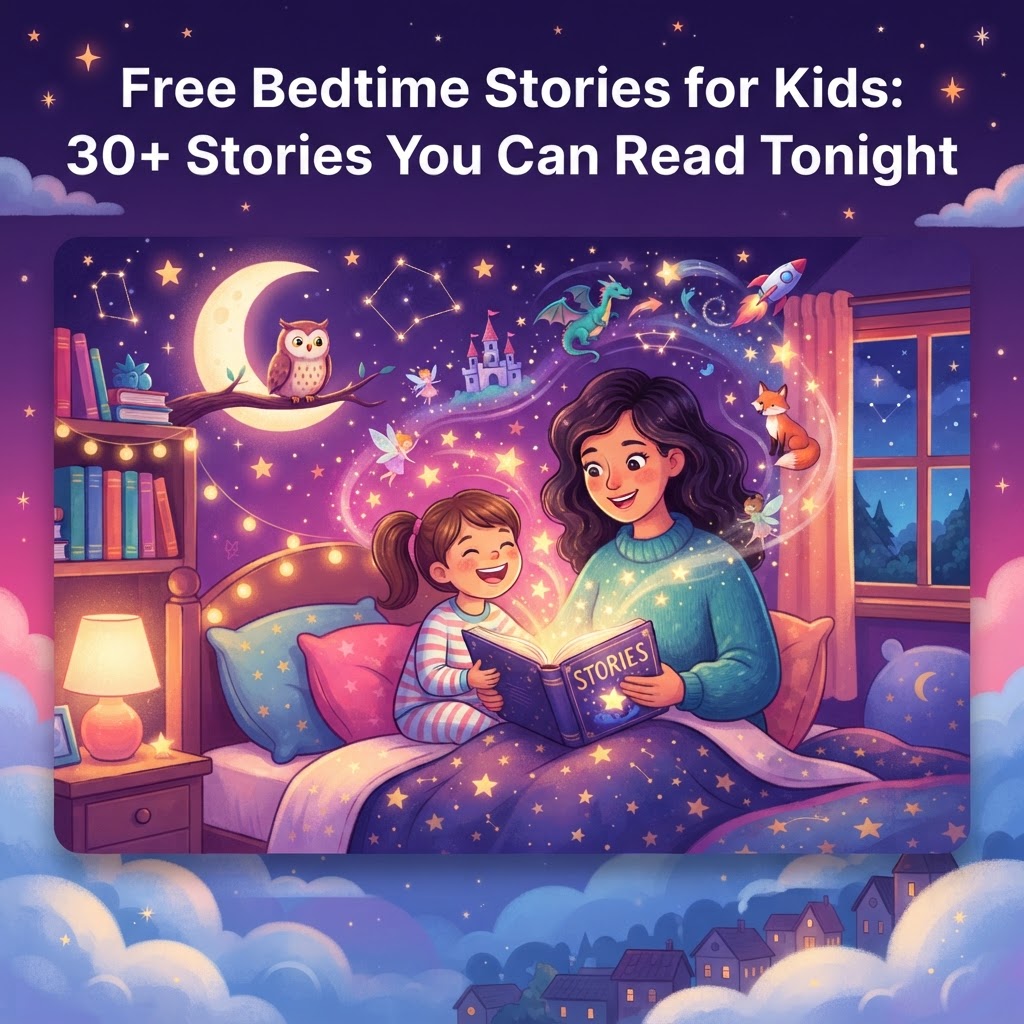
Building Imagination Through Stories for Kids
Stories are one of the most effective ways to build imagination in children. Here's how to use storytelling to develop this crucial skill.
✦ Key Takeaways
- •Stories build imagination because they ask children to create mental pictures, predict events, and explore ideas beyond everyday life.
- •Imagination is not just about creativity; it is deeply connected to reading, learning, and emotional development.
- •The best activities are simple, playful, and open-ended.

If you want to strengthen creativity, language, and flexible thinking at the same time, stories are one of the best tools you can use. Building imagination through stories helps children picture characters, settings, and possibilities that are not right in front of them. That mental work matters: it supports later reading, problem-solving, empathy, and even confidence in self-expression.
For babies, toddlers, and school-age children, stories create a safe space to wonder: What happens next? Why did the dragon hide? What if I were the hero? Those questions are the foundation of imagination development in children. And the good news is that you do not need to be a professional storyteller to help. A few simple habits can make storytelling far more powerful for building imagination in kids.
Why are stories so powerful for imagination development in children?
Stories build imagination because they ask children to create mental pictures, predict events, and explore ideas beyond everyday life. Unlike many passive activities, listening to or telling a story requires the brain to actively fill in gaps.
When a child hears, “The fox tiptoed through a silver forest,” they do more than process words. They imagine the fox, the trees, the sound, and the feeling of the scene. That is mental imagery in action, and it is a core part of imagination development.
Research supports this connection. The Harvard Center on the Developing Child highlights how rich back-and-forth experiences help children build thinking skills, language, and cognitive flexibility. Storytime offers exactly that kind of interaction when adults pause, ask questions, and invite children to add their own ideas.
Stories also help children practice:
- Visualization: making pictures in the mind
- Perspective-taking: understanding how characters think and feel
- Possibility thinking: asking “what if?”
- Narrative reasoning: linking events, causes, and consequences
This is one reason read-alouds remain so valuable even after a child can read independently. A strong story stretches the imagination while also nurturing vocabulary and comprehension.
How does imagination support literacy, learning, and emotional growth?
Imagination is not just about creativity; it is deeply connected to reading, learning, and emotional development. Children who imagine stories well often find it easier to understand characters, remember events, and make meaning from text.
Literacy researchers have long noted that interactive reading supports oral language and story understanding. Work on dialogic reading by Grover Whitehurst and colleagues showed that when adults involve children in discussing books, children make gains in vocabulary and expressive language. Those conversations also encourage children to think beyond the page.
Imagination supports literacy by helping children:
- Picture story events and settings
- Predict what might happen next
- Understand character motives
- Retell stories in their own words
- Connect books to real-life experiences
It supports learning more broadly, too. When children imagine different endings or invent new characters, they are practicing flexible thinking. The team at Reading Rockets frequently emphasizes that read-alouds expose children to rich language and story structure that later support independent reading.
Emotionally, stories help children try on feelings in a safe way. A child can explore fear through a bear in a cave, courage through a shy hero, or frustration through a lost puppy. This kind of story play builds empathy and emotional vocabulary.
If you want to support several skills at once, storytime is a high-impact starting point. It also pairs well with related literacy goals such as building listening skills through stories and building comprehension with stories.
Which story-based activities help build imagination in kids?
The best activities are simple, playful, and open-ended. You do not need crafts, screens, or a full lesson plan. You just need a story and room for the child to wonder.
1. What if we change one part of the story?
After reading, change one major detail and ask what would happen next. Try questions like, “What if Little Red Riding Hood met a friendly wolf?” or “What if the spaceship landed in your backyard?”
This activity builds flexible thinking because children must revise the story in their minds. It is especially effective for building imagination in kids ages 4-10.
2. Can you draw what you pictured?
Ask your child to draw a scene, creature, or setting from the story before showing any illustrations again. The point is not art skill. The goal is to reveal and strengthen the child’s mental imagery.
Afterward, ask:
- “What colors did you imagine?”
- “What else was in the background?”
- “How did the place feel?”
3. Could you tell the story from another character’s view?
Retell the story through the eyes of the sidekick, the villain, the pet, or even an object. A child might say, “I am the castle door, and I heard everything.”
This activity deepens imagination and empathy together. It also supports oral language and is a natural bridge to storytelling practice at home.
4. What happens after the ending?
Many children think the story ends when the book closes. Help them discover that stories can continue. Ask, “What did the mermaid do the next morning?” or “Where did the dinosaur go after the party?”
Sequels are powerful for imagination development because they invite children to create new story logic while staying connected to familiar characters.
5. Can we act it out with one new twist?
Acting out a story makes imagination physical. Use voices, scarves, pillows, or simple props, then add one surprise: a new setting, a weather problem, or an unexpected helper.
Pretend play has strong developmental value. The National Association for the Education of Young Children notes that play supports language, social development, and problem-solving. Story acting combines all three.
How can parents use InstaTales to create imagination-focused stories?
Personalized stories work especially well for imagination because they place the child inside the adventure. When a child becomes the explorer, dragon tamer, baker, or moon traveler, the story feels emotionally meaningful and easier to picture.
With InstaTales, parents can create your own personalized bedtime story around a child’s interests, favorite animals, current questions, or even a challenge they are working through. That makes storytelling more engaging than using generic prompts alone.
To focus on imagination, try these story ingredients:
- A vivid setting: underwater city, cloud kingdom, forest school
- A playful “what if?” problem
- One surprising helper or magical object
- A choice the child-character must make
- An ending that leaves room for the child to continue the story
You can also use prompts such as:
- “Create a bedtime story where Maya discovers a library under the ocean.”
- “Write a gentle adventure where Leo befriends a shy dragon who paints dreams.”
- “Tell a story about a child who can step into any picture frame.”
If a story really clicks, save it in your story library so you can revisit it later. Re-reading favorite stories matters because repetition helps children notice new details, deepen visualization, and eventually retell or extend the story on their own.
For families who want more literacy ideas beyond imagination, the InstaTales blog offers practical guides that connect stories with reading growth.
How can teachers use stories to support imagination in the classroom?
Teachers can use stories to build imagination by combining read-alouds with discussion, retelling, drawing, and dramatic play. The key is to move beyond “listen and answer” toward “listen, picture, and create.”
A strong classroom routine might look like this:
- Read a short story aloud
- Pause to ask children what they are picturing
- Invite them to predict or change one event
- Let them retell in pairs
- End with a quick drawing or role-play
This structure supports language, comprehension, and creativity without requiring a long block of time. It also works across age groups, from preschool to elementary classrooms.
Teachers using personalized stories can tailor content to a class theme, science unit, or social-emotional goal. InstaTales for teachers can be especially useful for creating custom stories around seasons, community helpers, habitats, or classroom routines while keeping students engaged.
Imagination-based story work also complements early reading instruction. For example, a child who pictures a scene more clearly may be better prepared for work in phonics, vocabulary, and story recall.
How can you tell if storytelling is strengthening your child’s imagination?
You will usually see imagination growth in the way children talk, play, and extend stories. The signs are often subtle at first, but they become clearer with regular storytime.
Look for changes such as:
- Your child adds new details during retelling
- They ask more “what if?” questions
- They invent original characters or settings
- They act out scenes during play
- They connect one story idea to another
- They create alternate endings without prompting
You may also notice stronger language. Children often begin using richer descriptive words after hearing vivid stories repeatedly. That is one reason imagination work and literacy work support each other so well.
The goal is not to produce polished storytellers overnight. The goal is to create a habit of curiosity, mental imagery, and joyful expression. Over time, those habits become a powerful base for learning.
Frequently Asked Questions
At what age can children start building imagination through stories?
Children can begin from infancy. Even babies benefit from rhythm, voice, and simple picture books, while toddlers and preschoolers start imagining scenes, actions, and characters more actively.
What kinds of stories are best for imagination development children?
Stories with vivid settings, clear characters, gentle suspense, and open-ended possibilities work best. Fantasy can help, but realistic stories also build imagination when children are invited to picture and extend them.
How long should imagination-focused storytime last?
Short and consistent is better than long and tiring. For many young children, 10-20 minutes of engaged storytelling or reading is enough to support building imagination in kids.
Are personalized AI stories good for imagination?
Yes, when used thoughtfully. Personalized stories can increase engagement because children see themselves in the adventure, which often makes mental imagery and creative participation stronger.
What if my child only wants the same story again and again?
That is normal and often helpful. Repetition builds comprehension, language, and confidence, and familiar stories make it easier for children to imagine new twists, predict events, and retell the plot.
Can stories help children who seem “not very imaginative”?
Yes. Imagination is a skill that grows with practice, especially when adults model curiosity, ask open-ended questions, and welcome unusual answers without correcting them too quickly.
Explore More Stories
Ready for more? - free AI bedtime story generator
Get a new bedtime story every week
Free, personalized, and delivered to your inbox. No spam, ever.
Ready to Create a Personalized Bedtime Story?
Use our free AI bedtime story generator to create a personalized illustrated story for your child in 30 seconds — no credit card needed.
Popular story types:
Maya Rodriguez
Lead Content Editor & Early Literacy Specialist
Maya is a former early childhood educator and literacy specialist with over a decade of experience helping children develop a love of reading. She leads content at InstaTales, where she writes about the science of storytelling, child development, and how families can use personalized AI stories to build literacy and emotional resilience.
instatales.ai