Watercolor, Cartoon or Storybook? Choosing the Perfect Art Style for Your AI Story
Watercolor, cartoon, realistic, or storybook — which AI illustration style is right for your child? A complete guide to choosing the perfect look for your personalized story.
✦ Key Takeaways
- •Illustration style matters because children aged 2–7 gather up to 60% of a story's meaning from pictures alone, as confirmed by studies in visual literacy.
- •| Story Type | Recommended Style | |---|---| | Bedtime / lullaby | Watercolor | | Silly comedy / slapstick | Cartoon | | Adventure / action | Cartoon or Realistic | | Fairy tale / fantasy | Storybook or Watercolor | | Nature / animals | Watercolor or Storybook | | Science / exploration | Realistic | | Emotional / social themes | Watercolor or Storybook | | Superhero / sports | Cartoon or Realistic | ---.
- •Illustration style isn't a cosmetic choice — it's a developmental one.
Watercolor, Cartoon or Storybook? Choosing the Perfect Art Style for Your AI Story
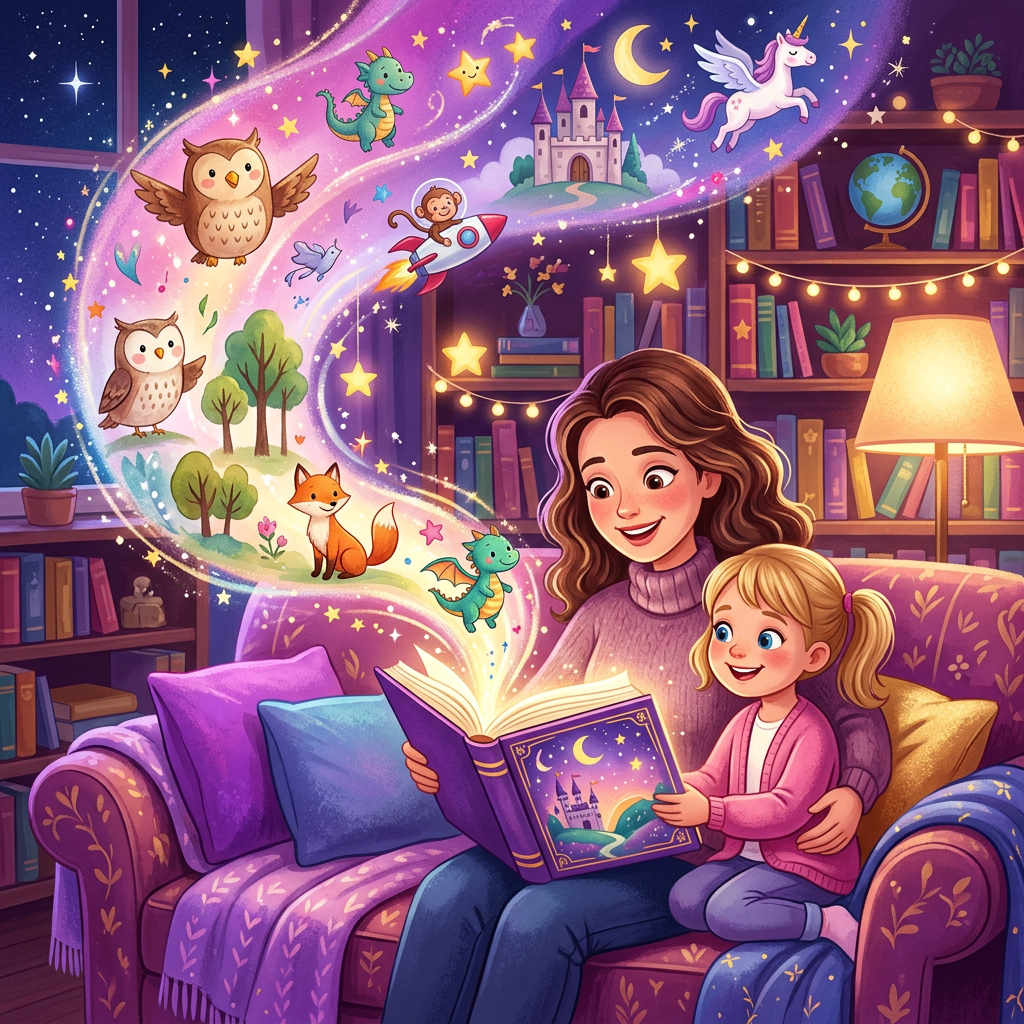
Every picture tells a story — but the style of that picture shapes how your child feels, thinks, and connects with the words on the page. Whether you're choosing between soft watercolor washes or bold cartoon characters, the illustration style in a children's story does far more than look pretty. It sets the emotional tone, supports comprehension, and even affects how long your child stays engaged. If you've ever wondered which AI story illustration style is right for your child, this guide breaks down everything you need to know.
Why does illustration style matter in children's stories?
Illustration style matters because children aged 2–7 gather up to 60% of a story's meaning from pictures alone, as confirmed by studies in visual literacy. These visuals are not mere decoration; they act as meaning-making tools that activate emotional responses, support vocabulary development, and help young readers build mental models of the narrative. Using the wrong style can confuse a toddler, while the right style can make a six-year-old fall in love with reading. When you create a personalised story on InstaTales, you choose from four distinct illustration styles, each tailored to different developmental needs.
What are the differences between AI illustration styles?
1. Watercolor: Dreamy, Soft, and Emotionally Rich
Best for ages: 1–5
Mood: Calm, imaginative, gentle
Watercolor illustrations are characterised by soft edges, translucent colour layers, and an organic, hand-painted feel. Think of classic picture books like Guess How Much I Love You or Where the Wild Things Are — that warm, slightly imperfect quality that feels like a hug.
For children's book art, watercolor works exceptionally well because:
- Soft colours reduce visual overwhelm for babies and toddlers whose visual processing is still developing
- Fluid shapes encourage imagination — the ambiguity in watercolor invites children to fill in details themselves
- The emotional warmth of the style supports bedtime routines by signalling calm and safety
Watercolor AI story illustrations are ideal for lullaby stories, nature adventures, fairy tales, and emotional themes like friendship, loss, or family. If your story involves a sleepy fox finding its way home or a little bear learning to be brave, watercolor is almost always the right choice.
Pro tip: For children under 3, pair watercolor with simple, high-contrast elements in the foreground so the main character is easy to identify.
2. Cartoon: Bold, Energetic, and Irresistibly Fun
Best for ages: 3–8
Mood: Playful, humorous, high-energy
Cartoon-style illustrations use clean outlines, saturated colours, and exaggerated expressions. This is the visual language of Saturday morning TV, popular picture books, and most children's apps — and for good reason.
Children respond strongly to cartoon art because:
- Exaggerated facial expressions make emotions instantly readable, which supports emotional intelligence development
- Bold outlines and bright colours hold attention and are easy to process at speed
- Familiar visual conventions (big eyes, round shapes, expressive mouths) are deeply intuitive for kids
Cartoon styles work brilliantly for comedy stories, superhero adventures, silly animal tales, and any story with lots of action or dialogue. If your child wants a story about a dinosaur who refuses to eat his vegetables or a robot going to school, cartoon illustrations will bring the giggles.
InstaTales uses cartoon-style AI generation with age-aware character proportions — meaning a story for a 4-year-old will look noticeably different from one designed for an 8-year-old.
3. Realistic: Detailed, Grounded, and Quietly Impressive
Best for ages: 6–10
Mood: Adventurous, serious, immersive
Realistic illustration styles move away from exaggeration toward proportional characters, detailed environments, and nuanced lighting. Think illustrated chapter books, middle-grade fiction covers, or the rich painted panels of adventure stories.
For older children, realistic visuals offer several advantages:
- Increased detail rewards close looking and builds observational skills
- Grounded imagery supports complex narratives involving real-world settings, historical contexts, or science themes
- Children aged 6–10 are developing a preference for "real" — they begin to reject styles that feel "babyish"
This style suits historical adventures, science exploration stories, sports narratives, and stories set in recognisable real-world locations. If your 9-year-old wants a personalised story about discovering ancient ruins or competing in the Olympics, realistic illustrations reinforce the believability of the world.
4. Storybook: Timeless, Whimsical, and Classically Magical
Best for ages: 3–7
Mood: Magical, classic, warm
Storybook illustration style is perhaps the most versatile — it sits between watercolor and cartoon, borrowing the warmth of traditional picture book art with slightly more defined lines and richer detail. It evokes the look of beloved illustrated classics: The Gruffalo, Elmer, The Very Hungry Caterpillar.
What makes storybook style special:
- It feels familiar and trusted, even for children encountering it for the first time
- The balance of detail and simplicity works across a wide age range
- It supports narrative comprehension without the ambiguity of watercolor or the high-energy stimulation of cartoon
Storybook-style AI illustrations are the most popular choice on InstaTales for a reason — they work beautifully for almost any genre, from princess adventures to bedtime stories to tales about starting school. When in doubt, this is the style to choose.
How do I match the illustration style to my child's story genre?
| Story Type | Recommended Style |
|---|---|
| Bedtime / lullaby | Watercolor |
| Silly comedy / slapstick | Cartoon |
| Adventure / action | Cartoon or Realistic |
| Fairy tale / fantasy | Storybook or Watercolor |
| Nature / animals | Watercolor or Storybook |
| Science / exploration | Realistic |
| Emotional / social themes | Watercolor or Storybook |
| Superhero / sports | Cartoon or Realistic |
Frequently Asked Questions
Can I change the illustration style for different stories?
Yes — and you should. On InstaTales, every new story lets you select a fresh illustration style. Many parents choose watercolor for evening wind-down stories and cartoon for weekend adventure stories. Mixing styles keeps things visually interesting and lets children experience the full range of picture-book aesthetics.
Which style is best for very young children (under 2)?
For babies and toddlers under 2, watercolor with bold foreground characters is developmentally ideal. High contrast, simple shapes, and soft backgrounds align with how young visual systems process imagery.
Does illustration style affect how well children understand the story?
Research from the Journal of Early Childhood Literacy suggests that visual-text coherence — how well illustrations match the tone of the words — significantly improves story comprehension in children under 7. Choosing a calm watercolor style for an exciting cartoon adventure can create cognitive dissonance. Matching style to narrative tone is one of the simplest ways to improve your child's story experience.
How do I ensure the visuals make the most impact?
Illustration style isn't a cosmetic choice — it's a developmental one. The right visual environment helps your child focus, feel, and understand. Whether you're winding down with a soft watercolor lullaby or sparking Saturday morning energy with a bright cartoon quest, the style you choose shapes the memory your child takes to sleep.
Ready to find the perfect match? Create your child's personalised illustrated story on InstaTales today — choose your style, add their name, and watch their eyes light up on the very first page.
Get a new bedtime story every week
Free, personalized, and delivered to your inbox. No spam, ever.
Ready to Create a Personalized Bedtime Story?
Use our free AI bedtime story generator to create a personalized illustrated story for your child in 30 seconds — no credit card needed.
Popular story types:
Maya Rodriguez
Lead Content Editor & Early Literacy Specialist
Maya is a former early childhood educator and literacy specialist with over a decade of experience helping children develop a love of reading. She leads content at InstaTales, where she writes about the science of storytelling, child development, and how families can use personalized AI stories to build literacy and emotional resilience.
instatales.ai