From Cartoon to Watercolor: Choosing Art Styles for Your AI-Generated Stories
Explore different illustration styles for AI-generated children's stories. Learn about watercolor, cartoon, comic book, and minimalist art and how to maintain visual consistency.
✦ Key Takeaways
- •Illustrations shape the mood and help young readers visualize characters and settings, making them essential for enhancing comprehension and setting the emotional tone of a narrative.
- •Children respond best to visual cues because an art style can immediately set the tone of a narrative, reflect cultural themes, and enhance overall comprehension for pre-readers.
- •Popular art styles for children's stories range from 3D animation and watercolors to graphic novels and minimalist line art, each serving a different storytelling purpose. ### Cartoon and 3D Animation Cartoon styles—think bold outlines and exaggerated expressions—are popular with young audiences.
From Cartoon to Watercolor: Choosing Art Styles for Your AI-Generated Stories
Why is choosing the right art style important for children's stories?
Illustrations shape the mood and help young readers visualize characters and settings, making them essential for enhancing comprehension and setting the emotional tone of a narrative. Platforms like StoryTailor offer a broad range of themes, including fantasy and educational genres, and they pair stories with illustrations. KidstalesAI is praised for its engaging artwork that evolves along with the child. Another illustration tool, ConsistentCharacter.ai, shows how consistent character design helps maintain continuity across pages; it allows you to create the same character in unlimited poses and expressions and to generate variations in seconds, without needing design expertise. This article discusses how to select the right art style for your AI‑generated story and how visual consistency enhances storytelling.
How does the art style impact a child's reading experience?
Children respond best to visual cues because an art style can immediately set the tone of a narrative, reflect cultural themes, and enhance overall comprehension for pre-readers. A whimsical watercolor palette evokes a sense of wonder, while bold comic‑book lines add excitement. The art style can:
- Set the tone. A bedtime lullaby might pair well with soft pastels and gentle brush strokes, whereas an adventure story benefits from bright, dynamic scenes.
- Reflect cultural themes. Choosing an art style inspired by your heritage or favourite artists can connect children to their identity.
- Enhance comprehension. Clear illustrations support understanding of plot and characters, especially for pre‑readers. Consistency across pages prevents confusion.
What are the most popular art styles for AI-generated children's stories?
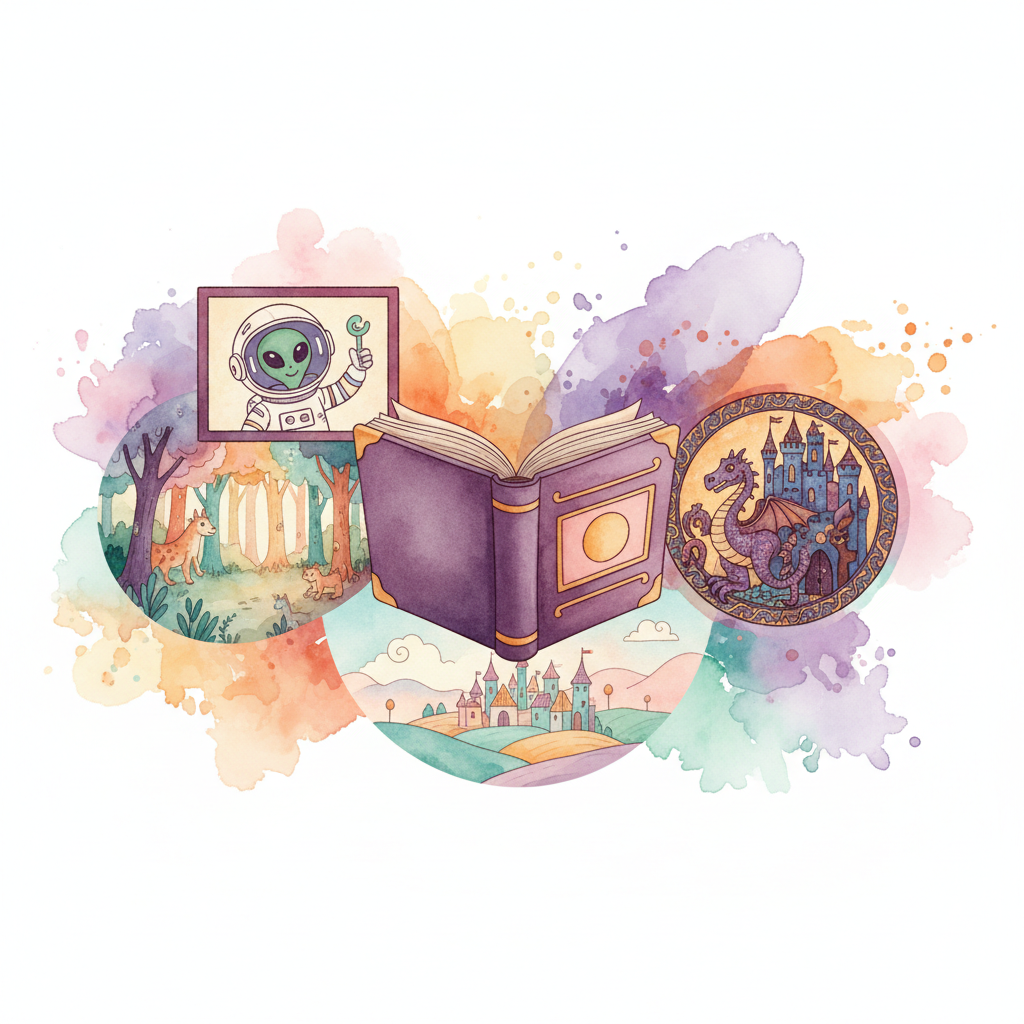
Popular art styles for children's stories range from 3D animation and watercolors to graphic novels and minimalist line art, each serving a different storytelling purpose.
Cartoon and 3D Animation
Cartoon styles—think bold outlines and exaggerated expressions—are popular with young audiences. Some AI tools can generate Pixar‑style 3D characters that look professional and polished. ConsistentCharacter.ai demonstrates how using the same character in multiple poses helps maintain continuity. This style suits playful adventures and light‑hearted themes.
Watercolor and Traditional Illustration
Soft watercolors evoke a classic storybook feel. Gentle washes of colour and textured brush strokes create warmth and nostalgia. This style works well for fairy tales, bedtime stories and gentle moral lessons.
Comic Book and Graphic Novel
For older children, a comic‑book aesthetic with panels and speech bubbles offers a dynamic reading experience. Bold lines and onomatopoeic text (e.g., "WHAM!") make action scenes exciting. When creating AI stories in this style, consider using fewer panels per page to avoid overcrowding.
Minimalist and Line Art
Minimalist illustrations use simple lines and limited colour palettes. They can encourage imagination because children fill in the gaps themselves. This style is ideal for educational stories where the focus is on the text or concepts rather than elaborate images.
How can I maintain visual consistency in AI-generated illustrations?
You can maintain visual consistency by defining character details early, using reference images, and manually reviewing AI-generated outputs to prevent characters from changing between pages. In manual illustration, an artist ensures that a character's facial features and clothing remain the same from scene to scene. ConsistentCharacter.ai highlights that without this oversight, characters might look different on each page, hair colour and facial features might change and hiring human illustrators can be costly. Their solution allows you to create characters that stay consistent by generating unlimited poses and editing every detail yourself. When using any AI illustration tool:
- Define character details early. Specify hair colour, clothing and facial features before generating multiple scenes.
- Use reference images. Some tools let you upload reference photos or previous illustrations to guide the AI.
- Edit manually. Even if the AI generates variations quickly, review each image and adjust details to align with your vision.
What tips should I follow when choosing an art style for my story?
To choose the right art style, you should match the genre, consider your child's preferences, account for printing requirements, and experiment with different styles.
- Match the genre. Align the art style with the story's theme—fantasy tales may thrive with lush, painterly backgrounds, while science stories could use clean diagrams or futuristic aesthetics.
- Consider your child's preferences. Involve your child in selecting the style. Do they love bright cartoons or prefer gentle pastels?
- Stay mindful of printing. If you plan to print your story, ensure that colours and details reproduce well on paper. Too much dark shading may look muddy when printed.
- Experiment and iterate. AI allows rapid prototyping. Generate the same scene in different styles and compare. Choose the one that resonates best.
How do I successfully put all of these storytelling elements together?
Art is a crucial element of storytelling, and by thoughtfully selecting an illustration style while maintaining visual consistency, parents and educators can elevate AI‑generated stories from simple text to immersive experiences. Platforms like StoryTailor and KidstalesAI showcase the power of paired images, and tools like ConsistentCharacter.ai make it easier to keep characters consistent across pages. Whether you opt for bold cartoons, dreamy watercolors or minimalist line art, the right visuals will captivate young readers and enrich the stories you create together.
Ready to Create a Personalized Bedtime Story?
Use our free AI bedtime story generator to create a personalized illustrated story for your child in 30 seconds — no credit card needed.
Popular story types:
Maya Rodriguez
Lead Content Editor & Early Literacy Specialist
Maya is a former early childhood educator and literacy specialist with over a decade of experience helping children develop a love of reading. She leads content at InstaTales, where she writes about the science of storytelling, child development, and how families can use personalized AI stories to build literacy and emotional resilience.
instatales.ai