Christmas Stories for Kids: Magical Holiday Ideas
Celebrate Christmas with these magical stories for kids — festive, fun, and perfect for the season.
✦ Key Takeaways
- •Christmas stories for kids matter because they combine connection, comfort, and imagination in one simple ritual.
- •You can explain Christmas to children by keeping it simple, honest, and tied to your family’s values.
- •A great Christmas bedtime story is gentle, clear, and full of sensory wonder.
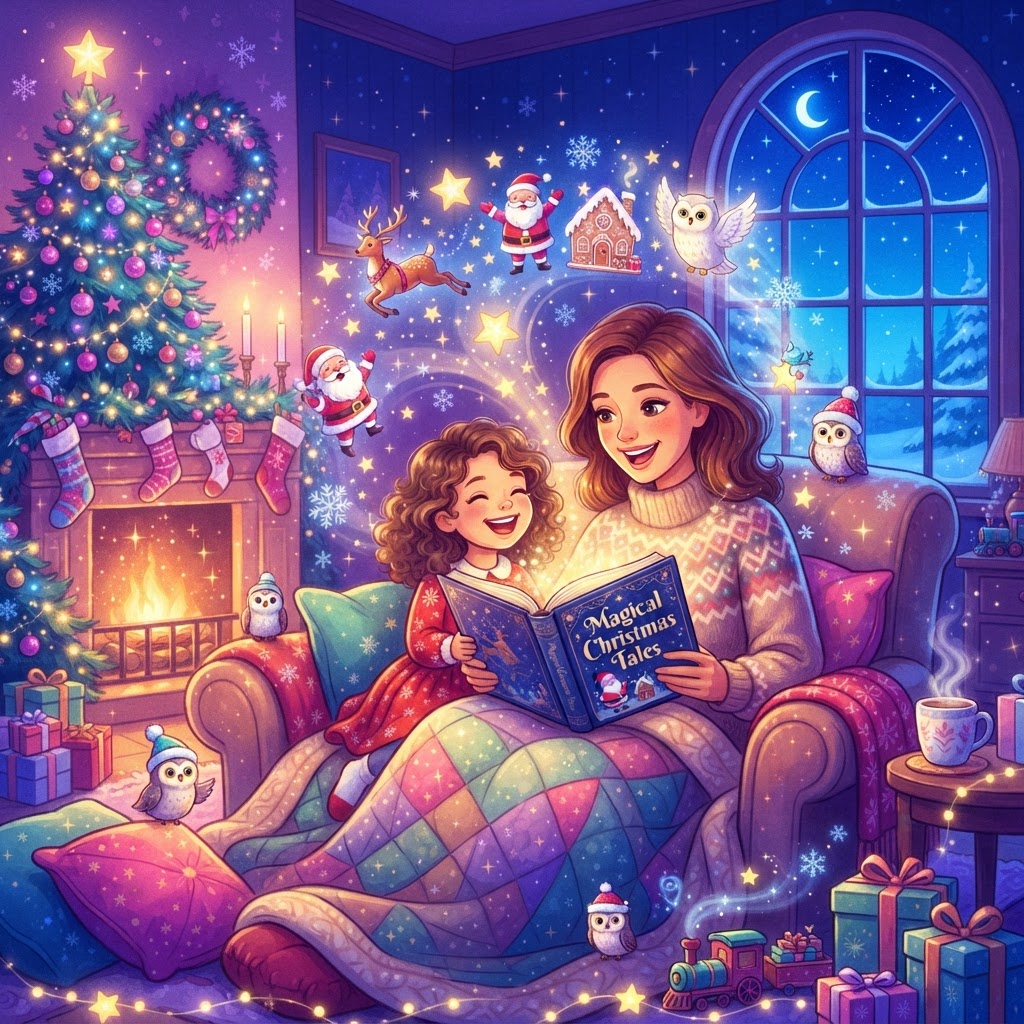
If you are looking for Christmas stories for kids that feel magical, calming, and meaningful, the best ones mix warmth, wonder, and simple emotional truths. Great Christmas bedtime stories can help children wind down, understand family traditions, and imagine themselves inside the holiday magic. In this guide, you’ll find age-appropriate ways to explain Christmas, a collection of festive story ideas, a sample excerpt, and practical tips for using InstaTales to create personalized Christmas stories children will want to hear again and again.
Why are Christmas stories for kids such a treasured holiday tradition?
Christmas stories for kids matter because they combine connection, comfort, and imagination in one simple ritual. A holiday read-aloud gives children a predictable moment of closeness, which supports emotional security and language growth.
Research and child development experts have long emphasized the value of reading aloud. Organizations like Reach Out and Read note that shared reading supports language, attention, and bonding. The Harvard Center on the Developing Child also explains that warm back-and-forth interactions help build strong brain architecture in young children.
That is one reason kids Christmas tales work so well at bedtime. They often include repetition, gentle suspense, and reassuring endings. For children ages 1-10, that mix can make the holiday season feel exciting without becoming overstimulating.
How can you explain the meaning of Christmas to children in an age-appropriate way?
You can explain Christmas to children by keeping it simple, honest, and tied to your family’s values. For many families, Christmas celebrates the birth of Jesus. For others, it is also a season of kindness, giving, light, gratitude, and time together.
Young children do best with concrete language. You might say:
- “Christmas is a special day when many people celebrate baby Jesus being born.”
- “Some families celebrate Christmas as a religious holiday, and some celebrate it as a family tradition.”
- “Many Christmas traditions are about giving, helping, and sharing joy.”
As children get older, you can add a little history. Christmas traditions have grown over many centuries and now include music, gift-giving, decorations, evergreen trees, and festive meals. The Library of Congress offers useful background on how Christmas has been observed in different times and places.
A good rule is to match the explanation to the child’s age:
- Ages 1-3: Focus on family, lights, songs, and love.
- Ages 4-6: Add simple meaning, like kindness and celebration.
- Ages 7-10: Introduce history, culture, and different ways families celebrate.
What makes a great Christmas bedtime story for young children?
A great Christmas bedtime story is gentle, clear, and full of sensory wonder. The best ones feel cozy rather than chaotic, with enough magic to spark interest and enough calm to help children settle for sleep.
Strong Christmas bedtime stories usually include:
- A simple problem children can follow
- A kind main character
- Familiar holiday details like snow, candles, bells, stars, or stockings
- Reassuring language and a happy ending
- A rhythm that sounds soothing when read aloud
Age matters too. Younger children enjoy repetition and short story arcs. Older children can handle richer plots, small mysteries, and more emotional depth.
Here is a simple guide:
- Ages 1-3: Very short stories, repeated phrases, soft holiday images
- Ages 4-6: Clear adventures, talking animals, funny mistakes, magical helpers
- Ages 7-10: Bigger quests, moral choices, teamwork, and more detailed settings
Which Christmas story ideas for children inspire wonder and connection?
The best Christmas story ideas for children give them something to feel as well as something to imagine. They work especially well when they center on kindness, courage, family traditions, or helping others.
Here are seven festive ideas you can use at home, in the classroom, or as prompts for personalized stories:
1. The Missing Reindeer Bell
A child finds a silver bell in the snow and sets out to return it before Christmas morning. Along the way, they help forest animals, and each act of kindness brings them closer to Santa’s sleigh.
2. The Little Tree That Chose a Family
A shy Christmas tree worries no one will pick it. Then it discovers that the warmest home is not the fanciest one, but the one filled with laughter, cocoa, and love.
3. The Gingerbread Village Rescue
A sudden gust of winter wind scatters pieces of a magical gingerbread village. A brave child and a clever pet work through the night to rebuild it before dawn.
4. The Star Over Maple Street
One bright star keeps following a child home every evening in December. It leads them to small chances to help neighbors, showing that Christmas light can shine through everyday kindness.
5. The Snowflake Who Wanted a Name
A lonely snowflake drifts from cloud to chimney looking for where it belongs. In the end, it lands on a mitten and becomes part of a child’s happiest Christmas memory.
6. The Secret Stocking Mission
Two siblings learn that one neighbor may spend Christmas alone. They quietly organize a stocking full of handmade gifts and discover that giving feels even better than receiving.
7. The Classroom Elf’s Last Lesson
A classroom elf loses its holiday sparkle and can only get it back when the class works together. This is a lovely choice for group reading and can connect well with InstaTales for teachers.
These Christmas stories children love can be made even more engaging by adding a child’s name, favorite toy, hometown, family tradition, or pet.
What does a personalized Christmas story sound like?
A personalized Christmas story sounds more immersive because the child hears their own world reflected back to them. When a story includes their name, family traditions, or favorite stuffed animal, it often feels instantly meaningful.
Here is a short sample excerpt:
On Christmas Eve, Maya pressed her nose to the window and watched the snow fall over Oak Lane in soft, sleepy swirls. Beside her, Pip the little brown dog wagged his tail at the twinkling lights across the street.
“Do you hear that?” Maya whispered.
From somewhere in the quiet night came a tiny jingle. Not loud like a sleigh bell. Softer. Sadder.
Maya pulled on her red slippers and opened the front door just enough to peek outside. There, resting on the welcome mat, was a golden bell no bigger than a plum. A silver ribbon was tied around it, and on the ribbon were three sparkling words: Please bring home.
Pip gave one brave bark. Maya tucked the bell into her coat pocket, looked up at the moon, and smiled. This was no ordinary Christmas Eve. This was the night she would help holiday magic find its way back.
A short excerpt like this works well because it feels calm, visual, and hopeful. It also leaves room for the child listener to wonder what happens next.
How can InstaTales help you create personalized Christmas bedtime stories?
InstaTales makes it easy to turn a simple holiday idea into a personalized story your child will want to hear again. Instead of starting with a blank page, you can shape a story around your child’s age, interests, and family traditions in minutes.
A practical way to start is to create your own personalized bedtime story using details like:
- Your child’s name and age
- Favorite holiday traditions
- A pet, sibling, or grandparent
- A preferred tone, such as funny, cozy, magical, or faith-based
- Story length for bedtime or classroom reading
If you want a quick starting point, browse the holiday-ready story templates. Templates can help you build kids Christmas tales around snowy adventures, acts of giving, Santa-themed journeys, or peaceful nativity-inspired moments.
After you create a story, save it in your story library so you can reread favorites every December. This is especially helpful for children who love repetition, which is developmentally normal and often comforting.
Teachers and homeschoolers can also use personalized holiday stories for literacy activities, writing prompts, or social-emotional learning. For more seasonal inspiration, you can explore the InstaTales blog or use weekly reading challenges to keep family reading routines fun through the holiday break.
How can families and teachers use Christmas stories to support learning, not just entertainment?
Christmas stories can support literacy, empathy, memory, and conversation when used intentionally. A festive read-aloud is not just cute seasonal content; it can also build real language and comprehension skills.
Here are simple ways to extend the learning:
- Ask children to predict what happens next
- Pause to explain words like “tradition,” “generous,” or “grateful”
- Invite them to retell the story in order
- Ask how a character felt and why
- Compare how different families celebrate the season
The National Association for the Education of Young Children regularly highlights the importance of meaningful, play-based, language-rich experiences in early childhood. Holiday storytelling fits beautifully into that approach when it stays warm, inclusive, and child-centered.
For families, these moments become memory builders. For teachers, they become rich seasonal prompts for speaking, listening, vocabulary, and creative writing.
Frequently Asked Questions
What age are Christmas stories for kids best for?
Christmas stories can work for children from toddlerhood through the early elementary years. The key is to match the story length, language, and emotional complexity to the child’s age.
How long should Christmas bedtime stories be?
For bedtime, shorter is usually better. Aim for 3-5 minutes for toddlers, 5-10 minutes for preschoolers, and 10-15 minutes for older children.
Can Christmas stories be inclusive for families with different beliefs?
Yes. You can focus on themes like kindness, hope, generosity, family, and winter wonder while also honoring religious meaning when that is important to your family.
Are personalized Christmas stories good for classrooms?
Yes, especially when used for group discussion, writing prompts, or seasonal literacy work. Teachers can personalize by class name, school setting, or shared classroom traditions.
What details should I include in a personalized Christmas story?
Start with the child’s name, age, favorite things, and holiday traditions. Adding a pet, grandparent, neighborhood, or bedtime comfort item can make the story feel even more special.
Ready to Create a Personalized Bedtime Story?
Use our free AI bedtime story generator to create a personalized illustrated story for your child in 30 seconds — no credit card needed.
Popular story types:
Maya Rodriguez
Lead Content Editor & Early Literacy Specialist
Maya is a former early childhood educator and literacy specialist with over a decade of experience helping children develop a love of reading. She leads content at InstaTales, where she writes about the science of storytelling, child development, and how families can use personalized AI stories to build literacy and emotional resilience.
instatales.ai