Cute Wolves Stories for Calm Bedtimes
Snuggle up with these cute wolves bedtime stories for children — gentle, heartwarming tales perfect for winding down at night.
✦ Key Takeaways
- •Wolves bedtime stories for kids are comforting because they combine adventure with safety.
- •A wolf story feels cozy when the stakes are small, the setting feels safe, and the emotions stay gentle.
- •The best cute wolves stories for bedtime are simple, rhythmic, and emotionally safe.
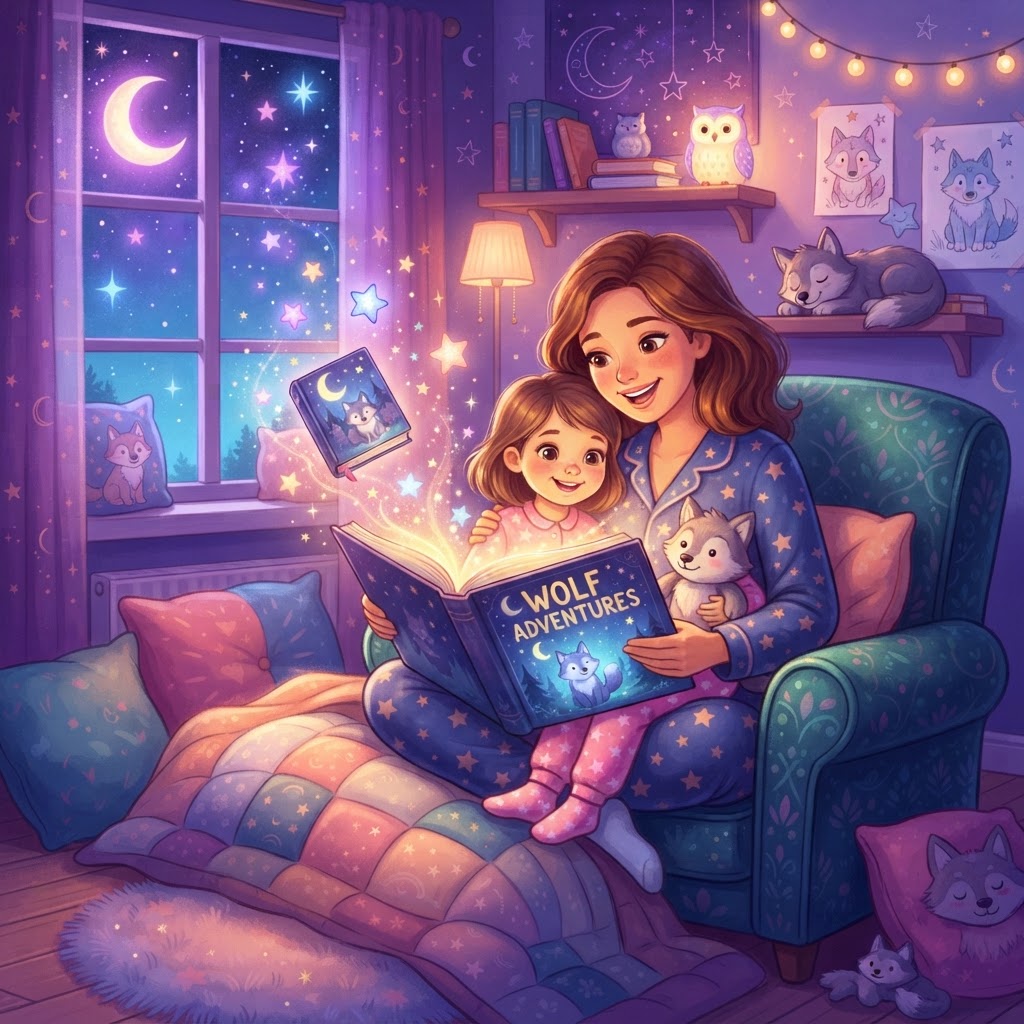
If your child loves animals but needs a story that feels soft, safe, and sleepy, cute wolves stories can be a lovely choice. The best wolf tales are not about danger or chasing. They are about warm dens, moonlit walks, gentle howls, family bonds, and the comfort of finding your way home.
That is why wolves bedtime stories for kids work so well at night. Wolves are wild animals, but in children’s fiction they can also be tender, loyal, and calm. When written with a soothing tone, wolves stories for children can help little ones settle their bodies, imagine peaceful scenes, and end the day with a sense of safety.
If your child already enjoys cozy animal tales, you might also like these gentle rabbit tales for another soft bedtime theme.
Why are wolves bedtime stories comforting for children?
Wolves bedtime stories for kids are comforting because they combine adventure with safety. Children get the wonder of moonlight, forests, and animal families, while still hearing a predictable story that ends in warmth, rest, and reassurance.
Many children are drawn to animals that live in groups. Wolves are especially appealing because they are often shown as caring for their pack, protecting young pups, and staying close to home. That pack feeling can mirror a child’s own need for connection at bedtime.
There is also a strong rhythm to wolf-themed storytelling. Repeated sounds like “soft paws,” “silver moon,” or “home to the den” create a gentle pattern. That kind of repetition matters. Shared reading and calm bedtime routines support emotional security, language growth, and sleep readiness, as noted by HealthyChildren.org from the American Academy of Pediatrics and ZERO TO THREE.
From a child development perspective, bedtime stories work best when they feel predictable. The Harvard Center on the Developing Child also highlights how warm back-and-forth moments with caregivers help children feel safe and connected. A simple wolf story gives you many chances to pause, point, cuddle, and talk softly together.
What makes a wolf tale feel cozy instead of scary?
A wolf story feels cozy when the stakes are small, the setting feels safe, and the emotions stay gentle. In other words, the wolf should be curious, kind, sleepy, or playful, not threatening.
When choosing or creating bedtime stories about wolves, look for these calming features:
- A wolf pup or friendly family group rather than a lone predator
- A clear bedtime goal, like getting home to the den or settling under the stars
- Soft sensory details, such as snow, moss, moonlight, warm fur, and quiet wind
- Gentle problems, like losing a mitten, finding a firefly, or learning a new howl
- A calm ending with rest, cuddles, or a lullaby
It also helps to avoid fast pacing. Bedtime is not the best time for cliffhangers or big scares. If a story includes tension, keep it mild and resolve it quickly. For example, a pup may wander a little too far from the den, but a parent or sibling helps right away.
Which cute wolves stories work best at bedtime?
The best cute wolves stories for bedtime are simple, rhythmic, and emotionally safe. They should have one clear problem, one loving relationship, and one soothing ending that invites sleep.
Here are five gentle story ideas you can use tonight or adapt into your own wolves stories for children:
Little Wolf and the Sleepy Fireflies
A young wolf pup wants to count stars but keeps getting distracted by glowing fireflies. One by one, the fireflies lead the pup back to the den, where the stars are even easier to see from a cozy blanket of moss.
The Softest Howl in the Forest
A small wolf is excited to learn how to howl, but every practice howl is too loud for bedtime. An older sibling teaches the pup a “moon hum,” a soft, sleepy sound that drifts through the trees like a lullaby.
Grandma Wolf’s Goodnight Soup
Before bed, Grandma Wolf makes warm carrot and herb soup for the whole pack. As everyone shares what made them happy that day, the youngest pup learns that bedtime can be a peaceful time to remember small joys.
Snow Paw Prints Home
A wolf cub follows a trail of paw prints through fresh snow after a quiet evening walk. Each print brings the cub closer to the warm den, glowing lantern light, and a pile of sleepy siblings.
The Den That Needed a Song
The wind whistles through the den and makes bedtime feel unsettled. So the wolf family works together to gather leaves, fluff blankets, and sing one slow song until the den feels snug again.
These story concepts work because they center on home, family, routine, and sensory calm. If your child enjoys animal-themed bedtime reading, you can also browse the InstaTales blog for more gentle ideas across land and sea.
How can you use InstaTales’ lullaby type with animal characters?
InstaTales’ lullaby type works beautifully for animal stories because it naturally slows the pace and softens the language. It helps turn a wolf story into a bedtime ritual rather than just a quick read.
If you want to create your own personalized bedtime story, try building your wolf tale with a few simple choices:
- Choose the lullaby story type for a slower, more musical rhythm
- Make the main character a wolf pup, gentle parent wolf, or sleepy forest friend
- Add your child’s name, favorite color, or comfort object
- Set the scene in a safe place like a den, snowy meadow, or moonlit hill
- Ask for a repeating phrase, such as “soft paws, sleepy eyes”
- End with cuddling, yawning, star-counting, or drifting to sleep
You can also start faster with ready-made story templates. Templates are useful when you want a calm structure but still want to personalize the details.
Once you find a version your child loves, save it in your story library so you can re-read it night after night. Repetition is not a problem at bedtime. In fact, many children sleep better when they know exactly what comes next.
For preschool teachers, reading specialists, or homeschool families, lullaby-style animal stories can also support quiet transitions and calm-down time. That is one reason wolf stories can work not just at home, but in early learning settings too.
What does a gentle wolf mini-story sound like?
A soothing wolf mini-story sounds slow, sensory, and reassuring from the very first lines. It uses simple language, repeated comfort phrases, and a peaceful ending.
Here is a sample excerpt:
Little Fern was the smallest wolf in the den, with silver ears and very sleepy paws.
Tonight, the moon hung low and round above the pine trees, like a lantern made of milk.“One more walk,” whispered Mama Wolf. “Then home for rest.”
Fern padded beside her, step by step through the cool, soft grass. Crickets sang. Fireflies blinked. The wind brushed the tall flowers until they swayed like they were saying goodnight too.
Fern tried a tiny howl, but it came out as a yawn.
Mama smiled. “That is the perfect bedtime howl.”
So Fern tried again. “Ooo,” he hummed, quiet as a breeze.
From the den, his brothers and sisters hummed back. “Ooo.”
Soft paws, sleepy eyes. Soft paws, sleepy eyes.
When Fern reached the den, Grandma Wolf had already made a nest of warm moss and wool. Fern curled into the middle, tucked his nose under his tail, and listened as the night wrapped around the forest.
One by one, the stars blinked above the trees.
One by one, Fern’s eyes blinked closed.
This kind of short scene works well for toddlers and younger children. For older children, you can add a little more plot while keeping the same soft rhythm.
How can adults make bedtime stories about wolves even calmer?
Adults can make bedtime stories about wolves calmer by slowing down their delivery and adding small rituals around the story. Your voice, pace, and tone matter as much as the words on the page.
Try these simple bedtime reading tips:
- Read a little more slowly than normal
- Lower your voice as the story moves toward sleep
- Repeat key lines together
- Pause to let your child picture the scene
- Keep lights dim and screens off before reading
- End with the same closing phrase each night
You can also invite quiet participation. Ask, “Should the wolf sleep under moss or under stars?” A small choice keeps children engaged without waking them up too much.
If your child likes variety, rotate wolf stories with other calm animal themes. A week of forest tales can pair nicely with ocean nights, gentle monkey stories, or slow turtle adventures.
Frequently Asked Questions
Are wolves too scary for young children?
Not always. Wolves stories for children can be very gentle when they focus on pups, family life, and cozy den settings instead of danger. For toddlers, choose short stories with soft language and quick, comforting endings.
What age are wolves bedtime stories for kids best for?
They can work well from ages 2 to 10, depending on the tone and length. Younger children usually prefer simple, repetitive stories, while older children may enjoy a fuller plot with a calm emotional arc.
How long should a bedtime story about wolves be?
For bedtime, shorter is often better. Toddlers may do best with 3-5 minutes, while older children may enjoy 8-12 minutes if the pacing stays slow and the ending feels restful.
Can personalized wolf stories help children settle down?
Yes, many children relax more when they hear familiar details, like their name, favorite blanket, or a comforting bedtime phrase. Personalized stories can make the experience feel safe, predictable, and emotionally close.
What should I include when creating a wolf story in InstaTales?
Include a gentle wolf character, a safe setting, a bedtime goal, and a repeated soothing phrase. If you use the lullaby format, keep the conflict small and the ending warm, sleepy, and clear.
Ready to Create a Personalized Bedtime Story?
Use our free AI bedtime story generator to create a personalized illustrated story for your child in 30 seconds — no credit card needed.
Popular story types:
Maya Rodriguez
Lead Content Editor & Early Literacy Specialist
Maya is a former early childhood educator and literacy specialist with over a decade of experience helping children develop a love of reading. She leads content at InstaTales, where she writes about the science of storytelling, child development, and how families can use personalized AI stories to build literacy and emotional resilience.
instatales.ai