Eagles Stories for Kids: 7 Tales and Fun Facts
Delightful eagles stories for kids — plus real fun facts woven into each tale. Perfect for young animal lovers who love a good story.
✦ Key Takeaways
- •Eagles make strong story heroes because they feel both powerful and relatable.
- •Children learn science, vocabulary, and empathy from well-made eagle stories.
- •These eagles stories for kids work best when they are short, vivid, and grounded in one clear idea.
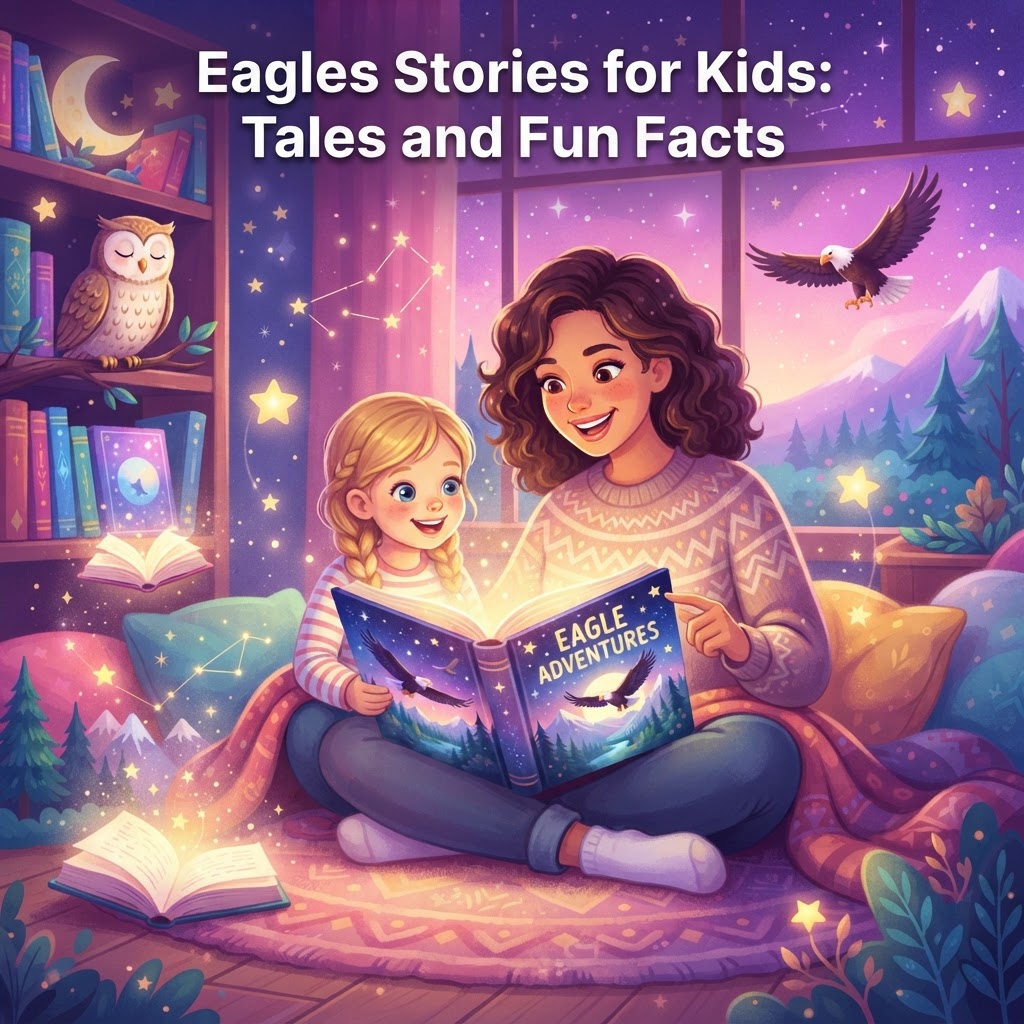
If your child loves brave animal heroes, eagles stories for kids are a wonderful choice. Eagles bring together big feelings, big skies, and real wildlife facts, so a bedtime tale can feel both magical and true.
That mix matters. Children remember information better when it is wrapped inside a story, especially when adults pause to talk, ask questions, and connect the tale to the real world. Below, you’ll find story ideas, true eagle facts, and easy AI prompts you can use to create fresh eagles bedtime stories in minutes.
Why are eagles such exciting heroes for children?
Eagles make strong story heroes because they feel both powerful and relatable. They soar high, protect their nests, learn new skills, and face challenges that children can understand, like being brave, patient, or helpful.
For ages 1-10, eagle characters work especially well because they support simple emotional themes: trying again, watching carefully, caring for family, and exploring safely. Their world is naturally dramatic too—mountains, lakes, tall trees, storms, and wide skies all create vivid settings for stories about eagles.
Eagles also fit nicely into both realistic and imaginative storytelling. One night, your child may want a gentle nature-based tale. Another night, they may want an eagle who talks to the moon, helps forest friends, or goes on a treasure hunt.
What do children learn from stories about eagles?
Children learn science, vocabulary, and empathy from well-made eagle stories. A good story can introduce real animal behavior while also building listening skills and curiosity.
Research on dialogic reading by Grover Whitehurst and colleagues found that back-and-forth conversation during reading supports language growth. The American Academy of Pediatrics also recommends regular read-aloud time because it strengthens early literacy, language, and relationships (AAP guidance).
That is why eagles tales children enjoy can do more than entertain. They can help children:
- learn animal facts in a memorable way
- practice prediction and sequencing
- build emotional understanding through character choices
- connect fiction with nonfiction
For the factual details below, the most reliable child-friendly wildlife references include the Cornell Lab of Ornithology and the U.S. Fish & Wildlife Service.
Which eagles bedtime stories can you create tonight?
These eagles stories for kids work best when they are short, vivid, and grounded in one clear idea. Each concept below includes a real fact and an AI prompt you can paste into InstaTales.
1. The Nest Above the River
A young eagle named Skye lives in a giant nest high above a sparkling river. When a windy night shakes the branches, Skye learns that eagle families return to the same nest again and again, making it stronger over time.
Real fact woven in: Bald eagles often reuse nests for years, and their nests can become enormous. Eagles also choose high, safe places with a good view of the water.
- AI prompt: Write a gentle bedtime story for a 4-year-old about a young eagle named Skye who lives in a huge nest above a river. Include a windy night, loving eagle parents, and a calm ending.
2. The Eagle Who Rode the Warm Wind
Little Ash wants to flap all day, but an older eagle teaches him a smarter way to fly. He discovers rising warm air, or thermals, and learns that soaring can carry him across the valley without wearing out his wings.
Real fact woven in: Eagles use thermals to soar and save energy. Their broad wings help them glide for long distances.
- AI prompt: Create an adventurous but soothing story about a young eagle learning to soar on thermals with a wise grandparent eagle. Explain the warm wind in simple language for kids.
3. Moonlight Over the Silver Fish
At dusk, an eagle circles over a lake that glitters like silver. She watches patiently, then dives to catch a fish with her talons, showing children that patience can be just as important as speed.
Real fact woven in: Bald eagles often eat fish and use strong talons to grab prey. Their excellent eyesight helps them spot movement from far above.
- AI prompt: Write a cozy bedtime story about an eagle fishing at sunset. Make it peaceful, sensory, and suitable for ages 5-7, with one lesson about patience.
4. Two Parents in the Tall Pines
When a storm is coming, two eagle parents work together to protect their eggs. One brings soft nesting material while the other guards the nest, showing teamwork and family care.
Real fact woven in: Eagle pairs often work together at the nest, and both parents help raise their young. Nest building and guarding are shared jobs.
- AI prompt: Tell a warm family story about two eagle parents preparing their nest before a rainstorm. Focus on teamwork, safety, and love.
5. Brown Feathers, White Future
A young bald eagle worries because she does not look like the bright white-headed adults yet. Her mother explains that young bald eagles are mostly brown and slowly change as they grow older.
Real fact woven in: Juvenile bald eagles do not have the famous white head and tail right away. They usually develop adult coloring over several years.
- AI prompt: Write an encouraging story about a young brown-feathered bald eagle who learns that growing up takes time. End with confidence and hope.
6. The Long Winter Journey
When the northern lake begins to freeze, an eagle family must decide whether to stay or travel. They follow open water and food, teaching children that some eagles migrate while others remain where conditions are good.
Real fact woven in: Some bald eagles migrate, especially when lakes and rivers freeze or food becomes harder to find. Others stay year-round if they can still access food.
- AI prompt: Create a story for ages 6-8 about an eagle family choosing a winter route. Include snow, teamwork, and a happy landing by open water.
7. The Lake That Learned to Heal
An old eagle remembers when the lake was quiet and unsafe, but now fish have returned and trees are growing strong again. The story becomes a hopeful conversation about habitat care and how people can help wildlife recover.
Real fact woven in: Bald eagles are a well-known conservation success story in the United States. Protecting habitats and reducing harmful chemicals helped their populations recover.
- AI prompt: Write a hopeful story about an elder eagle showing a child eagle how a lake became healthy again. Include themes of caring for nature and community action.
How can you use InstaTales to generate personalized eagle adventures?
InstaTales makes it easy to turn a simple idea into a custom story your child will actually want to hear again. The best results come from giving the AI a clear age, mood, setting, and lesson.
Try this simple formula:
- main eagle character
- child’s name or favorite color
- setting, like a lake, canyon, or snowy forest
- one real eagle fact
- one emotional theme, like bravery or patience
You can create your own personalized bedtime story from scratch, or start faster with ready-made story templates. If your child wants to hear the same hero again tomorrow, save the story in your story library for easy re-reading.
For classrooms, nature units, or writing centers, InstaTales for teachers can help you build age-appropriate reading material around animals and habitats. And if your child enjoys animal adventures, they may also love these wolf adventures for kids.
How can parents and teachers extend eagle tales into real learning?
The easiest way to deepen learning is to talk for two minutes after the story ends. Ask one feeling question, one fact question, and one imagination question.
For example:
- How did the eagle feel when the storm came?
- What real fact did we learn about eagle nests?
- Where should the eagle fly in the next story?
This kind of guided conversation supports comprehension and recall. It also turns stories about eagles into a bridge between literacy and science, which is especially useful in early childhood and elementary settings.
You can also extend the story with simple activities:
- draw the nest and label its parts
- act out soaring with “thermal” arm movements
- sort facts into “real” and “pretend”
- compare eagle tales with other animal themes your child already knows
The goal is not to turn bedtime into a lesson. It is to follow your child’s curiosity in a calm, playful way.
Frequently Asked Questions
Are eagles stories for kids good for bedtime?
Yes, they can be excellent bedtime stories when the tone is gentle and the ending feels safe. Choose calm adventures, soft nature settings, and simple emotional themes rather than intense danger.
What age are eagle stories best for?
Eagle stories can work from ages 1-10 when the language and plot match the child’s stage. Toddlers do best with short, repetitive tales, while older children enjoy richer facts and longer adventures.
How many real facts should I include in one story?
One or two facts is usually enough for young children. That keeps the story flowing while still helping them learn something true and memorable.
Can I use eagle tales in the classroom?
Absolutely. Eagle stories fit well into units on birds, habitats, food chains, migration, and conservation. They also support vocabulary, listening comprehension, and creative writing.
How do I make AI-generated stories feel personal?
Add your child’s name, favorite place, favorite color, and one familiar feeling, such as being nervous on the first day of something new. Personal details make eagles bedtime stories feel more meaningful and easier to remember.
What if my child wants fantasy and facts together?
That is often the sweet spot. You can keep the eagle behavior realistic—soaring, nesting, fishing, migrating—while adding magical elements like moonlight messages or talking forest friends.
Ready to Create a Personalized Bedtime Story?
Use our free AI bedtime story generator to create a personalized illustrated story for your child in 30 seconds — no credit card needed.
Popular story types:
Maya Rodriguez
Lead Content Editor & Early Literacy Specialist
Maya is a former early childhood educator and literacy specialist with over a decade of experience helping children develop a love of reading. She leads content at InstaTales, where she writes about the science of storytelling, child development, and how families can use personalized AI stories to build literacy and emotional resilience.
instatales.ai