6 Fall Story Activities for Kids
Celebrate fall with these story-based activities for kids — leaf stories, harvest tales, and autumn adventures.
✦ Key Takeaways
- •Fall stories for kids work well because the season is full of concrete, visible changes children can observe and talk about.
- •A leaf hunt becomes a story adventure when children collect “characters” from nature and give each one a role.
- •Apple tasting is an easy way to build an autumn story around comparing, predicting, and describing.
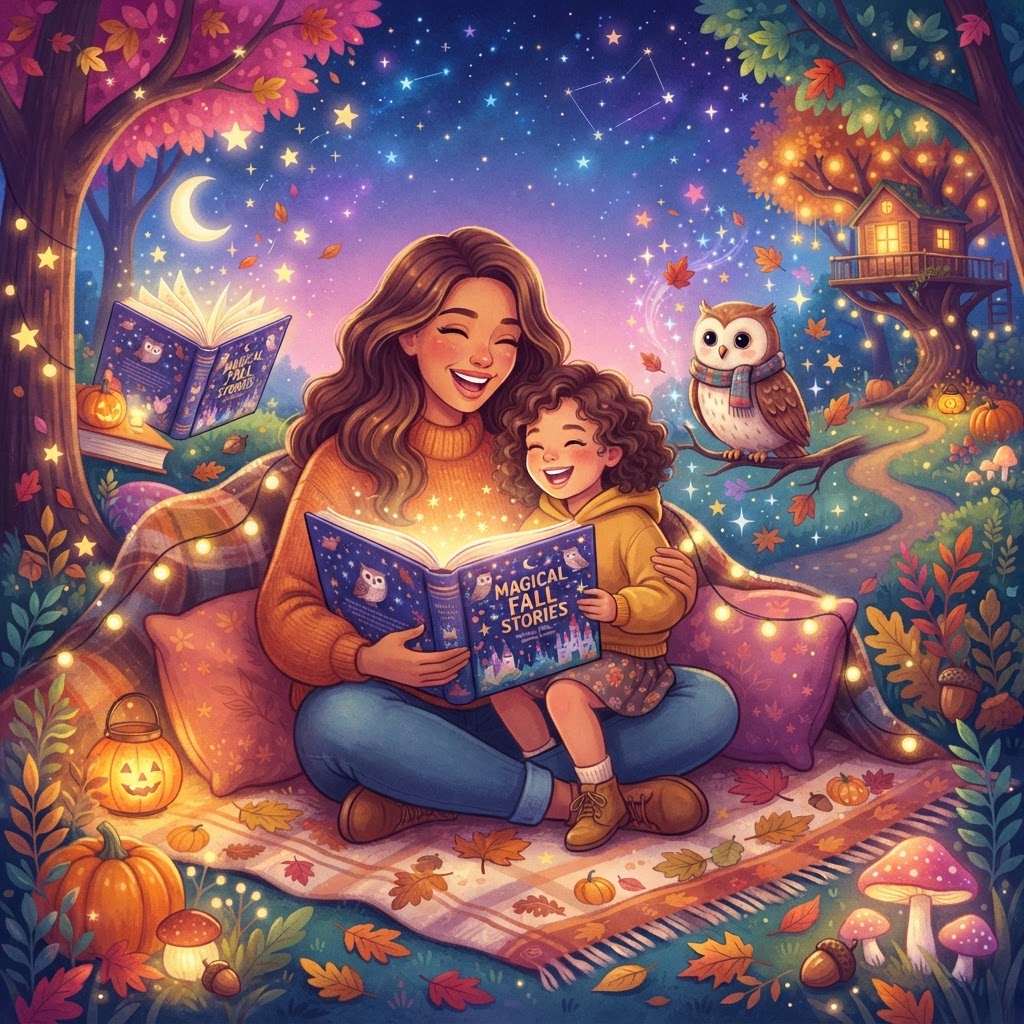
Fall is a wonderful season for storytelling. Crisp leaves, apples, pumpkins, migrating birds, and earlier sunsets give children rich sensory details to notice, describe, and weave into stories. That makes fall stories for kids especially helpful for building vocabulary, imagination, and emotional connection during a season of change.
These fall story activities combine books, pretend play, and simple crafts so children can move from listening to creating. That matters: the American Academy of Pediatrics has long emphasized shared reading as a key part of healthy development, and the Harvard Center on the Developing Child highlights back-and-forth conversation as essential for language growth. If you want even more inspiration, these cozy autumn story ideas pair beautifully with the activities below.
Why are fall stories for kids such a strong learning tool?
Fall stories for kids work well because the season is full of concrete, visible changes children can observe and talk about. Leaves change color, weather shifts, and family routines often become more structured, giving children plenty of real-life details to connect to language.
From a child development perspective, this is powerful. Research on dialogic reading by Grover Whitehurst and colleagues found that when adults ask open-ended questions during stories, children build vocabulary and comprehension more effectively. Fall themes also invite sensory play, which the National Association for the Education of Young Children recognizes as a meaningful part of early learning. In short, autumn themed stories help children connect words to the world around them.
How can a leaf hunt turn into a story adventure?
A leaf hunt becomes a story adventure when children collect “characters” from nature and give each one a role. This simple activity supports observation, sequencing, and descriptive language.
Story prompt
“On a windy day, three leaves fell from the tallest tree in the park. One wanted to fly, one wanted to hide, and one was looking for a new friend. What happened next?”
Materials
- 5-10 fallen leaves in different colors or shapes
- A small basket or paper bag
- Paper and crayons
- Tape or glue
Instructions
- Go on a short walk and collect a few safe, dry leaves.
- Spread them out and ask your child to choose a “main character” leaf.
- Invite your child to describe each leaf: big, tiny, curly, golden, spotted.
- Tell the story prompt aloud, then ask what each leaf wants, fears, or finds.
- Draw the story scenes or glue the leaves onto paper as illustrations.
- Retell the story at bedtime in beginning-middle-end order.
For toddlers, keep it oral and brief. For older children, encourage dialogue: “I am Ruby Leaf, and I’m trying to reach the pumpkin patch!”
How can apple tasting inspire autumn themed stories?
Apple tasting is an easy way to build an autumn story around comparing, predicting, and describing. Children naturally use more language when they can smell, taste, and sort what they are experiencing.
Story prompt
“In the orchard, a tiny apple named Pip rolled away from the basket and discovered a secret path between the trees. Who did Pip meet there?”
Materials
- 2-4 kinds of apples
- Child-safe knife for adult use
- Plates or napkins
- Chart paper or a notebook
Instructions
- Slice different apples and let your child taste each one.
- Ask descriptive questions: Which is crunchy? Which is sweet? Which is tart?
- Create simple characters based on the apples: brave red apple, shy green apple, giggly yellow apple.
- Start with the prompt and let your child choose which apple becomes the hero.
- Write down your child’s words exactly if possible. This shows that their ideas matter.
- Finish by drawing the orchard map or making a “favorite apple ending.”
This activity works especially well for preschool and early elementary children because it blends sensory exploration with storytelling. It is also a gentle way to practice opinion words like “favorite,” “best,” and “because.”
How can a harvest rescue story build problem-solving skills?
A harvest rescue story helps children practice planning and flexible thinking while they play. When a story includes a small problem to solve, children naturally begin sequencing actions and testing ideas.
Story prompt
“The farm wagon tipped over just before the harvest festival, and the corn, pumpkins, and hay bales rolled everywhere. How could the animal friends save the celebration?”
Materials
- Toy animals, blocks, or loose parts
- Small pumpkins, play food, or paper cutouts
- A tray, rug, or table as the “farm”
- Optional: a toy wagon or basket
Instructions
- Set up a simple farm scene with scattered items.
- Read or say the prompt, then pause for your child’s plan.
- Ask guiding questions: Who can help? What should happen first? What if it starts to rain?
- Let your child move the toys and act out the rescue.
- Add a twist if needed: one pumpkin is missing, or the wagon wheel is stuck.
- End with a celebration scene and a retelling of how the problem was solved.
This is one of the best fall story activities for siblings or mixed ages because everyone can take a character. It also fits beautifully in a classroom dramatic play center.
How can a pumpkin problem-solving tale support early STEM learning?
A pumpkin story can support early STEM by inviting children to predict, test, count, and compare. The story gives a playful reason to measure, sort, and experiment.
Story prompt
“Poppy the pumpkin wanted to reach the porch before sunset, but she was round, wobbly, and kept rolling the wrong way. How could her friends help?”
Materials
- One pumpkin or mini pumpkins
- Books, blocks, or cardboard tubes for ramps
- Tape measure or ruler
- Paper for simple recording
Instructions
- Build a few easy ramps with household materials.
- Ask your child to predict which ramp will help the pumpkin move fastest or farthest.
- Use the story prompt to explain why the pumpkin is traveling.
- Test the ramps and observe what happens.
- Count rolls, compare distances, or sort pumpkins by size.
- Finish by telling the “scientist ending”: How did Poppy finally make it home?
Keep the focus playful, not perfect. The goal is to connect narrative thinking with early inquiry skills.
How can nature art become a cozy bedtime story?
Nature art becomes a cozy bedtime story when children turn their collage into a setting, character, or journey. This activity is calm, creative, and ideal for winding down after a busy fall day.
Story prompt
“In the forest, a small squirrel found a sparkling path made of leaves, seeds, and feathers. Where did the path lead?”
Materials
- Leaves, twigs, seeds, or grass
- Construction paper
- Glue
- Markers or crayons
Instructions
- Invite your child to arrange the natural items into a forest scene.
- Ask what or who lives there.
- Use the prompt to introduce a gentle adventure.
- Add drawn details like a nest, moon, acorn house, or hidden pond.
- Tell the story slowly as your child points to each part of the picture.
- Display the finished art and revisit the story over several nights.
Because the visual scene stays in place, children can retell the same story with new details each time. Repetition is especially supportive for younger children who are building confidence with language.
How can flashlight shadow stories make dark evenings feel magical?
Flashlight shadow stories turn early autumn darkness into something playful instead of unsettling. They are especially helpful for children who feel nervous about longer nights or seasonal changes.
Story prompt
“When the room grew dark, the brave little fox saw dancing shadows on the wall. Were they strangers, or were they secret forest friends?”
Materials
- Flashlight
- Blank wall or sheet
- Paper cutouts or hands for shadows
- Optional: soft blanket or pillows
Instructions
- Dim the room and shine the flashlight onto a wall.
- Make simple shapes with your hands or paper cutouts.
- Begin the story prompt and invite your child to name each shadow character.
- Keep the tone reassuring and cozy.
- Let your child control the flashlight for part of the story.
- End with a calm bedtime message: the fox is safe, loved, and ready to rest.
This is one of the most flexible autumn themed stories activities because it requires almost no prep. It can also become a lovely bedtime ritual.
How can InstaTales help you create personalized fall stories?
InstaTales can make fall storytelling easier by turning your child’s interests, age, and favorite seasonal themes into a custom story in minutes. Personalized stories often hold attention longer because children hear familiar names, feelings, and settings woven into the plot.
You can create your own personalized bedtime story about leaf explorers, pumpkin helpers, orchard adventures, or woodland animals. If you want a quick starting point, browse story templates and adapt them for a harvest fair, a windy park, or a cozy cabin bedtime tale. Saving favorites in your story library makes it easy to revisit the same story for repetition, which is excellent for comprehension and confidence.
For educators, InstaTales for teachers can support seasonal writing prompts, literacy centers, and take-home reading extensions. A teacher might generate one shared class story about a squirrel preparing for winter, then invite each child to act out or illustrate a different ending. That kind of story extension reflects best practice in early literacy: read, talk, play, retell.
Frequently Asked Questions
What age are these fall story activities best for?
These activities work well for children ages 1-10, with simple adjustments. Toddlers can listen and point, while older children can write, sequence, and add more complex plot details.
How long should a fall story activity take?
Most activities can be done in 10-25 minutes. For younger children, shorter sessions are usually more successful and can always be continued later at bedtime.
Do I need to use books with these activities?
No. You can start with a book, a simple oral story prompt, or a personalized AI story. The most important part is the back-and-forth conversation between adult and child.
How can I make these activities easier for toddlers?
Use fewer materials, one-step directions, and very short storylines. Let toddlers choose characters, make sounds, and repeat key phrases rather than expecting a full narrative.
Can these fall story activities work in a classroom?
Yes, many are ideal for small groups, literacy centers, or circle time extensions. The harvest rescue, leaf story, and pumpkin STEM story all adapt well for collaborative classroom use.
What makes personalized fall stories so engaging for children?
Children tend to stay more interested when a story includes their name, favorite animals, or familiar routines. Personalized storytelling also helps adults meet children where they are emotionally, whether they want something funny, adventurous, or comforting.
Ready to Create a Personalized Bedtime Story?
Use our free AI bedtime story generator to create a personalized illustrated story for your child in 30 seconds — no credit card needed.
Popular story types:
Maya Rodriguez
Lead Content Editor & Early Literacy Specialist
Maya is a former early childhood educator and literacy specialist with over a decade of experience helping children develop a love of reading. She leads content at InstaTales, where she writes about the science of storytelling, child development, and how families can use personalized AI stories to build literacy and emotional resilience.
instatales.ai