The Amazon Folktales for Kids: Magic & Lessons
Discover the magic of the Amazon through its folktales — traditional stories that teach, delight, and transport kids to another culture.
✦ Key Takeaways
- •They are meaningful because they combine wonder with values children can understand.
- •Several themes appear again and again in the Amazon tales: animal wisdom, river mystery, forest protection, trickster behavior, creation stories, and transformation.
- •The best way is to keep the retelling simple, respectful, and age-appropriate.
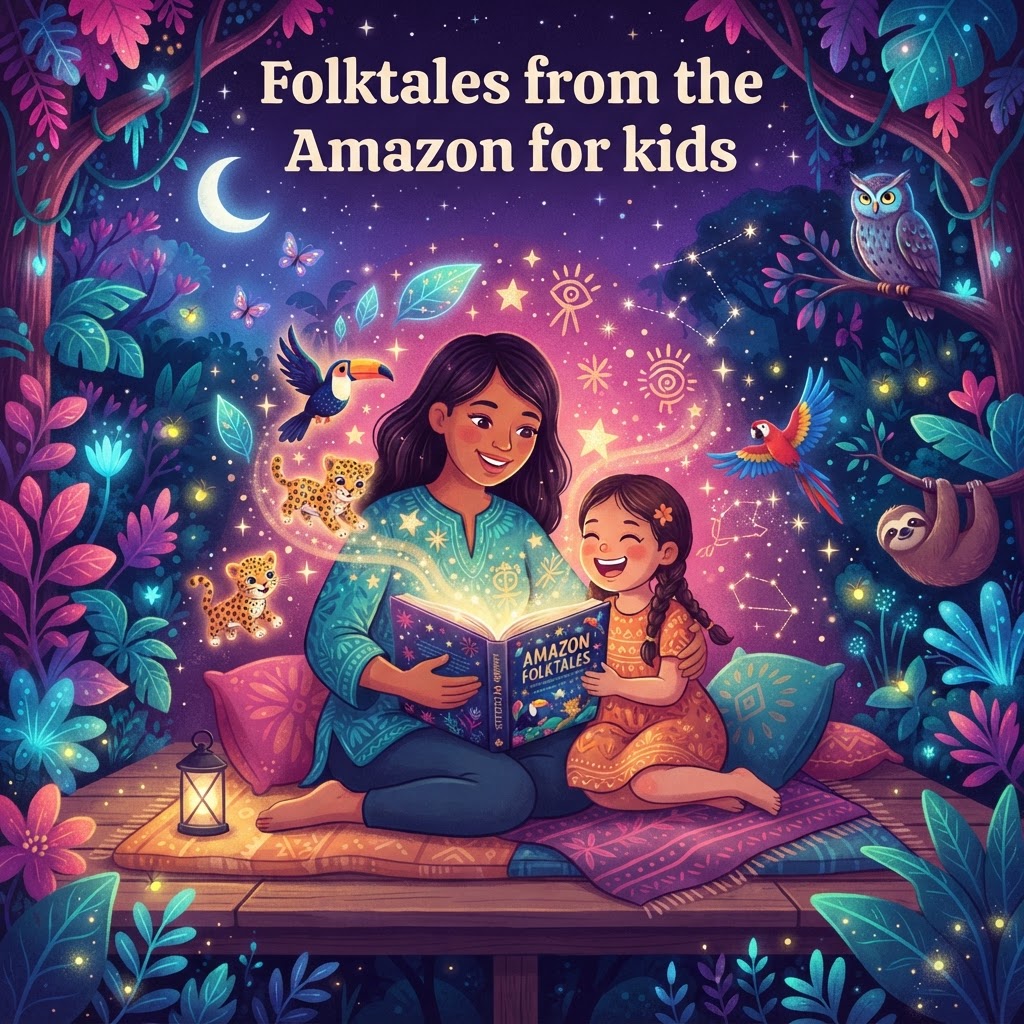
The Amazon is more than a rainforest. It is a vast cultural world shaped by rivers, animals, memory, and oral storytelling. For families exploring folktales from the Amazon, that matters: there is no single “Amazon myth” tradition, but many living story traditions across Indigenous and river communities in countries such as Brazil, Peru, Colombia, Ecuador, and Bolivia.
That diversity is exactly why the Amazon folktales for kids feel so rich. They invite children to imagine pink river dolphins, clever forest animals, mysterious night skies, and protective spirits—while also learning timeless lessons about respect, courage, and care for nature. If your child already enjoys South American folktales for children, Amazon stories are a wonderful next step.
Why are folktales from the Amazon so meaningful for kids?
They are meaningful because they combine wonder with values children can understand. Amazon stories often use animals, rivers, and transformations to teach empathy, responsibility, and respect for the natural world.
They also help children see that stories come from real cultures, not just fantasy worlds. Resources from the National Museum of the American Indian and the World Wildlife Fund’s Amazon overview can help parents place these tales in a real cultural and ecological context.
From a child development point of view, storytelling matters deeply. Research highlighted by the Harvard Center on the Developing Child shows that back-and-forth conversation supports language and thinking skills. When you tell a folktale, pause for predictions, or ask “What would you do?”, you turn story time into rich brain-building interaction.
What story themes appear most often in the Amazon tales?
Several themes appear again and again in the Amazon tales: animal wisdom, river mystery, forest protection, trickster behavior, creation stories, and transformation. These recurring patterns help children enjoy the stories while also noticing the moral at the heart of each one.
Animal teachers and clever creatures
Many the Amazon stories children love most feature jaguars, monkeys, turtles, birds, or snakes that act like teachers. The lesson is often that humans should observe carefully, stay humble, and learn from the living world.
For kids, this theme works well because animals feel familiar. After the story, ask: “What did the animal know that the person did not?”
River spirits and the pink dolphin
In Brazilian Amazon folklore, the pink river dolphin, or boto, is one of the best-known magical figures. Stories about river beings often teach children that not everything is as it seems and that water deserves caution and respect.
With younger children, keep these tales gentle rather than spooky. Focus on wonder, mystery, and river safety instead of fear.
Forest guardians and protectors
Some Amazon-inspired tales include spirits or magical beings who guard the forest, such as the Curupira in Brazilian folklore. These stories teach that forests are not resources to use carelessly; they are homes to protect.
This theme connects beautifully to environmental learning. A simple follow-up is asking children to name three ways they can “be a forest helper.”
Tricksters who learn the hard way
Trickster figures appear across the world, and Amazon storytelling traditions are no exception. These characters lie, boast, or take shortcuts—and then face the consequences.
The moral is usually clear: cleverness without kindness causes problems. If your child likes this pattern, they may also enjoy African folktales for kids, where trickster tales teach similar lessons in a different cultural setting.
Creation stories of night, stars, and rivers
Some folktales from the Amazon explain how darkness came, why rivers move the way they do, or how stars appeared. These stories help children explore big questions about beginnings, belonging, and the shape of the world.
For children, creation tales are especially powerful at bedtime. They slow the pace, spark imagination, and invite quiet reflection.
Transformation and shape-shifting
A person becomes an animal. A spirit appears as a human. A river creature crosses between worlds. Transformation is a powerful theme in Amazon folklore, and it often teaches empathy: things may have hidden stories and hidden identities.
Older children usually enjoy talking about the feelings inside these changes. Ask: “How would it feel if no one knew who you really were?”
How can parents share the Amazon stories children will understand and enjoy?
The best way is to keep the retelling simple, respectful, and age-appropriate. Start with one strong image, one clear plot, and one lesson your child can carry into real life.
A few practical tips help a lot:
- Ages 1-3: Use short, rhythmic retellings with animals and repeated lines.
- Ages 4-6: Add gentle mystery, sound effects, and simple “why” questions.
- Ages 7-10: Discuss the moral, compare versions, and talk about culture and place.
- Name the source when you can: Say “This story is inspired by Brazilian Amazon folklore” rather than treating all Amazon cultures as one.
- Avoid sacred retellings you do not understand: “Inspired by” is often better than claiming a story is authentic if the source is unclear.
It can also help to connect the Amazon to a map, pictures of rainforest animals, or other world story traditions. If your family enjoys cultural story journeys, you can explore more regions through folktales from Asia for kids or other guides on the InstaTales blog.
How can InstaTales help you create stories inspired by Amazon folklore?
InstaTales can help by turning a cultural theme into a child-friendly, personalized bedtime story. The key is to use Amazon folklore as inspiration, not to copy a sacred or community-specific story without context.
A simple process works well:
- Pick one theme: river spirit, animal teacher, forest guardian, or creation tale.
- Choose one moral: respect nature, tell the truth, listen well, or share.
- Add age and tone: calm for bedtime, playful for preschool, adventurous for older kids.
- Include sensory details: moonlit river, bright macaws, rustling leaves, rain on the canopy.
- Ask for a gentle reflection question at the end.
You can create your own personalized bedtime story with a prompt like:
- “Write a calm bedtime story for a 5-year-old inspired by Amazon folklore about a kind pink river dolphin who teaches respect for the river.”
- “Create an adventure story for an 8-year-old set in the Amazon rainforest, featuring a clever turtle, a forest guardian, and a lesson about honesty.”
If your child wants to revisit favorite stories, save them in your story library. And if you want a faster starting point, browse story templates to shape the tone, age level, and bedtime style.
How can teachers and caregivers extend folktales from the Amazon beyond bedtime?
They can extend them through art, geography, discussion, and creative writing. A good folktale does not end when the story ends; it opens a door to culture, empathy, and inquiry.
Try these simple extensions:
- Locate the Amazon basin on a map and name a few countries within it.
- Create a rainforest soundscape using claps, whispers, and animal calls.
- Ask children to draw the “guardian” or “teacher” from the story.
- Compare the moral with one from another region.
- Invite students to write their own respectful “inspired by” tale using InstaTales for teachers.
These activities support comprehension and oral language while helping children understand that stories belong to people, places, and traditions.
Frequently Asked Questions
Are Amazon folktales good for preschoolers?
Yes, as long as they are simplified and kept gentle. Animal-centered tales, creation stories, and forest-helper themes usually work especially well for ages 3-5.
Are all folktales from the Amazon Indigenous stories?
Not all of them. The Amazon includes many Indigenous traditions as well as regional and river-community folklore, so it is best to avoid treating them as one single category.
How do I share Amazon folklore respectfully with kids?
Use clear sources, name the culture or country when known, and say “inspired by” when you are adapting themes. Avoid claiming a story is traditional if you cannot verify its origin.
What is the best first Amazon story theme for children?
Animal teacher stories are often the easiest place to begin. They are vivid, easy to follow, and naturally lead to conversations about kindness, wisdom, and nature.
Can AI-generated stories be culturally respectful?
Yes, if adults guide the process carefully. Choose broad themes, avoid stereotypes, and add real cultural context through trusted sources and discussion.
What lesson do Amazon folktales often teach?
A common lesson is that humans are part of nature, not above it. Many stories also teach honesty, humility, listening, and respect for community.
Get a new bedtime story every week
Free, personalized, and delivered to your inbox. No spam, ever.
Ready to Create a Personalized Bedtime Story?
Use our free AI bedtime story generator to create a personalized illustrated story for your child in 30 seconds — no credit card needed.
Popular story types:
Maya Rodriguez
Lead Content Editor & Early Literacy Specialist
Maya is a former early childhood educator and literacy specialist with over a decade of experience helping children develop a love of reading. She leads content at InstaTales, where she writes about the science of storytelling, child development, and how families can use personalized AI stories to build literacy and emotional resilience.
instatales.ai