Arctic Folktales for Kids: Stories & Lessons
Discover the magic of the Arctic through its folktales — traditional stories that teach, delight, and transport kids to another culture.
✦ Key Takeaways
- •Arctic folktales for kids are meaningful because they connect story, place, and survival in a vivid way.
- •The Arctic stories children remember best often return to a few powerful themes: animals as teachers, survival, generosity, transformation, and community rules.
- •The strongest lessons in Arctic folktales are respect, resilience, generosity, and attention to others.
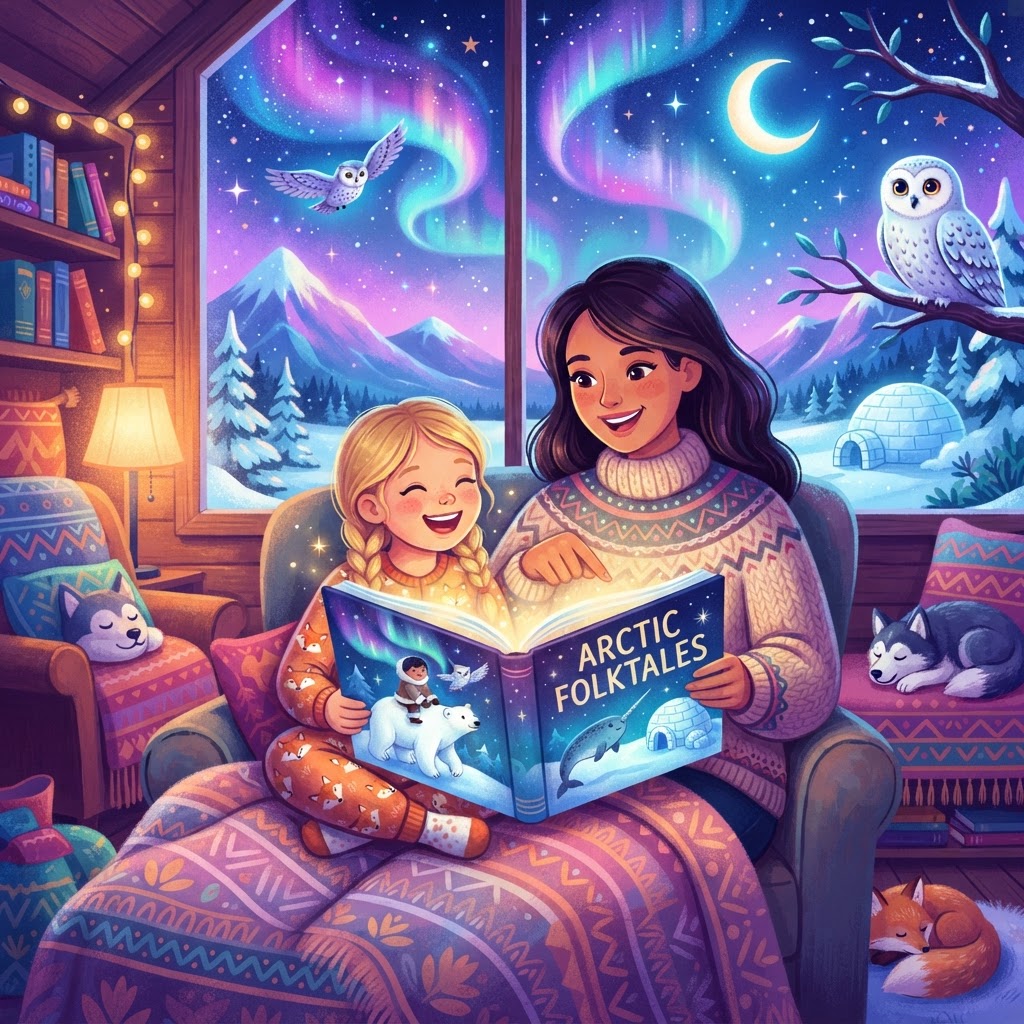
Snow, stars, sea ice, animal helpers, and long winter nights make folktales from the Arctic especially memorable for children. These stories do more than entertain: they introduce kids to the cultures, values, and environments of the far North in ways that feel warm, human, and deeply imaginative. If you have enjoyed folktales from Africa or stories from Asia, Arctic storytelling offers another rich way to help children explore the world through bedtime reading.
What makes folktales from the Arctic so meaningful for kids?
Arctic folktales for kids are meaningful because they connect story, place, and survival in a vivid way. They help children understand how families in northern regions have long used stories to teach respect, courage, caution, and community care.
It is also important to remember that the Arctic tales do not come from one single culture. The Arctic includes many Indigenous peoples across Alaska, Canada, Greenland, and northern Scandinavia and Russia, including Inuit, Yupik, Inupiat, Sámi, and others. Their storytelling traditions are distinct, even when they share similar themes like animals, weather, and cooperation.
For parents who want trusted cultural context, the Alaska Native Knowledge Network offers valuable educational resources, and the Smithsonian Arctic Studies Center provides helpful background on Arctic peoples and lifeways. Using sources like these helps families present the Arctic folktales for kids with more care and accuracy.
What children often notice first is the atmosphere: northern lights, snow houses, kayaks, seals, ravens, and great whales. What adults notice is the deeper lesson underneath: in Arctic traditions, nature is powerful, alive, and worthy of respect.
Which traditional themes appear in folktales from the Arctic?
The Arctic stories children remember best often return to a few powerful themes: animals as teachers, survival, generosity, transformation, and community rules. These themes make the stories exciting for kids while also carrying moral lessons that are easy to discuss after reading.
Animals as teachers and relatives
In many folktales from the Arctic, animals are not just background creatures. Raven, fox, bear, seal, whale, and hare may speak, guide, trick, or test people.
For children, this theme teaches:
- Respect for animals
- Careful observation of nature
- Humility about human power
A simple discussion question is: What did the animal know that the person did not?
Why do weather and ice matter so much?
In Arctic storytelling, weather is never just scenery. Wind, snow, darkness, and shifting ice can protect, challenge, or warn people.
This teaches children that:
- Nature deserves respect
- Good choices keep people safe
- Listening to elders can be lifesaving
This is one reason the Arctic stories children hear often feel both magical and practical at the same time.
How do clever heroes survive?
Many Arctic heroes are not the strongest person in the story. They survive because they pay attention, solve problems, and stay calm.
Kids learn that:
- Thinking matters as much as strength
- Patience can be brave
- Small actions can change big outcomes
This theme works especially well for children who like adventure but still need reassuring endings.
Why is sharing a repeated lesson?
In harsh climates, no one thrives alone. Food, shelter, tools, and knowledge often appear in stories as things that must be shared fairly.
The moral lesson is clear:
- Generosity protects the whole group
- Greed harms trust
- Communities stay strong when people help one another
For young children, this makes sharing feel less like a rule and more like a meaningful human value.
What do transformation stories teach?
Shape-shifting and transformation are common in the Arctic tales. A person may become an animal, an animal may take human form, or someone may be changed by a broken promise or act of kindness.
This theme helps children think about:
- Empathy and perspective-taking
- Consequences of choices
- The mystery of identity and belonging
It also opens the door to imaginative play, which early childhood experts link to flexible thinking and emotional growth.
Why do some stories warn children?
Not every folktale is soft and cozy. Some Arctic stories are cautionary, using fear, tricksters, or strange beings to teach children not to wander, lie, mock others, or ignore safety rules.
Handled gently, these stories can teach:
- Boundaries
- Self-control
- Respect for family guidance
For ages 1-5, keep the tone mild. For older children, you can talk more directly about why communities created warning stories in difficult environments.
What lessons do the Arctic folktales for kids teach?
The strongest lessons in Arctic folktales are respect, resilience, generosity, and attention to others. These are developmentally valuable lessons because children learn best when ideas are carried inside memorable stories.
Here are some of the clearest takeaways:
- Respect nature: Weather, animals, and land are not toys.
- Work together: Survival and happiness depend on community.
- Listen well: Elders and experienced helpers often carry wisdom.
- Stay resourceful: Clever thinking can solve hard problems.
- Be kind: Sharing and fairness matter.
This fits what child development research tells us. The American Academy of Pediatrics recommends shared reading from infancy because it supports language, relationships, and early literacy. Research on dialogic reading, including the work of Grover Whitehurst and colleagues, also shows that children understand stories better when adults pause, ask questions, and invite predictions.
So after reading folktales from the Arctic, try asking:
- What was the smartest choice in the story?
- Who shared? Who did not?
- How would you help in that snowy place?
How can adults share folktales from the Arctic respectfully and clearly?
The best way to share Arctic folktales is to name the culture, keep the context simple, and avoid treating all Arctic peoples as the same. Children do not need a lecture, but they do benefit from accuracy and respect.
A few practical guidelines help:
- Say where the story comes from when you can: Inuit, Yupik, Sámi, or another people.
- Choose retellings by Indigenous authors, educators, or trusted cultural organizations when possible.
- Explain that some traditions are seasonal or sacred, so not every story should be copied casually.
- Focus on inspiration rather than imitation.
For example, instead of saying, “This is how Arctic people tell stories,” say, “This story comes from an Inuit tradition,” or “This tale is inspired by northern storytelling themes.” That small wording change matters.
It can also help to compare world storytelling patterns. Children may notice that trickster tales, animal helpers, and cautionary stories appear across cultures, whether they are reading northern legends or European folktales for kids. That builds cultural curiosity without flattening differences.
How can you create Arctic-inspired stories with InstaTales?
You can use InstaTales to create original bedtime stories inspired by Arctic settings and values without copying a traditional tale word for word. This is a great option if your child loves snowy adventures but needs a gentler, more personalized version.
Start by asking InstaTales to create your own personalized bedtime story using details your child already loves:
- their name
- age
- favorite animal
- bedtime tone
- reading level
Then add Arctic-inspired elements such as:
- northern lights
- sea ice
- a kind raven guide
- teamwork in a snowstorm
- sharing food with neighbors
- listening to a grandparent’s wisdom
A strong prompt might be:
Create a calm bedtime story for a 6-year-old about Maya, a helpful child in the Arctic who learns to share, listen to a seal guide, and protect her friends during a snowy night.
If you want faster results, browse story templates and adapt one with an Arctic setting. When your child finds a favorite, save it in your story library so you can reread it and compare it with other world story traditions from the InstaTales blog.
For classrooms, Arctic-themed story generation can also support geography, cultural studies, and reading response. Teachers can ask students to identify the lesson, setting clues, and animal symbolism after listening.
Frequently Asked Questions
Are Arctic folktales appropriate for young children?
Yes, many are, especially when retold in simple and gentle language. For toddlers and preschoolers, choose stories with animal helpers, repetition, and clear, comforting endings.
What age is best for folktales from the Arctic?
Children ages 4-10 usually get the most from the themes and discussion questions. Younger children can still enjoy the Arctic stories children love most when the plot is shortened and the imagery stays soothing.
Do all Arctic peoples tell the same stories?
No. The Arctic includes many different Indigenous cultures, and their stories are not interchangeable. It is best to identify the specific tradition whenever possible.
What morals appear most often in the Arctic tales?
Common morals include generosity, respect for nature, bravery, clever problem-solving, and listening to elders. These lessons often reflect the realities of living in demanding environments.
Can I use AI to make Arctic-inspired bedtime stories?
Yes, if you use AI carefully. Ask for an original story inspired by Arctic themes and values rather than a copied sacred or traditional story, and keep the cultural framing respectful.
Ready to Create a Personalized Bedtime Story?
Use our free AI bedtime story generator to create a personalized illustrated story for your child in 30 seconds — no credit card needed.
Popular story types:
Maya Rodriguez
Lead Content Editor & Early Literacy Specialist
Maya is a former early childhood educator and literacy specialist with over a decade of experience helping children develop a love of reading. She leads content at InstaTales, where she writes about the science of storytelling, child development, and how families can use personalized AI stories to build literacy and emotional resilience.
instatales.ai