How Many Bedtime Stories Should You Read to Your Child Each Night?
How many bedtime stories should you read each night? The evidence-based sweet spot — 1–2 short stories, 10–15 minutes — and why consistency beats quantity.
✦ Key Takeaways
- •One to two short stories per night is the ideal for most families.
- •Aim for 10–15 minutes of total reading time for ages 3 and up, and 3–5 minutes for toddlers.
- •Three things outrank story count: (1) consistency — same time, same order, most nights; (2) engagement — reading with expression and talking about the story, not just reciting words; and (3) a screen-free, wind-down context — dim lights, no tablets, calm voices.
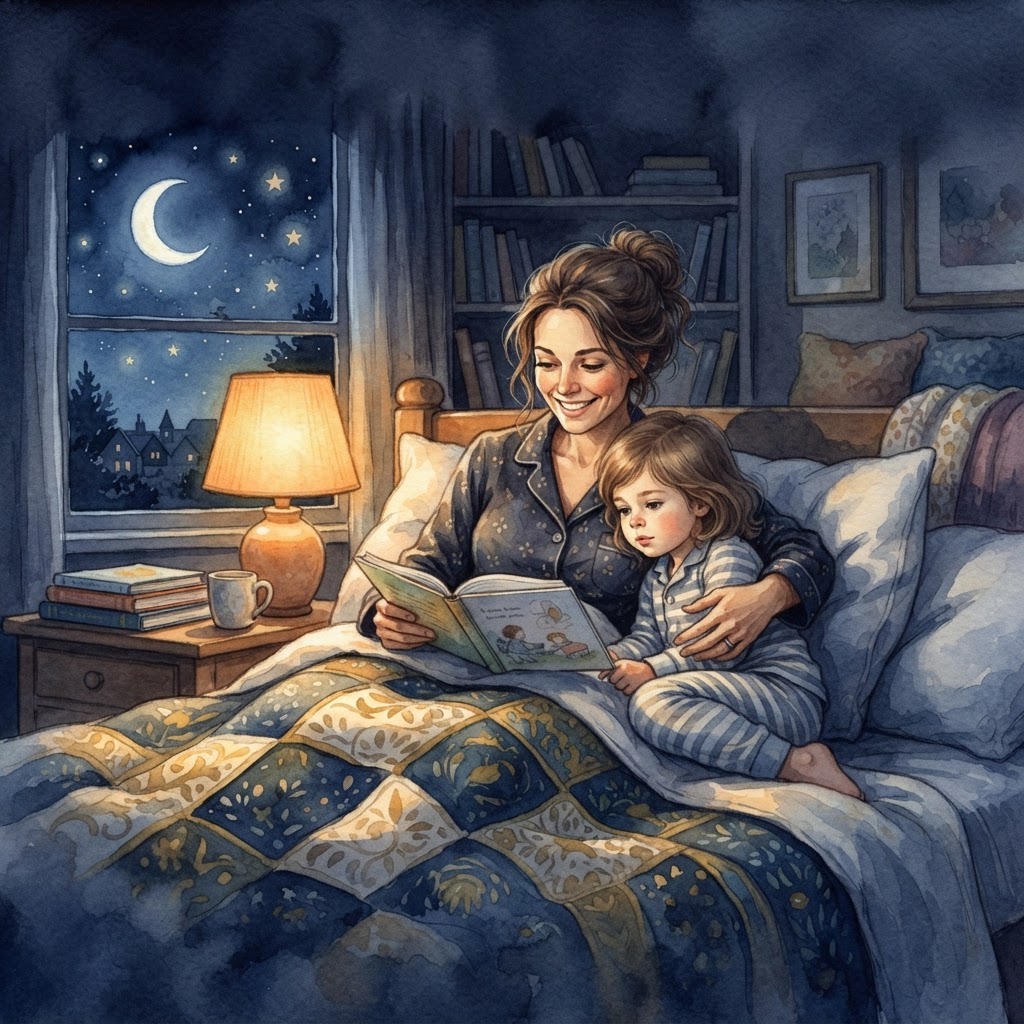
How Many Bedtime Stories Should You Read to Your Child Each Night?
Reading 1 to 2 short stories — about 10 to 15 minutes total — each night is the sweet spot: enough to build routine and literacy without overstimulating the child or pushing bedtime too late. Consistency matters far more than quantity; one story every night beats three stories twice a week.
How many bedtime stories should you read per night?
One to two short stories per night is the ideal for most families. For toddlers, one story of 2–5 minutes is plenty. For preschoolers and older children, one longer story or two short ones totaling 10–15 minutes hits the engagement-to-sleep balance. The goal is a consistent ritual, not a marathon — a child who reads one story nightly builds stronger routine and literacy habits than one who reads three stories on an unpredictable schedule.
How long should bedtime reading be in total?
Aim for 10–15 minutes of total reading time for ages 3 and up, and 3–5 minutes for toddlers. The American Academy of Pediatrics recommends a 'Brush, Book, Bed' routine with a short, consistent reading segment — emphasizing that the ritual matters more than the volume. Going beyond 20 minutes risks overtiredness (which paradoxically makes falling asleep harder) and pushes lights-out later, which undermines the sleep you're trying to protect.
Does reading more stories lead to better literacy outcomes?
Not linearly. Literacy outcomes are driven more by frequency (reading most nights) than by volume per session. A child who reads one story seven nights a week gets more language exposure and stronger routine than one who reads three stories twice a week. The National Literacy Trust research consistently links daily reading — not lengthy reading — with stronger reading outcomes. Quality of engagement (talking about the story, pointing to words) matters more than piling on more books.
Should I read the same story repeatedly or new ones each night?
A mix is best. Repetition is valuable — children learn vocabulary and prediction through re-reading, and a favorite story becomes a comforting ritual. But pure repetition eventually drops engagement, and variety builds broader vocabulary. A practical rule: honor a child's request to re-read a favorite for as long as they're genuinely engaged, then introduce a new story (an AI generator like InstaTales makes fresh, personalized stories frictionless to produce) to keep vocabulary growing.
What matters more than the number of stories?
Three things outrank story count: (1) consistency — same time, same order, most nights; (2) engagement — reading with expression and talking about the story, not just reciting words; and (3) a screen-free, wind-down context — dim lights, no tablets, calm voices. A single story read with full engagement in a consistent routine delivers more sleep and literacy benefit than three stories read distractedly on a chaotic night.
Frequently Asked Questions
How many bedtime stories should a toddler get?
One short story of 2–5 minutes is enough for toddlers. Longer sessions risk overtiredness and attention loss.
Is reading every night more important than reading for a long time?
Yes. Frequency builds routine and language exposure; lengthy single sessions don't compensate for inconsistent nights.
Should I read the same book every night if my child asks?
Yes, while they're genuinely engaged — repetition builds vocabulary. Introduce new stories when engagement dips.
Can reading too many stories delay sleep?
Yes. Sessions over 20 minutes, especially with screens, push lights-out later and can overstimulate the child, making sleep harder.
Related: Bedtime Routine for Toddlers with Stories · Best Bedtime Story Themes for Kids' Sleep · Nighttime Routines and AI Stories
Get a new bedtime story every week
Free, personalized, and delivered to your inbox. No spam, ever.
Ready to Create a Personalized Bedtime Story?
Use our free AI bedtime story generator to create a personalized illustrated story for your child in 30 seconds — no credit card needed.
Popular story types:
Maya Rodriguez
Lead Content Editor & Early Literacy Specialist
Maya is a former early childhood educator and literacy specialist with over a decade of experience helping children develop a love of reading. She leads content at InstaTales, where she writes about the science of storytelling, child development, and how families can use personalized AI stories to build literacy and emotional resilience.
instatales.ai