How to Make a Personalized Children's Book Fast
Want to create a personalized children's book with your child as the hero? Here's a step-by-step guide to making a custom illustrated storybook in under 5 minutes.
✦ Key Takeaways
- •Personalized books work well because children pay closer attention when a story feels like it belongs to them.
- •Before you begin, gather a few simple details about your child.
- •Start with the child’s real name and 2-4 recognizable traits.
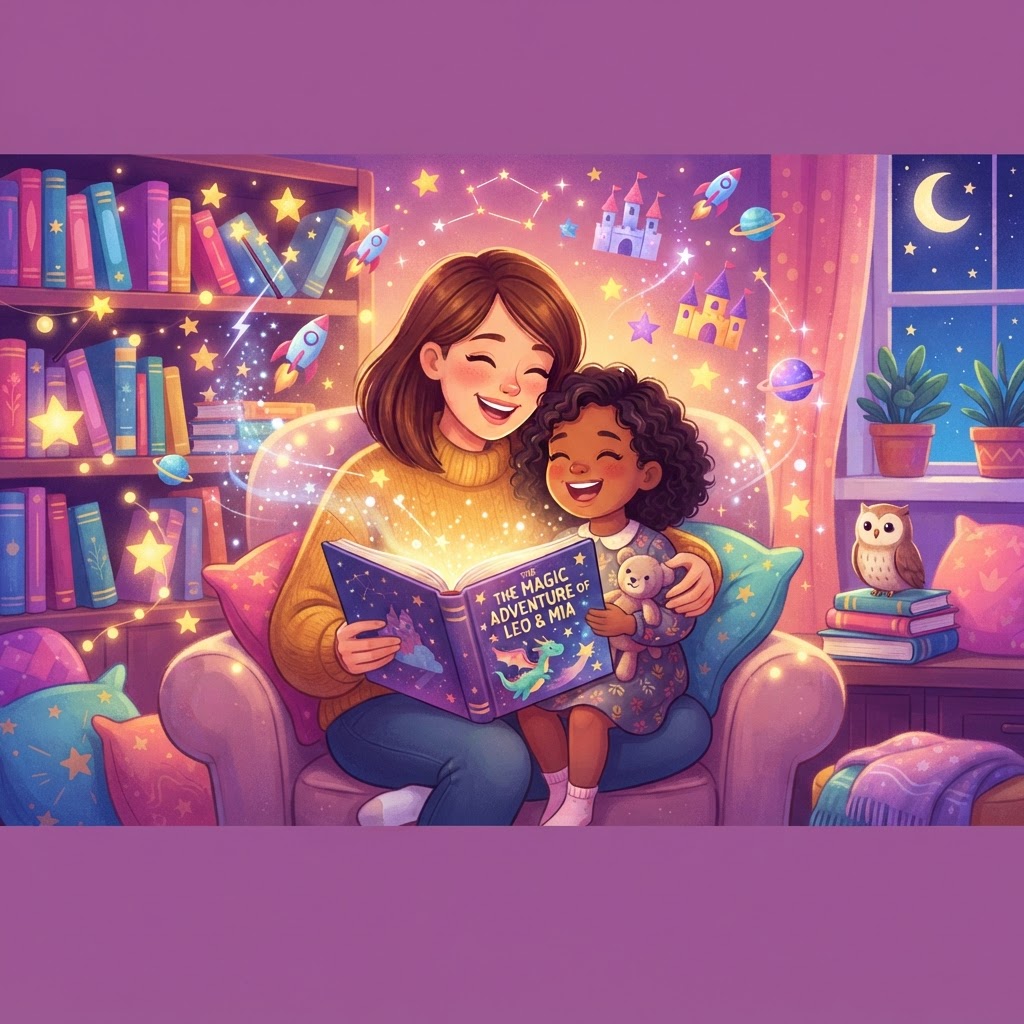
If you have been wondering how to make a personalized children's book without hiring an illustrator or spending a whole afternoon writing, the process is much easier than it used to be. With AI tools like InstaTales, you can create custom children's story content in just a few minutes, complete with your child’s name, interests, age-appropriate language, and matching illustrations.
That speed matters, but so does quality. A good personalized storybook online should feel warm, readable, and developmentally appropriate. The steps below walk you through exactly how to do that with InstaTales, from choosing your child’s details to saving the finished story for later.
Why do personalized children's books work so well?
Personalized books work well because children pay closer attention when a story feels like it belongs to them. Seeing their own name, favorite animal, or familiar routine in a book can increase engagement and make reading feel more meaningful.
This fits with what child development experts already know. The American Academy of Pediatrics recommends reading aloud from infancy because it supports language, attention, and bonding. The Harvard Center on the Developing Child also emphasizes that warm, back-and-forth interactions help build language and thinking skills.
In practice, personalized stories can help children:
- Stay focused longer
- Join in with repeated phrases
- Talk about feelings and choices
- Build confidence as the “hero” of the story
- Connect reading with comfort and fun
That is why many parents use tools like InstaTales to create your own personalized bedtime story instead of relying only on one-size-fits-all books.
What should you prepare before you start?
Before you begin, gather a few simple details about your child. The best results come from specific, concrete information rather than long or complicated prompts.
Have these ready:
- Your child’s name or nickname
- Age
- Favorite animals, colors, toys, or places
- Personality traits, such as brave, curious, gentle, or silly
- Any bedtime themes you want, like calming, adventurous, or educational
You do not need a full plot. In fact, shorter inputs often work better. Think in terms of a few strong details: “Maya, age 5, loves turtles, rainbows, and helping friends.”
If you want a faster starting point, you can browse InstaTales story templates for ready-made structures and then personalize them.
How do you choose your child’s name and characteristics?
Start with the child’s real name and 2-4 recognizable traits. This is the step that makes the story feel personal rather than generic.
A good character profile might include:
- Name: Oliver
- Age: 4
- Traits: kind, curious, cautious
- Favorites: dinosaurs, muddy puddles, bedtime snuggles
Keep traits positive and easy to show in action. “Helpful” is usually better than “complex.” “Loves trains” gives the story something concrete to build around.
Here is a simple formula you can use:
- Name
- Age
- 2 personality traits
- 1-3 favorite things
- Optional comfort detail like a stuffed rabbit or night-light
Try not to overload this step. If you add too many traits, hobbies, and side characters, the story may feel scattered. One child, one main goal, and a few memorable details is usually the sweet spot.
How do you pick the right story type and theme?
Choose a story type that matches your child’s interests and your reading goal. For bedtime, calm and reassuring themes usually work best, while daytime reading can support humor, adventure, or learning.
Common story types include:
- Bedtime calm-down stories for winding down
- Adventure stories for imaginative play
- Friendship stories for social-emotional learning
- Moral or lesson-based stories for gentle teaching
- Fantasy tales with dragons, fairies, or magical forests
The theme should feel familiar enough to comfort and new enough to hold attention. A shy child may enjoy a story about finding courage. A highly active child may like a gentle quest with a clear ending.
If your child already loves classic genres, these guides can help you choose:
For older children, myths and legends can also work well when you want a bigger sense of wonder or a stronger hero journey.
How do you select the best age group and tone?
Pick the age group honestly, not aspirationally. The best personalized books match a child’s actual listening level, attention span, and emotional needs.
A simple guide:
- Ages 1-3: short sentences, repetition, soothing tone, familiar routines
- Ages 4-6: clear plot, playful language, simple problem and solution
- Ages 7-10: richer vocabulary, stronger character growth, longer scenes
Tone matters just as much as reading level. For bedtime, choose words like gentle, cozy, reassuring, or sleepy. For daytime reading, you might choose funny, mysterious, or adventurous.
This is also where your practical knowledge as a parent helps. If your child is sensitive, avoid high-stakes danger before bed. If they are reluctant readers, use a cheerful tone and a plot that moves quickly.
Shared reading experts at Reading Rockets note that children learn more when adults actively talk with them about books. That means the right age level is not just about words. It is also about giving your child space to predict, respond, and join in.
How do you choose an illustration style that fits the story?
Choose an illustration style that matches both the child’s age and the story mood. Younger children often respond best to bright, simple images, while older children may enjoy more detailed or cinematic art.
A few easy pairings work well:
- Soft watercolor for bedtime and calming stories
- Cartoon style for silly or energetic tales
- Whimsical fantasy art for magical adventures
- Clean, colorful illustrations for toddlers and preschoolers
When you create a custom children's story, the art should support the emotional goal. If the story is meant to settle your child before sleep, very bold or chaotic images may work against that.
A useful rule: if you want a peaceful reading experience, keep the visual style warm, clear, and not too busy.
How do you generate the story and read it together?
Once you have chosen the child details, theme, age group, tone, and illustration style, generate the story and read it right away. Immediate reading helps you see what works and what you may want to adjust next time.
With InstaTales, the process is simple:
- Enter your child’s name and key traits
- Choose the story type and theme
- Select the age group and tone
- Pick an illustration style
- Generate the book
- Read it together
As you read, use simple dialogic reading prompts:
- “What do you think happens next?”
- “How is the character feeling?”
- “What would you do?”
- “Can you find your favorite part?”
This matters because the learning benefit comes not only from the story itself, but from the conversation around it. Personalized books are especially effective for this because children naturally want to talk about stories that feel like their own lives.
How do you save your personalized books and use them again?
Save stories you love so you can reread them, compare versions, and build a meaningful home library. Repetition is good for children; rereading supports vocabulary, comprehension, and emotional security.
In InstaTales, you can store finished stories in your story library. That makes it easy to:
- Revisit favorite bedtime stories
- Create seasonal or holiday story collections
- Track which themes your child responds to best
- Save sibling versions of similar stories
Over time, this becomes more than a novelty. It becomes a personalized reading archive that reflects your child’s growth, interests, and changing developmental stage.
What tips and common mistakes should you keep in mind?
The best tip is to stay specific and simple. The most common mistake is trying to make the story do too much at once.
Helpful tips for better results
- Use 2-4 strong details instead of a long biography
- Match the tone to the reading moment, especially at bedtime
- Choose one clear story goal, such as finding a lost toy or helping a friend
- Reread and refine prompts based on what your child actually enjoys
- Let your child help choose the theme or art style when possible
Common mistakes to avoid
- Adding too many characters
- Choosing a reading level that is too advanced
- Using overstimulating themes right before bed
- Making the prompt overly long or vague
- Focusing only on novelty instead of readability
If you want more genre inspiration, browsing the InstaTales blog can help you find ideas that fit your child’s age, mood, and interests.
A final educator’s tip: keep bedtime stories emotionally safe. Children do not need a dramatic twist every night. Often, the most successful personalized books end with connection, comfort, and a predictable sense of calm.
Frequently Asked Questions
How long does it take to make a personalized children's book?
With a good prompt, it can take less than five minutes. Most of the time goes into choosing the child details, theme, and tone.
What details should I include in a personalized story prompt?
Start with your child’s name, age, 2-3 personality traits, and a few favorite things. That is usually enough to make the story feel personal without becoming cluttered.
Is a personalized storybook online good for bedtime?
Yes, as long as you choose a calm theme, gentle tone, and age-appropriate language. Bedtime stories work best when they feel soothing and predictable.
Can I make different stories for siblings?
Yes. Create separate versions using each child’s name, interests, and age level so the story feels truly tailored to them.
What is the best story type for young children?
For ages 1-5, simple bedtime, animal, and friendship stories usually work very well. They are easy to follow and support repetition, comfort, and early language growth.
Can teachers use personalized stories too?
Yes. Personalized stories can support engagement, classroom discussion, and creative writing prompts. They are especially useful when children need a stronger personal connection to reading material.
Get a new bedtime story every week
Free, personalized, and delivered to your inbox. No spam, ever.
Ready to Create a Personalized Bedtime Story?
Use our free AI bedtime story generator to create a personalized illustrated story for your child in 30 seconds — no credit card needed.
Popular story types:
Maya Rodriguez
Lead Content Editor & Early Literacy Specialist
Maya is a former early childhood educator and literacy specialist with over a decade of experience helping children develop a love of reading. She leads content at InstaTales, where she writes about the science of storytelling, child development, and how families can use personalized AI stories to build literacy and emotional resilience.
instatales.ai