How to Start a Family Storytelling Tradition
Want to create lasting family memories? Start a storytelling tradition. Here's how to make stories a cherished part of your family culture.
✦ Key Takeaways
- •Yes, a family storytelling tradition is worth starting because it supports both relationships and child development.
- •The best storytelling tradition is the one your family will actually repeat.
- •Start small, choose a consistent moment, and lower the pressure.
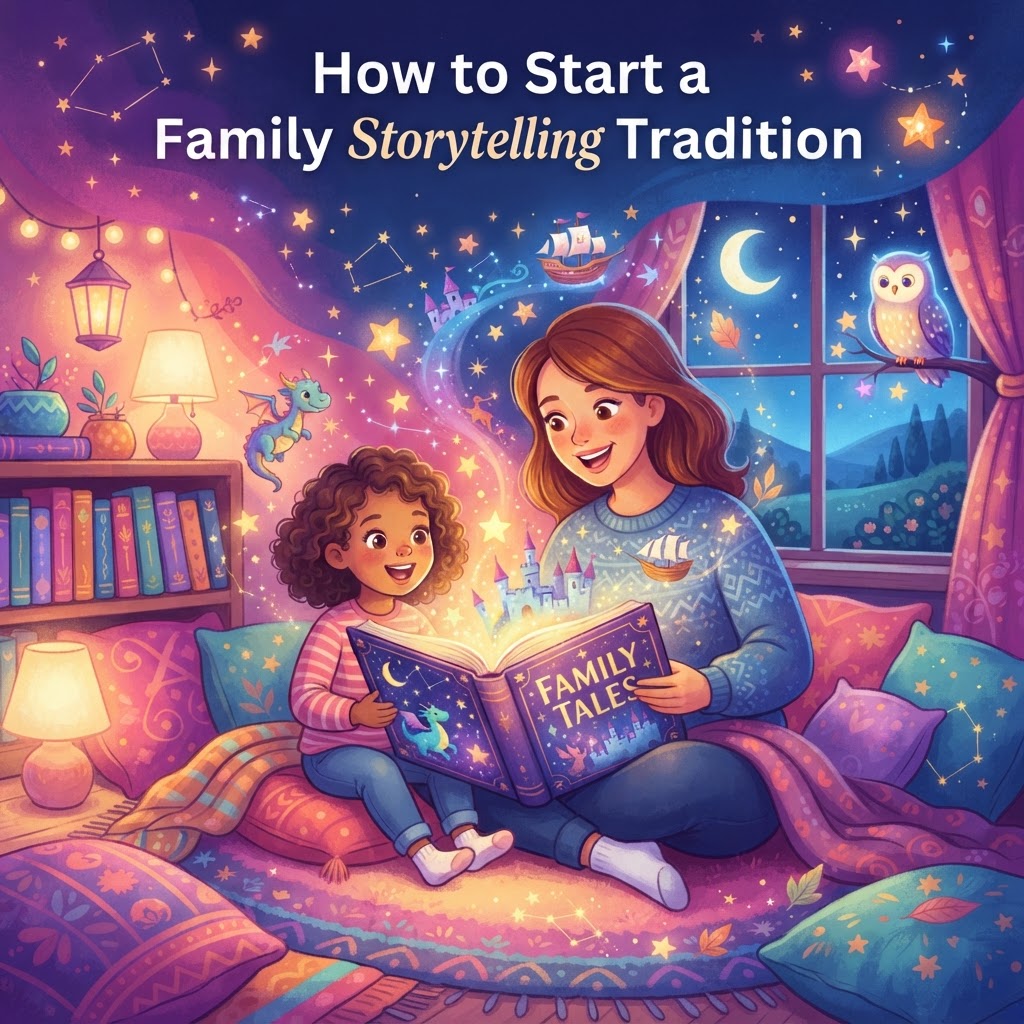
A family storytelling tradition is one of the simplest ways to build connection, language, and lasting memories at the same time. Whether you tell stories at bedtime, share funny family stories at dinner, or record grandparent memories in a journal, storytelling helps children feel rooted in who they are and where they belong.
The best part is that storytelling for families does not need to be polished or perfect. It just needs to be regular, warm, and shared. A few minutes of story time, repeated over weeks and years, can become part of your family culture.
Why is a family storytelling tradition worth starting?
Yes, a family storytelling tradition is worth starting because it supports both relationships and child development. Stories help children build vocabulary, attention, memory, empathy, and a sense of identity.
The American Academy of Pediatrics, through HealthyChildren.org, has long highlighted the value of shared reading and language-rich routines from infancy. Storytelling adds another layer: children are not only hearing words, they are also learning how families solve problems, laugh together, and make meaning from everyday life.
Storytelling also strengthens what the Harvard Center on the Developing Child calls serve-and-return interactions. When a child adds a detail, asks a question, or finishes a repeated line, that back-and-forth supports brain development and emotional security.
In practical terms, family stories help children:
- learn new words and sentence patterns
- understand feelings and relationships
- remember family values in a natural way
- feel seen when they become part of the story
- develop confidence as speakers and listeners
What kinds of storytelling traditions work best for families?
The best storytelling tradition is the one your family will actually repeat. Most families do well with simple, flexible formats that fit into routines they already have.
Here are four tried-and-true types of storytelling for families:
Bedtime stories
Bedtime storytelling is often the easiest place to begin. A short story before sleep creates comfort, predictability, and closeness, especially for younger children. If you want a simple structure, this guide to a bedtime story routine that works can help.
Family story night
This works well once a week. One person tells a made-up story, shares a memory, or retells a favorite family moment while everyone else listens, adds details, or asks questions.
Story journals
A family story journal lets you write down funny things children say, memorable milestones, or stories your child invents. Over time, it becomes a treasure chest of family history and creativity.
Generational stories
These are stories from parents, grandparents, and relatives about childhood, traditions, challenges, and celebrations. They help children see themselves as part of a bigger story, not just a busy week.
If you are not sure what kind of story matches your child’s stage, it helps to look at story types by age so your tradition feels engaging rather than forced.
How do you start a family storytelling tradition without making it complicated?
Start small, choose a consistent moment, and lower the pressure. The goal is not to perform. The goal is to make storytelling feel easy enough to repeat.
A good starting plan looks like this:
- pick one time: bedtime, dinner, bath, or Sunday afternoon
- keep it short: 5 to 10 minutes is enough
- choose one format: read aloud, tell a memory, or co-create a story
- use repetition: children love familiar openings and endings
- let children participate, even in tiny ways
For example, you might say, “Every Friday after dinner, we tell one family story.” Or, “Every night, we make up a two-minute bedtime adventure.”
If reading aloud feels awkward, a few small techniques can make a big difference. This guide on reading aloud like a pro offers practical tips that also work for oral storytelling, such as using pauses, expression, and repeated phrases.
You can also make starting easier with prompts. A child’s drawing, a photo, or a favorite stuffed animal can become the seed of a story. Many families love turning art into stories, and this guide on how to turn your child’s drawing into a story is a great place to begin.
What are five easy family storytelling tradition ideas to try?
These five ideas are simple, flexible, and realistic for busy families. Choose one and try it for two weeks before adding anything else.
1. The “one story before bed” tradition
Tell or read one short story every night. It can be a book, a family memory, or a made-up tale featuring your child as the main character.
2. Friday family story night
Pick one evening a week when everyone shares a story prompt such as “something funny that happened today” or “a time I felt brave.” Snacks help.
3. The story jar
Write prompts on slips of paper and keep them in a jar. Ideas might include “Tell a story about a rainy day,” “Tell a story about Grandma as a child,” or “Make up a story about a lost sock.”
4. The family story journal
Keep a notebook by the couch or bedside table. Each week, write one new family story, favorite quote, or child-created tale. If you create digital stories, you can save favorites in your story library for easy re-reading.
5. Generations and memory nights
Once a month, ask an older relative to share one story from their childhood. This can happen in person, by phone, or on video call. Organizations like Zero to Three emphasize that everyday conversation and shared language experiences are powerful for early learning, and family memory-sharing is part of that.
How can you keep storytelling for families consistent over time?
You keep a storytelling tradition going by making it simple, predictable, and forgiving. Consistency matters more than length, and imperfect storytelling still counts.
Here are the habits that help traditions last:
- attach storytelling to an existing routine
- repeat favorite formats instead of reinventing each time
- let “short” be enough on busy days
- store prompts, books, or story starters in one easy place
- celebrate participation, not performance
It also helps to rotate between reading, retelling, and inventing. Some nights you may read a classic. Other nights, you may choose to create your own personalized bedtime story based on your child’s interests, then return to it later as part of your routine.
Children stay engaged when stories feel fresh but familiar. That is why many parents mix repeated characters with new adventures, or use seasonal prompts like birthdays, holidays, or first-day-of-school memories.
If you miss a week, do not treat the tradition as broken. Just restart. Strong family rituals survive because they are flexible, not because they are perfect.
How can you involve every family member in sharing family stories?
Everyone can take part in a family storytelling tradition, even babies and reluctant adults. The key is to match the role to the person’s age, temperament, and comfort level.
Here are easy ways to involve everyone:
Babies and toddlers
Use repetition, rhythm, and simple actions. Let them point to pictures, finish a sound effect, or hold a prop.
Preschoolers
Invite them to choose the character, setting, or ending. Young children love helping shape the story, even if their ideas are silly or surprising.
School-age children
Let them tell parts of the story, ask “what happens next,” or create sequels. They may also enjoy drawing scenes or acting stories out.
Teens
Ask for stories about their own experiences, favorite memories, or family traditions they want to keep. Giving them ownership matters.
Parents, grandparents, and caregivers
Adults do not need to be “good storytellers.” Honest, specific memories are often the most meaningful. A story about a lost lunchbox, a first job, or a funny holiday mishap can become a cherished piece of family culture.
If you want even more ideas, the InstaTales blog offers practical ways to make storytelling more playful, age-appropriate, and sustainable.
A family storytelling tradition grows slowly. You begin with one story, one routine, one repeated moment. Over time, those moments become the family stories your children remember most.
Frequently Asked Questions
How often should we do family storytelling?
Start with what feels realistic. For many families, 2 to 4 times a week is enough to build a real tradition without adding stress.
What if my child will not sit still for stories?
That is normal, especially for toddlers and active preschoolers. Try shorter stories, movement, props, or storytelling during bath time, snack time, or bedtime instead of expecting long, quiet listening.
Do family stories have to be educational?
No, they do not need to feel like lessons. Fun, silly, comforting stories still support language, imagination, and connection, which are all valuable forms of learning.
Can we use technology and still have a storytelling tradition?
Yes, as long as technology supports connection rather than replacing it. Listening together, creating stories together, and revisiting favorites can all strengthen storytelling for families.
What if I am not a natural storyteller?
You do not need special talent. Start with simple openings like “When I was little...” or “Once, our family had the funniest day...” and let the story grow from there.
How do we preserve family stories over time?
Write them in a journal, record audio, or save digital versions in one place. The more easy they are to revisit, the more likely they are to become a lasting part of your family culture.
Ready to Create a Personalized Bedtime Story?
Use our free AI bedtime story generator to create a personalized illustrated story for your child in 30 seconds — no credit card needed.
Popular story types:
Maya Rodriguez
Lead Content Editor & Early Literacy Specialist
Maya is a former early childhood educator and literacy specialist with over a decade of experience helping children develop a love of reading. She leads content at InstaTales, where she writes about the science of storytelling, child development, and how families can use personalized AI stories to build literacy and emotional resilience.
instatales.ai