Math Stories for Kids: Teach Early Concepts
Math can be fun when it's hidden in a story! Here's how to use storytelling to teach math concepts to young children.
✦ Key Takeaways
- •Storytelling helps children learn math because it gives abstract ideas a clear purpose.
- •You can weave counting into stories by giving the character something to collect, find, or deliver.
- •Stories teach shapes and spatial language best when children can picture where things are and what they look like.
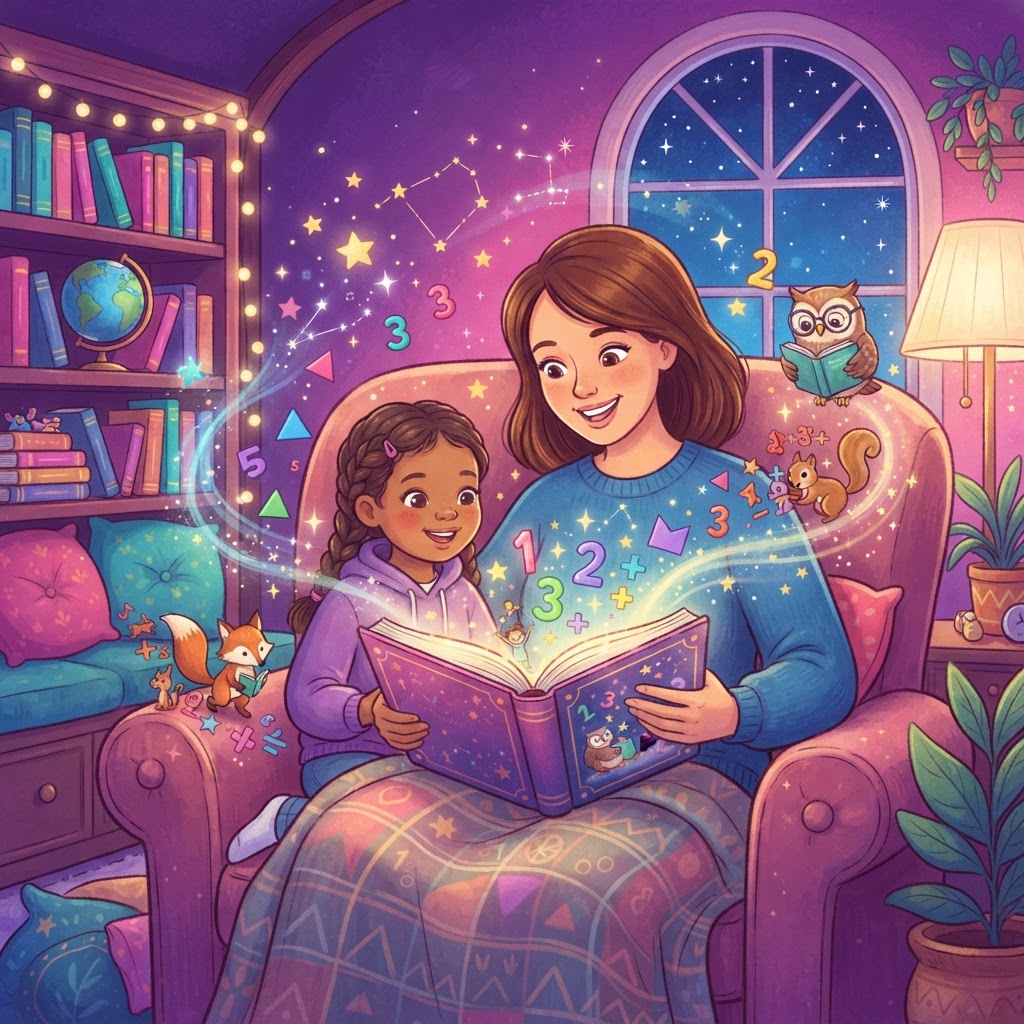
Math gets much easier for young children when it lives inside a story. Instead of feeling like a worksheet, math stories for kids turn counting, shapes, sharing, and problem-solving into something meaningful, playful, and memorable.
That matters because early math is more than reciting numbers. It includes noticing patterns, comparing amounts, understanding space, and making sense of simple math story problems. When parents and teachers use storytelling well, they support both literacy and number sense at the same time.
Why does storytelling help children learn math?
Storytelling helps children learn math because it gives abstract ideas a clear purpose. In a story, numbers are not random—they help a character solve a problem, share a snack, or find the right path home.
Research backs this up. Early math skills are strongly linked to later school success, and experts emphasize that young children learn best through meaningful, hands-on experiences. The U.S. Department of Education’s Teaching Math to Young Children practice guide highlights the value of building math through everyday language, comparisons, and problem-solving. The NAEYC also stresses that early math includes patterns, spatial relationships, and reasoning—not just memorizing facts.
Stories also lower pressure. A child who resists “doing math” may happily help a bear count berries or help a dragon divide treasure fairly. That emotional safety is one reason teaching math with stories works so well for ages 1-10.
How can you weave counting into everyday stories?
You can weave counting into stories by giving the character something to collect, find, or deliver. Counting works best when it feels like part of the plot rather than a quiz.
Try simple story moments like these:
- A squirrel gathers 1, 2, 3, 4 acorns for winter.
- A bus stops to pick up two more passengers at each stop.
- A puppy climbs five stairs to reach bed.
- A child packs three apples and two bananas for a picnic.
As you read or tell the story, pause and ask:
- “How many does she have now?”
- “Can we count them together?”
- “What comes after four?”
- “Do we have more apples or more bananas?”
For toddlers and preschoolers, focus on one-to-one correspondence—touching or pointing as they count. For older kids, add comparing words like more, fewer, equal, first, next, and last. If you want extra participation ideas, this guide on how to make story time interactive pairs beautifully with math-rich storytelling.
What kinds of story scenes teach shapes and spatial words?
Stories teach shapes and spatial language best when children can picture where things are and what they look like. A good shape story turns geometry into something children can spot in the world around them.
For example, a castle might have:
- round windows
- square doors
- triangle roofs
- a rectangle bridge
A treasure hunt can also build spatial language. A clue might say the key is under the chair, behind the curtain, or between two rocks. Those words matter. Early math research shows that spatial language supports later geometry and problem-solving.
You can make this richer by asking:
- “Which shape is the tower?”
- “What do you see above the rabbit?”
- “Can you find something round in this picture?”
- “Which path is longer?”
The goal is not a formal lesson. It is helping children notice that shapes and positions have names, and those names help us describe the world.
How can patterns and simple addition fit naturally into a plot?
Patterns and addition fit naturally into stories when events repeat or when characters join a group. Children love repetition, and that makes stories a perfect home for both concepts.
Patterns can show up in familiar ways:
- red fish, blue fish, red fish, blue fish
- clap, stomp, clap, stomp
- sunny day, rainy day, sunny day, rainy day
When a pattern appears in the story, pause and ask, “What comes next?” That question builds prediction, sequencing, and logical thinking.
Addition works well when the plot changes in a visible way. A story might start with 2 ducks in a pond, then 3 more ducks swim over. Now the child has a reason to solve a small math story problem: “How many ducks are there altogether?”
Keep addition concrete and visual at first:
- use fingers
- point to pictures
- draw quick dots
- act out the scene with toys
If you homeschool, you can build these moments into a larger story-based homeschool unit so literacy, science, and math all connect.
How do you introduce fractions without making them abstract?
Fractions make sense to young children when they are tied to sharing real things fairly. Start with halves and quarters in stories about food, treasure, or anything that can be split into equal parts.
For example:
- Two friends share one sandwich into 2 equal parts.
- Four teddy bears divide a pie into 4 equal slices.
- A family folds a paper map into halves and then quarters.
The key word is equal. Young kids do not need formal fraction terms right away. They need to see that one whole can be divided into smaller, fair shares.
The Zero to Three organization notes that early math grows through everyday experiences like dividing snacks, sorting objects, and noticing patterns. Fractions in stories work the same way. When children help a character share fairly, they begin to understand part-whole relationships long before formal fraction worksheets appear.
What are five easy math story prompts to try tonight?
The easiest way to begin is with a simple character, a clear goal, and one math focus. These prompts turn teaching math with stories into something you can do at bedtime, in the classroom, or during quiet reading time.
-
The Bunny Who Counted Berries
A bunny needs to gather 10 berries before sunset. Count the berries on each page, compare which basket has more, and ask how many are still needed. -
The Train of Many Shapes
Each train car has a different shape, and the engineer must put them in the right order. Ask children to name the shapes and describe which cars are in front, behind, or beside each other. -
The Robot Who Loved Patterns
A little robot fixes a path made of repeating lights: red, blue, red, blue. Let your child guess what comes next and invent a new pattern for the robot to follow. -
The Duck Pond Addition Parade
Three ducks are swimming when two more arrive, then one flies away. This is a gentle way to introduce simple addition and subtraction through math story problems. -
The Picnic Pie Puzzle
Four friends need to share one pie equally. Ask how to cut it fairly, what a half looks like, and how many pieces each friend gets.
After each story, keep the follow-up light. One or two good questions are enough.
How can InstaTales help you create math-rich stories?
InstaTales can make math storytelling easier because it lets you tailor a story to your child’s age, interests, and learning goal in minutes. Personalization matters: a child who loves dinosaurs, princesses, trucks, or sea animals is more likely to engage with the math inside the plot.
You can create your own personalized bedtime story around counting, shapes, addition, or sharing. For example, you might ask for a story about a unicorn who must sort star-shaped cookies, or a firefighter who adds ladders and helmets before a rescue. Once you find stories your child loves, save them in your story library for easy re-reading—important because repetition helps children remember math language and patterns.
For classrooms or small groups, InstaTales for teachers can support themed lessons, center activities, or warm-up prompts. A teacher might generate several versions of the same story concept at different difficulty levels, which is especially useful when one class includes children at very different stages of math development.
The best approach is simple: choose one math idea per story, keep the plot playful, and ask a few open-ended questions after reading. That is often all it takes to turn story time into meaningful early math practice.
Frequently Asked Questions
What age can children start learning math through stories?
Children can start very early, even in toddlerhood. Simple stories about counting toys, finding shapes, and sharing snacks build early math thinking long before formal lessons begin.
How long should a math story be for young kids?
Short is usually best, especially for ages 1-5. Aim for 3-10 minutes, depending on attention span, and focus on one concept at a time.
Do math stories replace hands-on math activities?
No. Math stories work best alongside hands-on play with blocks, counters, snacks, or toys. The story gives meaning, and the objects help children see the math clearly.
How do I turn a regular picture book into a math lesson?
Look for chances to count objects, name shapes, compare sizes, or spot patterns in the illustrations. Then ask one or two simple questions during or after reading.
What if my child does not like math story problems?
Make the problem smaller, playful, and connected to something they love. A child may resist “problems” but enjoy helping a puppy find two missing bones or divide cookies with a friend.
Ready to Create a Personalized Bedtime Story?
Use our free AI bedtime story generator to create a personalized illustrated story for your child in 30 seconds — no credit card needed.
Popular story types:
Maya Rodriguez
Lead Content Editor & Early Literacy Specialist
Maya is a former early childhood educator and literacy specialist with over a decade of experience helping children develop a love of reading. She leads content at InstaTales, where she writes about the science of storytelling, child development, and how families can use personalized AI stories to build literacy and emotional resilience.
instatales.ai