Lunar New Year Stories for Kids: 7 Activities
Celebrate Lunar New Year with these story-based activities for kids — dragon stories, lantern tales, and New Year adventures.
✦ Key Takeaways
- •Lunar New Year stories for kids make traditions easier to understand because stories turn symbols into experiences.
- •A dragon parade story works beautifully as a movement game because it combines listening, rhythm, and whole-body play.
- •A lantern rescue story craft helps children connect fine motor work with problem-solving and imagination.
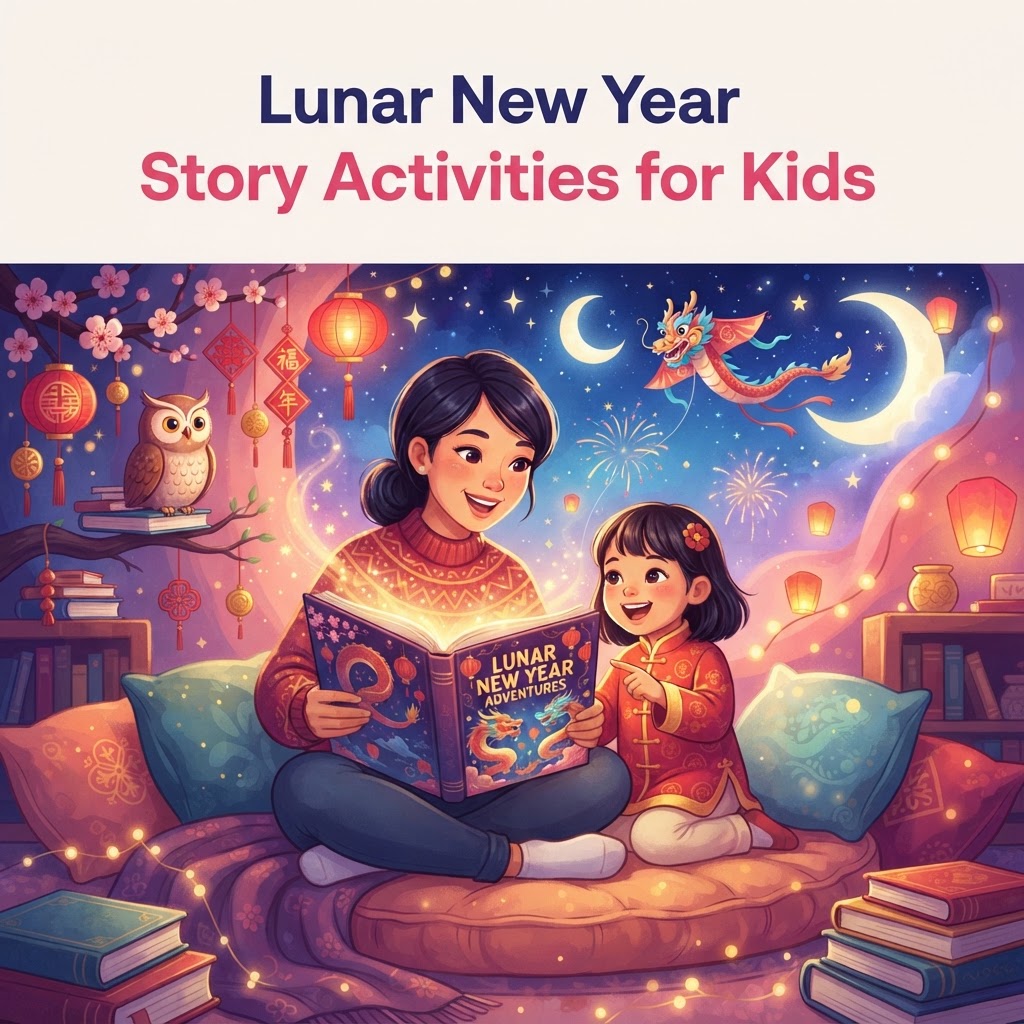
Lunar New Year is a wonderful time to bring stories, family traditions, and creative play together. Lunar New Year stories for kids help children understand symbols like dragons, lanterns, reunion meals, lucky colors, and zodiac animals in a way that feels joyful and age-appropriate.
This seasonal guide shares Lunar New Year story activities you can use at home, in preschool, or in early elementary classrooms. If your family enjoys celebration-themed reading all year, you might also like these Diwali story activities and Hanukkah story ideas for more festive storytelling inspiration.
Why are Lunar New Year stories for kids such a meaningful way to celebrate?
Lunar New Year stories for kids make traditions easier to understand because stories turn symbols into experiences. A child may not remember a long explanation about lanterns or red envelopes, but they will remember a brave rabbit carrying a lantern home or a grandparent sharing a lucky envelope in a story.
This matters for development, too. Research on dialogic reading by Grover Whitehurst and colleagues shows that children build stronger language skills when adults read interactively and ask questions. Organizations like the NAEYC and Harvard’s Center on the Developing Child also emphasize that warm conversation, pretend play, and shared attention support learning.
When you plan celebration themed stories, keep cultural respect in mind. Lunar New Year is celebrated in different ways across families and communities, including Chinese, Vietnamese, Korean, and other traditions. If you are teaching a mixed group, it helps to say, “Different families celebrate in different ways,” and invite children to share what they know.
How can a dragon parade story become a movement game?
A dragon parade story works beautifully as a movement game because it combines listening, rhythm, and whole-body play. It is especially good for ages 2-7, who learn well through repetition and action.
Story prompt
“A little dragon is nervous about joining the Lunar New Year parade. Can your child help the dragon swish, stomp, twist, and roar its way through town?”
Materials
- A scarf, sheet, or long strip of paper for the dragon tail
- Music or a drum
- Open floor space
Instructions
- Tell the story one scene at a time: waking up, getting dressed in bright colors, joining the parade, and greeting neighbors.
- Each time the dragon appears, invite children to copy a movement like swish, bow, spin, or tiptoe.
- Add simple language prompts: “The dragon feels shy. What should it do next?”
- End with a parade around the room and a big “Happy New Year!”
This activity supports motor planning, listening, and expressive language. It also works well as a group circle-time story.
What can children learn from a lantern rescue story craft?
A lantern rescue story craft helps children connect fine motor work with problem-solving and imagination. It turns a familiar Lunar New Year symbol into a gentle adventure.
Story prompt
“A small lantern floats away on a windy night, and a child must follow glowing clues to bring it back before the celebration begins.”
Materials
- Red or yellow paper
- Child-safe scissors
- Glue or tape
- Crayons or markers
- String
- Optional battery tea light
Instructions
- Read or tell the lantern story, pausing to ask where the lantern might travel.
- Help children make a simple paper lantern or draw one if they are younger.
- Add “clues” around the room, such as stars, footprints, or moon drawings, for children to follow.
- When they find the lantern, ask them to retell the journey in order.
Sequencing a story from beginning to end strengthens comprehension. If you want culturally grounded background on symbols and traditions, the Smithsonian’s National Museum of Asian Art has helpful educator resources.
How do you turn a zodiac animal tale into a guessing game?
A zodiac animal story becomes more engaging when children can guess, compare, and act out the animals. This is a simple way to build vocabulary while keeping the activity playful.
Story prompt
“The Jade Emperor is choosing animals for a great race, but each animal must solve a tiny problem on the journey.”
Materials
- Pictures of zodiac animals
- A basket or bag
- Optional animal puppets or stuffed animals
Instructions
- Put animal pictures in a basket and let the child pick one at a time.
- Tell a short part of the tale featuring that animal: “The Ox is steady,” or “The Rabbit must cross the river.”
- Ask children to guess what happens next, then act it out with a movement or sound.
- For older children, compare traits: “Which animal was clever? Which one was kind?”
Keep the focus on storytelling, not fortune-telling. Younger children usually enjoy the animal personalities most, and older children can notice patterns, order, and character traits.
Can a red envelope story build early math skills?
Yes, a red envelope story can build early math in a natural, playful way. Counting, sorting, and comparing feel more meaningful when they are part of a festive narrative.
Story prompt
“A child is helping prepare lucky red envelopes, but each family member needs the right number of coins, stickers, or paper hearts inside.”
Materials
- Red paper envelopes or folded red paper
- Coins, buttons, pom-poms, or paper circles
- Number cards
Instructions
- Introduce the story problem: “Grandma needs 2, Uncle needs 4, and the baby gets 1.”
- Let children count items into each envelope.
- Ask simple comparison questions: “Which has more? Which has fewer?”
- For older children, add totals: “How many lucky tokens did we use altogether?”
This activity blends storytelling with early numeracy. According to Reading Rockets, children gain more from reading when adults connect books and stories to talk, play, and hands-on learning.
What makes a reunion dinner story perfect for pretend play?
A reunion dinner story is perfect for pretend play because meals are familiar, social, and full of rich language. Children can practice conversation, manners, memory, and flexible thinking while acting out a celebration.
Story prompt
“A family is getting ready for a special New Year dinner, but everyone has an important job to do before the first guest arrives.”
Materials
- Play dishes or safe kitchen items
- Toy food, paper food, or drawings
- Tablecloth, napkins, or simple props
Instructions
- Assign roles: cook, helper, grandparent, guest, or storyteller.
- Tell the story as children act it out: setting the table, greeting relatives, sharing favorite foods, and making kind wishes.
- Model language like “Welcome,” “Thank you,” and “Let’s eat together.”
- After play, ask children to share one favorite moment from the story.
Pretend family routines help children develop social understanding and self-regulation. This is one reason early childhood educators use dramatic play as a core learning tool.
How can a New Year wish story inspire writing and drawing?
A New Year wish story inspires writing and drawing because it gives children a simple emotional theme: hope. Even very young children can participate through pictures, dictated words, or one short sentence.
Story prompt
“On the first morning of the New Year, a child meets a friendly moon rabbit who asks, ‘What kind wish will you send into the year ahead?’”
Materials
- Paper
- Crayons, markers, or watercolor paints
- Optional star or moon stickers
Instructions
- Tell the story slowly and pause at the wish.
- Invite children to draw their wish, their family, or an imagined New Year adventure.
- Write down their exact words if they are not yet writing independently.
- Display the pictures or read them aloud at bedtime.
This is one of the easiest celebration themed stories to adapt for multiple ages. Toddlers can scribble and point, while older children can write mini booklets.
How can families use InstaTales for Lunar New Year stories?
Families can use InstaTales to make Lunar New Year storytelling more personal, flexible, and easy to repeat. Personalized stories are especially powerful when children see familiar names, routines, and feelings reflected back to them.
Start by visiting InstaTales to create your own personalized bedtime story. You can prompt for a dragon parade, lantern adventure, zodiac animal quest, or a calm bedtime tale about visiting grandparents for New Year.
A simple prompt might be:
- “Write a gentle Lunar New Year bedtime story for a 4-year-old named Maya. Include a lantern, a kind dragon, family dinner, and a happy ending.”
- “Create a classroom-friendly Lunar New Year story for ages 6-8 about teamwork during a parade.”
- “Make a short celebration themed story about a rabbit delivering New Year wishes.”
If you want a faster start, browse the story templates and customize the details. Once you have a few favorites, save them in your story library so children can revisit beloved characters again and again.
For the best results, keep the tone warm, specific, and age-matched. Include sensory details, one clear problem, and a reassuring ending. That makes the story easier for young children to follow and retell.
Frequently Asked Questions
What age are Lunar New Year stories best for?
Lunar New Year stories can work for ages 1-10 when the language and activity match the child’s stage. Toddlers do best with repetition and pictures, while older children enjoy longer plots and cultural details.
How long should a Lunar New Year story activity last?
For toddlers and preschoolers, 10-20 minutes is usually enough. Early elementary children may enjoy 20-30 minutes, especially if the story includes drawing, movement, or pretend play.
How can I make these activities culturally respectful?
Use accurate symbols, avoid stereotypes, and remember that traditions vary by family and community. It also helps to frame activities with simple language like, “Many families celebrate this in different ways.”
Can teachers use these Lunar New Year story activities in class?
Yes, these activities work well in preschool, kindergarten, and early elementary settings. Choose simple materials, use inclusive language, and invite children to share their own family traditions if they wish.
What should I include in a good Lunar New Year story prompt?
A strong prompt includes the child’s age, a few key symbols, the tone, and the ending you want. For example, mention a lantern, family celebration, kind animal helper, and a calm bedtime ending.
Why do story-based holiday activities work so well for young children?
Stories give children structure, emotion, and meaning, which makes new ideas easier to remember. When you add talk, play, and hands-on materials, children engage more deeply and build language at the same time.
Ready to Create a Personalized Bedtime Story?
Use our free AI bedtime story generator to create a personalized illustrated story for your child in 30 seconds — no credit card needed.
Popular story types:
Maya Rodriguez
Lead Content Editor & Early Literacy Specialist
Maya is a former early childhood educator and literacy specialist with over a decade of experience helping children develop a love of reading. She leads content at InstaTales, where she writes about the science of storytelling, child development, and how families can use personalized AI stories to build literacy and emotional resilience.
instatales.ai