Plants Stories for Curious Kids Who Love Science
Feed your child's curiosity with these plants stories that combine imagination with real science and discovery.
✦ Key Takeaways
- •Plants stories help children remember science because stories give facts a sequence, emotion, and purpose.
- •A good plant story for children is simple, accurate, and sensory-rich.
- •The best plant tales combine a strong plot with one memorable fact children can retell.
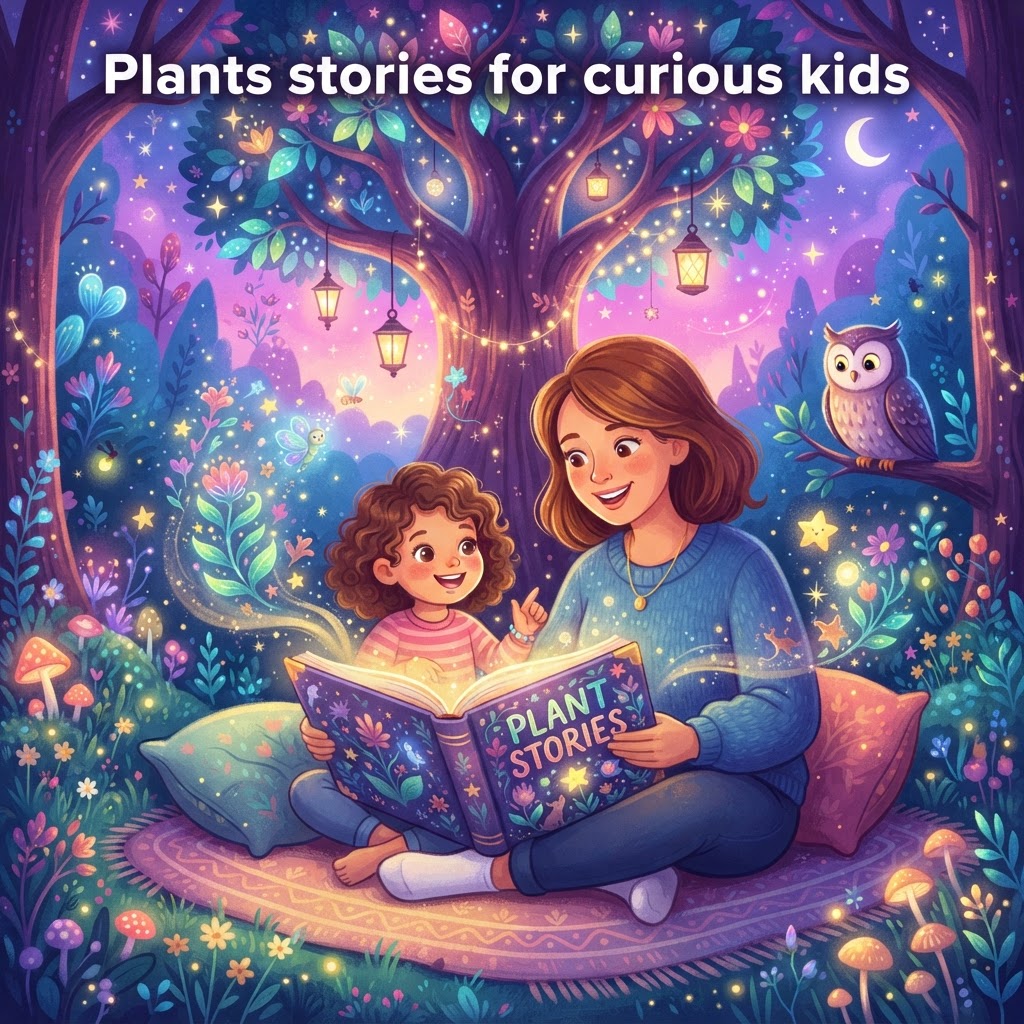
The best plants stories do more than fill bedtime with gentle magic. They help children notice the living world, ask better questions, and remember real science through characters, problems, and wonder. If you are looking for plants for kids that feel exciting instead of textbook-like, story is one of the easiest ways to make roots, leaves, seeds, and flowers stick.
For curious children, plants are full of mystery. How does a tiny seed know when to grow? Why do flowers need bees? How can a plant live in salty water or catch an insect? The right story turns those questions into adventure, which is why plants adventures children love often become their first step into science.
Why do plants stories help curious kids remember science?
Plants stories help children remember science because stories give facts a sequence, emotion, and purpose. When a child follows a seed on its journey underground or a bee visiting a blossom, the science is easier to understand and recall later.
This matches what child development experts have found about learning through language-rich interaction. The American Academy of Pediatrics has long emphasized shared reading as a strong support for early language and thinking. The Harvard Center on the Developing Child also highlights how back-and-forth conversation helps young children build knowledge.
In practice, that means a story does something a fact list cannot. It helps a child connect new information to feelings, images, and actions:
- A root is not just a root; it is the plant’s anchor and water finder.
- Pollination is not just a word; it is the bee’s important mission.
- Germination is not just a definition; it is the moment the sleepy seed wakes up.
For curious kids, plants stop being background scenery and become living systems with jobs, needs, and surprises.
What makes a good plant story for young children?
A good plant story for children is simple, accurate, and sensory-rich. It should focus on one main science idea, use clear language, and give the child a reason to care about what the plant is doing.
The strongest stories usually include:
- One clear science concept, such as growth, pollination, or plant habitats
- A child-friendly challenge, like finding sunlight or surviving a dry day
- Concrete sensory details, such as sticky pollen, cool soil, or prickly cactus skin
- Accurate facts, woven into the plot without sounding like a lesson
Age matters too. Toddlers do best with repetition and simple cause-and-effect. Children ages 4-7 often enjoy personified plants and gentle problem-solving. Older children can handle richer facts and bigger questions about ecosystems, adaptation, and food chains.
If you want more examples of science-rich storytelling, these stories that teach kids about plants can help you see how fact and imagination work together.
Which plants stories can turn real science into adventure?
The best plant tales combine a strong plot with one memorable fact children can retell. Here are five story ideas that make real botany feel like discovery.
1. The Seed That Waited for Rain
A tiny seed lies in the soil, listening for the first drops of spring. It wants to wake up, but it needs the right mix of water, oxygen, and warmth before it can germinate.
This story teaches that seeds do not simply “start” on their own. They respond to conditions in their environment, which is a powerful first science idea for young children.
2. The Sunflower Scout Who Chased the Morning
A young sunflower turns its face across the sky, trying to catch every bit of sunlight it can. Along the way, it learns that young sunflower buds often track the sun, while many mature sunflowers later settle facing east.
Children love movement, so this makes a vivid way to introduce light, growth, and plant behavior. It also shows that plants are active in their own quiet way.
3. The Bee and the Apple Blossom
A busy bee visits an apple tree, gathering nectar and dusting itself with pollen. Without meaning to, it helps move pollen from flower to flower, which is how many apple blossoms become fruit.
This is a wonderful plot for teaching pollination. It also helps children see that insects and plants depend on each other, not as separate science topics, but as partners.
4. The Mangrove That Hugged the Shore
A mangrove tree lives where land and sea meet. Its tangled roots hold steady in muddy, salty water, showing children that mangroves can tolerate salt and help protect coastlines from erosion.
This kind of story expands plant science beyond gardens and houseplants. It introduces habitat, adaptation, and the idea that plants can protect other living things too.
5. The Venus Flytrap That Counted Touches
A fly lands on a strange green plant and brushes one tiny trigger hair. Nothing happens. When it touches again, the trap snaps, showing that a Venus flytrap closes after repeated contact with its trigger hairs, which helps it avoid wasting energy.
Older children especially enjoy this one because it feels surprising and a little dramatic. It is a perfect example of a real plant fact that sounds almost magical but is completely true.
The National Science Teaching Association often emphasizes that children learn science best when ideas connect to curiosity and real-world observation. These story seeds do exactly that.
How can parents and teachers prompt InstaTales for science-rich plant stories?
The easiest way to get a strong plant story is to be specific about the child, the science fact, and the story mood. A good prompt tells the AI what to teach, how old the child is, and what kind of adventure will hold their attention.
When you create your own personalized bedtime story, try this simple formula:
- Main character: your child, a bee, a seed, or a tree
- Plant topic: germination, roots, pollination, habitats, or photosynthesis
- One must-include fact: “sunflowers turn toward light when young”
- Tone: cozy, funny, adventurous, calm
- Age and length: toddler short, early reader, or older child chapter style
You can also use story templates if you want a faster starting point, then adjust the science details to match your child’s interests.
Here are three prompt examples:
- “Write a bedtime story for a 4-year-old about a seed named Mina who needs water, warmth, and oxygen to grow.”
- “Create a gentle science story for a 6-year-old about a bee helping an apple tree through pollination.”
- “Write an adventure story for an 8-year-old about a Venus flytrap in a bog, including accurate facts about trigger hairs and nutrient-poor soil.”
When you find a story that works, save it in your story library so children can revisit favorite plant characters and build stronger recall through repetition.
How can you extend plants stories into real-world discovery?
A plant story becomes even more powerful when a child can observe or try something afterward. One small follow-up activity helps move knowledge from “heard once” to “understood and remembered.”
Try one of these simple extensions:
- Sprout a bean in a clear cup to watch roots and shoots appear
- Visit a flower and count how many pollinators stop by in five minutes
- Compare leaves from two plants and talk about shape, texture, and size
- Draw the life cycle of a sunflower from seed to bloom
For hands-on ideas, KidsGardening offers accessible plant activities for families and schools. If you are using stories in a classroom or homeschool setting, InstaTales for teachers can support literacy and science together in a simple, engaging way.
The real goal is not to make every child memorize plant vocabulary. It is to help them notice, question, and care. That is where long-term science learning begins.
Frequently Asked Questions
What are the best plant topics for young children?
Start with visible, concrete ideas like seeds, roots, flowers, and watering. Young children learn best when they can connect the story to something they can actually see.
Can bedtime stories really teach science?
Yes, especially when the story includes one clear fact and some discussion afterward. Stories help children remember information by linking it to emotion, sequence, and imagery.
How accurate should plants stories be?
They should be simple, but still scientifically correct. It is fine to make a sunflower talk, but the facts about how it grows or uses light should stay true.
What age are plants stories good for?
Plant stories work well from toddlerhood through late elementary years. The key is to match the language, length, and science depth to the child’s age.
How can teachers use plants stories in class?
Teachers can use them as a read-aloud before a planting activity, science journal, or nature walk. Stories make a strong entry point because they build vocabulary and curiosity before formal instruction.
Ready to Create a Personalized Bedtime Story?
Use our free AI bedtime story generator to create a personalized illustrated story for your child in 30 seconds — no credit card needed.
Popular story types:
Maya Rodriguez
Lead Content Editor & Early Literacy Specialist
Maya is a former early childhood educator and literacy specialist with over a decade of experience helping children develop a love of reading. She leads content at InstaTales, where she writes about the science of storytelling, child development, and how families can use personalized AI stories to build literacy and emotional resilience.
instatales.ai