Robots Stories for Kids: 7 Creative Adventures
Exciting robots stories for kids — adventures, lessons, and imagination with your child's favorite characters.
✦ Key Takeaways
- •Children love robot stories because robots feel both exciting and safe.
- •The best robots bedtime stories are gentle, simple, and emotionally warm.
- •The easiest way to start is with simple story prompts that match your child’s age and interests.
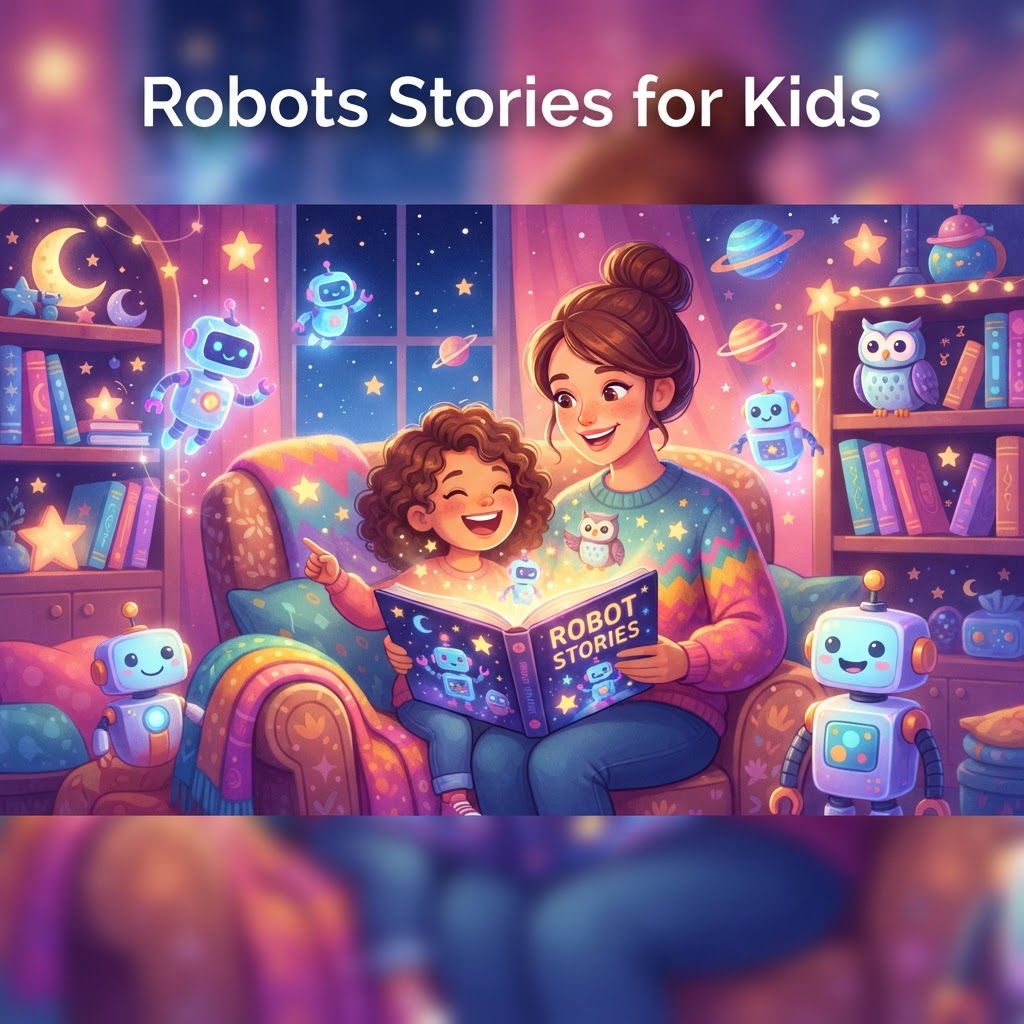
Robots stories for kids have a special kind of magic. They mix wonder, humor, problem-solving, and just enough futuristic sparkle to capture a child’s imagination without feeling too scary. For children ages 1-10, stories about robots can become cozy bedtime favorites, playful learning tools, and a great way to explore big feelings like bravery, kindness, and curiosity.
Whether your child loves helpful helper-bots, clumsy little inventors, or shiny space explorers, robot tales can do more than entertain. They can support language growth, social-emotional learning, and flexible thinking. If your family also enjoys other imaginative themes, you might like these dragon story ideas for another cozy story night.
Why do children love robots stories?
Children love robot stories because robots feel both exciting and safe. They are new and imaginative, but they also follow patterns, rules, and routines that many children find reassuring.
Young children are naturally drawn to repetition, predictable behavior, and clear cause-and-effect. A robot character often says certain phrases, completes tasks step by step, or learns one lesson at a time. That structure can make robots bedtime stories especially satisfying for preschoolers and early readers.
Robot characters also give children a gentle way to think about emotions. A robot who is learning how to be kind, brave, or patient mirrors the way children are learning those same skills. Research from the Center on the Developing Child at Harvard University shows that back-and-forth interactions and emotionally responsive storytelling support healthy brain development. Stories work best when children can connect with the character’s challenge and talk about it with an adult.
There is also a strong curiosity factor. Robots invite questions like:
- How does it work?
- Can it help someone?
- What happens if it makes a mistake?
- Can a machine learn friendship?
Those questions turn a simple bedtime read into a conversation about empathy, creativity, and problem-solving.
What makes robots bedtime stories feel calm and memorable?
The best robots bedtime stories are gentle, simple, and emotionally warm. They should offer a small adventure, a clear feeling, and a peaceful ending that helps a child settle down.
At bedtime, robot stories work best when the action stays manageable. A lost toy, a broken garden gate, or a sleepy moon mission usually feels better than a loud robot battle. Children can enjoy suspense, but they also need emotional safety before sleep.
A strong bedtime robot story often includes:
- One lovable main robot with a clear goal
- A problem that can be solved without violence
- Repetition or familiar phrases
- Sensory details like glowing lights, humming sounds, or soft metal footsteps
- A comforting ending with rest, home, or connection
Reading experts at Reading Rockets often emphasize that engaging, meaningful read-alouds help children build vocabulary and comprehension. In practice, that means the most memorable robot tales for children are not the most complicated ones. They are the ones children want to hear again because the character feels familiar and the ending feels good.
Which robots stories for kids can you try tonight?
The easiest way to start is with simple story prompts that match your child’s age and interests. Here are seven robots stories for kids ideas that work beautifully for bedtime or quiet reading time.
1. The Robot Who Fixed the Stars
A tiny repair robot notices that one star in the night sky has stopped twinkling. With patience and teamwork, it climbs a moon ladder and helps the star shine again.
2. The Helper Bot and the Lost Teddy
A home robot finds a child’s missing teddy before bedtime. Along the way, it searches under pillows, in toy baskets, and beside sleepy slippers, learning how important comfort objects can be.
3. The Little Robot Who Was Afraid of Rustling Noises
A robot hears strange sounds at night and worries something is wrong. It discovers that the noises come from curtains, leaves, and a purring cat, helping children reframe nighttime fears.
4. The Garden Robot’s First Flower
A robot designed for tidying learns how to care for seeds, sunlight, and water. This story is perfect for children who enjoy nature and gentle growth-themed adventures.
5. The Moon Mail Robot
A cheerful delivery robot takes bedtime wishes from children on Earth to the moon. Each message carries a hope, a thank-you, or a dream, making the story feel calm and reflective.
6. The Feelings Bot Learns to Say Sorry
A robot accidentally messes up a friend’s block tower and has to make things right. This is one of the strongest stories about robots for teaching empathy, repair, and friendship.
7. The Sleepy Space Station Robot
A robot on a quiet space station helps every little machine get ready for bed. Lights dim, wheels slow down, and the whole station settles into a peaceful nighttime routine.
These ideas can also be mixed with other themes. A robot can meet a wizard, guard a castle, or sail for treasure. If your child enjoys genre mashups, robot-and-adventure combinations pair especially well with pirate story ideas.
How can you create robot characters children truly care about?
Children connect with robot characters when those characters feel emotionally real. A shiny body is fun, but a clear personality is what makes a robot unforgettable.
If you want stronger stories about robots, give the robot a need, a flaw, and a heartwarming goal. Even very young listeners can understand a robot who wants a friend, worries about getting something wrong, or tries hard to help.
Use these character development tips:
- Give the robot one standout trait. Maybe it is extra tidy, extra curious, or always a little too literal.
- Add a feeling to learn. A robot can practice patience, courage, sharing, or apologizing.
- Create a gentle weakness. Perhaps its map glitches, it sneezes bubbles, or it forgets names when nervous.
- Use a memorable voice. A repeated phrase like “Beep-beep, I can help!” gives young children something to anticipate.
- Make the goal child-sized. Finding a toy, helping a friend, or finishing a small task feels relatable.
- Show growth by the end. The robot should learn something, not just complete a mission.
This matters because stories help children make sense of social situations. Organizations like ZERO TO THREE have long highlighted how everyday interactions support emotional learning in early childhood. A well-built robot character gives children a safe mirror for those lessons.
How can parents and teachers use stories about robots for learning?
Stories about robots are excellent for learning because they naturally blend imagination with real thinking skills. They can support language, empathy, sequencing, and early STEM curiosity in one playful format.
At home, parents can pause during reading and ask:
- What do you think the robot should do next?
- How is the robot feeling?
- What helped solve the problem?
- What would your robot look like?
In classrooms, robot tales children enjoy can be extended into drawing, role-play, or simple design activities. Teachers might ask students to invent a robot helper for the library, the playground, or the lunchroom. For more structured literacy use, InstaTales for teachers can support story-based activities in a classroom setting.
These stories are also useful for routines. A robot story about cleanup, handwashing, or bedtime can make daily transitions easier because children see the routine modeled in a playful way.
How can InstaTales help you create personalized robot adventures?
InstaTales makes personalized robot storytelling simple. You can turn your child’s name, favorite interests, and bedtime needs into a custom robot adventure in just a few steps.
A personalized story often feels more meaningful than a generic one. When the hero robot knows your child’s favorite color, helps their stuffed bunny, or visits a place they recognize, the story becomes more engaging and easier to revisit. That familiarity supports repeated reading, which is great for language development and confidence.
With InstaTales, you can:
- create your own personalized bedtime story starring a helper bot, inventor robot, or space explorer
- Start quickly with guided story templates
- Save favorite robot adventures in your story library for easy rereading
- Tailor the lesson to bedtime calm, friendship, courage, or curiosity
This is especially helpful if your child wants the same theme again and again, but with fresh details. One night the robot can rescue a teddy. The next night it can water moon flowers or deliver starlight mail. Personalized storytelling keeps the comfort of a favorite theme while adding novelty.
Frequently Asked Questions
What age are robots stories for kids best for?
Robot stories can work well from toddlerhood through age 10. For younger children, keep the plot simple and repetitive; for older kids, add bigger adventures, inventions, and emotional growth.
Are robots bedtime stories too stimulating before sleep?
Not if the story is calm and well-paced. Choose gentle plots, soft imagery, and reassuring endings instead of loud battles or high-stakes danger.
What lessons can children learn from stories about robots?
Children can learn problem-solving, empathy, resilience, and curiosity. Robot characters are especially good for showing how mistakes can lead to learning and repair.
How do I make a robot character feel less cold or mechanical?
Give the robot a clear feeling, a relatable goal, and a few charming quirks. A robot who worries, wonders, or wants to help will feel much more lovable to a child.
Can robot tales be educational as well as fun?
Yes. Robot tales for children can support vocabulary, sequencing, social-emotional learning, and early STEM thinking, especially when adults ask simple follow-up questions after reading.
How can I create personalized robots stories for kids quickly?
A story generator like InstaTales can help you build custom robot adventures fast. Add your child’s name, age, interests, and preferred lesson, then save favorites for future bedtime reading.
Ready to Create a Personalized Bedtime Story?
Use our free AI bedtime story generator to create a personalized illustrated story for your child in 30 seconds — no credit card needed.
Popular story types:
Maya Rodriguez
Lead Content Editor & Early Literacy Specialist
Maya is a former early childhood educator and literacy specialist with over a decade of experience helping children develop a love of reading. She leads content at InstaTales, where she writes about the science of storytelling, child development, and how families can use personalized AI stories to build literacy and emotional resilience.
instatales.ai