Spanish Stories for Kids: A Helpful Guide
Delightful Spanish stories for kids — perfect for bilingual families, language learners, and heritage language preservation.
✦ Key Takeaways
- •Spanish stories for kids are valuable because they support language growth, cultural connection, and emotional development all at once.
- •Research strongly supports shared reading and home-language exposure.
- •The best Spanish story ideas are simple, rhythmic, and emotionally clear.
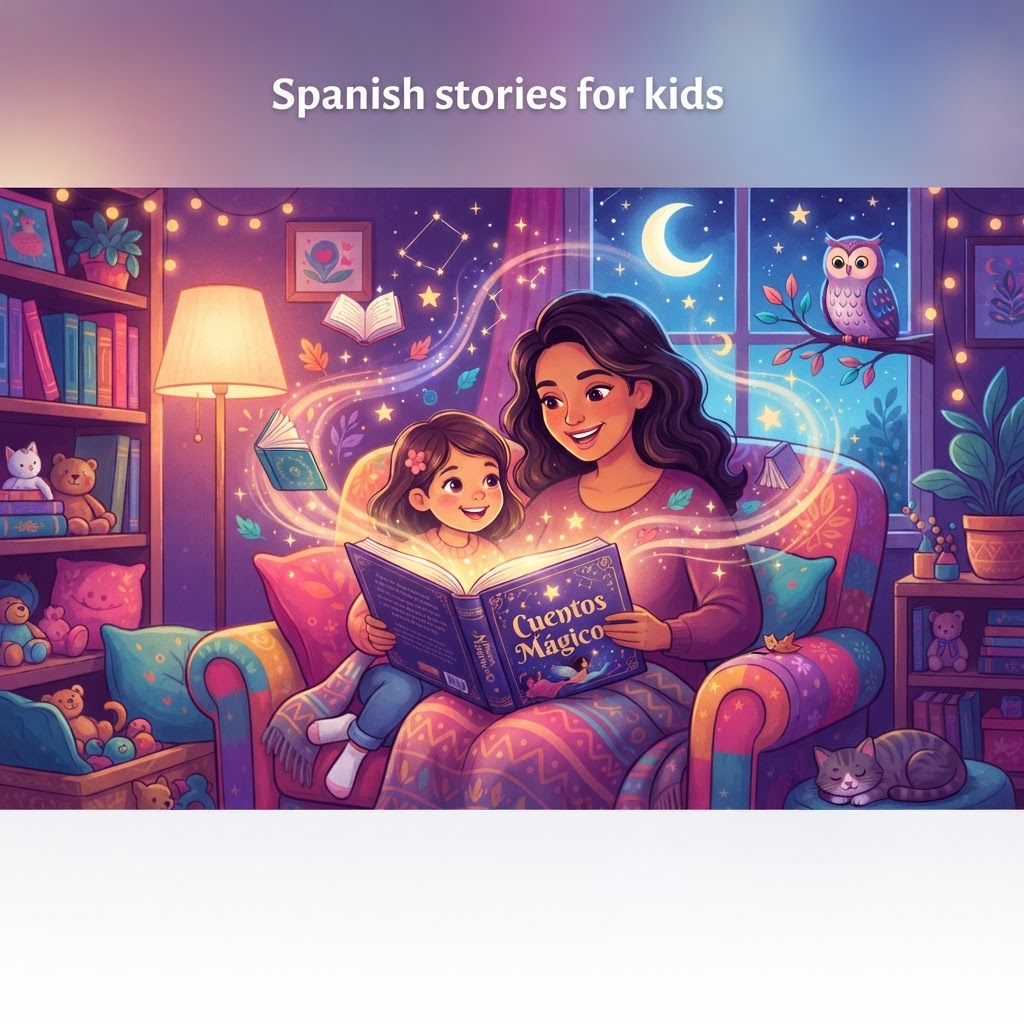
Spanish stories for kids can do much more than entertain at bedtime. They help children build language, strengthen family bonds, and connect with culture in a way that feels warm, memorable, and fun.
For bilingual families, language learners, and heritage speakers, stories in Spanish offer a daily chance to hear rich vocabulary, repeated sentence patterns, and meaningful emotional language. Whether you are reading a classic cuento, making up your own tale, or using AI to create your own personalized bedtime story, the goal is the same: help children fall in love with language.
Why are Spanish stories for kids so valuable?
Spanish stories for kids are valuable because they support language growth, cultural connection, and emotional development all at once. A good story gives children repeated exposure to words and phrases while also helping them feel safe, seen, and curious.
When children hear Spanish children stories, they absorb grammar, rhythm, and pronunciation naturally. This is especially helpful for young children, who learn best through repetition, songs, and familiar routines. Even short stories can build listening skills and expressive language over time.
Stories in Spanish also help preserve family identity. If grandparents, relatives, or community members speak Spanish, shared storytelling gives children access to family memories, humor, and traditions. That matters for belonging.
There are also cognitive benefits. Research on bilingualism suggests that learning and using two languages can support attention, flexibility, and problem-solving. A useful overview from the National Institutes of Health explains how bilingual experience can shape cognitive development across childhood.
What does bilingual education research say about stories in Spanish?
Research strongly supports shared reading and home-language exposure. Children benefit when adults read with them regularly, and those benefits are even stronger when reading happens in a language that carries family meaning and daily use.
The American Academy of Pediatrics recommends shared reading from infancy because it promotes language, early literacy, and strong caregiver-child relationships. In practice, that means Spanish bedtime stories are not just a “nice extra.” They are a powerful part of development.
For bilingual and heritage-language families, keeping the home language active can support identity and communication across generations. Colorín Colorado highlights that preserving a child’s home language helps maintain family bonds while also supporting later academic growth.
As an educator, I often tell parents this: children do not need a “perfect lesson” to learn. They need warm, repeated, meaningful language. A short story, a cuddle, a few questions, and a familiar phrase like “Buenas noches” can be enough to make Spanish feel joyful and secure.
Which Spanish story ideas work best for young children?
The best Spanish story ideas are simple, rhythmic, and emotionally clear. Young children respond especially well to gentle plots, repeated phrases, animal characters, and everyday adventures.
Here are five story ideas that work beautifully as stories in Spanish:
1. La luna que perdió su brillo
A little moon cannot shine and asks forest animals for help. Along the way, children hear repeated vocabulary like luna, brillo, noche, and ayuda.
2. Mateo y el mercado mágico
A child visits a lively market and discovers fruits, colors, sounds, and friendly vendors. This is a great way to introduce everyday Spanish words while celebrating community life.
3. La abuela que guardaba estrellas
A grandmother keeps stars in her sewing basket and gives one away each time a child does something kind. This kind of story supports emotional vocabulary, family connection, and heritage themes.
4. El perrito que no quería dormir
A playful puppy tries every excuse to avoid bed. This is ideal for Spanish bedtime stories because it uses bedtime routines, humor, and predictable repetition.
5. Las semillas del arcoíris
A child plants magical seeds that grow into colors, songs, and tiny surprises. This works well for preschoolers because it introduces nature vocabulary and a sense of wonder.
To make these stories even more effective, try to include:
- Repeated lines children can join in with
- Familiar routines like bath time, dinner, or bedtime
- Age-appropriate vocabulary
- Gentle conflict with a reassuring ending
- Characters that reflect your child’s world
If you want a quick starting point, pre-made story templates can make it easier to shape a story around your child’s age, interests, and language level.
How can families make Spanish bedtime stories a daily habit?
Families make Spanish storytelling stick by keeping it short, consistent, and interactive. You do not need a long lesson plan. Ten calm minutes each night can be enough.
Start with a predictable routine. For example: pajamas, one glass of water, one story, one cuddle, lights out. When children know what comes next, they are more ready to listen.
A few practical strategies help:
- Choose one repeating phrase, like “Y entonces…” or “Colorín colorado…”
- Pause to ask simple questions: ¿Dónde está la luna? or ¿Cómo se siente el perrito?
- Let children point to pictures, act out sounds, or finish a repeated line
- Re-read favorite stories often instead of chasing new ones every night
If you are not fully fluent, that is okay. Read slowly, use simple Spanish, and focus on connection rather than perfection. Children benefit from hearing the language, even when adults are learning too.
You can also mix Spanish and English naturally. Many families use one page in Spanish, one short explanation in English, or key vocabulary in both languages. That gentle approach helps children build understanding without stress.
How does InstaTales help you create Spanish children stories?
InstaTales makes it easier to create personalized Spanish children stories that match a child’s age, interests, and language needs. Instead of searching for the “perfect” book every time, you can create stories that feel immediately relevant.
A simple way to use InstaTales for Spanish story time is to:
- Choose Spanish as the story language, or ask for a bilingual Spanish-English story
- Add your child’s name, age, favorite animals, hobbies, or family members
- Pick a familiar theme like bedtime, feelings, friendship, or a magical adventure
- Adjust the tone so the story feels calm and sleep-friendly
- Save favorites in your story library for easy re-reading
This works especially well for children who are more engaged when they hear their own name in a story. Personalization can also help with motivation, which matters for language learning.
If you want more ideas for prompts, routines, and reading tips, explore the InstaTales blog. And if you are using stories with a class, small group, or reading center, InstaTales for teachers can support more structured literacy activities.
How can you choose the right stories in Spanish for different ages?
The right story depends on a child’s age, attention span, and language level. Younger children need simpler language and more repetition, while older children can handle longer plots and richer vocabulary.
A quick guide:
- Ages 1-3: very short stories, animal sounds, bedtime routines, repeated words
- Ages 3-5: simple adventures, feelings, colors, family members, predictable plots
- Ages 6-8: problem-solving stories, folktale elements, longer conversations
- Ages 8-10: chapter-style bedtime stories, cultural themes, humor, character growth
No matter the age, keep the experience warm and low-pressure. The goal is not to test your child. The goal is to help them enjoy Spanish as a living language.
Frequently Asked Questions
At what age can children start listening to Spanish stories?
Children can start from infancy. Even babies benefit from hearing the rhythm and melody of language during calm, loving reading time.
Do parents need to be fluent to read Spanish stories to kids?
No. Simple, consistent exposure is still valuable, and many families learn alongside their children. Focus on warmth, repetition, and a few useful phrases rather than perfect pronunciation.
Are Spanish bedtime stories helpful for bilingual children?
Yes. Spanish bedtime stories support vocabulary, listening comprehension, and emotional connection to the language. They also help children see Spanish as part of everyday family life, not just a school subject.
How long should a Spanish story session be?
For most young children, 5 to 15 minutes is plenty. Short, regular reading sessions are usually more effective than long sessions that feel rushed or tiring.
Can stories in Spanish help preserve a heritage language?
Yes. Regular exposure at home helps children hear the sounds, phrases, and family expressions that keep a heritage language alive. Stories are especially powerful because they connect language with memory, affection, and culture.
Can teachers use personalized Spanish children stories in class?
Absolutely. Personalized stories can support vocabulary lessons, reading comprehension, and speaking practice. They are especially useful when teachers want materials that match student interests and language levels.
Ready to Create a Personalized Bedtime Story?
Use our free AI bedtime story generator to create a personalized illustrated story for your child in 30 seconds — no credit card needed.
Popular story types:
Maya Rodriguez
Lead Content Editor & Early Literacy Specialist
Maya is a former early childhood educator and literacy specialist with over a decade of experience helping children develop a love of reading. She leads content at InstaTales, where she writes about the science of storytelling, child development, and how families can use personalized AI stories to build literacy and emotional resilience.
instatales.ai