Spring Equinox Stories for Kids: 7 Activities
Celebrate the spring equinox with these story-based activities for kids — balance stories, nature tales, and equinox adventures.
✦ Key Takeaways
- •Spring equinox stories for kids work well because they connect a real event in nature to ideas children can understand: balance, change, and new beginnings.
- •A sunrise-and-sunset story walk helps children feel the idea of balance with their whole bodies.
- •A balance collage gives children a visual way to explore the equinox.
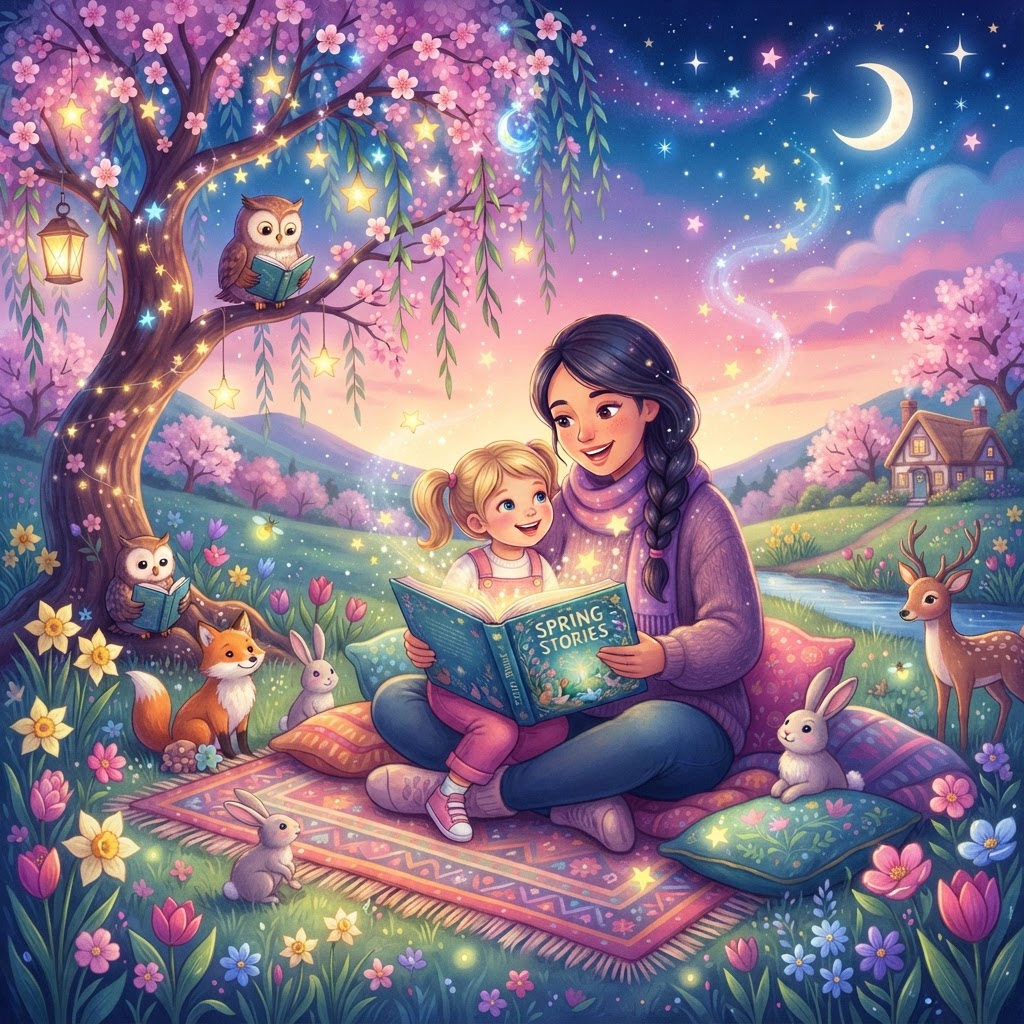
Spring is a natural time to slow down, notice change, and tell new stories together. Because the spring equinox marks a time when day and night are nearly equal, it gives parents and teachers a beautiful theme for spring equinox stories for kids: balance, growth, light, nature, and fresh starts.
These equinox story activities are designed for children ages 1-10 and can be adapted for home, homeschool, or classroom use. Each one includes a story prompt, simple materials, and step-by-step instructions so you can turn a seasonal moment into meaningful reading, play, and connection.
Why are spring equinox stories for kids such a powerful seasonal learning tool?
Spring equinox stories for kids work well because they connect a real event in nature to ideas children can understand: balance, change, and new beginnings. When stories are tied to hands-on play, children remember them more deeply and engage with both language and emotions.
The equinox is a perfect storytelling theme because children can see its symbols all around them: longer days, buds opening, birds returning, and weather shifting. According to NASA Space Place, the equinox helps explain why seasons change, which gives families an easy science connection.
There is also a strong child development reason to use story-based seasonal activities. The Harvard Center on the Developing Child explains that playful activities involving attention, memory, and flexible thinking help build executive function skills. Storytelling, pretend play, sequencing, and simple problem-solving all support those skills. Likewise, the National Association for the Education of Young Children highlights how play and guided interaction support self-regulation and learning (NAEYC).
How can a sunrise-and-sunset story walk teach children about balance?
A sunrise-and-sunset story walk helps children feel the idea of balance with their whole bodies. It turns the equinox into movement, observation, and storytelling all at once.
Story prompt
“On the day when light and dark were almost the same, two friends — Sunrise Bunny and Twilight Fox — set out to meet in the middle.”
Materials
- Sidewalk chalk or paper arrows
- A small basket or bag
- Optional: flashlight, scarf in yellow and blue
Instructions
- Mark a short walking path indoors or outdoors with a sunrise end and a sunset end.
- Tell the story as your child walks from one side to the other.
- Pause in the middle and ask, “What do you notice right here, between day and night?”
- Invite children to collect one “day thing” and one “night thing,” such as a yellow flower and a smooth gray stone.
- End by retelling the walk in three parts: beginning, middle, and end.
This works especially well for preschoolers who are learning sequencing words like first, next, and last. It is one of the easiest balance themed stories to act out with toddlers, too.
How can children make a day-and-night balance collage from a story?
A balance collage gives children a visual way to explore the equinox. It helps them compare opposites while building vocabulary and fine motor skills.
Story prompt
“Little Robin wanted to build a picture that showed both halves of spring: bright morning skies and sleepy moonlit gardens.”
Materials
- Folded paper or poster board
- Magazines or printed images
- Glue stick
- Crayons or markers
- Nature items like petals, leaves, or grass clippings
Instructions
- Fold the paper into two halves.
- Label one side Day and the other Night.
- Read or tell the story prompt, then ask children what belongs on each side.
- Let them glue pictures or draw details for both halves.
- Add a line, tree, or path in the center to show where the two sides meet.
For younger children, keep the collage simple and focus on naming colors and objects. For older children, ask them to explain how the two halves are different and how they still belong in one world.
How can a seed-planting story activity celebrate spring beginnings?
A seed story is one of the best equinox story activities because it pairs a clear symbol of spring with a calming routine. Children learn that growth often begins quietly, before big changes are visible.
Story prompt
“Deep under the cool spring soil, a tiny seed listened to the world becoming brighter each day.”
Materials
- Small pot or cup
- Potting soil
- Fast-growing seeds such as beans or herbs
- Water
- Craft stick or label
Instructions
- Tell the story of the seed while your child fills the pot with soil.
- Have them plant one seed and whisper a wish or hope for spring.
- Water it together and place it near a window.
- Each day, invite your child to add one new sentence to the story: What is the seed feeling today? What does it notice?
- Record the story in a notebook or digitally.
This activity supports observation, patience, and narrative growth. If your child loves revisiting favorite tales, you can save each version in your story library and reread how the seed’s adventure changes over time.
How can a “day meets night” puppet show build storytelling confidence?
A puppet show makes abstract ideas like light and dark feel playful and concrete. It is especially useful for children who learn best through dramatic play and conversation.
Story prompt
“When Day Bird and Night Owl met on the equinox, they discovered they were not opposites at all — they were a team.”
Materials
- Paper bag puppets or sock puppets
- Markers, glue, paper scraps
- A blanket or table for a simple puppet stage
Instructions
- Help children make two characters: one for day and one for night.
- Introduce the problem: both characters want the sky all to themselves.
- Ask your child to help solve it through dialogue.
- Encourage a gentle ending where both characters share the sky and welcome spring together.
- Perform the story once, then switch roles and tell it a new way.
This is a strong activity for emotional learning because children practice perspective-taking. In classrooms, teachers can adapt it for partner work or small groups with InstaTales for teachers.
How can a nature scavenger hunt become an equinox adventure story?
A scavenger hunt becomes richer when children are not just finding objects, but helping a character on a spring mission. This creates purpose, attention, and excitement.
Story prompt
“Maple the Deer had one equinox day to gather signs of spring before the forest celebration began.”
Materials
- Simple checklist
- Pencil or crayons
- Basket or camera
- Optional magnifying glass
Instructions
- Create a short list of spring signs: a bud, a bird sound, something green, a smooth rock, a cloud shape.
- Tell children that each item helps Maple complete the story.
- After the hunt, sit together and put the finds in story order.
- Ask: What did Maple find first? What challenge came next? How did the celebration end?
- Let your child narrate while you write down their words.
This activity blends literacy with nature study. If you want another seasonal storytelling idea for later in the year, our summer seasonal story ideas make a nice follow-up.
How can a balance-themed yoga story help children regulate their bodies?
A movement story with simple yoga poses helps children understand balance physically and emotionally. It is a calm, low-prep activity that works well before bedtime or after a busy school day.
Story prompt
“As the equinox wind moved through the meadow, Willow the Fawn learned how to stand steady, bend softly, and rest peacefully.”
Materials
- Floor space
- Optional yoga mat or blanket
- Calm music
Instructions
- Tell the story slowly and pause for poses.
- Use simple movements: tree pose for balance, child’s pose for rest, butterfly pose for spring.
- Invite children to breathe in for “day” and out for “night.”
- End with one quiet sentence: “Both light and dark belong.”
For younger children, keep the session under five minutes. For older children, ask them to invent the next pose in the story. These balance themed stories are especially helpful for transitions and bedtime routines.
How can you use InstaTales to create personalized equinox stories?
InstaTales makes it easy to turn spring themes into personalized stories your child will actually want to hear again. You can tailor the plot, age level, tone, and characters so the story feels familiar, comforting, and exciting.
Start by choosing a simple prompt such as: “Write a gentle spring equinox story for a 4-year-old about balance, a fox, a robin, and the first flowers of spring.” Then customize details your child loves: their name, favorite animal, sibling, classroom, or backyard.
A few practical ways to use InstaTales for equinox stories:
- Use create your own personalized bedtime story to generate a one-of-a-kind spring adventure in minutes.
- Start faster with seasonal story templates and adjust the reading level for toddlers, early readers, or older children.
- Save your favorite stories in your story library so children can revisit the same equinox tale night after night.
- Explore more family reading ideas on the InstaTales blog, including milestone and school-transition story activities.
For parents, I recommend keeping prompts simple and emotionally warm. For educators, try making one shared class story, then invite children to retell it through drawing, puppets, or dramatic play.
How can you make spring equinox story activities feel simple instead of overwhelming?
The easiest approach is to choose just one story activity and repeat it for several days. Children benefit more from familiar routines than from elaborate one-time setups.
A good rhythm is:
- One short story
- One simple hands-on response
- One repeated phrase or question
That structure supports comprehension, confidence, and calm. If your child enjoys seasonal traditions, you can also connect spring activities with other yearly reading moments, such as first-day-of-school story routines or birthday storytelling rituals later on.
Frequently Asked Questions
What is the spring equinox in kid-friendly language?
The spring equinox is the time in spring when day and night are almost the same length. For kids, you can describe it as a “balance day” between more darkness and more daylight.
What age are spring equinox stories for kids best for?
These activities can work for ages 1-10 with simple adjustments. Toddlers do best with short, repetitive stories, while older children often enjoy creating dialogue, endings, and character problems.
Why are balance themed stories good for children?
Balance themed stories help children understand opposites, transitions, and cooperation. They also support self-regulation when paired with movement, turn-taking, and predictable story structure.
How long should equinox story activities take?
Most can be done in 10-20 minutes. That is usually enough time to hold a child’s attention while keeping the activity calm and enjoyable.
Can teachers use equinox story activities in the classroom?
Yes, they work well for circle time, literacy centers, nature units, and SEL lessons. Choose one shared story, then extend it through art, movement, or partner retelling.
How do I create personalized spring equinox stories quickly?
Use a short prompt with your child’s age, favorite character, and one spring theme such as light, flowers, or balance. Personalized tools like InstaTales can help you generate, save, and reuse stories with very little prep.
Ready to Create a Personalized Bedtime Story?
Use our free AI bedtime story generator to create a personalized illustrated story for your child in 30 seconds — no credit card needed.
Popular story types:
Maya Rodriguez
Lead Content Editor & Early Literacy Specialist
Maya is a former early childhood educator and literacy specialist with over a decade of experience helping children develop a love of reading. She leads content at InstaTales, where she writes about the science of storytelling, child development, and how families can use personalized AI stories to build literacy and emotional resilience.
instatales.ai