Stories that teach generosity to kids
Help your child learn generosity through the power of storytelling. Tips, story ideas, and discussion questions for parents and teachers.
✦ Key Takeaways
- •Stories work because they let children see generosity in action without pressure.
- •A meaningful generosity story is specific, relatable, and emotionally honest.
- •The best story scenarios show that generosity is not only about giving things away.
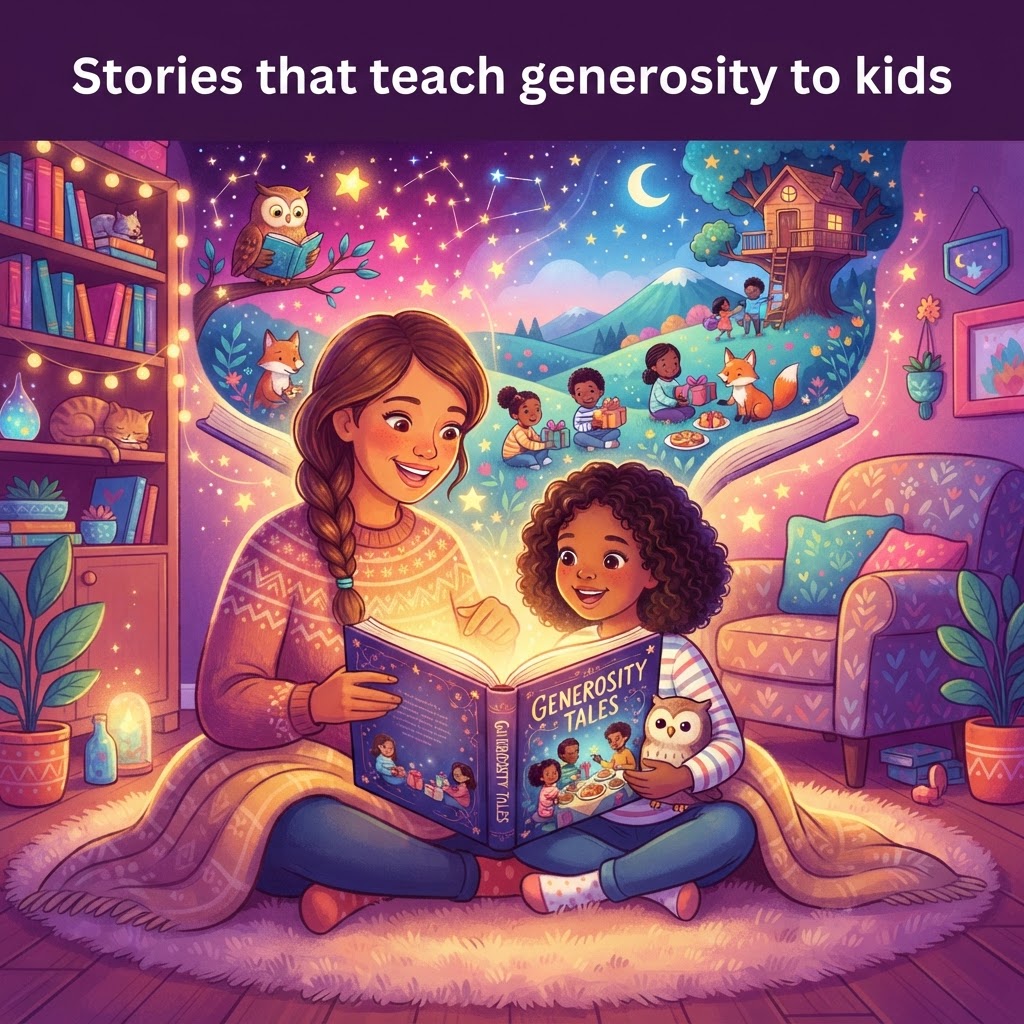
If you want to raise a child who notices others, shares willingly, and enjoys helping, stories are one of the best places to start. The right generosity stories for kids make kindness concrete, memorable, and safe to practice in the imagination before children try it in real life. Whether you are a parent, caregiver, or teacher, this guide will help you use generosity bedtime stories and everyday read-alouds to make teaching generosity to children feel natural, warm, and effective.
Why are stories so effective for teaching generosity to children?
Stories work because they let children see generosity in action without pressure. A child can watch a character face a choice, feel the emotions involved, and imagine what they would do next.
This matters for child development. According to CASEL’s framework for social and emotional learning, children build social awareness and relationship skills when they learn to understand others’ feelings and respond with care. Storytelling supports both. It gives children repeated examples of empathy, sharing, helping, and repairing relationships.
Stories also help because they:
- make abstract values easier to understand
- show cause and effect clearly
- lower defensiveness compared with direct lectures
- create a shared language for later conversations
- invite repetition, which is how young children learn best
Research and practice in early childhood education support this approach. The Harvard Center on the Developing Child emphasizes that children learn through responsive back-and-forth interactions, and story discussions are a perfect example. The NAEYC also highlights the importance of guided social-emotional learning in early childhood.
In simple terms, moral stories about generosity work because they help children feel the value, not just hear the rule.
What makes a generosity story truly meaningful for kids?
A meaningful generosity story is specific, relatable, and emotionally honest. Children learn best when the generous act feels realistic and the character has to make a real choice.
The strongest stories usually include:
- a child-friendly problem
- a moment of hesitation or conflict
- a generous choice
- a clear emotional result
- a gentle takeaway, not a heavy-handed lesson
Age matters too. For ages 1-3, keep generosity stories simple: sharing a toy, helping a sibling, offering a hug. For ages 4-6, children can follow stories about fairness, inclusion, and noticing someone left out. For ages 7-10, they are ready for more complex themes like giving time, standing up for someone, or sharing credit.
It also helps to connect generosity with other values. A child may need patience before they can share, respect before they can listen, or responsibility before they can help consistently. That is why related values stories, like teaching patience through stories, respect-themed stories, and stories about responsibility, can strengthen the same lesson.
Which story scenarios best demonstrate generosity for kids?
The best story scenarios show that generosity is not only about giving things away. It also includes giving time, attention, effort, comfort, and kindness.
The child who shares the last treat
A simple but powerful story starts with a child who has one cupcake, orange slice, or favorite snack left. A friend arrives late and has none. The child must decide whether to keep it or share.
This works well for younger children because the choice is clear and easy to picture. It shows that generosity can feel hard for a moment and still be the right choice.
Discussion questions:
- How do you think the child felt before sharing?
- Why might it be hard to give away your last treat?
- How did the friend feel after the child shared?
- Can you remember a time when someone shared with you?
The new classmate who feels left out
In this scenario, a new child joins class, camp, or the playground and does not know anyone. Another child notices and invites them to play, sit together, or join a group activity.
This is a strong example of generosity because it focuses on giving attention and belonging, not just objects. For many children, including someone is one of the most meaningful generous acts.
Discussion questions:
- What clues showed that the new child felt alone?
- What could happen if no one invited them?
- Why is giving time or friendship generous?
- What could you do if you saw someone left out?
The sibling who gives time to help
A child has plans to build a tower, draw, or play outside. Then a younger sibling or grandparent needs help finding something, tying shoes, or cleaning up. The child pauses their own fun to help.
This scenario teaches that generosity sometimes looks like service. It helps children see that helping is valuable even when no one gives a reward.
Discussion questions:
- Was it easy or hard for the character to help?
- What did they give up in that moment?
- How can helping someone be a generous act?
- When have you helped even when you were busy?
The child who gives anonymously
Older children often enjoy stories where a character leaves a kind note, donates a toy quietly, or helps fix a problem without asking for praise. The key lesson is that generosity does not need applause.
This kind of story is especially useful for ages 7-10. It expands the idea of generosity beyond “look what I gave” and toward inner character.
Discussion questions:
- Why might someone choose not to take credit?
- Is a kind act still important if nobody sees it?
- How did the receiver benefit from the act?
- What is one secret kind thing you could do?
The group that shares resources fairly
A class has limited art supplies, a team has one umbrella, or friends find a basket of fruit during a picnic. One child wants more, but the group learns to divide resources fairly so everyone has enough.
This scenario teaches that generosity can happen in groups. It also introduces fairness, cooperation, and empathy in a practical way.
Discussion questions:
- What would have happened if one child kept most of it?
- How is fairness connected to generosity?
- Did everyone need the same thing, or just enough?
- How can a group make kind decisions together?
How can adults turn generosity stories into real-life habits?
The biggest lesson comes after the story. Children learn generosity more deeply when adults connect the plot to everyday life in calm, concrete ways.
Try this simple pattern after reading:
- Name the generous act: “She noticed someone needed help.”
- Name the feeling: “He looked relieved when she shared.”
- Make a connection: “Have you ever seen that happen at school?”
- Plan one action: “What is one generous thing you could do tomorrow?”
Keep the tone curious, not corrective. If the discussion sounds like a quiz, many children shut down. If it feels like a warm conversation, they usually open up.
For classrooms, stories can lead into role-play, partner activities, kindness journals, or class goals. Teachers who want a flexible way to create age-appropriate SEL read-alouds can explore InstaTales for teachers for literacy and values-based activities.
How can you prompt InstaTales to create generosity bedtime stories?
The best prompts are clear, personal, and age-specific. Include your child’s age, favorite interests, the value you want to teach, and the type of challenge the main character should face.
A strong formula looks like this:
- child’s name and age
- favorite theme or character type
- generosity lesson
- setting
- emotional tone
- gentle ending or reflection
For example, you can create your own personalized bedtime story with prompts like these:
Prompt ideas for generosity-themed stories
- “Write a bedtime story for a 4-year-old who loves rabbits. The story should teach generosity by showing a bunny who shares carrots with a hungry friend.”
- “Create a gentle story for a 6-year-old about a child who notices a new classmate sitting alone and invites them to play.”
- “Write a story for an 8-year-old who loves space adventures. Include a moment where the main character gives up a reward to help the team.”
- “Create a calming bedtime story about siblings learning that helping each other is a form of generosity.”
- “Write a classroom story for ages 7-9 about students learning to share supplies fairly during an art project.”
You can also improve the result by adding details such as:
- “Use simple language.”
- “Make the ending reassuring.”
- “Include one discussion question at the end.”
- “Show that generosity can mean sharing time, not just toys.”
- “Keep the lesson gentle, not preachy.”
If you are building a full values library, it helps to rotate themes so children see how virtues connect. You might pair generosity with stories on forgiveness, perseverance, or respect by exploring more guides on the InstaTales blog.
What should parents and teachers remember when choosing moral stories about generosity?
Choose stories that invite reflection, not shame. The goal is to help children practice generosity step by step, not to make them feel guilty for being still learning.
A few good rules:
- avoid stories where “good children always give everything away”
- show that generous choices can feel difficult
- include emotional nuance and realistic consequences
- celebrate small acts, not only big sacrifices
- re-read favorite stories so the lesson sticks
Most importantly, remember that children learn generosity by seeing it around them. A story has the strongest effect when adults model sharing, helping, listening, and noticing others in daily life.
Frequently Asked Questions
What age should I start teaching generosity through stories?
You can start very early, even around ages 1-2, with simple stories about sharing and helping. Keep the examples short, concrete, and close to your child’s daily life.
What are the best generosity stories for kids?
The best stories are age-appropriate and relatable. Look for plots about sharing, including others, helping family members, or giving without expecting praise.
How do generosity bedtime stories help children learn?
Bedtime stories create a calm, focused moment for emotional learning. Children can reflect on characters’ choices and talk about kindness without the pressure of a real conflict.
How can I tell if a story is too preachy?
If the lesson feels forced, overly moralizing, or unrealistic, children may tune out. Good moral stories about generosity feel natural, emotionally believable, and open to discussion.
Can teachers use personalized stories to teach generosity in class?
Yes. Personalized stories can support SEL lessons, discussion circles, and writing activities. They are especially helpful when you want examples that match your students’ age, interests, or classroom situations.
What should I ask after reading a generosity story?
Ask simple open-ended questions like, “How did the character feel?” or “What else could they have done?” Then connect the lesson to one small real-life action your child can try.
Ready to Create a Personalized Bedtime Story?
Use our free AI bedtime story generator to create a personalized illustrated story for your child in 30 seconds — no credit card needed.
Popular story types:
Maya Rodriguez
Lead Content Editor & Early Literacy Specialist
Maya is a former early childhood educator and literacy specialist with over a decade of experience helping children develop a love of reading. She leads content at InstaTales, where she writes about the science of storytelling, child development, and how families can use personalized AI stories to build literacy and emotional resilience.
instatales.ai