Stories that teach kindness to kids
Help your child learn kindness through the power of storytelling. Tips, story ideas, and discussion questions for parents and teachers.
✦ Key Takeaways
- •Stories are effective because they make kindness concrete, emotional, and memorable.
- •The best stories use everyday situations children recognize right away.
- •A short, calm conversation after the story is often where the deepest learning happens.
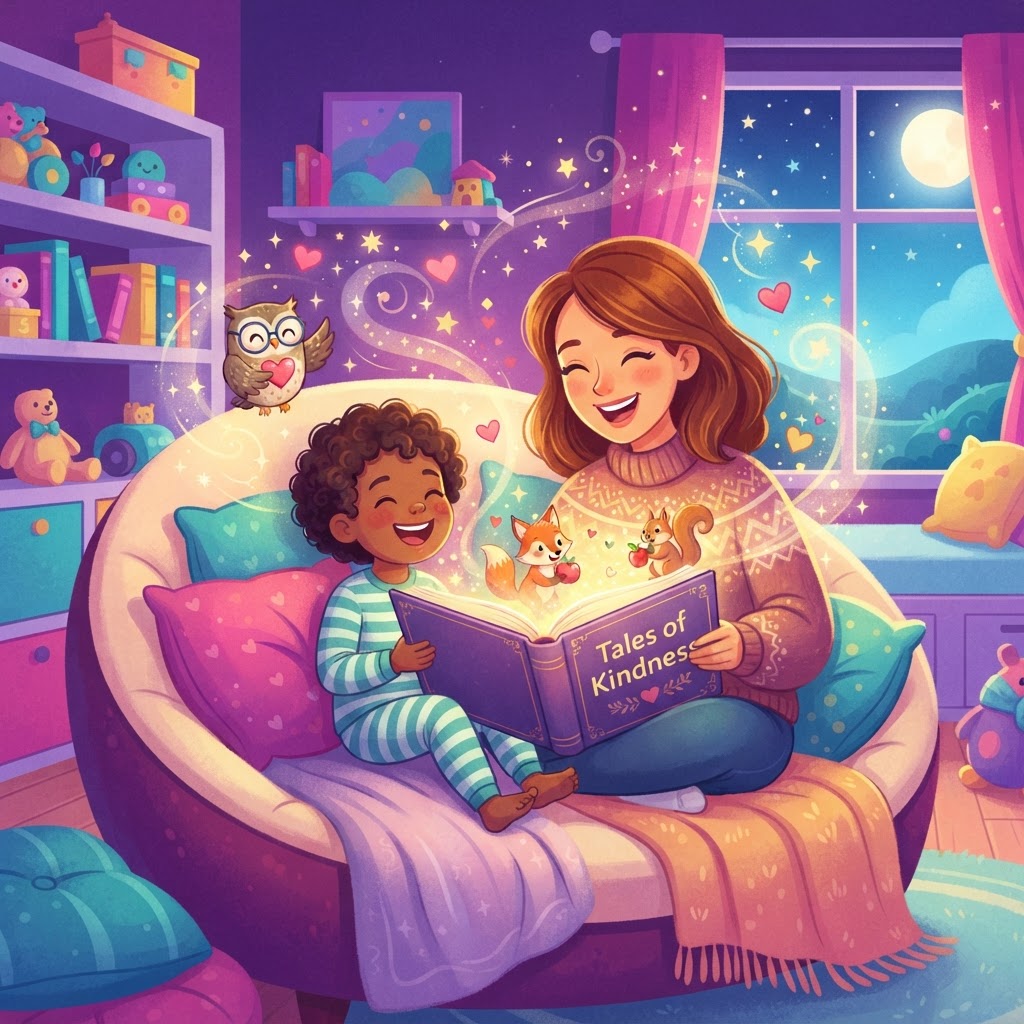
Kindness is one of the first values most adults hope to nurture, but children rarely learn it from lectures alone. Kindness stories for kids work because they turn big ideas like empathy, sharing, and helping into simple moments children can picture and copy. Whether you are reading at home, planning a class circle time, or creating kindness bedtime stories, the goal is the same: help children notice feelings, understand choices, and practice caring actions in real life.
Why are stories so effective for teaching kindness to children?
Stories are effective because they make kindness concrete, emotional, and memorable. Instead of hearing “be nice,” children see what kindness looks like when a character shares, includes someone, or fixes a mistake.
That matters for child development. CASEL identifies social awareness and relationship skills as core parts of social and emotional learning, and stories support both by helping children recognize feelings and consider other people’s needs (CASEL). The CDC also notes that social and emotional skills grow through everyday interactions, modeling, and practice. Research from the Harvard Center on the Developing Child reinforces that children learn best through warm, responsive relationships and repeated experiences.
For parents and teachers, this means teaching kindness to children works best when stories include:
- familiar situations children actually face
- clear emotions children can name
- simple choices and consequences
- a chance to repair harm, not just avoid it
- repetition, so the lesson sticks over time
This is why moral stories about kindness can be so powerful at bedtime or in the classroom. A story gives children emotional distance, which makes it easier to talk honestly about behavior without shame or defensiveness.
What kinds of kindness stories for kids teach the strongest lessons?
The best stories use everyday situations children recognize right away. When a story feels realistic, children are more likely to transfer the lesson into their own play, friendships, and family life.
If you want more inspiration beyond the ideas below, these more moral story ideas can help you build a wider reading routine.
A child notices someone being left out
A strong kindness story shows a child seeing another child sitting alone at recess, on the playground, or at a birthday party. The main character feels unsure at first, then offers a small invitation: “Do you want to play with us?”
Why it works: It teaches that kindness does not need to be big or dramatic. Often, one invitation changes someone’s whole day.
Discussion questions:
- How do you think the child felt before being invited?
- What made the main character decide to help?
- What is one kind way you can include someone this week?
A sibling or friend shares when it feels hard
In this scenario, a child has one special snack, toy, or turn and must decide whether to share. The story should show that sharing can feel difficult, not automatic.
Why it works: Children learn that kindness is not the absence of hard feelings. It is making a caring choice even when you feel possessive or frustrated.
Discussion questions:
- Why was sharing hard in this story?
- Did the child lose everything by sharing, or did something good happen too?
- When is sharing easy for you, and when is it hard?
A child makes a mistake and repairs the hurt
A valuable kindness story is not only about helping. It is also about repair. For example, a child laughs at a classmate’s drawing, sees the hurt it causes, then apologizes and finds a way to make things right.
Why it works: This teaches that kindness includes taking responsibility. Children need to know they can recover from mistakes with honesty and care.
Discussion questions:
- How did the classmate feel after being hurt?
- What made the apology feel real?
- What can we do after we make an unkind choice?
A class welcomes a new child
A new student, neighbor, or teammate arrives and feels nervous. One child notices and helps by explaining the rules, sitting nearby, or offering a tour.
Why it works: This story builds empathy and social awareness. It helps children imagine how unfamiliar places feel from someone else’s point of view.
Discussion questions:
- What clues showed that the new child felt nervous?
- Which kind action helped the most?
- How can you welcome someone who is new?
A child stands up gently when someone is teased
In this story, a child sees teasing or unfairness and responds with calm courage. They might say, “That’s not kind,” invite the other child away, or ask an adult for help.
Why it works: Kindness is not only soft and passive. It can also mean protecting someone, using a brave voice, or refusing to join in.
Discussion questions:
- What made this situation hard?
- What are safe ways to help when someone is being teased?
- Who can you ask for help if you are not sure what to do?
How can parents and teachers help children reflect after a kindness story?
A short, calm conversation after the story is often where the deepest learning happens. The best discussions are simple, curious, and pressure-free.
You do not need a long lesson. Try asking one or two thoughtful questions and then pausing. Children often need time to process before answering.
Here are a few ways to make reflection more effective:
- Name the feeling first. “How do you think she felt when no one picked her?”
- Focus on choices. “What could he do next?”
- Connect the story to real life. “Have you ever seen that happen?”
- Notice small acts. “What was the kindest moment in the story?”
- Avoid over-correcting. Let the story teach; you do not need to turn every read-aloud into a lecture.
For toddlers and younger children, keep questions concrete: “Who was sad?” “Who helped?” For older children, especially ages 8-10, you can discuss motives, fairness, peer pressure, and repair. If you are looking for age-matched reads, these bedtime stories for 10-year-olds can offer more direction for older readers.
How can you prompt InstaTales to create meaningful kindness bedtime stories?
The best prompt is specific, age-appropriate, and centered on one clear kindness skill. When you create your own personalized bedtime story, give the AI enough detail to build a gentle, believable lesson instead of a vague “be kind” message.
A useful prompt formula is:
- child’s age
- name or favorite character type
- setting the child knows
- one kindness challenge
- one kind action
- a calm, reassuring ending
Here are three examples:
- “Write a 5-minute bedtime story for a 4-year-old about Maya at preschool who notices a child playing alone and learns how to invite them kindly.”
- “Create a gentle story for a 7-year-old about Leo who hurts his sister’s feelings, apologizes, and finds a way to make things right.”
- “Write a story for an 8-year-old about a new student joining class and a child who chooses kindness by helping them feel welcome.”
To get stronger results, include these details:
- Choose one lesson only. Sharing, including, apologizing, or helping is enough for one story.
- Use a familiar setting. Home, school, the park, or bedtime routines feel relatable.
- Ask for emotional language. Request words like worried, lonely, proud, or relieved.
- Keep consequences gentle. Especially for young children, the story should guide rather than scare.
- End with reflection. Ask for a closing line that shows how kindness changed the situation.
If you want a faster starting point, browse the built-in story templates. For classroom reading, writing prompts, or SEL activities, InstaTales for teachers can help educators use personalized storytelling in a structured way. You can also explore shorter moral story ideas if you want quick read-aloud options for busy evenings.
What should children learn from moral stories about kindness?
Children should come away with the idea that kindness is a daily practice, not a perfect personality trait. The most helpful moral stories about kindness teach that children can notice feelings, make caring choices, and repair mistakes when they get something wrong.
That lesson is especially important because real kindness is active. It can look like:
- inviting someone to join in
- sharing fairly
- using gentle words
- apologizing sincerely
- helping someone who feels unsure or left out
- asking an adult for help when another child is hurt
Over time, repeated exposure to kindness bedtime stories helps children build a mental library of prosocial choices. That is one reason many families and educators return to the same themes again and again: repetition supports both understanding and action.
Frequently Asked Questions
What age should children start hearing kindness stories?
Children can begin hearing simple kindness stories in toddlerhood. For ages 1-3, keep the plot short and repetitive; for older children, add more emotional detail and problem-solving.
How long should a kindness bedtime story be?
For most children, 3-8 minutes is enough for a focused story with one clear lesson. Younger children usually benefit from shorter stories, while older children can follow slightly more complex plots.
Can AI-generated stories really help with teaching kindness to children?
Yes, when they are used thoughtfully. Personalized stories can make social lessons feel more relevant, especially when adults follow up with a short discussion and model kindness in daily life.
What if my child does not answer discussion questions?
That is normal. Keep the tone light, offer choices like “Was that kind or unkind?”, and revisit the topic later during play, meals, or another story.
How often should we read kindness stories for kids?
A few times each week is often enough to build familiarity without making it feel forced. Re-reading favorite stories can be especially helpful because repetition strengthens understanding.
Are kindness stories useful in classrooms too?
Absolutely. Teachers can use them for morning meetings, SEL lessons, writing prompts, and conflict-repair conversations, especially when stories reflect common classroom situations.
Ready to Create a Personalized Bedtime Story?
Use our free AI bedtime story generator to create a personalized illustrated story for your child in 30 seconds — no credit card needed.
Popular story types:
Maya Rodriguez
Lead Content Editor & Early Literacy Specialist
Maya is a former early childhood educator and literacy specialist with over a decade of experience helping children develop a love of reading. She leads content at InstaTales, where she writes about the science of storytelling, child development, and how families can use personalized AI stories to build literacy and emotional resilience.
instatales.ai