Excitement Stories for Kids: A Parent’s Guide
If your child struggles with excitement, stories can help. Here's how to use storytelling to support your child's emotional development.
✦ Key Takeaways
- •Children feel excitement strongly because their brains are still learning how to balance big emotions with self-control.
- •Stories help because they create a little emotional distance.
- •The best story themes are the ones that match real childhood situations.
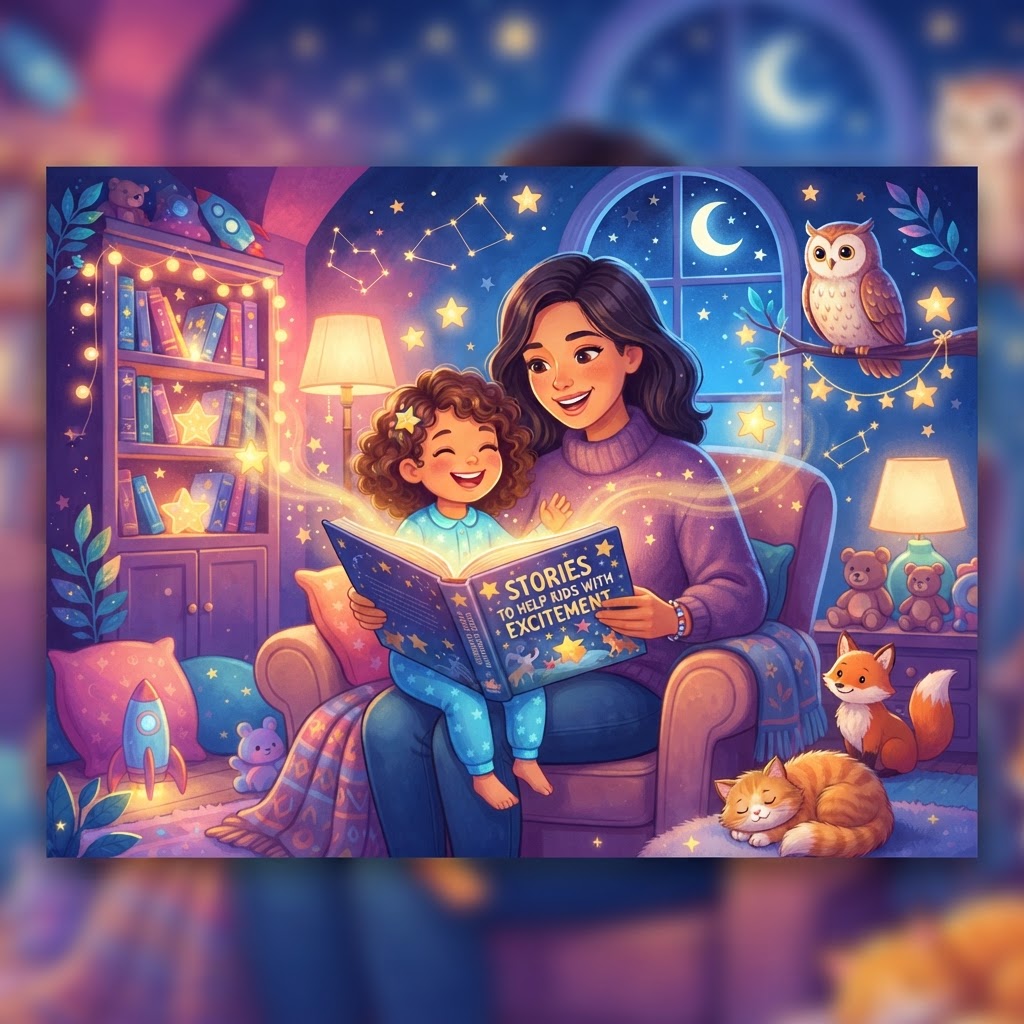
Excitement is a happy feeling, but for many children it can also feel huge, buzzy, and hard to manage. That is why excitement stories for kids can be so helpful. A gentle story gives children a safe way to understand what is happening in their body, learn words for the feeling, and practice calming down without being told that their joy is “too much.”
Why do children experience excitement so intensely?
Children feel excitement strongly because their brains are still learning how to balance big emotions with self-control. In other words, the feeling comes fast, but the skills to slow the body and behavior take time to grow.
Young children often show excitement through jumping, shouting, interrupting, racing around, or struggling to sleep before a special event. That is developmentally normal. The brain systems involved in executive function—including impulse control, attention, and flexible thinking—develop gradually, as explained by the Harvard Center on the Developing Child.
Excitement can also be mixed with other feelings. A child waiting for a birthday party may feel thrilled, but also worried, impatient, or overwhelmed. This is one reason helping kids with excitement is not about “stopping” the emotion. It is about helping children notice it, name it, and handle it safely.
Research in child development also shows that emotional regulation grows through relationships. When adults stay calm, predictable, and warm, children borrow that steadiness. The CDC’s developmental guidance also reminds us that emotional and social skills build over time, not all at once.
How do excitement stories for kids support emotional regulation?
Stories help because they create a little emotional distance. A child can watch a character feel wiggly, impulsive, or overexcited without feeling blamed or corrected.
This is sometimes called narrative distance. Instead of hearing, “You need to calm down,” a child hears, “Milo was so excited for the trip that his tummy felt full of bouncing beans.” That softer approach lowers defensiveness and opens the door to learning.
Stories also help in three important ways:
- They model behavior. Children see what a character does when excitement gets too big: take breaths, ask questions, squeeze a pillow, or wait for a turn.
- They build emotional vocabulary. Words like eager, buzzy, jittery, impatient, hopeful, and overwhelmed help children describe what they feel.
- They make repetition easy. Re-reading the same story lets children rehearse the same coping skills again and again.
This fits with what we know from social learning theory, especially the work of Albert Bandura: children learn by watching others. In practice, stories about excitement for children can show that excitement is welcome, while still teaching limits and regulation.
For many families, stories work best when they are followed by a short chat:
- “What did the character’s body feel like?”
- “What helped them wait?”
- “Have you ever felt like that?”
Which story themes are most helpful for helping kids with excitement?
The best story themes are the ones that match real childhood situations. Stories are most effective when children can recognize themselves in the plot.
Here are some especially helpful themes for excitement and children:
- Waiting for something special: birthdays, holidays, visitors, school trips, or a playdate
- Big body feelings: a fast heart, jumpy legs, loud voice, or trouble settling at bedtime
- Mixed emotions: excitement that turns into frustration, worry, or tears
- Turn-taking and sharing attention: wanting to talk first, go first, or open everything at once
- Transitions: calming down after good news, after a party, or before sleep
These themes matter because excitement often peaks around anticipation and change. A story about “being excited” in a vague way can be less useful than a story about waiting for grandma to visit or sleeping the night before a trip.
If your child’s excitement often spills into irritation or snapping, it can help to pair these stories with resources on stories about anger. If excitement also brings nerves, our guide to fear stories for children may support that emotional mix.
What should you avoid in stories about excitement for children?
Avoid stories that shame the emotion, overstimulate the child, or push a lesson too hard. The goal is not to teach that excitement is bad; it is to teach that excitement needs support.
Try to avoid:
- Shaming language: “She was silly,” “He was too much,” or “Good kids stay calm”
- Chaotic plots with no repair: lots of noise, speed, and mess without any settling
- Long moral lectures: children usually learn better from action than from speeches
- Instant fixes: regulation is a process, not a magic sentence
- Using stories only during a meltdown: stories work best before the big moment, not just in it
It also helps to avoid stories that are too close to a child’s distress when they are already dysregulated. If your child is jumping on the bed with pre-party excitement, that may not be the ideal time for a long reflective story. Read it earlier in the day, at bedtime, or during a calm cuddle.
A good rule is simple: validate first, guide second. A story should sound like, “It makes sense that you feel this way, and here is what can help.”
What are five gentle story ideas for excitement and children?
The most effective story ideas combine warmth, realism, and one clear coping strategy. These five ideas work well for bedtime, classroom circles, or pre-event routines.
1. The night-before-the-birthday story
A child is thrilled about tomorrow’s party and keeps popping out of bed with new questions. A kind grown-up helps them make a “morning plan,” take belly breaths, and place their excitement in an imaginary treasure box until sunrise.
2. The fast-feet school trip story
A class is getting ready for a special outing, and one child feels so excited that they keep rushing ahead. The story shows how excitement can live in the body and how “slow feet, bright eyes” helps everyone stay safe.
3. The talking-too-fast playdate story
A child is eager to see a friend and talks over everyone at once. A caring character models how to pause, listen, and share the fun instead of letting excitement take over the whole moment.
4. The wiggly holiday morning story
A child wakes up early, buzzing with anticipation, and everything feels too loud and too bright. The plot gently normalizes that feeling and introduces a calm ritual such as stretching, sipping water, and noticing five quiet things.
5. The exciting surprise that needs waiting story
A child knows something wonderful is coming but not exactly when. The story focuses on patience, uncertainty, and the skill of holding joy without needing immediate action.
If you want to tailor these ideas to your child’s age, interests, or current challenge, you can create your own personalized bedtime story and adjust the details so the emotional lesson feels natural. For a quicker start, story templates can help you build a calm, emotionally supportive structure in minutes.
How can you use InstaTales’ kind tone to make excitement stories more effective?
A kind, non-judgmental tone makes stories more effective because children learn best when they feel safe. They are far more likely to reflect, listen, and try new coping tools when the story respects the feeling instead of correcting it harshly.
With InstaTales, aim for language that does three things:
- Names the feeling clearly: “Lina felt excited, buzzy, and wide awake.”
- Normalizes the experience: “Lots of children feel this way before something special.”
- Offers one or two doable strategies: breathing, counting, squeezing a blanket, or making a waiting plan
This matters because stories should not turn into disguised discipline. A gentle tone keeps the message compassionate: “Your feelings make sense, and you can learn what to do with them.”
A few practical tips:
- Re-read the same story before the same kind of event
- Personalize the character to match your child’s world
- Keep the ending calming, not hyper
- Ask one reflection question, not ten
You can also save effective stories in your story library so your child has familiar favorites to revisit. And if you want more emotion-focused support, the InstaTales blog includes guides for other big feelings, including sadness, anger, and fear.
Frequently Asked Questions
Are excitement stories for kids only useful when a child is overexcited?
No. They are often most helpful before the big moment happens. Reading ahead of time gives children a mental script they can use when excitement builds.
Can excitement be a difficult emotion for children even though it is positive?
Yes. Positive emotions can still feel overwhelming, especially for young children with developing self-regulation. A child can be happy and dysregulated at the same time.
What age are stories about excitement for children best for?
They can help from toddlerhood through early primary school, but the style should match the child’s age. Younger children do best with simple plots and repeated phrases, while older children can handle mixed emotions and more reflection.
Should bedtime stories calm excitement or celebrate it?
Ideally, they do both. A strong story validates the joy while also helping the child’s body settle enough for rest and connection.
What if my child gets more wound up during the story?
That can happen if the story is too stimulating or the timing is off. Try reading earlier, shortening the plot, or choosing a gentler story with a slower ending and fewer exciting details.
How often should we re-read the same excitement story?
Often. Repetition is one of the main ways children learn emotional skills, and familiar stories can become a comforting tool during exciting times.
Ready to Create a Personalized Bedtime Story?
Use our free AI bedtime story generator to create a personalized illustrated story for your child in 30 seconds — no credit card needed.
Popular story types:
Maya Rodriguez
Lead Content Editor & Early Literacy Specialist
Maya is a former early childhood educator and literacy specialist with over a decade of experience helping children develop a love of reading. She leads content at InstaTales, where she writes about the science of storytelling, child development, and how families can use personalized AI stories to build literacy and emotional resilience.
instatales.ai