Fear Stories for Kids: A Parent’s Guide
If your child struggles with fear, stories can help. Here's how to use storytelling to support your child's emotional development.
✦ Key Takeaways
- •Fear is a normal part of child development.
- •Stories help because they create safety without avoidance.
- •The best story themes are specific, gentle, and hopeful.
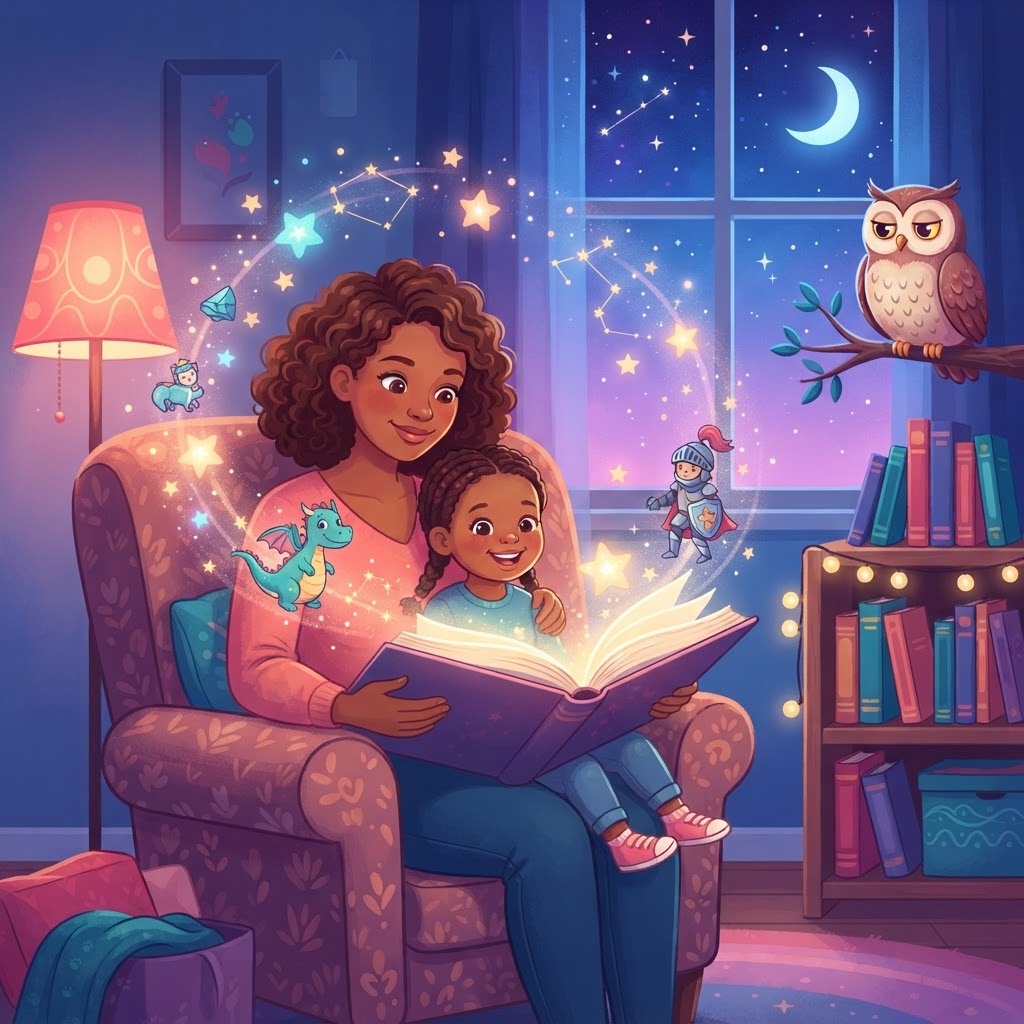
When a child feels scared, a gentle story can do more than distract them for a few minutes. Fear stories for kids can help children name what they feel, imagine a way through it, and experience comfort alongside a trusted adult. Used well, stories become a practical tool for helping kids with fear at bedtime, after a hard day, or during a stressful season.
Why do children experience fear?
Fear is a normal part of child development. Most children move through predictable fears as their brains, imaginations, and independence grow.
Babies and toddlers may fear separation, loud noises, or unfamiliar people. Preschoolers often worry about the dark, monsters, or things they cannot fully understand. Older children may become more aware of real-world risks, social embarrassment, school pressure, or family changes.
According to the American Academy of Child & Adolescent Psychiatry, childhood fears often change with age and are usually temporary. Temperament matters too. Some children are naturally more cautious, more sensitive to sensory input, or quicker to imagine worst-case scenarios.
Fear can also increase when children are tired, overstimulated, dealing with change, or absorbing adult stress. That is why fear and children should never be treated as a discipline problem first. A scared child usually needs safety, language, and support before they can be brave.
How can stories help children with fear?
Stories help because they create safety without avoidance. A child can explore a scary feeling at a comfortable distance while staying close to a calm adult.
Child psychology gives us a few reasons this works:
- Narrative distance: A character can feel afraid without the child feeling fully overwhelmed. “The little fox is scared of thunder” can feel safer than “You should not be scared.”
- Modeling: Children learn by watching others, including story characters. This builds on Albert Bandura’s social learning theory: kids copy coping strategies they see used successfully.
- Emotional vocabulary: Stories give children words like worried, nervous, startled, uneasy, or brave. Research on affect labeling, including work by Matthew Lieberman and colleagues, suggests that naming feelings can reduce their intensity.
- Predictable resolution: A well-told story shows that fear rises, support appears, and the feeling passes.
Responsive relationships matter too. The Center on the Developing Child at Harvard University explains that children regulate stress best with steady, supportive adults. When you read stories about fear for children in a warm, connected way, the story and the relationship work together.
If your child’s fear looks more like constant worry, our guide to stories about anxiety can also help.
What kinds of story themes work best for helping kids with fear?
The best story themes are specific, gentle, and hopeful. Children usually respond better to stories that reflect a real fear in a softened, manageable way.
Good themes include:
- Fear of the dark: A character discovers that nighttime is different, not dangerous.
- Separation worries: A child and parent stay connected through a routine, object, or promise.
- New experiences: First day of school, swimming lesson, haircut, sleepover, or doctor visit.
- Loud noises or storms: A character learns what the sound is and what helps their body feel calm.
- Big imagination fears: Shadows, monsters, or strange sounds are handled playfully and gently.
- Social fears: Worry about joining a group, speaking up, or making mistakes.
- Fear after change or loss: Moving house, a new sibling, or a family transition can create hidden fear. In those moments, stories for sadness may also be useful.
The most effective fear stories for kids usually include three ingredients:
- A relatable fear
- A caring helper
- One simple coping tool
That coping tool might be deep breaths, holding a comfort object, asking for help, turning on a nightlight, or trying one small brave step. Young children do not need a dramatic hero’s journey. They need a believable path from “scared” to “safer.”
What should parents avoid when choosing fear stories for kids?
Avoid stories that overwhelm, shame, or pressure the child. A story should stretch a child gently, not flood them.
Try to avoid:
- High-intensity danger: Graphic peril, strong villains, or long scenes of panic can backfire.
- Mocking the fear: If a character is laughed at for being scared, a child may feel embarrassed instead of supported.
- Fast fixes: “Then she stopped being scared forever” sounds simple, but it is not believable.
- Heavy moralizing: Children usually do better with empathy than lectures.
- Too-close details: If your child fears burglars, for example, avoid vivid break-in scenes.
It also helps not to use a story as a disguised command. A child can sense when a parent is really saying, “See? You should be over this by now.” For some children, fear comes out as irritability or control-seeking rather than tears. If that sounds familiar, you may also find our article on anger story ideas for children helpful.
How can you use InstaTales’ kind tone to support a fearful child?
A calm, validating tone matters as much as the plot. With a fearful child, the goal is not to make the story exciting; it is to make the child feel understood and capable.
If you want to create your own personalized bedtime story, keep the tone:
- Gentle, not dramatic
- Reassuring, not dismissive
- Brave in small steps, not big leaps
- Clear and sensory-safe, not intense
A useful prompt structure is:
- “Write a bedtime story about a child who feels scared of thunder.”
- “Use a warm, kind tone.”
- “Include a loving adult, a simple coping skill, and a peaceful ending.”
- “Make the child brave by trying one small step.”
This kind of personalization is powerful because the story can match your child’s age, fear, favorite animal, and comfort routine. You can save the stories that work best in your story library and reread them when the fear returns. Repetition is not a problem here; it is often the treatment.
If you want a quick starting point, gentle story templates can make it easier to build a supportive bedtime story without overthinking every detail.
What are five gentle fear story ideas to try tonight?
The best story ideas reflect fear indirectly and end with comfort, competence, and calm. Here are five that work especially well for young children.
1. The bunny who was afraid of the dark
A small bunny thinks the dark hides scary things. With a lantern and a parent beside them, they discover soft owl sounds, glowing stars, and the familiar shapes of home.
2. The child who carried a pocket of courage
A child worries about a new classroom. Before school, they put a tiny “pocket of courage” in their coat: a smooth stone, a note, or a heart sticker that reminds them they are connected to home.
3. The fox who listened to the thunder
A fox is frightened by storms until a grandparent teaches them to count between lightning and thunder, wrap in a blanket, and notice when the storm begins to pass. The fear becomes more understandable and less mysterious.
4. The bear who thought mistakes were dangerous
An older child may not fear monsters, but they may fear getting things wrong. In this story, a bear learns that wobbling, spilling, and retrying are part of learning, not signs that something bad will happen.
5. The kitten who checked the shadows
A kitten sees odd shadows on the wall each night. One by one, the shadows turn out to be safe, ordinary things: a chair, a plant, a hanging sweater. The ending reinforces curiosity over panic.
These stories about fear for children work best when you pause to ask, “What helped the character feel safer?” That simple question turns a bedtime story into a coping lesson.
When should parents seek extra support for fear and children?
Seek extra help when fear is intense, persistent, or getting in the way of daily life. Normal fears come and go, but some children need more support.
Consider talking to your pediatrician or a child mental health professional if fear is causing:
- Frequent sleep problems or nightmares
- School refusal
- Panic-like symptoms
- Avoidance of normal activities
- Ongoing physical complaints like stomachaches
- Distress that lasts for weeks or months
The CDC’s child mental health resources can help parents understand when emotions may need additional support. Stories are a wonderful tool, but they are not a substitute for professional care when fear becomes disabling.
Frequently Asked Questions
What are the best fear stories for kids?
The best stories are gentle, age-appropriate, and focused on one manageable fear. They should include comfort, a coping strategy, and a hopeful ending rather than intense danger.
How do stories help with fear in children?
Stories give children emotional distance, helpful language, and a model for coping. They also let parents co-regulate with their child through closeness, repetition, and calm discussion.
Should I choose stories that match my child’s exact fear?
Usually, yes—but soften the details. A close match helps a child feel understood, while a slightly indirect version keeps the story safe enough to absorb.
Can bedtime stories reduce nighttime fears?
They often can, especially when paired with a predictable bedtime routine. Re-reading the same calming story can build familiarity and reduce anticipatory worry around sleep.
What if my child gets more upset during the story?
Pause right away and validate the feeling. You can shorten the story, make it gentler next time, or switch to a more indirect theme if the content feels too close.
Are personalized AI stories safe for emotional topics?
They can be, if adults guide the tone and review the story before reading. For emotional themes, choose warm language, simple coping tools, and endings that feel reassuring rather than dramatic.
Ready to Create a Personalized Bedtime Story?
Use our free AI bedtime story generator to create a personalized illustrated story for your child in 30 seconds — no credit card needed.
Popular story types:
Maya Rodriguez
Lead Content Editor & Early Literacy Specialist
Maya is a former early childhood educator and literacy specialist with over a decade of experience helping children develop a love of reading. She leads content at InstaTales, where she writes about the science of storytelling, child development, and how families can use personalized AI stories to build literacy and emotional resilience.
instatales.ai