Tamil Stories for Kids: Benefits, Ideas & Tips
Delightful Tamil stories for kids — perfect for bilingual families, language learners, and heritage language preservation.
✦ Key Takeaways
- •Tamil stories for kids are worth making time for because they support language, identity, and connection all at once.
- •Stories in Tamil support language learning by giving children repeated, meaningful exposure to words, grammar, and conversation patterns.
- •Tamil children stories help children stay connected to culture by making traditions personal and memorable.
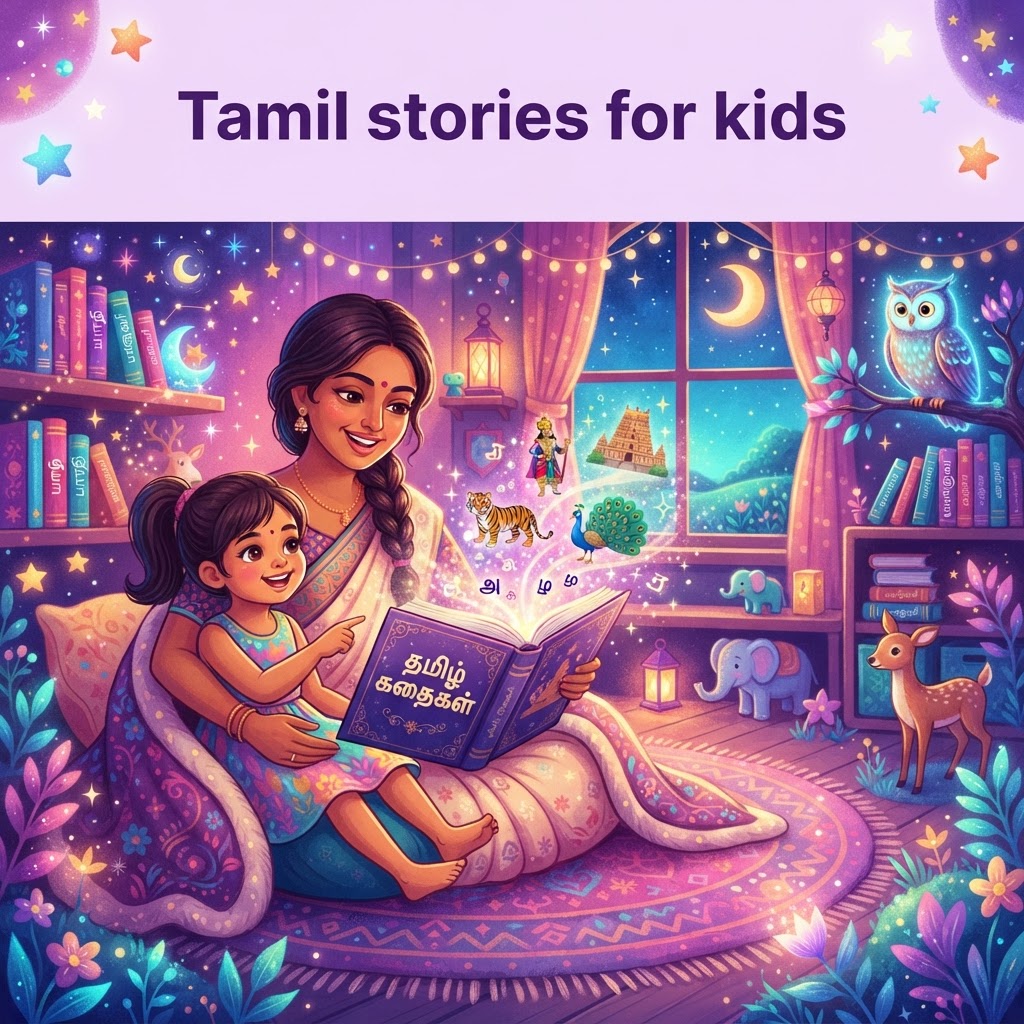
Tamil stories for kids do much more than fill a bedtime routine. They help children hear the rhythm of a beautiful heritage language, build stronger family bonds, and connect everyday reading with culture, memory, and identity.
For bilingual families, language learners, and parents raising children away from Tamil-speaking communities, stories in Tamil can become a simple daily habit with lasting benefits. Whether you want gentle Tamil bedtime stories for toddlers or richer Tamil children stories for early readers, the goal is the same: make Tamil feel warm, useful, and joyful.
Why are Tamil stories for kids worth making time for?
Tamil stories for kids are worth making time for because they support language, identity, and connection all at once. A short story in a familiar family language can teach vocabulary while also giving children a strong sense of belonging.
When children hear stories in the language spoken by parents, grandparents, or relatives, they learn that the language matters outside of instruction. It becomes the language of comfort, imagination, humor, and love.
This is especially important in bilingual homes. A child may hear English at school and in media, but Tamil bedtime stories create protected space for the home language to grow naturally.
Reading Tamil children stories also gives parents an easy way to:
- repeat common phrases and sentence patterns
- introduce new words in context
- talk about feelings and choices
- pass down family values through storytelling
- build positive bedtime routines
Even five to ten minutes each night can make Tamil feel like a living, everyday language rather than something children only “study.”
How do stories in Tamil support language learning and brain development?
Stories in Tamil support language learning by giving children repeated, meaningful exposure to words, grammar, and conversation patterns. They also support brain development because shared reading strengthens attention, memory, and back-and-forth interaction.
Research on bilingual development consistently shows that maintaining a child’s home language supports overall communication and learning. The National Association for the Education of Young Children highlights that strong home-language experiences help dual language learners build confidence and literacy foundations. The Head Start Early Childhood Learning & Knowledge Center also emphasizes the value of home language for identity and school readiness.
Shared reading matters, too. The Harvard Center on the Developing Child explains that responsive conversation and interaction help build early brain architecture. When you pause during a story, ask a question, or repeat a phrase, you are not just reading—you are strengthening language pathways.
In practical terms, stories in Tamil help children:
- hear correct pronunciation and rhythm
- learn words tied to daily life, nature, family, and emotions
- understand how sentences are formed
- predict story patterns through repetition
- retell events in their own words
For younger children, repetition is especially powerful. For older children, stories develop narrative thinking: who the characters are, what problem they face, and how they solve it. These are core literacy skills in any language.
How do Tamil children stories help children stay connected to culture?
Tamil children stories help children stay connected to culture by making traditions personal and memorable. Instead of teaching culture as a list of facts, stories let children feel it through characters, places, and everyday family life.
A well-told Tamil story can introduce:
- festivals such as Pongal or Deepavali
- foods like idli, dosa, or sakkarai pongal
- family roles such as paati and thatha
- village and city settings
- local animals, trees, weather, and landscapes
- values such as kindness, courage, respect, and generosity
This kind of cultural learning is powerful because it is emotionally anchored. A child may forget a vocabulary list, but they will remember the story of a little girl making a kolam with her grandmother before sunrise.
For families living outside Tamil-speaking regions, Tamil stories for kids can also reduce the distance between generations. Grandparents may find it easier to share memories, sayings, songs, and proverbs when they are attached to a simple story. That turns storytime into relationship-building, not just language practice.
If your family enjoys exploring multiple heritage languages, you may also like these ideas for Bengali stories for children.
What makes a Tamil bedtime story engaging for ages 1-10?
The best Tamil bedtime stories are simple, soothing, and age-appropriate. They keep children interested without overstimulating them right before sleep.
A strong story for bedtime usually includes a clear emotional arc, gentle repetition, and a comforting ending. Children do not need complicated plots. They need language they can follow and moments they can predict.
Here are a few features that work especially well:
- Repetition: repeated phrases help children join in
- Warm settings: home, moonlight, rain, gardens, family visits
- Gentle conflict: a lost toy, a shy moment, a small problem to solve
- Sensory detail: jasmine flowers, temple bells, mango trees, ocean breeze
- Emotional safety: the ending should feel secure and calm
You can also match story style by age:
- Ages 1-3: short, rhythmic, repetitive stories with familiar objects
- Ages 4-6: simple adventures, talking animals, family traditions
- Ages 7-10: richer plots, folktale-inspired journeys, moral choices, humor
If you are creating your own story, starting with a predictable structure helps: child + small problem + helper + solution + peaceful ending.
Which Tamil story ideas can you try tonight?
The easiest way to start is with story ideas that feel familiar, visual, and emotionally warm. These five concepts work well as Tamil stories for kids because they naturally include everyday language, culture, and child-friendly plots.
1. The Little Kolam That Blew Away
A child helps decorate the front step with a beautiful kolam, but the wind smudges it away. With help from a grandparent, they learn that beauty can be remade and mistakes are part of learning.
2. The Mango Tree’s Secret
A shy child visits a village mango tree that “whispers” small acts of kindness to everyone who sits under it. Each act helps a neighbor, and by the end, the child discovers their own voice.
3. The Moon Over Marina Beach
A family evening walk turns magical when the moon seems to follow one curious child across the sand. This makes a lovely Tamil bedtime story because it blends wonder, family closeness, and a calm nighttime setting.
4. Paati’s Festival Box
A grandmother opens a special box filled with objects from different celebrations—sugarcane, lamps, flowers, tiny bells. Each object begins a mini-story, making this a great format for Tamil children stories that introduce traditions in small, memorable pieces.
5. The Talking Parrot and the Tamarind Seed
A playful parrot helps a child plant a seed and care for it day by day. This story supports vocabulary about nature, patience, weather, and growth while ending with a sense of quiet accomplishment.
You can make each of these more personal by adding:
- your child’s name
- their favorite animal or color
- a hometown or family village
- a sibling, cousin, or grandparent
- a favorite food or bedtime object
That personal touch often makes children ask for the same story again—and repeated listening is excellent for language growth.
How can parents and teachers use InstaTales for Tamil stories?
InstaTales makes it easier to create personalized stories in Tamil without needing to write everything from scratch. It works best when you combine the tool with what you already know about your child’s interests, language level, and bedtime routine.
A simple approach is to:
- start with create your own personalized bedtime story and choose Tamil or a bilingual Tamil-English format
- use story templates if you want a quick starting point for animals, adventures, or bedtime themes
- add personal details like your child’s name, favorite place, or a family celebration
- keep the prompt age-appropriate and ask for calm endings if the story is for bedtime
- save the best ones in your story library for easy rereading
For bilingual families, one helpful strategy is to alternate languages. You might read most of the story in Tamil, then briefly discuss key words in English. Or you can generate a simpler Tamil story for younger children and gradually increase the language complexity as they grow.
Teachers and early years educators can also use Tamil story generation in small-group literacy activities, family engagement projects, or multicultural units. If you are planning classroom use, InstaTales for teachers can help you organize reading activities more intentionally.
And if you want more multilingual reading ideas, the InstaTales blog offers additional resources for families building home-language story habits.
How can you make Tamil storytelling a consistent family habit?
Consistency matters more than perfection. Children benefit most when Tamil storytelling feels regular, relaxed, and enjoyable.
Try these simple habits:
- read one short story at the same time each evening
- repeat favorite stories instead of always chasing new ones
- invite grandparents to record or tell a story in Tamil
- ask one easy question after reading: “What happened?” or “Who helped?”
- let children retell part of the story in any language they can manage
The goal is not flawless grammar. The goal is confident, joyful engagement with Tamil.
When children associate Tamil with warmth, imagination, and attention from trusted adults, they are much more likely to keep using it as they grow.
Frequently Asked Questions
Are Tamil stories for kids good for children who are stronger in English?
Yes. Children do not need to be fluent to enjoy stories in Tamil. Short, repetitive stories with pictures, gestures, or quick English support can make Tamil feel accessible and fun.
At what age should I start Tamil bedtime stories?
You can start from infancy. Even babies benefit from hearing the sounds, rhythm, and emotional tone of a familiar language during shared reading.
Do bilingual children get confused by hearing stories in two languages?
No, this is a common myth. Research on dual language learners shows that children can learn more than one language successfully when they get meaningful exposure and responsive interaction.
How long should a Tamil bedtime story be?
For toddlers, 3-5 minutes is enough. For older children, 8-15 minutes often works well, especially if the story includes a simple plot and a calm ending.
Can teachers use Tamil children stories in the classroom?
Absolutely. Tamil children stories can support inclusion, oral language practice, family engagement, and multicultural learning, especially in early childhood and primary settings.
How can I create personalized Tamil stories quickly?
A story generator can help you start faster. With InstaTales, you can choose a theme, add your child’s name and interests, and create a story in Tamil or a bilingual format that you can save and reuse.
Ready to Create a Personalized Bedtime Story?
Use our free AI bedtime story generator to create a personalized illustrated story for your child in 30 seconds — no credit card needed.
Popular story types:
Maya Rodriguez
Lead Content Editor & Early Literacy Specialist
Maya is a former early childhood educator and literacy specialist with over a decade of experience helping children develop a love of reading. She leads content at InstaTales, where she writes about the science of storytelling, child development, and how families can use personalized AI stories to build literacy and emotional resilience.
instatales.ai