A Parent's Guide to Teaching Values with Bedtime Stories
A practical guide for parents on using the power of storytelling to gently instill life lessons like kindness, resilience, and honesty in children.
Weaving Wisdom into Bedtime: A Guide to Values-Based Storytelling
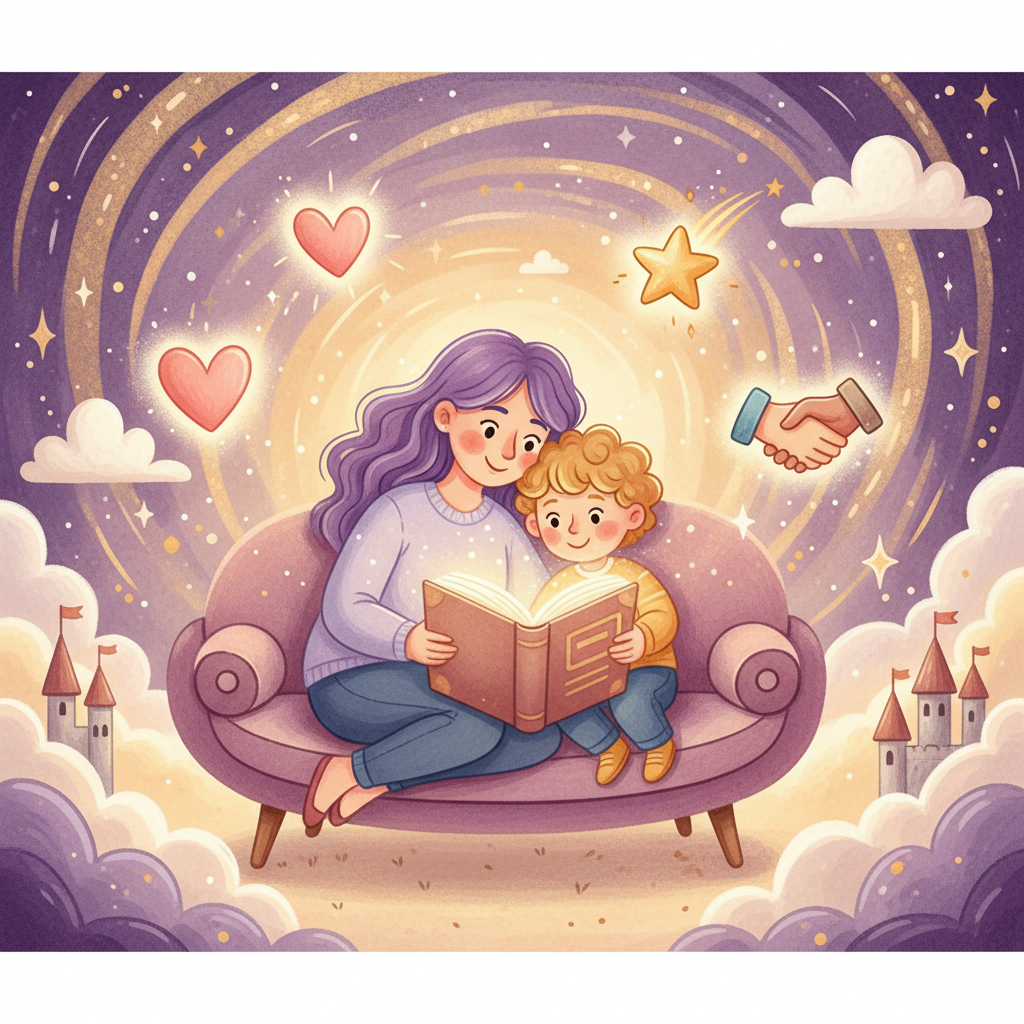
As parents, one of our most important roles is to guide our children in developing a strong moral compass. While direct conversations are essential, the subtle art of storytelling offers a uniquely powerful way to introduce complex values like kindness, resilience, and honesty in a format that is both engaging and digestible for young minds.
Why Stories Are the Perfect Vehicle for Teaching Values
Stories provide a gentle, indirect approach to moral education. Instead of a lecture, a child is invited into a world where they can observe characters making choices and experiencing the outcomes. This narrative context makes abstract virtues feel tangible and relevant.
According to research on social-emotional learning, narratives help children connect emotional understanding to moral reasoning. When a character in a story chooses honesty over deceit and is rewarded with trust, the lesson is learned emotionally and intellectually.
Practical Strategies for Parents
-
Choose a Core Value: Before crafting a story, decide on a single, clear value you want to highlight. Is it the importance of sharing? The courage to try something new? Focusing on one theme prevents the message from becoming diluted.
-
Create Relatable Scenarios: Frame the moral dilemma in a situation your child can understand. Instead of a knight facing a dragon, perhaps it's a small squirrel learning to share its acorns with a friend.
-
Show, Don't Tell: The most effective moral stories demonstrate the value in action rather than stating it outright. The story's conclusion should naturally reveal the benefit of the positive behavior. For example, a character who shows kindness is later helped by the friends they made.
-
Use Discussion as a Tool: After the story, engage your child with open-ended questions. Ask, 'Why do you think the rabbit decided to share her carrot?' or 'How do you think the bear felt when his friend told the truth?' This reinforces the lesson and encourages critical thinking.
-
Leverage Technology Thoughtfully: Platforms that allow for personalized stories can be invaluable. By creating a character with your child's name who successfully navigates a moral challenge, the lesson becomes deeply personal and empowering.
By making values-based storytelling a regular part of your routine, you are not just entertaining your child; you are providing them with a rich tapestry of moral examples that will help shape their character for years to come.
Sources & Further Reading:
- Making Caring Common Project, Harvard Graduate School of Education. (2023). 'Reading and Empathy'.
- Social and Emotional Learning (SEL) and Children's Literature, CASEL. (2021).
- Psychology Today. (2019). 'Good Stories Build Good Character'.
Ready to Create a Personalized Bedtime Story?
Use our free AI bedtime story generator to create a personalized illustrated story for your child in 30 seconds — no credit card needed.
Popular story types:
Maya Rodriguez
Lead Content Editor & Early Literacy Specialist
Maya is a former early childhood educator and literacy specialist with over a decade of experience helping children develop a love of reading. She leads content at InstaTales, where she writes about the science of storytelling, child development, and how families can use personalized AI stories to build literacy and emotional resilience.
instatales.ai