7 Benefits of Personalized Stories for Kids
Personalized stories aren't just fun — they have real cognitive and emotional benefits for kids. Here's what the research says.
✦ Key Takeaways
- •Personalized stories are effective because they make reading feel immediately relevant to the child.
- •Personalized children’s books research points to a clear pattern: children remember and engage more with material that connects to themselves.
- •Custom storybooks boost engagement because children are naturally drawn to stories that reflect their identity and interests.
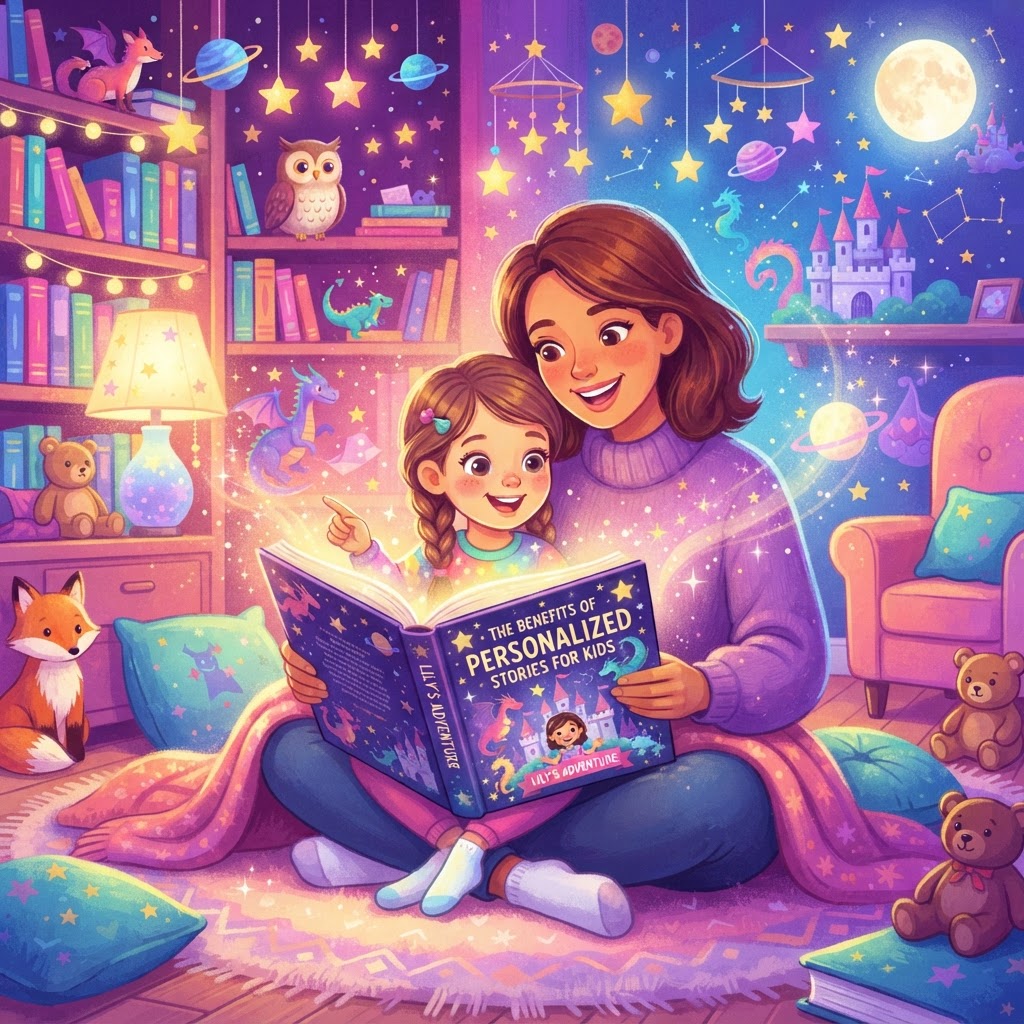
Personalized stories do more than make children smile when they hear their own name. Research suggests they can improve attention, memory, comprehension, motivation, and emotional connection to reading. For parents looking into the benefits of personalized stories, the big takeaway is simple: when a story feels personally meaningful, children are more likely to listen closely, remember what they heard, and want to come back for more.
That matters because early reading experiences shape how children see books, learning, and even themselves. Whether you create your own personalized bedtime story, use it as part of a family reading routine, or explore more literacy ideas on the InstaTales blog, personalization can be a powerful tool when it is used thoughtfully.
What makes personalized stories especially effective for kids?
Personalized stories are effective because they make reading feel immediately relevant to the child. When children hear their own name, favorite places, or familiar routines in a story, their brains treat that information as more important.
This is not just a cute reaction. In child development, relevance matters. Young children learn best when new information connects to what they already know. A story about “a child” can be enjoyable, but a story about your child going on an adventure with their teddy bear or visiting Grandma’s garden is easier to picture, follow, and remember.
Personalization also supports several learning systems at once:
- Attention: familiar details capture interest quickly
- Memory: self-related information tends to stick better
- Language: known contexts make new words easier to understand
- Emotion: children feel seen, included, and important
That combination is why custom storybooks often feel so engaging, especially for toddlers and preschoolers who are still building focus and story comprehension.
What does personalized children’s books research show?
Personalized children’s books research points to a clear pattern: children remember and engage more with material that connects to themselves. One of the best-known explanations is the self-reference effect, also called self-referential encoding.
In the classic study by Rogers, Kuiper, and Kirker (1977), researchers found that people remember information better when they process it in relation to themselves. Later developmental studies found similar patterns in children: when an object, character, or event is linked to the child, memory improves. In simple terms, “this is about me” creates a stronger mental hook than “this is about someone else.”
That matters for storytime. If a child is the hero of the story, or the plot includes their name, pet, neighborhood, or interests, the story becomes easier to encode and retrieve later. This helps explain why many parents notice that personalized stories are retold, re-enacted, and requested again and again.
Broader child development research supports the same idea from another angle. The Harvard Center on the Developing Child emphasizes that meaningful, responsive experiences strengthen learning, while the NICHD highlights how early literacy experiences support language and cognitive development. Personalized stories sit right at that intersection: they are meaningful, interactive, and language-rich.
So when families search for personalized children’s books research, the most useful answer is this: personalization works because self-relevant information is easier to attend to, understand, and remember.
How do custom storybooks boost engagement and motivation?
Custom storybooks boost engagement because children are naturally drawn to stories that reflect their identity and interests. They also boost motivation because kids are more willing to read something that feels made for them.
Anyone who reads with young children has seen this in action. A child who drifts during one story may sit up instantly when the main character has their name or rides their favorite dinosaur scooter. Personalization adds novelty, but it also adds ownership. The story feels like theirs.
This can be especially helpful for:
- children who are reluctant readers
- children with short attention spans
- children going through transitions, like starting school or welcoming a sibling
- children who want the comfort of hearing the same story repeatedly
Re-reading matters. Repetition helps children learn story structure, new vocabulary, and sequencing. If a personalized story is the one they keep asking for, that repetition becomes a learning advantage. You can also save favorites in your story library so children can revisit beloved stories and deepen comprehension over time.
This is one reason personalized reading fits so well with bedtime. If you want to pair personalization with the wider developmental benefits of read-aloud routines, see how bedtime stories support child development.
How can personalized stories improve comprehension and memory?
Personalized stories improve comprehension by making it easier for children to connect new information to familiar knowledge. They improve memory because self-related details are more meaningful and therefore more memorable.
For example, if a story says, “Maya packed her red rain boots before walking to the park,” a child named Maya who owns red boots already has mental images ready to go. That background knowledge reduces cognitive load. Instead of spending energy figuring out who the character is, the child can focus on what is happening in the story.
This supports comprehension in several ways:
- children follow cause and effect more easily
- unfamiliar words are easier to infer from context
- story events feel more concrete and visual
- recall after reading is often stronger
Personalized stories can also support oral language. When children talk about a story featuring themselves, they are often more eager to answer questions, predict what happens next, or retell events in order. That kind of back-and-forth conversation is exactly the kind of rich language interaction encouraged by literacy organizations such as Reach Out and Read.
For teachers, this can be useful in small-group reading, writing prompts, and social-emotional learning. Educators exploring classroom use can look at InstaTales for teachers for ideas on assignments, reading stations, and student-created stories.
Why do personalized stories strengthen emotional connection and confidence?
Personalized stories strengthen emotional connection because they help children feel seen, valued, and emotionally safe inside the story. They also build confidence by showing the child as capable, brave, curious, or kind.
This emotional piece is easy to overlook, but it matters. Children do not just learn literacy skills from stories. They also learn identity, belonging, and possibility. When a child hears themselves portrayed as the helper, problem-solver, or explorer, that message can support healthy self-image.
Personalization can be especially meaningful when a child is working through big feelings or life changes. A custom story about the first day of school, losing a tooth, moving homes, or visiting a doctor can help children process emotions in a gentle, familiar format.
Used well, personalized stories can help children:
- practice empathy in safe scenarios
- build confidence around new experiences
- feel calmer during routines like bedtime
- see reading as comforting, not demanding
This is one reason many families use story templates to create stories around specific themes like courage, friendship, or starting school.
How can parents and teachers use personalized stories thoughtfully?
Parents and teachers get the best results when they use personalized stories as a support for connection, not as a gimmick. The goal is not just to insert a name. The goal is to create a meaningful reading experience.
A few practical guidelines help:
- Keep the story age-appropriate. Younger children do best with simple plots, repetition, and familiar routines.
- Use accurate, comforting details. Include favorite animals, family members, or places the child knows well.
- Talk after reading. Ask, “What happened first?” or “How did you feel when you climbed the moon ladder?”
- Re-read favorites. Repetition supports both language and emotional security.
- Balance fantasy and real life. Personalized stories can be magical, but they should still feel understandable to the child.
For classrooms or home reading goals, personalized stories can also be combined with weekly reading challenges to build consistency without making reading feel like a chore.
The most important point is this: personalization works best when it is paired with warm adult interaction. A well-made story matters, but so does the lap, the voice, the pause for questions, and the shared laugh.
Frequently Asked Questions
Are personalized stories good for all ages?
Yes, but the benefits look a little different by age. Toddlers respond strongly to familiarity and repetition, while older children may enjoy deeper plots, choices, and identity-based themes.
Do personalized stories really help children remember better?
Often, yes. Research on self-referential encoding suggests that information connected to the self is easier to remember, which helps explain why personalized stories can stick so well.
Are custom storybooks better than regular books?
Not automatically. Regular books still offer huge literacy value, but custom storybooks can be especially helpful for engagement, confidence, and making reading feel personally meaningful.
Can personalized stories help reluctant readers?
They often can. A child who feels less interested in books may be more willing to listen or read when the story features their own name, interests, and experiences.
How often should parents use personalized stories?
There is no perfect number. Many families mix personalized stories with classic picture books and use them a few times a week or during important routines like bedtime.
Can teachers use personalized stories in the classroom?
Yes, especially for early literacy, writing prompts, and social-emotional learning. Personalized stories can increase participation and help students connect reading to their own lives.
Ready to Create a Personalized Bedtime Story?
Use our free AI bedtime story generator to create a personalized illustrated story for your child in 30 seconds — no credit card needed.
Popular story types:
Maya Rodriguez
Lead Content Editor & Early Literacy Specialist
Maya is a former early childhood educator and literacy specialist with over a decade of experience helping children develop a love of reading. She leads content at InstaTales, where she writes about the science of storytelling, child development, and how families can use personalized AI stories to build literacy and emotional resilience.
instatales.ai