Storytelling and Sleep: How Stories Improve Rest
Bedtime stories aren't just a tradition — they actually improve sleep quality. Here's what sleep science says about storytelling.
✦ Key Takeaways
- •Storytelling helps children fall asleep because it slows the pace of the evening and gives the brain a clear transition from active time to rest time.
- •Bedtime stories help lower stress by reducing emotional arousal, and lower arousal supports healthier nighttime cortisol patterns.
- •Sleep research supports the idea that bedtime routines including stories can improve sleep quality, especially in babies, toddlers, and young children.
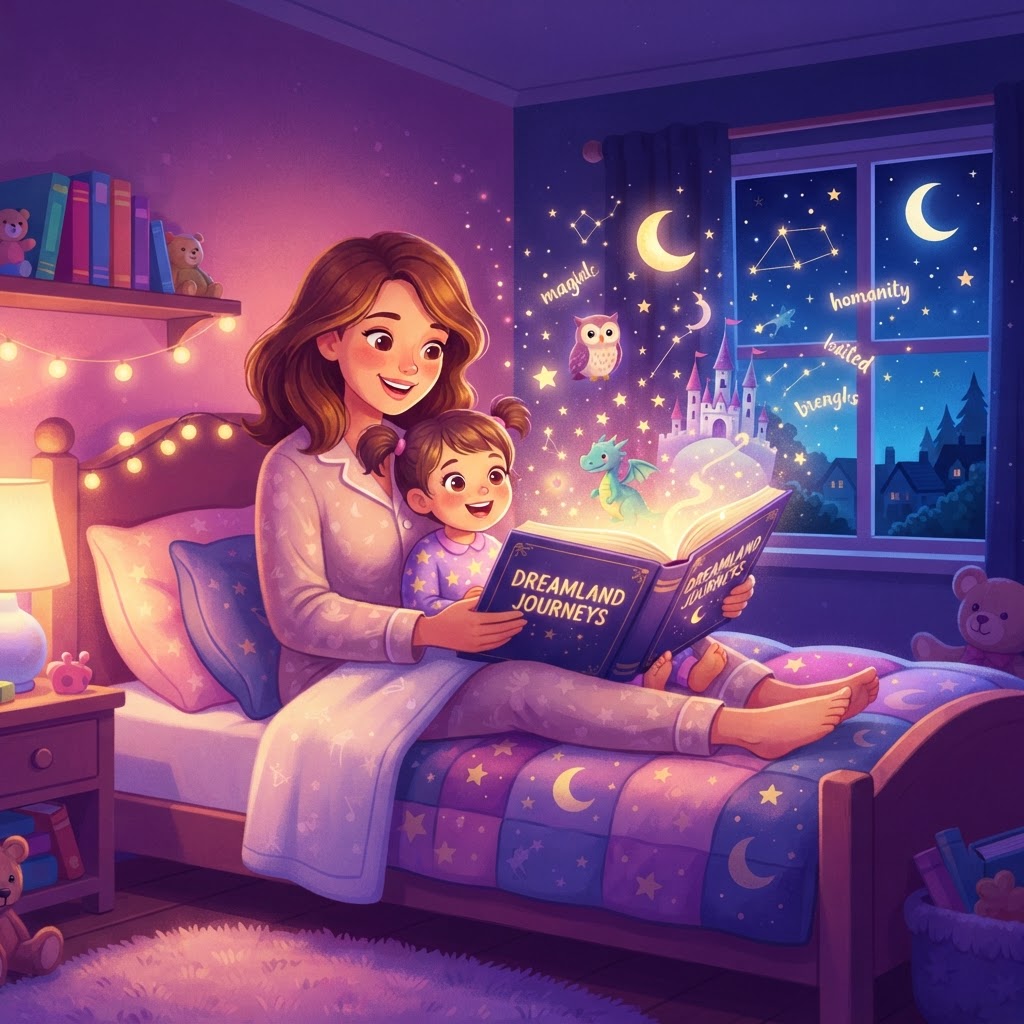
Bedtime stories are more than a cozy family habit. Research suggests that storytelling and sleep are closely linked because a calm, predictable story routine helps children unwind, feel safe, and move more easily toward sleep. For many families, stories for better sleep are not just comforting in the moment—they also support better bedtime behavior and more consistent sleep quality over time.
That matters because sleep is a major part of healthy development. Good sleep supports mood, attention, memory, learning, and emotional regulation. When parents ask whether bedtime stories and sleep quality are truly connected, the short answer is yes: the story itself helps, but the routine around it may be just as powerful.
Why does storytelling help children fall asleep more easily?
Storytelling helps children fall asleep because it slows the pace of the evening and gives the brain a clear transition from active time to rest time. A story replaces stimulation with rhythm, closeness, and predictability, which makes sleep onset easier for many children.
Young children do not switch from play to sleep instantly. Their bodies and brains need a “bridge” between daytime excitement and nighttime rest. A bedtime story works well as that bridge because it invites children to sit still, listen closely, and settle into a slower emotional state.
Stories also help by reducing bedtime resistance. Instead of bedtime feeling like an abrupt stop, it becomes a positive ritual children look forward to. That can lower arguments, reduce stalling, and make the whole evening feel calmer.
For many families, storytelling becomes one of the strongest signals in the bedtime routine:
- Bath or wash-up
- Pajamas
- Tooth brushing
- One calm story
- Lights out
When the same order happens night after night, the child’s brain starts to connect the story with sleep. That is one reason stories for better sleep can be so effective even when the story is simple.
How do bedtime stories lower stress and cortisol?
Bedtime stories help lower stress by reducing emotional arousal, and lower arousal supports healthier nighttime cortisol patterns. Cortisol is a stress hormone that should gradually drop as the body prepares for sleep, and calm storytelling can help that process along.
It is important to be precise here. Not every study on bedtime stories directly measures cortisol levels in children. However, sleep and stress research consistently shows that calming, predictable routines reduce the alert state that keeps children “revved up” at bedtime.
A soothing story changes the body in small but important ways:
- Breathing often becomes slower
- Muscles relax
- The voice of a trusted adult feels reassuring
- Attention narrows to one gentle activity
- Worries and overstimulation fade into the background
That shift matters because stress and sleep do not mix well. If a child is anxious, excited, or dysregulated, the body is less ready to sleep. A familiar book or spoken story can create emotional safety, much like rocking, cuddling, or soft music.
This is also where parent-child connection matters. The closeness of reading together can support the same sense of security described in research on emotional connection and bonding. Children often sleep more easily when they feel connected, seen, and safe.
What does sleep research say about bedtime stories and sleep quality?
Sleep research supports the idea that bedtime routines including stories can improve sleep quality, especially in babies, toddlers, and young children. Studies do not suggest that stories are a cure-all, but they do show that calm, consistent routines are linked with better sleep outcomes.
One often-cited randomized study led by Jodi Mindell found that a nightly bedtime routine with quiet activities such as reading was associated with improvements in sleep onset, night wakings, and overall bedtime behavior. You can read the study summary on PubMed.
This fits with broader guidance from child health organizations. The American Academy of Pediatrics recommends a simple, consistent bedtime routine, and the CDC provides age-based sleep guidelines because children need enough total sleep for healthy growth and learning.
So what does “better sleep quality” look like in real life? Parents often notice:
- Falling asleep faster
- Fewer bedtime battles
- Less emotional intensity at night
- Fewer wake-ups linked to difficulty settling
- Better mood the next day
Stories also support the learning side of development. Re-reading favorite books can support memory through repetition, and listening quietly helps children build attention over time. Those are not sleep benefits alone, but they help explain why bedtime reading is such a high-value routine.
Why do familiar stories signal the brain that it is time to sleep?
Familiar stories work as sleep cues because the brain learns through repetition. When the same type of story happens at the same time each night, it becomes a strong signal that sleep is next.
This is a form of behavioral conditioning, and it is one reason many children ask for the same story again and again. Adults may worry that repetition is boring, but repetition is actually useful at bedtime. A known plot requires less mental effort than a brand-new, exciting one.
A familiar story tells the brain:
- Nothing surprising is coming
- The environment is safe
- The day is ending
- Rest is expected now
That last point is especially important in discussions of storytelling and sleep. The story is not just entertainment. It becomes part of the body’s learned pattern for winding down.
This is also why highly stimulating content can backfire before bed. Fast-paced adventures, scary scenes, loud screens, or cliffhanger endings may increase alertness. Sleep-friendly stories usually have a gentle arc, reassuring tone, and calm ending.
How can parents use stories for better sleep at different ages?
Parents can use stories for better sleep by matching the story style to the child’s age, temperament, and bedtime needs. The best bedtime story is not always the most educational or imaginative one—it is the one that helps your child settle.
Here is a simple age-by-age guide:
Ages 1-3
Choose very short stories with rhythm, repetition, and soothing language. Naming familiar things—animals, bedtime actions, family members—can be especially calming.
Ages 4-6
Use one short story with a clear, gentle plot. Predictable endings, soft humor, and reassuring themes tend to work better than suspense.
Ages 7-10
Older children may enjoy longer read-alouds, short chapters, or personalized stories. Keep bedtime selections calmer than daytime reading, especially if your child gets mentally activated by adventure.
A few practical tips can make a big difference:
- Keep the story at roughly the same time each night
- Dim the lights before reading
- Read in a slower, quieter voice
- Stop screens before the story when possible
- Choose comforting themes over exciting ones
- End with the same phrase, hug, or lights-out routine
If you want variety without losing the calming structure, it can help to create your own personalized bedtime story around familiar themes like kindness, nighttime animals, stars, or a child’s favorite comfort object. Saving the best calming stories in your story library also makes it easier to re-read the ones that consistently work.
The goal is not to create a perfect bedtime. The goal is to build a repeatable pattern that tells your child, night after night, “You are safe, and it is time to rest.”
Can personalized bedtime stories support better sleep?
Yes, personalized bedtime stories can support better sleep when they stay calm, predictable, and emotionally reassuring. Personalization often boosts engagement, which means children may settle into the routine more willingly.
A child who hears their own name in a story may feel more connected to it. That can be especially helpful for children who resist bedtime or struggle to transition from busy evenings. The key is to personalize gently, not dramatically.
For sleep, the best personalized stories usually include:
- A calm setting
- A secure adult or helper figure
- Simple language
- Low conflict
- A peaceful ending
If a personalized story becomes too silly, suspenseful, or action-packed, it may work better earlier in the day. For bedtime stories and sleep quality, soothing tone matters more than novelty.
Frequently Asked Questions
Do bedtime stories really improve sleep quality?
Yes, they can. Research supports calming bedtime routines, and stories often help children relax, resist bedtime less, and fall asleep more smoothly.
How long should a bedtime story be?
For many children, 5 to 15 minutes is enough. The ideal length is long enough to calm your child, but short enough that it does not turn into a stimulating second wind.
Are audiobooks as effective as reading aloud?
Audiobooks can help, especially for older children, but reading aloud adds connection and responsiveness. A parent’s voice, pacing, and presence often make the routine more soothing.
What kind of stories are best before bed?
Choose stories that are gentle, predictable, and emotionally safe. Avoid scary themes, cliffhangers, or fast-paced plots right before sleep.
Is it okay to read the same bedtime story every night?
Yes. Repetition is often helpful because familiar stories reduce mental effort and become strong sleep cues.
Can bedtime stories replace a full bedtime routine?
Not usually. Stories work best as one part of a consistent routine that may also include hygiene, dim lights, and a regular bedtime.
Explore More Stories
Ready for more? - free AI bedtime story generator
Get a new bedtime story every week
Free, personalized, and delivered to your inbox. No spam, ever.
Ready to Create a Personalized Bedtime Story?
Use our free AI bedtime story generator to create a personalized illustrated story for your child in 30 seconds — no credit card needed.
Popular story types:
Maya Rodriguez
Lead Content Editor & Early Literacy Specialist
Maya is a former early childhood educator and literacy specialist with over a decade of experience helping children develop a love of reading. She leads content at InstaTales, where she writes about the science of storytelling, child development, and how families can use personalized AI stories to build literacy and emotional resilience.
instatales.ai