The Human Body for Kids: Stories That Spark Wonder
Feed your child's curiosity with these the human body stories that combine imagination with real science and discovery.
✦ Key Takeaways
- •Stories help children remember science because narrative gives facts a shape.
- •The best body facts for children are concrete, visual, and connected to everyday life.
- •The best human body stories mix one clear body system with one strong adventure.
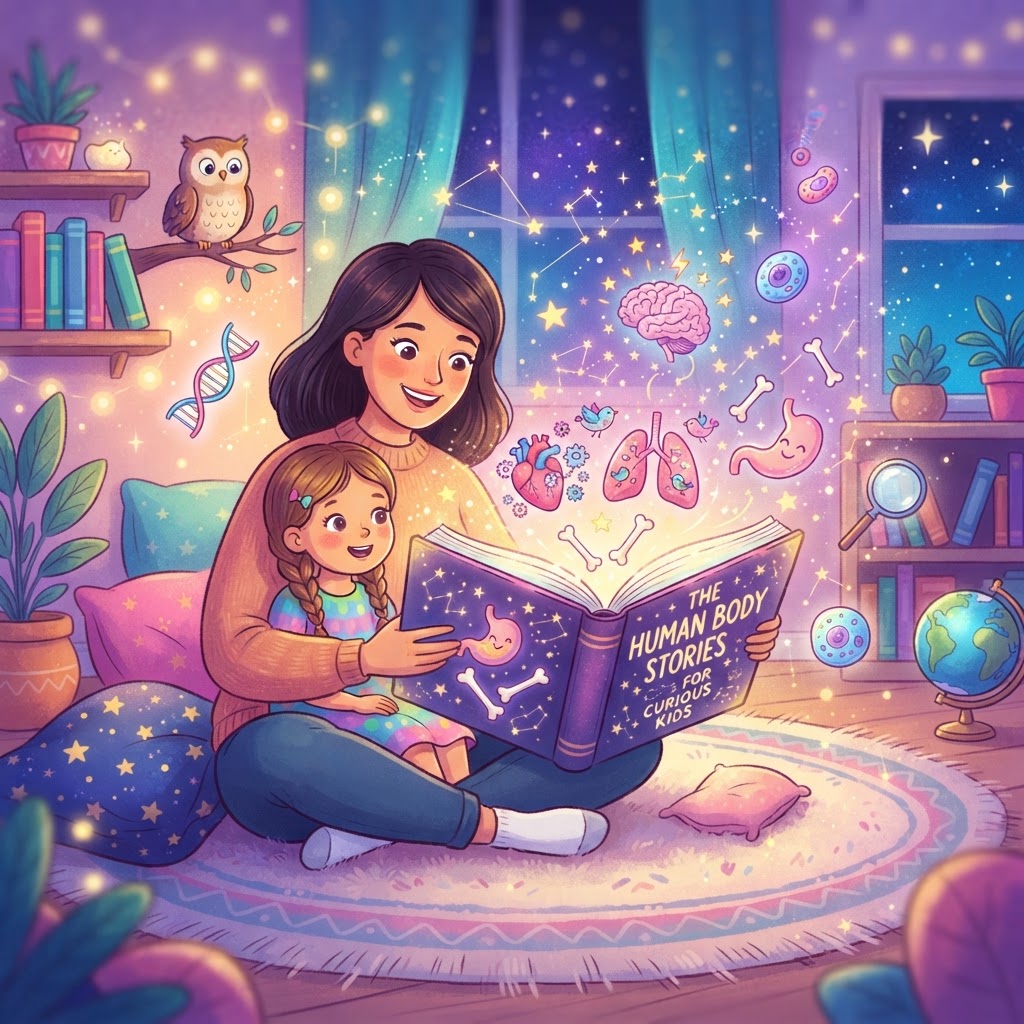
If your child asks where food goes, why hearts beat fast, or how bones stay strong, stories can turn those big questions into joyful learning. The human body for kids becomes much easier to understand when science is wrapped in characters, movement, and a simple plot. That is why the human body stories work so well for ages 1-10: they make facts feel personal, memorable, and safe to explore at bedtime.
Why do the human body stories help children remember science?
Stories help children remember science because narrative gives facts a shape. When a heart becomes a hard-working helper or the brain becomes a message captain, children can attach real information to images, emotions, and action.
Developmental research has long shown that young children learn best through meaningful, language-rich experiences. The Harvard Center on the Developing Child explains that back-and-forth conversation, play, and emotionally engaging experiences help build strong learning pathways. In practice, that means a child is more likely to remember “the stomach churns food” if they followed a sandwich on an adventure through Tummy Town.
Stories also support:
- Attention, because children want to know what happens next
- Vocabulary, because words like lungs, bones, and nerves repeat naturally
- Confidence, because complex science feels less intimidating
- Recall, because a sequence is easier to remember than a random list of facts
For toddlers, simple repetition works best. For older children, plot and problem-solving make the human body adventures children enjoy feel more like discovery than a lesson.
Which human body facts are easiest for children to understand?
The best body facts for children are concrete, visual, and connected to everyday life. Start with body functions they can feel, see, or imagine, then add correct science language in small steps.
Good beginner facts include:
- The heart pumps blood around the body
- The lungs help us breathe in oxygen
- The brain sends messages so we can move, think, and feel
- The stomach and intestines help break down food
- Bones support the body and protect important organs
- Skin helps protect us from the outside world
You can check simple, child-friendly explanations through trusted health sources like MedlinePlus. For younger children, one or two facts per story is enough. For ages 6-10, you can include more precise details such as digestion, reflexes, or how blood carries oxygen.
If you want more examples of science-rich storytelling, this guide to stories that teach kids about the human body is a helpful next read.
What are five the human body stories curious kids will love?
The best human body stories mix one clear body system with one strong adventure. That keeps the science accurate and the storytelling fun for curious kids the human body topic lovers.
1. How does Captain Heart race through the River Roads?
A child hero shrinks small enough to travel with Captain Heart through rivers of red blood cells. Along the way, they learn that the heart is a muscle that pumps blood all day and that exercise can make it beat faster.
Real facts to include:
- The heart pumps blood through blood vessels
- Blood carries oxygen around the body
- Hearts beat faster during active play
2. Why does Luna Lungs live in the Balloon Forest?
Luna guides a child through a forest of tiny air balloons that fill and empty with each breath. The story can show that breathing brings oxygen into the body and that the diaphragm helps move air in and out.
Real facts to include:
- Lungs help us take in oxygen
- The diaphragm is important for breathing
- We breathe faster when we run
3. Where does the sandwich go in Tummy Town?
A cracker, apple slice, or sandwich becomes the main character in a digestion quest. First it meets teeth and saliva, then the stomach, and finally the intestines, where useful nutrients are absorbed.
Real facts to include:
- Digestion begins in the mouth
- The stomach churns food
- The small intestine absorbs nutrients
4. How does the Brain Mail Express deliver messages?
In this story, the brain runs a speedy message station that sends notes through nerves to the hands, feet, eyes, and ears. A child can discover how the body reacts quickly, especially during blinking, jumping, or touching something hot.
Real facts to include:
- The brain and nerves send messages
- The senses give the brain information
- Some reactions, called reflexes, happen very fast
5. What happens inside the Skeleton Cave?
A child explorer meets Bone Builders who are repairing a giant glowing skeleton. The story can explain that bones give the body shape, protect organs like the brain and heart, and grow with us over time.
Real facts to include:
- Bones support the body
- The skull protects the brain
- Children have growing bodies that need movement and nutrition
For more hands-on science inspiration, Science Buddies offers excellent age-appropriate STEM ideas that pair well with story-based learning.
How can you prompt InstaTales for science-rich human body adventures?
A strong prompt gives the story one body system, one age level, and a few facts that must stay accurate. This helps you get a tale that feels magical without losing the real science.
A simple prompt formula is:
- Child’s age
- Favorite theme or character
- One body topic
- 2-3 science facts to include
- Tone and length
Example prompt:
Write a gentle bedtime story for a 6-year-old about a child traveling through the lungs with a friendly guide. Include these facts: lungs help us breathe in oxygen, the diaphragm moves when we breathe, and breathing gets faster during exercise. Use simple language, a warm ending, and 700 words.
Helpful tips:
- Ask for age-appropriate vocabulary
- Request fact-checkable details
- Limit each story to one main body system
- Add a recap at the end with 3 facts learned
When you are ready to create your own personalized bedtime story, start with one body question your child already asks. If you want a faster setup, use the ready-made story templates, then save your best science tales in your story library for rereading.
How can parents and teachers extend learning after the story?
One short follow-up activity can turn a fun story into real understanding. You do not need a full lesson plan; a question, drawing, or movement game is often enough.
Try these easy extensions:
- Ask, “What job did the heart do in the story?”
- Let your child draw the body system they heard about
- Count breaths before and after jumping
- Feel a heartbeat after running in place
- Retell the story in their own words
This approach matches what organizations like NAEYC recommend: active, playful learning works especially well for young children. For classrooms, InstaTales for teachers can help educators build reading, science, and writing into one activity.
Frequently Asked Questions
What age are the human body stories best for?
They can work from ages 1-10 when the language matches the child. Toddlers do best with short, repetitive stories, while older children enjoy more detailed body-system adventures.
How accurate should science bedtime stories be?
The main facts should always be accurate, even when the story uses imagination. Fantasy can carry the plot, but the science details should stay simple and true.
Can stories really help children learn science?
Yes. Stories support attention, vocabulary, and recall because they connect facts to characters and events children can remember more easily than isolated information.
What if my child feels nervous about body topics?
Start with friendly systems like the heart, bones, or lungs instead of injury or illness themes. Keep the tone gentle, curious, and reassuring.
How long should a science story be for bedtime?
For toddlers, 3-5 minutes is often enough. For school-age children, 7-12 minutes usually gives enough space for both story and real facts without feeling heavy.
Ready to Create a Personalized Bedtime Story?
Use our free AI bedtime story generator to create a personalized illustrated story for your child in 30 seconds — no credit card needed.
Popular story types:
Maya Rodriguez
Lead Content Editor & Early Literacy Specialist
Maya is a former early childhood educator and literacy specialist with over a decade of experience helping children develop a love of reading. She leads content at InstaTales, where she writes about the science of storytelling, child development, and how families can use personalized AI stories to build literacy and emotional resilience.
instatales.ai