Second Grade Science Stories That Make Learning Stick
Make science engaging for second grade students with stories. Practical strategies, story ideas, and classroom activities for teachers.
✦ Key Takeaways
- •Stories help second graders learn science because they turn facts into meaning.
- •A good science story for second grade is simple, accurate, and built around one clear science idea.
- •The best second grade science activities connected to stories are the ones that move students from listening to doing.
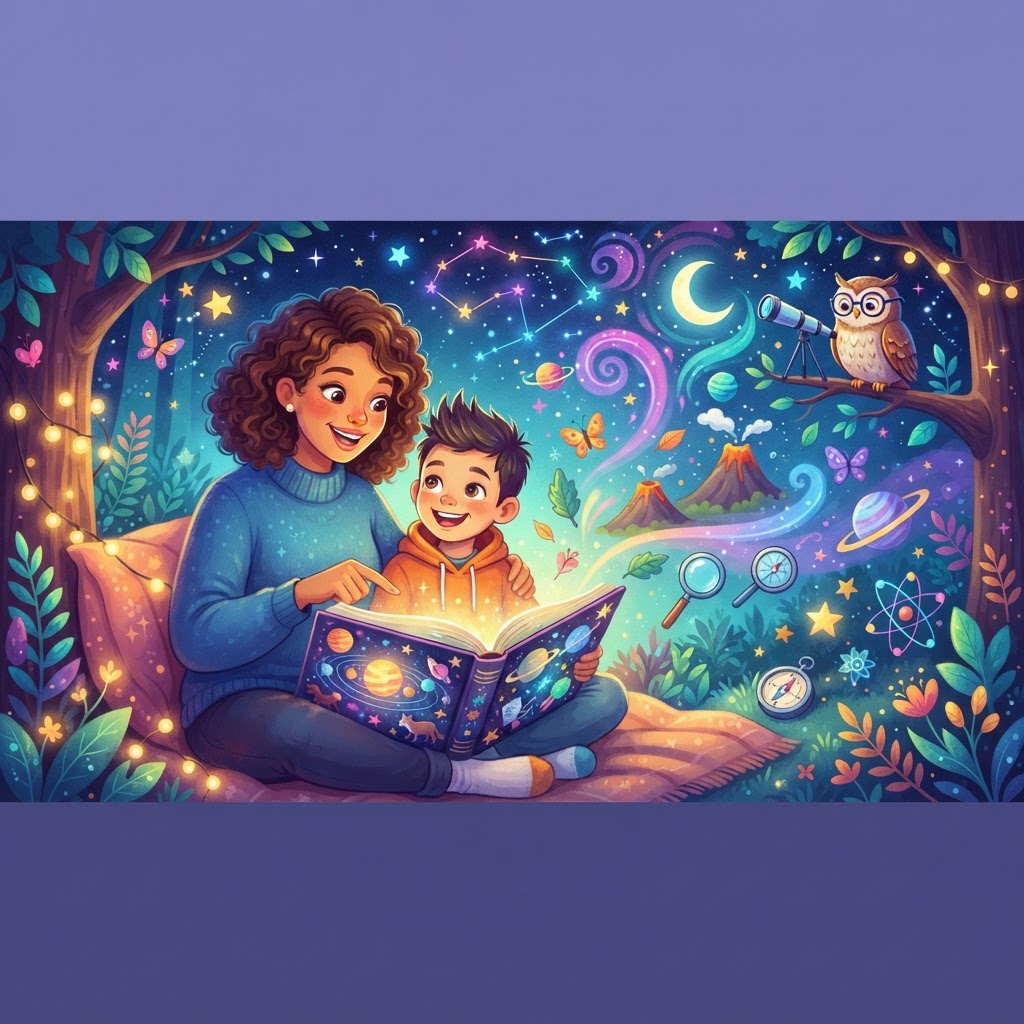
Teaching science to seven- and eight-year-olds gets easier when ideas come wrapped in a story. Second grade science stories give children a reason to care about weather, plants, materials, and habitats, while also supporting vocabulary, discussion, and memory. If you are a teacher looking for practical ways to start teaching science with stories, this guide will walk you through the research, classroom strategies, and simple ways to use story-based lessons in your second grade science block.
Why do stories help second graders learn science?
Stories help second graders learn science because they turn facts into meaning. A narrative gives children a sequence, a problem, and a purpose, which makes abstract ideas easier to understand and remember.
This matters in second grade. Children at this age are building the ability to explain cause and effect, use content vocabulary, and connect what they observe to bigger concepts. A story about a seed trying to grow in shade is easier to discuss than a list of plant needs on a worksheet.
Education research supports this approach. The National Research Council’s Ready, Set, SCIENCE! emphasizes that young learners build science understanding through discussion, inquiry, and meaningful contexts. Jerome Bruner’s work on narrative also showed that stories are a powerful way people organize knowledge. And the Harvard Center on the Developing Child explains that attention, working memory, and cognitive flexibility grow through engaging, meaningful learning experiences.
In classroom practice, science stories for second grade can support:
- Vocabulary growth through repeated, meaningful use of words like habitat, observe, absorb, and predict
- Comprehension by showing how events connect over time
- Discussion skills as students explain what happened and why
- Cross-curricular learning by blending literacy and science naturally
If you already use second grade reading stories or second grade writing lessons, story-based science fits right into that same instructional flow.
What makes a good science story for second grade?
A good science story for second grade is simple, accurate, and built around one clear science idea. The best stories do not overload students with facts; they help children notice patterns, ask questions, and connect science to everyday life.
When choosing or writing second grade science stories, look for these features:
- One main concept such as plant needs, weather patterns, habitats, or properties of materials
- A relatable problem like a garden that will not grow, a picnic threatened by rain, or an animal looking for shelter
- Clear cause and effect so students can track what changed and why
- Accurate science language used in child-friendly ways
- Built-in pauses for thinking where you can ask, “What do you predict?” or “What evidence do we have?”
- A short length that works for a read-aloud and follow-up activity
For example, a story about a rabbit choosing a home can introduce shelter, food, and environment. A story about a child testing boots for a rainy day can teach material properties like waterproof, soft, and strong.
The key is balance. You want enough imagination to spark interest, but enough accuracy to support real science learning. Think of the story as a bridge into observation, discussion, and hands-on investigation.
Which second grade science activities work best with stories?
The best second grade science activities connected to stories are the ones that move students from listening to doing. After a read-aloud, children should predict, test, sort, draw, discuss, or observe something in the real world.
Seed-to-plant story journals
Use a story about a seed trying to grow in different conditions. Then plant seeds in cups with different amounts of light or water.
Have students:
- Predict what each seed needs
- Draw daily changes
- Write one sentence using science vocabulary
- Compare the real plant growth to the story events
This works well for life cycles, plant needs, and observation skills.
Weather reporter story maps
Read a story about a class planning an outdoor event while the weather keeps changing. Students then become “weather reporters” for the week.
Try this routine:
- Track daily weather on a chart
- Ask students to describe patterns across the week
- Create a beginning, middle, and end weather story
- Discuss how weather affected the characters’ choices
This helps children see that weather is observable, measurable, and connected to daily life.
Push-and-pull problem stories
Tell a short story about a character who needs to move objects across different surfaces. Then let students test toy cars, balls, or classroom objects.
Students can:
- Act out the pushes and pulls in the story
- Test movement on carpet, tile, or cardboard
- Record which surfaces slow objects down
- Explain what force they used
This is one of the simplest science stories for second grade because it turns motion into something children can feel in their own bodies.
Habitat rescue role-play
Read a story about an animal that cannot find food, water, or shelter. Afterward, give groups picture cards of animals and habitats.
Ask students to:
- Match each animal to a habitat
- Explain what the habitat provides
- Role-play how the animal survives there
- Discuss what happens if the habitat changes
This activity supports life science standards while building speaking and reasoning skills.
Material detectives challenge
Share a story about a character who needs to choose the best material for an umbrella, nest, bridge, or lunch container. Then set out sample materials for testing.
Students might test:
- Which material is most waterproof
- Which is strongest
- Which bends without breaking
- Which would work best for the story problem
This turns story details into evidence-based thinking, which is exactly what you want in elementary science.
How can teachers differentiate story-based science lessons?
Differentiation works well with story-based science because stories are naturally flexible. You can adjust the language, response format, and level of challenge without changing the core concept for the whole class.
Here are practical ways to differentiate:
- For emerging readers: pre-teach 3-5 science words with pictures and gestures
- For multilingual learners: use sentence frames such as “I predict ___ because ___”
- For students who need movement: add acting, sorting, or station work after the story
- For students who need support with writing: allow labeled drawings, oral retells, or partner responses
- For advanced learners: ask them to find evidence, compare two systems, or identify an inaccuracy in a story
Interactive read-alouds are especially useful because every child can participate through listening and talk before writing. Literacy organizations such as Reading Rockets also highlight how read-aloud discussion strengthens vocabulary and comprehension, both of which matter in science.
A good rule: keep the science goal constant, but vary how students access the story and show what they know.
How can teachers use InstaTales for second grade science lessons?
Teachers can use InstaTales to quickly create custom stories that match a science topic, student interest, or classroom routine. That makes it easier to plan engaging lessons without spending extra hours writing your own read-aloud from scratch.
With InstaTales for teachers, you can build a short story around a specific concept like plant growth, habitats, weather, or materials. You can also create your own personalized bedtime story using a class mascot, local weather, familiar settings, or target vocabulary, then adapt it for whole-group instruction.
A simple classroom workflow looks like this:
- Choose one science standard or question
- Generate a short story with a clear problem and science focus
- Read it aloud and pause for predictions
- Follow with one hands-on task or observation
- Save the best versions in your story library for centers, sub plans, or home-school connections
This can be especially helpful when you want to revisit a concept several times with slight changes. For example, you might create one story about a seed that gets enough sunlight and another that does not. Students can compare outcomes and explain the science behind both.
InstaTales is also useful for cross-curricular planning. A science story can lead into reading comprehension, vocabulary work, oral language, and short explanatory writing, all in one lesson.
Frequently Asked Questions
What science topics work best with stories in second grade?
The easiest topics for stories are plants, habitats, weather, materials, and forces. These all connect well to everyday experiences and simple classroom investigations.
Can stories replace hands-on science in second grade?
No. Stories work best as a launch, bridge, or reflection tool, while hands-on observation and testing provide the evidence children need to build real understanding.
How long should a second grade science story be?
For most lessons, 300-700 words is enough. That is long enough to build a clear problem and short enough to leave time for discussion and an activity.
How do I assess learning after a science story?
Use quick checks such as drawings with labels, oral explanations, exit tickets, or simple “claim and evidence” responses. You can also listen for correct use of science vocabulary during partner talk.
Is teaching science with stories still rigorous?
Yes. It is rigorous when the story leads to observation, evidence, vocabulary use, and explanation. The narrative adds engagement, but the learning goal should still be grounded in accurate science.
How often should I use science stories for second grade?
Most teachers can use them one to three times a week as part of a unit. The best routine is to pair stories with experiments, notebooks, and discussion rather than using them in isolation.
Get a new bedtime story every week
Free, personalized, and delivered to your inbox. No spam, ever.
Ready to Create a Personalized Bedtime Story?
Use our free AI bedtime story generator to create a personalized illustrated story for your child in 30 seconds — no credit card needed.
Popular story types:
Maya Rodriguez
Lead Content Editor & Early Literacy Specialist
Maya is a former early childhood educator and literacy specialist with over a decade of experience helping children develop a love of reading. She leads content at InstaTales, where she writes about the science of storytelling, child development, and how families can use personalized AI stories to build literacy and emotional resilience.
instatales.ai