10 calming story ideas for kids
10 creative calming story ideas for kids — each with a free AI prompt to generate the full illustrated story instantly.
✦ Key Takeaways
- •Yes, calming stories for kids can support smoother bedtimes because they create predictability, connection, and emotional safety.
- •The best kids calming stories are simple, sensory, and reassuring.
- •For toddlers, the most effective calming stories are short, rhythmic, and easy to picture.
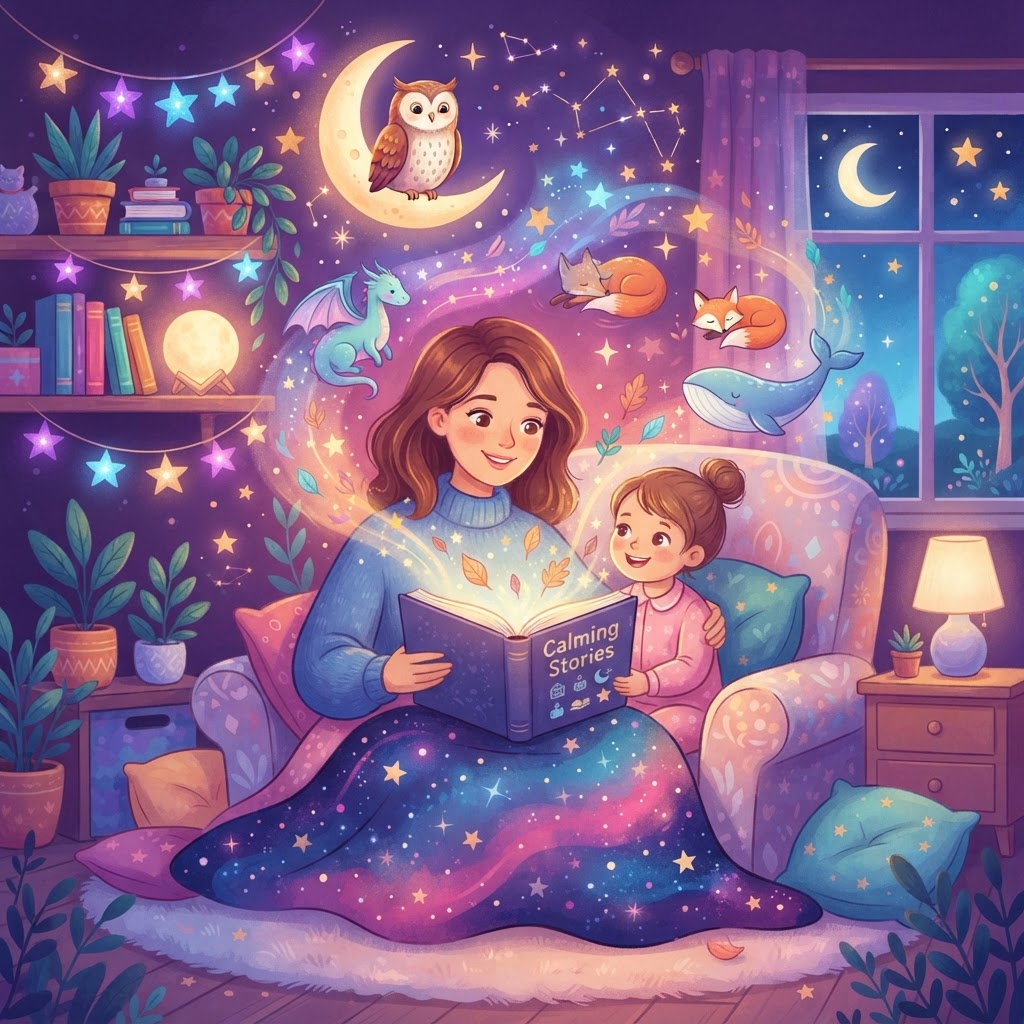
Bedtime goes more smoothly when a story helps a child’s body and mind slow down. These calming story ideas are designed to do exactly that: use gentle repetition, soft imagery, and reassuring endings so children feel safe, sleepy, and ready to rest. Below, you’ll find 10 creative calming stories for kids, each with a ready-to-use AI prompt you can paste into InstaTales to turn the idea into a personalized illustrated bedtime story in minutes.
Why do calming stories for kids help children settle at bedtime?
Yes, calming stories for kids can support smoother bedtimes because they create predictability, connection, and emotional safety. A familiar story rhythm helps lower stimulation, especially when paired with a consistent sleep routine.
Research backs this up. The CDC recommends regular sleep habits for children’s health and development, including age-appropriate sleep amounts and consistent routines (CDC sleep guidance). Bedtime routine research by Jodi Mindell and colleagues also found that predictable routines can improve children’s sleep. Shared reading matters too: child development experts at Harvard’s Center on the Developing Child and ZERO TO THREE both emphasize that warm, responsive interactions help children regulate emotions.
What makes a story idea feel calming instead of overstimulating?
The best kids calming stories are simple, sensory, and reassuring. They usually follow one gentle problem, one soothing journey, and one safe ending.
Look for these features when choosing calming story prompts:
- Slow pacing with no loud danger or sudden twists
- Repetition, such as “breathe in, breathe out” or “step, sway, settle”
- Cozy settings like moonlit gardens, quiet oceans, and sleepy forests
- Emotional resolution, where the character feels safe, loved, and ready to rest
If your child sometimes prefers sillier bedtime reading before winding down, you can also explore gentle funny story ideas and then follow with one of the softer prompts below.
Which calming story ideas work best for toddlers ages 1-3?
For toddlers, the most effective calming stories are short, rhythmic, and easy to picture. Focus on bedtime routines, animal helpers, and familiar objects that become sleepy alongside your child.
1. The Moon’s Goodnight Blanket
The moon gently tucks in the trees, birds, and little houses with a silver blanket of light. Each page repeats a sleepy phrase, helping toddlers relax through predictability.
AI prompt: “Write a 300-word calming bedtime story for ages 1-3 about the moon covering the world with a soft goodnight blanket. Use simple repetition, cozy language, and a peaceful ending. Include [Child’s Name] as a listener in the story and add 5 gentle illustration scene notes.”
2. Bunny Finds a Quiet Burrow
A tiny bunny searches for the coziest place to rest and discovers that quiet, warmth, and slow breathing make the best bedtime home. This works well for children who resist settling down.
AI prompt: “Create a gentle illustrated bedtime story for a toddler about a little bunny finding a warm burrow for sleep. Keep the tone soothing, use short sentences, repeat calming phrases, and include [Child’s Favorite Toy] resting beside the bunny.”
3. The Sleepy Boat on the Pond
A small boat rocks slowly under fireflies and stars while the water whispers it toward sleep. The rocking motion mirrors the feeling of being soothed and held.
AI prompt: “Write a 350-word bedtime story for ages 1-3 about a tiny wooden boat drifting slowly on a calm pond at night. Make it peaceful, repetitive, and comforting, with fireflies, soft sounds, and a reassuring final line for sleep.”
Which kids calming stories suit preschoolers ages 4-6?
Preschoolers often enjoy a little more plot, as long as the story stays emotionally safe. This age responds well to magical-but-gentle adventures, nature imagery, and small bedtime missions.
4. The Cloud That Learned to Breathe
A fluffy cloud feels too busy to rest, so it copies the slow breathing of sleeping animals below. This story subtly models self-regulation without sounding like a lesson.
AI prompt: “Write a 450-word calming story for ages 4-6 about a cloud that learns slow breathing from rabbits, foxes, and deer. Use soft, lyrical language, add [Child’s Name], and end with the cloud floating peacefully to sleep. Include 6 illustration prompts.”
5. The Star Who Lost Its Twinkle
A little star worries because it is shining too brightly to sleep, but kind night creatures teach it how to glow softly. This is a lovely option for children who feel ‘too awake’ at bedtime.
AI prompt: “Generate a peaceful bedtime story for ages 4-6 about a young star learning how to dim its twinkle and rest. Keep the plot gentle, avoid scary moments, and include a comforting bedtime message for [Child’s Name].”
6. The Garden That Whispered Goodnight
Flowers, snails, and ladybugs all say goodnight in turn until the whole garden becomes still. This story idea supports language development because children can join in on repeated phrases.
AI prompt: “Write an illustrated calming bedtime story about a moonlit garden where every plant and tiny creature whispers goodnight. Make it 400-500 words, repetitive, cozy, and perfect for reading aloud to a 4-6-year-old.”
7. The Little Mermaid’s Quiet Lagoon
A young mermaid leaves the busy waves for a calm lagoon where even the sea sings softly at bedtime. If your child loves ocean settings, this is one of the most effective calming stories for kids.
AI prompt: “Create a gentle bedtime story for ages 4-6 about a little mermaid finding the quietest lagoon in the ocean to rest. Include glowing shells, slow waves, and a peaceful ending with [Child’s Name].”
For more watery inspiration, browse these gentle ocean adventures or soft fairy-tale bedtime ideas.
Which calming story prompts help older kids ages 7-10 unwind?
Older children still need soothing stories, but they often prefer richer imagery and a slightly deeper emotional theme. The key is to keep the stakes low and the ending steady, safe, and hopeful.
8. The Library of Sleeping Winds
A child discovers a secret library where each book holds a different gentle breeze: mountain wind, meadow wind, rain-scented wind. Choosing the quietest one becomes a beautiful metaphor for calming the mind.
AI prompt: “Write a 600-word bedtime story for ages 7-10 about a hidden library filled with sleeping winds in glass jars. Give the story a dreamy tone, gentle sensory detail, and a calm ending where [Child’s Name] chooses the softest wind for bedtime.”
9. The Night Train to Dream Valley
A silent silver train carries sleepy passengers past glowing hills, warm cottages, and moonlit rivers until everyone is ready to rest. This kind of journey story helps older kids mentally transition from the day into sleep.
AI prompt: “Generate a peaceful bedtime story for ages 7-10 about a magical night train traveling to Dream Valley. Use quiet adventure, vivid but soothing imagery, and a reassuring ending. Include [Child’s Name] as a passenger and add illustration cues for each major scene.”
10. The Lantern Keeper’s Last Round
A child helper walks through a peaceful village, dimming lanterns one by one so every home can sleep. The steady structure makes it one of the most reliable calming story ideas for sensitive or imaginative children.
AI prompt: “Write a calming 600-word story about a young lantern keeper making the final nighttime round through a quiet village. Make the mood warm and secure, use a slow pace, and end with [Child’s Name] returning home feeling sleepy and safe.”
How can you turn these calming story prompts into personalized bedtime stories with InstaTales?
It’s easy to turn any of these ideas into a custom bedtime story. Start by choosing the prompt that matches your child’s age, then add their name, favorite animal, comfort object, or a bedtime challenge like “worries about the dark.”
A simple process works best:
- Paste the prompt into InstaTales to create your own personalized bedtime story
- Adjust the age, length, and tone so the story fits your child
- Save favorites in your story library for easy re-reading
If your child loves magical worlds, you can also find more inspiration in these classic fairy-tale prompts or explore more themes through the InstaTales blog. In my experience as an education writer, personalization often matters more than complexity. A child is much more likely to settle with a story that includes their own name, familiar routines, and the exact kind of comfort they need tonight.
Frequently Asked Questions
What length is best for calming bedtime stories?
Shorter is usually better for young children. Aim for 250-400 words for toddlers, 400-500 for preschoolers, and 500-700 for older kids who enjoy a fuller story.
Are AI-generated calming stories safe for kids?
They can be, especially when a parent reviews the story first and keeps the tone gentle and age-appropriate. The safest approach is to use clear prompts that ask for no scary scenes, a slow pace, and a reassuring ending.
What if my child wants the same story every night?
That is completely normal. Repetition is often soothing, and many children use familiar stories as part of emotional regulation and sleep readiness.
Can calming stories help anxious children?
They can support relaxation, especially when they model breathing, routine, and safety in a non-preachy way. If a child has significant anxiety or sleep difficulties, it’s best to combine soothing routines with guidance from a pediatrician or child mental health professional.
Should I use different calming story ideas by age?
Yes, because children process story structure differently as they grow. Toddlers benefit from repetition and simple images, while older kids often prefer reflective journeys, richer settings, and gentle emotional themes.
Ready to Create a Personalized Bedtime Story?
Use our free AI bedtime story generator to create a personalized illustrated story for your child in 30 seconds — no credit card needed.
Popular story types:
Maya Rodriguez
Lead Content Editor & Early Literacy Specialist
Maya is a former early childhood educator and literacy specialist with over a decade of experience helping children develop a love of reading. She leads content at InstaTales, where she writes about the science of storytelling, child development, and how families can use personalized AI stories to build literacy and emotional resilience.
instatales.ai