10 fantasy story ideas for kids
10 creative fantasy story ideas for kids — each with a free AI prompt to generate the full illustrated story instantly.
✦ Key Takeaways
- •Fantasy stories help children practice imagination, language, emotional problem-solving, and flexible thinking.
- •For toddlers and preschoolers, the best fantasy stories are gentle, repetitive, and easy to follow.
- •Children ages 5-7 often enjoy slightly bigger adventures, silly twists, and clear emotional lessons.
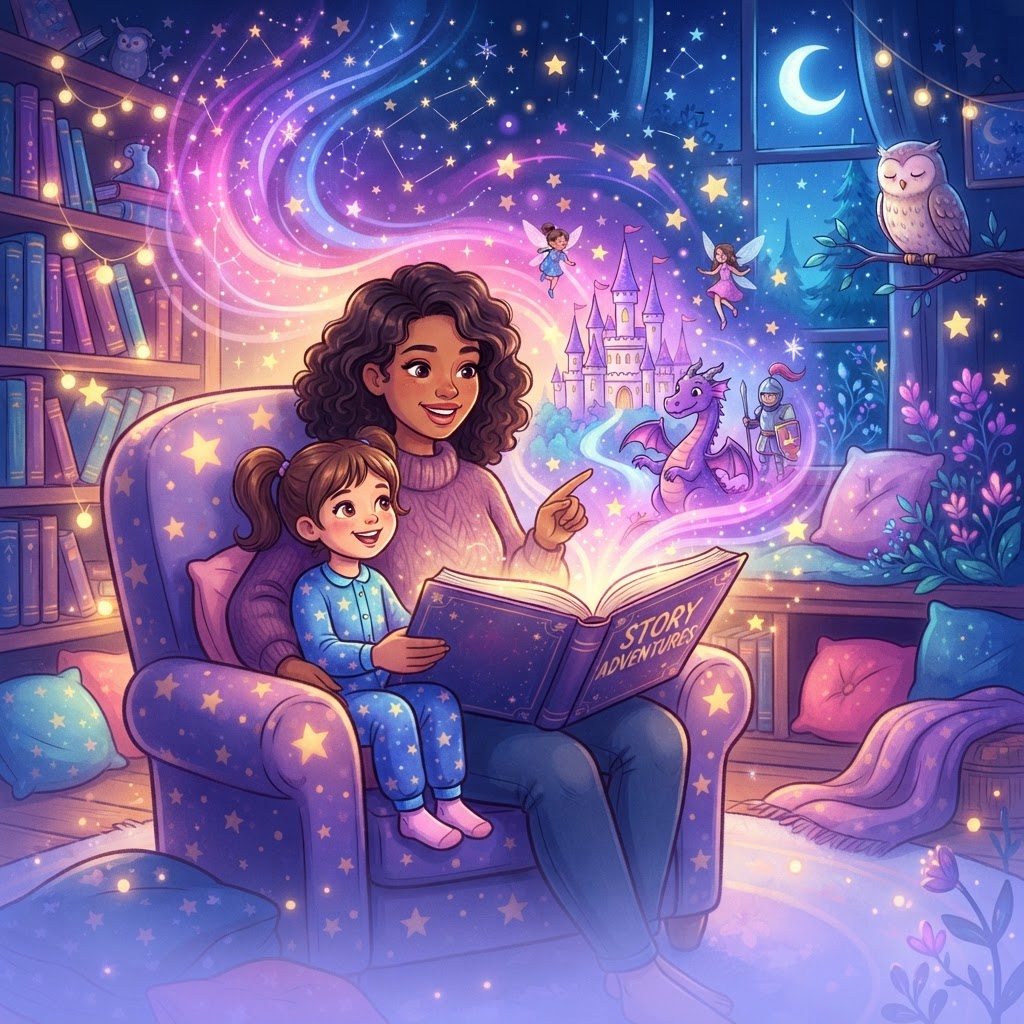
If you need fantasy story ideas that feel magical, age-appropriate, and easy to turn into a bedtime book, start with simple wonder: talking animals, hidden kingdoms, friendly dragons, and brave children solving small-but-important problems. Below, you’ll find 10 creative ideas for fantasy stories for kids, each paired with a ready-to-use AI prompt you can paste into InstaTales to generate a full personalized story in minutes.
Why are fantasy stories so powerful for kids?
Fantasy stories help children practice imagination, language, emotional problem-solving, and flexible thinking. When a child enters a world of dragons, moon gardens, or secret maps, they are not escaping learning—they are actively building it.
Child development research consistently shows that pretend play and storytelling support cognitive and social growth. The American Academy of Pediatrics’ report on The Power of Play highlights how imaginative play strengthens language, self-regulation, and relationships. The Harvard Center on the Developing Child also emphasizes that back-and-forth storytelling builds the kind of responsive interaction children need for healthy development.
That’s why kids fantasy stories work so well at bedtime and in the classroom. They give children a safe way to explore bravery, kindness, mistakes, and wonder—all through characters they love.
Which fantasy story ideas work best for ages 1-4?
For toddlers and preschoolers, the best fantasy stories are gentle, repetitive, and easy to follow. Choose simple quests, cozy magical settings, and one clear problem with a reassuring ending.
1. The Bunny Who Returned a Star
A sleepy little bunny finds a fallen star in the meadow and sets off to bring it back to the night sky. Along the way, kind forest friends help one by one.
- AI prompt: Write a gentle bedtime fantasy story for a 2-4 year-old about [child’s name] as a bunny who finds a fallen star and returns it to the sky. Use simple language, soothing repetition, friendly animal helpers, and a calm happy ending. Include 5 illustrated scenes.
2. The Tiny Dragon Who Could Only Blow Bubbles
A baby dragon is embarrassed because everyone else can breathe fire—but she can only blow shimmering bubbles. Soon, her bubbles save the day in a magical forest.
- AI prompt: Create a sweet fantasy story for ages 3-5 about [child’s name] meeting a tiny dragon who blows magical bubbles instead of fire. Make the story funny, kind, and reassuring, with a message about unique strengths and 5 colorful illustration moments.
3. The Cloud Boat to Dream Island
A child climbs into a soft cloud boat each night and sails to Dream Island, where moonflowers sing and pillows bounce. The adventure is magical but short, ending back in bed feeling safe.
- AI prompt: Write a calm fantasy bedtime story for a preschooler about [child’s name] riding a cloud boat to Dream Island. Use dreamy imagery, gentle repetition, magical creatures, and a sleepy ending with 4-6 illustrated scenes.
Which fantasy stories for kids spark imagination for ages 5-7?
Children ages 5-7 often enjoy slightly bigger adventures, silly twists, and clear emotional lessons. This is a great age for hidden doors, magical pets, and problem-solving quests.
4. The Secret Library Under the Tree
A child discovers a tiny door inside an old oak tree that leads to a library where books whisper their own endings. To save the library, the child must return a missing golden bookmark.
- AI prompt: Write an imaginative fantasy story for ages 5-7 about [child’s name] discovering a secret library under a giant tree. Include whispering books, a missing golden bookmark, one small challenge, and a joyful ending. Make it adventurous but not scary.
5. The Mermaid Who Lost Her Song
A young mermaid’s beautiful song has disappeared, and the ocean feels unusually quiet. With the help of a child friend, she follows glowing seashell clues to find it again.
- AI prompt: Create a magical underwater fantasy story for ages 5-7 starring [child’s name] and a mermaid who has lost her song. Include glowing shells, gentle sea creatures, a clear quest, and a message about friendship and confidence.
6. The Castle That Appeared Only in Rain
Every time it rains, a rainbow castle appears at the end of the street—but only children can enter. Inside, the rooms change shape based on feelings, and one room needs laughter to unlock.
- AI prompt: Write a playful fantasy adventure for ages 6-7 about [child’s name] finding a castle that appears only in rain. Include magical rooms, a feeling-based puzzle, kind humor, and a bright satisfying ending with 5-7 illustrated scenes.
7. The Moon Fox and the Missing Night
One evening, the stars vanish and the moon grows dim. A silver moon fox asks a child to help gather lost pieces of nighttime from the wind, river, and forest.
- AI prompt: Write a fantasy story for children ages 5-7 about [child’s name] helping a moon fox restore the night sky. Make it poetic, magical, and easy to follow, with animal guides and a comforting bedtime ending.
Which kids fantasy stories are best for ages 8-10?
Older children often want richer worldbuilding, stronger stakes, and more independence for the main character. These fantasy story prompts add mystery, courage, and creative problem-solving without becoming too intense.
8. The Map That Redrew Itself
A child inherits a map from a grandparent, but the map changes every morning. It leads to hidden villages, sky bridges, and a final choice about protecting a magical realm from being forgotten.
- AI prompt: Write an adventurous fantasy story for ages 8-10 about [child’s name] finding a magical map that redraws itself each day. Include hidden places, clever clues, one meaningful choice, and a hopeful ending. Make it vivid and exciting, with 6-8 illustrated scenes.
9. The Apprentice of the Last Stargazer
In a city where nobody looks up anymore, a child becomes the apprentice to the last stargazer. Together, they must wake ancient constellations before darkness covers the kingdom.
- AI prompt: Create a fantasy story for ages 8-10 about [child’s name] training with the last stargazer in a forgotten city. Include star magic, a mystery to solve, emotional growth, and a triumphant ending that celebrates curiosity.
10. The Dragon Market at the Edge of Dawn
At sunrise, a hidden market appears where dragons trade feathers, riddles, music, and weather. A child must win a riddle contest to help a lost baby dragon find its family.
- AI prompt: Write a richly detailed fantasy story for ages 8-10 about [child’s name] visiting a secret dragon market at dawn. Include magical stalls, clever riddles, a lost dragon, and an ending that feels warm, brave, and memorable.
How can you turn these fantasy story prompts into a personalized InstaTales adventure?
The easiest way to use these ideas is to add your child’s name, age, favorite animals, and comfort level, then generate the story in InstaTales. Personal details make fantasy feel more meaningful and more engaging.
Here’s a simple process:
- Pick one of the story ideas above.
- Add your child’s name, age, and favorite theme.
- Choose whether you want a calm bedtime tone or a more adventurous tone.
- Use create your own personalized bedtime story to generate the story.
- If you want a faster start, browse the built-in story templates.
- Save favorites in your story library for re-reading on future nights.
This kind of personalization matters. Many children stay engaged longer when stories reflect their interests, routines, and emotional needs—a principle often supported by literacy experts at Reading Rockets, which highlights the value of interest-based reading for motivation and comprehension.
How can parents and teachers use fantasy stories for learning as well as fun?
Fantasy stories can build literacy, empathy, and discussion skills when adults use them intentionally. A magical plot becomes even more valuable when you pause to talk, predict, and reflect.
Try these simple extensions:
- Ask, “What would you do if you found the magic map?”
- Let children draw their favorite creature or setting.
- Invite them to change the ending or add a new character.
- Connect the story to values like honesty, courage, or kindness.
If you want stories with stronger academic themes, explore these educational story ideas for kids. If you’d like more character-building themes, these moral story ideas for kids pair well with fantasy adventures.
In classrooms, fantasy can also support oral language, sequencing, and creative writing. Teachers can turn one prompt into a whole-group read-aloud, a partner retelling task, or an art-and-writing center activity.
Frequently Asked Questions
What are good fantasy story ideas for young children?
Good fantasy story ideas for young children include simple magical quests, talking animals, friendly dragons, and cozy dream journeys. The best ones use repetition, gentle stakes, and reassuring endings.
How do I make fantasy stories for kids less scary?
Keep the conflict small, avoid intense villains, and make helpers clearly kind and supportive. A calm ending, familiar routines, and age-appropriate language also help children feel safe.
Can AI-generated fantasy stories be educational?
Yes, if the prompts are designed well. You can build in vocabulary, problem-solving, emotional themes, or science and reading concepts while still keeping the story playful and magical.
How long should a bedtime fantasy story be?
For ages 1-4, shorter is usually better—around 3-5 minutes. Children ages 5-10 often enjoy slightly longer stories, especially if the plot is clear and personalized.
What should I include in a fantasy story prompt?
Include the child’s name, age, tone, favorite creatures or settings, the main problem, and the kind of ending you want. The more specific the prompt, the more tailored and engaging the story will feel.
Are fantasy stories helpful for classroom use?
Yes. Fantasy stories can support vocabulary, listening comprehension, sequencing, discussion, and creative writing, especially when teachers add follow-up questions or art activities.
Ready to Create a Personalized Bedtime Story?
Use our free AI bedtime story generator to create a personalized illustrated story for your child in 30 seconds — no credit card needed.
Popular story types:
Maya Rodriguez
Lead Content Editor & Early Literacy Specialist
Maya is a former early childhood educator and literacy specialist with over a decade of experience helping children develop a love of reading. She leads content at InstaTales, where she writes about the science of storytelling, child development, and how families can use personalized AI stories to build literacy and emotional resilience.
instatales.ai