10 ocean story ideas for kids
10 creative ocean story ideas for kids — each with a free AI prompt to generate the full illustrated story instantly.
✦ Key Takeaways
- •Ocean stories work well because they combine comfort with discovery.
- •For toddlers, the best ocean stories are short, repetitive, and emotionally safe.
- •Children ages 4-6 usually enjoy a bit more plot, humor, and problem-solving.
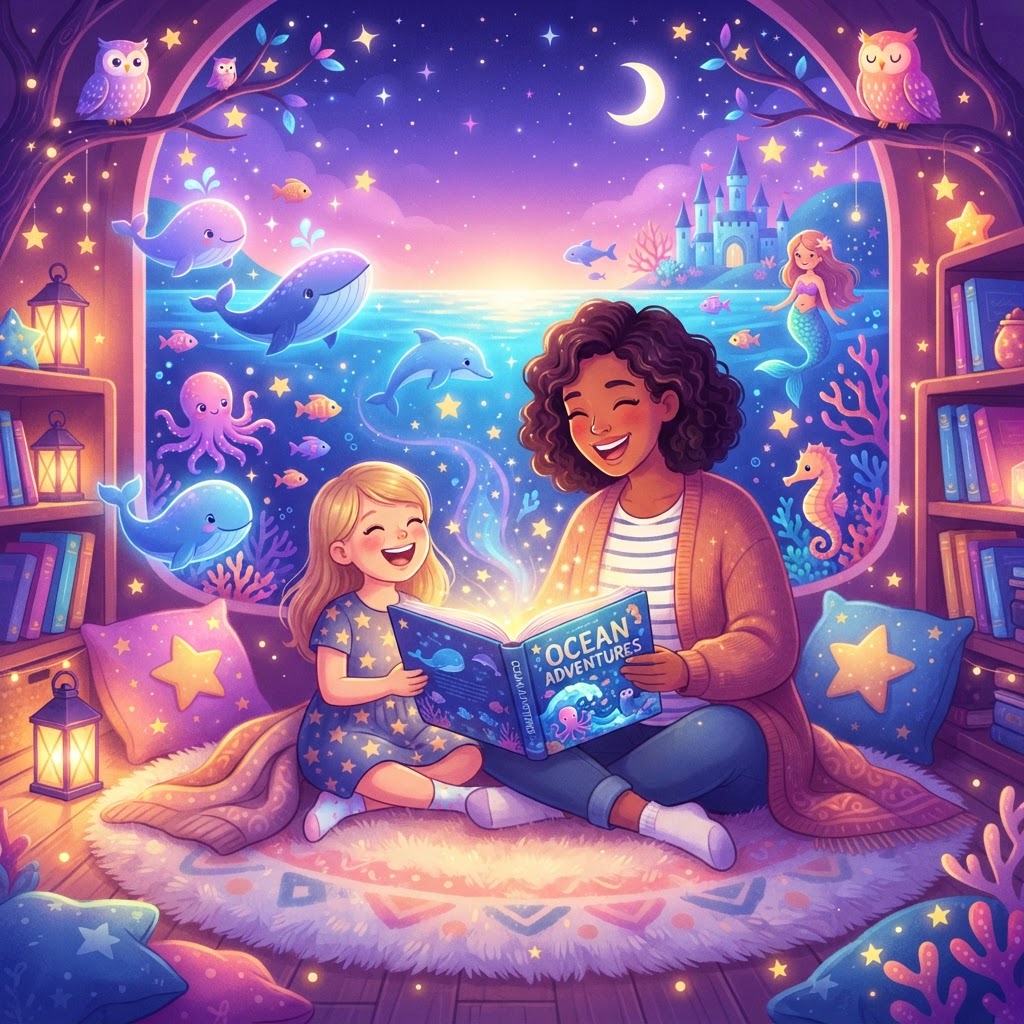
If you are looking for ocean story ideas that feel magical, calming, and easy to personalize, the sea is a wonderful place to start. Ocean adventures naturally blend wonder, gentle repetition, and learning, which makes them ideal ocean stories for kids from toddlers to confident young readers. Below, you will find 10 age-grouped ideas, each with a ready-to-use ocean story prompt you can copy into InstaTales to turn into a full illustrated bedtime story.
Why are ocean stories such a strong choice for kids?
Ocean stories work well because they combine comfort with discovery. The rhythm of waves feels soothing at bedtime, while sea creatures, coral reefs, and treasure maps keep children curious and engaged.
From a child development point of view, that mix matters. The American Academy of Pediatrics recommends shared reading from infancy, and organizations like Reading Rockets note that read-aloud time supports vocabulary, listening, and comprehension. Back-and-forth storytelling also strengthens the “serve and return” interactions highlighted by the Harvard Center on the Developing Child.
Ocean-themed tales also create a natural bridge to real-world learning. When you weave in simple facts about tides, habitats, or marine animals, kids ocean stories become both cozy and educational. If your child also loves the outdoors, these nature story ideas for kids are another great next step.
Which ocean story ideas work best for ages 1-3?
For toddlers, the best ocean stories are short, repetitive, and emotionally safe. Choose gentle plots with one clear problem and a comforting ending.
1. The Sleepy Seahorse's Moonlight Ride
A tiny seahorse cannot fall asleep, so friendly glowing fish help guide the little one home through the quiet reef. This idea works well for bedtime because it uses soothing repetition and soft imagery.
- AI prompt: "Write a gentle 3-minute bedtime story for a 2-year-old named [Name] about a sleepy seahorse who rides through the moonlit ocean looking for home. Include calm repetition, friendly sea animals, simple language, and a peaceful ending. Add cute illustrated scene descriptions."
2. Bubble the Whale Finds a Song
A baby whale worries that its voice is too small, but each sea friend adds one sound until a beautiful ocean song is born. This story supports confidence and sound play.
- AI prompt: "Create a short ocean bedtime story for ages 1-3 about a baby whale named Bubble who learns every voice matters. Use simple sentences, repeated sounds, warm feelings, and a happy ending. Include illustration cues for each sea animal."
3. The Lost Shell for Grandma Turtle
A little crab helps Grandma Turtle find her favorite shiny shell before bedtime. The plot is simple, sweet, and easy for very young children to follow.
- AI prompt: "Write a cozy illustrated story for a toddler about a helpful crab and Grandma Turtle searching for a missing shell on the beach. Keep it under 400 words, use repetition, and end with cuddles and sleep."
Which ocean story ideas work best for ages 4-6?
Children ages 4-6 usually enjoy a bit more plot, humor, and problem-solving. This is a great age for imaginative ocean stories for kids that still feel safe but include a small challenge or mystery.
4. The Mermaid Who Collected Morning Colors
A young mermaid wants to paint the sunrise underwater, so she gathers coral pink, dolphin silver, and seaweed green from around the reef. It is a creative story that encourages noticing color and nature.
- AI prompt: "Write a playful story for a 5-year-old about a young mermaid collecting colors from the ocean to paint the sunrise. Make it imaginative, kind, and visually rich, with a simple lesson about creativity and sharing."
5. Captain Octopus and the Missing Map
A clever octopus captain loses a treasure map and must use all eight arms to solve funny clues across the ocean floor. This is one of the best ocean story ideas for kids who like adventure without anything scary.
- AI prompt: "Create a funny adventure story for ages 4-6 about Captain Octopus searching for a lost treasure map. Include three simple clues, friendly sea creatures, light humor, and a cheerful ending with treasure that is shared."
6. The Coral Reef Cleanup Crew
A team of fish, turtles, and a curious child work together to clean a reef after a storm. It gently introduces ocean care and teamwork.
- AI prompt: "Write an encouraging children's story about a reef cleanup team made of sea animals and a child named [Name]. Teach simple ocean kindness, teamwork, and respect for marine habitats. Add bright illustration prompts and a hopeful ending."
7. The Penguin Who Took the Wrong Wave
A playful penguin accidentally surfs far from home and has to ask different ocean animals for directions. This makes a great read-aloud because the repeated question-and-answer pattern invites participation.
- AI prompt: "Write a lively ocean adventure for ages 4-6 about a penguin who rides the wrong wave and asks sea creatures how to get home. Use repetition, gentle humor, and a reassuring ending."
Which ocean story ideas work best for ages 7-10?
Older children often want richer world-building, stronger characters, and bigger questions. For this age group, ocean story prompts can include mystery, science, and bravery while still staying bedtime-friendly.
8. The Secret Library Beneath the Waves
A child discovers an underwater library where every shell contains a memory from the sea. The story can explore curiosity, responsibility, and the joy of learning.
- AI prompt: "Write an imaginative story for ages 7-10 about a child named [Name] who finds a secret library under the ocean where shells hold the sea's memories. Include wonder, a small mystery, and a lesson about protecting stories and nature."
9. The Storm Lantern of Lighthouse Bay
When a storm knocks out the lighthouse, a brave group of sea animals and one child must relight it before boats lose their way. This is a strong choice for children who enjoy teamwork and suspense.
- AI prompt: "Create an illustrated bedtime adventure for ages 7-10 about a child and ocean animal friends relighting a storm-dark lighthouse. Make it exciting but not scary, include problem-solving, and end with safety, gratitude, and calm seas."
10. The Sea Dragon and the Plastic Crown
A shy sea dragon finds a crown tangled in ocean trash and sets out to discover who lost it. Along the way, the character learns how human choices affect sea life, making this one of the most meaningful kids ocean stories on the list.
- AI prompt: "Write a thoughtful ocean story for ages 7-10 about a sea dragon who finds a crown trapped in plastic and journeys across the ocean to return it. Blend adventure, emotion, and age-appropriate environmental facts from the sea."
For fact-rich inspiration, you can borrow real marine details from NOAA Ocean Service, then wrap them in imaginative storytelling.
How can parents and teachers turn these prompts into full InstaTales stories?
The easiest way is to copy a prompt, add a few personal details, and let InstaTales build the story and illustrations for you. Personalization helps children stay engaged because familiar names, favorite animals, and bedtime routines make the story feel like it belongs to them.
A simple process works best:
- Pick one idea that matches your child's age and attention span.
- Add details like [Name], favorite sea creature, sibling, or hometown beach.
- Choose a calm bedtime tone or a more adventurous style.
- Generate the story, then adjust length, vocabulary, or lesson as needed.
If you want to start right away, you can create your own personalized bedtime story in minutes. For faster setup, browse ready-made story templates. If a child wants to revisit favorite ocean stories for kids, save them in your story library. And if you are using these in literacy centers, writing lessons, or science units, InstaTales for teachers can help structure classroom-friendly storytelling.
A practical tip from educators: ask one prediction question before reading, one feeling question during the story, and one recall question after. That kind of simple discussion supports comprehension without making bedtime feel like homework.
Frequently Asked Questions
What makes a good ocean story for young children?
A good ocean story for young children is gentle, easy to follow, and emotionally safe. The best ones use repetition, vivid imagery, and a comforting ending.
How long should bedtime ocean stories be?
For toddlers, 3-5 minutes is often enough. Children ages 4-10 can usually enjoy 5-10 minutes, especially if the story includes a clear plot and familiar characters.
Can ocean stories also teach real facts?
Yes. The strongest ocean stories for kids mix imagination with simple, accurate facts about sea animals, habitats, or caring for the ocean.
How do I personalize ocean story prompts?
Add your child's name, age, favorite sea creature, preferred story length, and bedtime tone. You can also include a sibling, pet, or familiar place to make the story feel even more special.
Are AI-generated ocean stories okay for classrooms?
Yes, when they are age-appropriate and reviewed by an adult first. Teachers often use them for read-alouds, writing inspiration, science connections, and differentiated literacy practice.
What if my child wants more than ocean stories?
That is common, especially with imaginative readers. Once they love the pattern of personalized storytelling, you can branch into space, nature, dinosaurs, or other high-interest themes.
Ready to Create a Personalized Bedtime Story?
Use our free AI bedtime story generator to create a personalized illustrated story for your child in 30 seconds — no credit card needed.
Popular story types:
Maya Rodriguez
Lead Content Editor & Early Literacy Specialist
Maya is a former early childhood educator and literacy specialist with over a decade of experience helping children develop a love of reading. She leads content at InstaTales, where she writes about the science of storytelling, child development, and how families can use personalized AI stories to build literacy and emotional resilience.
instatales.ai