10 Kindness Storytelling Tips for Parents
Want to raise a kind child? Here are 10 tips for using stories to teach kindness and compassion.
✦ Key Takeaways
- •Start with stories where kindness is easy to spot.
- •The best kindness story is one your child can understand and retell.
- •Ask simple, specific questions that direct attention to feelings and choices.
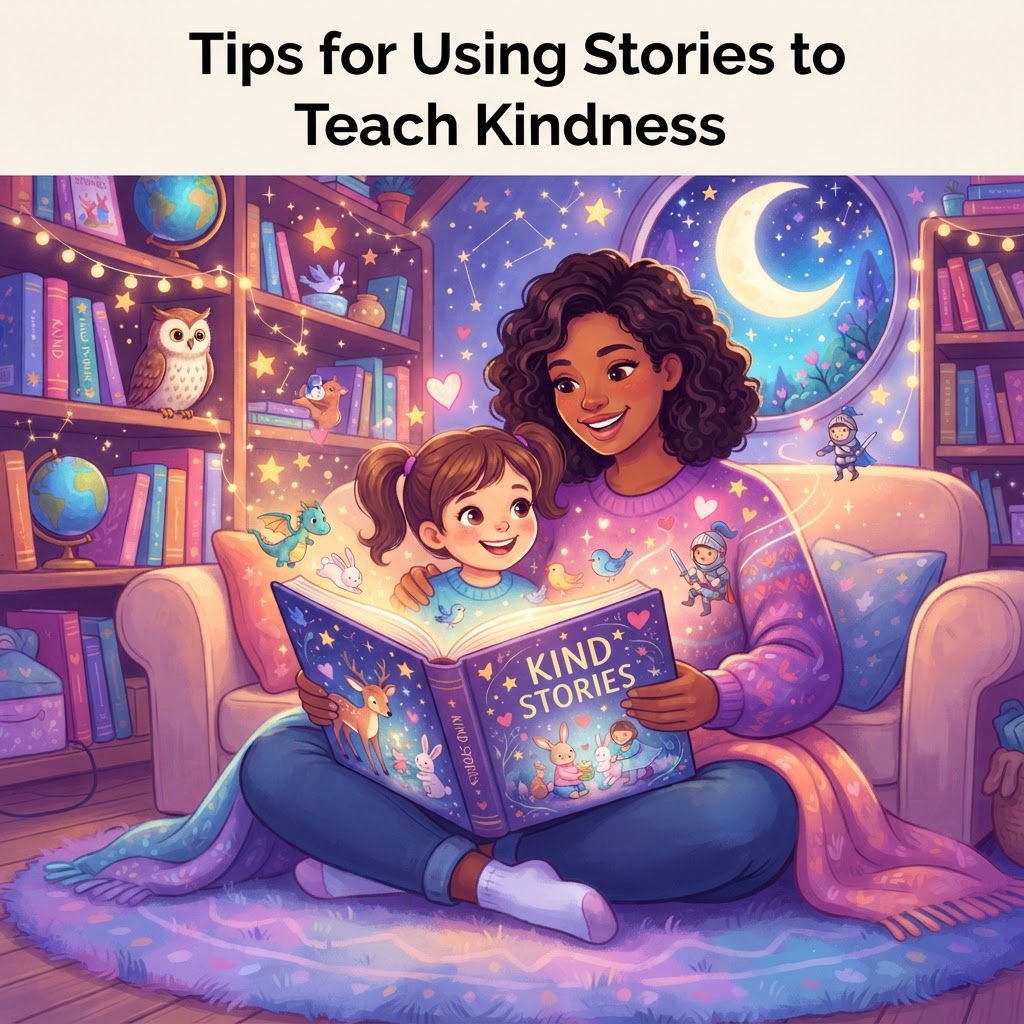
Stories give children a safe place to practice empathy before real-life moments feel big or messy. When you use teaching kindness through stories on purpose, kids start to notice feelings, choices, and consequences in a way that feels natural, not preachy.
That is why kindness storytelling works so well for children ages 1-10. A simple bedtime story can help a toddler learn “helping hands,” while an older child can think through friendship problems, exclusion, or apologizing. Below are 10 practical kindness stories tips you can use at home or in the classroom.
Why should you choose stories with clear acts of kindness?
Start with stories where kindness is easy to spot. Children learn best when they can clearly see who helped, how they helped, and how it changed someone else’s day.
Look for scenes with sharing, comforting, including others, apologizing, or helping without being asked. For younger children, simple cause-and-effect matters most: “The rabbit shared, and the fox felt better.” For older kids, choose stories with more nuance, like standing up for someone or making amends after a mistake.
If you want to create your own personalized bedtime story, make your child the helper in the plot. Personalized characters often increase engagement because the lesson feels close to their real life.
How can you match kindness stories to your child’s age?
The best kindness story is one your child can understand and retell. Match the story’s language, conflict, and length to your child’s developmental stage.
Toddlers and preschoolers do well with repetition, familiar routines, and one clear kind action. Early elementary children can handle friendship conflicts and more than one perspective. Older children benefit from stories where characters feel jealous, left out, or unsure, then choose kindness anyway.
The Center on the Developing Child at Harvard University notes that responsive relationships help build social and emotional skills. In practice, that means choosing stories your child can process with your support, not stories so complex that the kindness lesson gets lost.
What kinds of questions help children notice kindness?
Ask simple, specific questions that direct attention to feelings and choices. Good questions turn passive listening into active empathy practice.
Try prompts like:
- “Who needed help in this part?”
- “How did that character feel before and after?”
- “What else could the character have done?”
- “Have you ever seen something like that at school?”
This kind of back-and-forth reading is supported by dialogic reading research, which shows that conversation during reading improves understanding and language. It also helps children connect actions with emotions, which is at the heart of teaching kindness through stories.
How can you pause at key moments to build empathy?
Pause right before a character acts, not only after the lesson is over. Predicting what someone might do helps children practice perspective-taking in real time.
For example, stop and say, “The boy sees his friend sitting alone. What do you think he might do?” Then ask, “What would feel kind here?” These micro-pauses matter because empathy grows when children are invited to think about another person’s inner world.
Organizations like CASEL emphasize that social-emotional skills develop through repeated, guided practice. A two-minute pause during a story can do more than a ten-minute lecture afterward.
Why does role-play make kindness lessons stick?
Role-play helps children move from “I understand” to “I can do it.” Acting out a story makes kindness concrete, physical, and easier to remember.
After reading, invite your child to play a scene:
- welcoming a new student
- sharing a toy
- comforting someone who is upset
- apologizing after hurting feelings
Keep it light and short. Young children may use stuffed animals or dolls, while older kids can try “What would you say?” scripts. If your child needs extra support with communication, these strategies can pair well with tips for reading to a child with speech delays.
How can you connect story events to real life?
Children learn kindness faster when they see that stories and real life match. Make one clear bridge from the page to your child’s everyday world.
You might say, “That reminds me of the playground when Sam was alone,” or “This is like helping your little sister zip her coat.” Keep the example immediate and familiar. Abstract moral lessons are harder for young children to use.
This is also a good place to connect kindness with other life skills. For example, being kind often takes courage and self-control, much like the habits in these stories that build resilience.
What small kindness challenges can you try after reading?
A real-world kindness challenge is one of the most effective kindness stories tips because it turns insight into action. The key is to make the challenge small, specific, and doable that same day.
Try challenges such as:
- say one kind thing at dinner
- help clean up without being asked
- invite someone to join a game
- draw a picture for a grandparent or neighbor
- thank a teacher, sibling, or caregiver
You can even keep a simple “kindness jar” and add a pom-pom each time your child completes a challenge. If your family likes structured activities, the weekly reading challenges page can help you turn story time into a fun routine.
How can personalized stories make kindness more meaningful?
Personalized stories can make kindness feel relevant because the child sees themselves inside the situation. When the main character shares your child’s name, interests, or worries, the lesson often feels more memorable.
For example, a child who struggles with exclusion may respond well to a story about joining a new group at soccer or preschool. A nervous child may need gentle scenarios and emotional safety; if that sounds familiar, these tips for reading to an anxious child can help you adapt the experience.
If you want a quick starting point, browse story templates built around common themes and age levels.
What should you do when a story includes unkind behavior?
Do not avoid every story with conflict; use it as a teaching moment. Children learn a lot from seeing mistakes, consequences, repair, and second chances.
When a character lies, excludes someone, or says something hurtful, name it calmly: “That was not a kind choice.” Then follow with two questions: “How do you think the other person felt?” and “What could help make it right?” According to the American Academy of Pediatrics, empathy and social skills grow through modeling, discussion, and practice, not punishment alone.
This approach keeps the focus on repair instead of shame, which is more useful for long-term behavior.
How can you make kindness storytelling a regular routine?
Consistency matters more than perfection. A short, steady kindness routine helps children absorb these lessons over time.
Try a simple structure:
- read one kindness-themed story 3-4 times a week
- ask one feelings question
- name one kind action
- do one small kindness challenge the next day
At home, re-reading favorites is a strength, not a weakness. In classrooms, regular story-based SEL can support group discussions and cooperative behavior. Teachers looking for ready-to-use ideas can explore InstaTales for teachers, and families can find more reading support on the InstaTales blog.
Frequently Asked Questions
What age should I start teaching kindness through stories?
You can start in toddlerhood with very simple books about helping, sharing, and comforting. Even babies and young toddlers benefit from warm language, facial expressions, and repeated kind routines during reading.
How long should a kindness story session be?
For most children, 5-15 minutes is enough. What matters most is one meaningful question or one small follow-up activity, not a long lesson.
What if my child does not seem interested in the message?
Keep it playful and avoid over-explaining. Children often absorb kindness lessons through repetition, role-play, and seeing you model the same behavior in daily life.
Are personalized stories better than traditional books for teaching kindness?
Both can work well. Personalized stories may feel more relevant, while traditional books can expose children to different people, settings, and perspectives.
How can teachers use kindness storytelling in class?
Teachers can read aloud, pause for discussion, and follow with partner role-play or a class kindness challenge. The best classroom approach is brief, consistent, and tied to real situations like inclusion, teamwork, and conflict repair.
Ready to Create a Personalized Bedtime Story?
Use our free AI bedtime story generator to create a personalized illustrated story for your child in 30 seconds — no credit card needed.
Popular story types:
Maya Rodriguez
Lead Content Editor & Early Literacy Specialist
Maya is a former early childhood educator and literacy specialist with over a decade of experience helping children develop a love of reading. She leads content at InstaTales, where she writes about the science of storytelling, child development, and how families can use personalized AI stories to build literacy and emotional resilience.
instatales.ai