Teaching Values With Stories: 10 Simple Tips
Want to use stories to teach your child values? Here are 10 tips for effective values-based storytelling.
✦ Key Takeaways
- •Start with one clear value at a time.
- •Choose stories that match your child’s developmental level, not just their reading level.
- •The best values lessons feel discovered, not delivered.
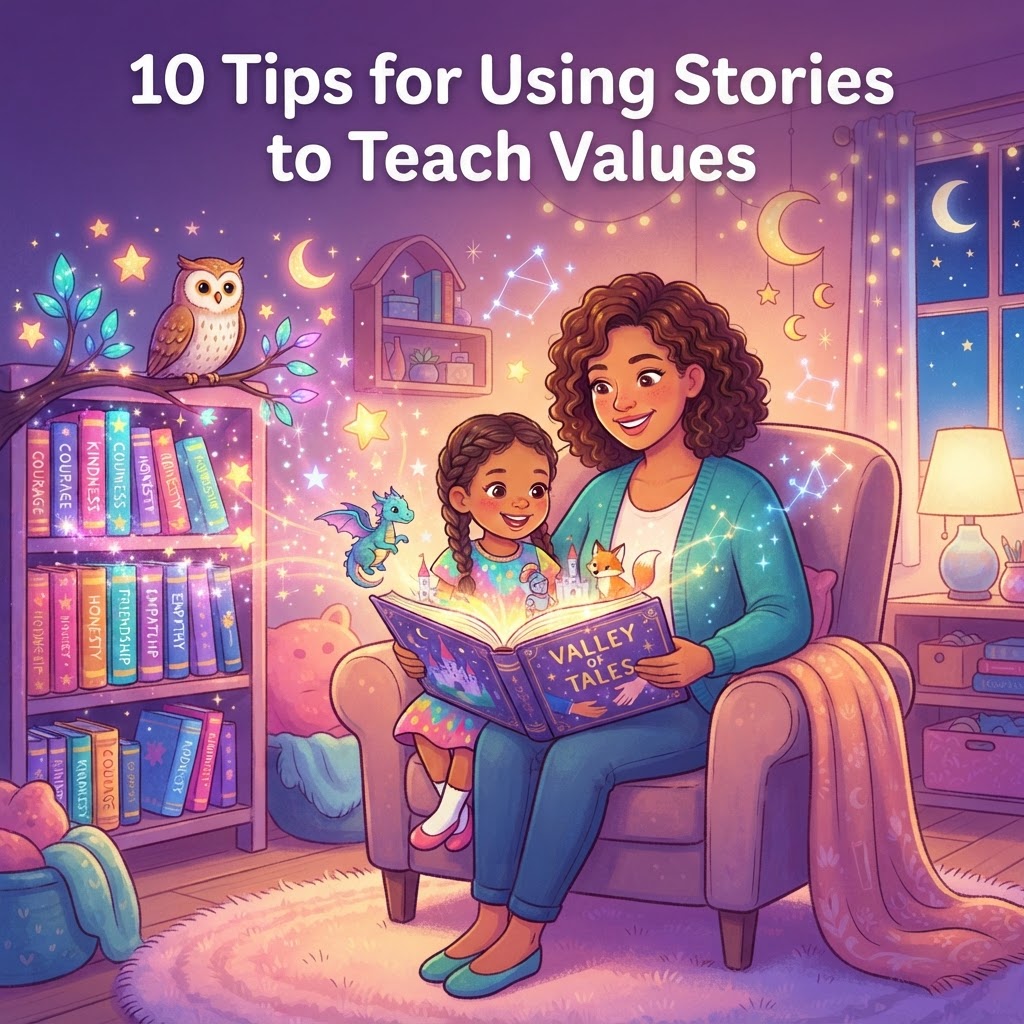
Stories are one of the gentlest ways to teach children right from wrong. They let kids see kindness, honesty, courage, and responsibility in action without feeling corrected or pressured.
That is why teaching values with stories works so well. Children learn through relationships, repetition, and examples. The American Academy of Pediatrics notes that shared reading supports language, bonding, and learning, while child development experts at the Center on the Developing Child at Harvard University emphasize that back-and-forth interaction helps children make meaning. In other words, the story matters, but the conversation around it matters too.
Here are 10 practical moral stories tips you can use at home or in the classroom to make values storytelling feel natural, useful, and memorable.
1. Which value should you focus on first?
Start with one clear value at a time. Young children learn best when the message is simple and concrete, such as sharing, telling the truth, waiting your turn, or helping a friend.
If you try to teach kindness, gratitude, patience, bravery, and responsibility all in one story, the lesson can get muddy. Instead, choose one value and return to it in different books over time. That repetition helps children notice patterns and apply the idea in daily life.
A good rule is to ask yourself: What is the one takeaway I want my child to remember tomorrow?
2. How do you choose stories that fit your child’s age and stage?
Choose stories that match your child’s developmental level, not just their reading level. A toddler needs simple cause-and-effect, while an older child can discuss motives, fairness, and mixed feelings.
The CDC’s developmental milestones remind us that younger children tend to think more concretely. That means a story about “being a good friend” may work better if the actions are obvious: sharing crayons, taking turns, or saying sorry. Older children can handle stories where the “right” choice is less clear.
If you want help selecting strong books, these tips on choosing stories that fit your child can make the process easier.
3. Why should the lesson grow from the plot instead of a lecture?
The best values lessons feel discovered, not delivered. When the moral grows naturally from what the characters do, children are more likely to absorb it.
A preachy story often makes kids tune out. A good story shows consequences, feelings, and choices. Instead of saying, “You must always be honest,” let the child see what happens when a character hides the truth and then feels relieved after telling it.
This is one of the most important moral stories tips: trust the story to carry part of the lesson. Your job is to guide, not over-explain.
4. How can you ask questions that build reflection?
Ask open-ended questions that help your child think, not quiz questions that test memory. Reflection builds deeper understanding than simply recalling facts.
Try questions like:
- “Why do you think she made that choice?”
- “How did that action affect the other character?”
- “What would you do in that situation?”
- “Was it easy or hard to do the right thing?”
This kind of discussion supports social and emotional growth. The National Association for the Education of Young Children regularly emphasizes that empathy and self-regulation grow through guided interaction, conversation, and modeling. If you want your questions to sound warm and engaging, it also helps to practice reading aloud with expression, because tone shapes how children respond.
5. What should you do when a child disagrees with a character?
Welcome the disagreement. When a child says, “That wasn’t fair,” or “I wouldn’t do that,” they are actively practicing moral reasoning.
Resist the urge to correct them too quickly. Ask follow-up questions instead:
- “What felt unfair about it?”
- “What do you think the character should have done?”
- “Could there be another side to the story?”
These moments are gold. Research on moral development, including the work of Lawrence Kohlberg, suggests that children build ethical thinking by wrestling with dilemmas, not by memorizing the “right” answer.
6. How can you connect the story to real life right away?
Make one simple bridge from the story to everyday life. A value sticks better when a child can use it within the next day or two.
After a story about kindness, you might say, “Let’s look for one way to help someone today.” After a story about honesty, you might mention a time when telling the truth felt hard but important. Keep the connection light and practical.
You do not need a long lesson plan. One small action is enough:
- write a thank-you note
- practice taking turns during a game
- help clean up without being asked
- check on a sibling who feels upset
7. Why does your own behavior matter more than the story?
Because children learn values most powerfully by watching you. Stories introduce the lesson, but your actions prove whether the lesson is real.
Albert Bandura’s social learning theory showed that children learn through observation and imitation. If you praise honesty in stories but tell “little lies” in front of your child, the mixed message will be louder than any book. The same is true for patience, respect, and empathy.
Think of stories as a starting point and your daily behavior as the follow-through. That combination is what makes values storytelling effective.
8. How can repetition and rereading strengthen values?
Rereading helps children notice deeper meaning. A story they first enjoyed for the plot often becomes, on the third or fourth reading, a story they understand for its values.
This matters because young children rarely absorb a lesson in one sitting. Repetition gives them more chances to spot patterns, name emotions, and predict outcomes. It also creates emotional safety, which is one reason bedtime stories are such a strong teaching tool.
You can support this by keeping favorite values-based stories easy to revisit in your story library and by using routines that build a steady reading habit.
9. What makes personalized or child-created stories so effective?
Personalized stories work well because children pay closer attention when the situation feels relevant to their own world. A child is often more invested in a story when the main character shares their name, worries, or daily routines.
That does not mean every story needs to be fully customized. But tailored examples can be especially useful for specific challenges like sibling conflict, bedtime resistance, or learning to include others. If you want to create your own personalized bedtime story(/), you can shape the plot around the value your child is practicing while still keeping the tone playful and imaginative.
This is especially helpful when standard books do not quite match your child’s situation.
10. How do you keep values storytelling from feeling preachy?
Keep it warm, curious, and child-centered. The goal is to invite thought, not deliver a sermon.
A few ways to avoid preachiness:
- let the character’s choices do some of the teaching
- ask more questions than you answer
- keep your comments short
- accept that children may interpret stories differently
- revisit the value over time instead of forcing one “big lesson”
When parents ask for the best teaching values with stories strategy, this is often the answer: be consistent, not intense. Gentle repetition works better than pressure.
Frequently Asked Questions
At what age can children start learning values through stories?
Children can begin learning simple values through stories in toddlerhood. Very young children respond best to clear actions like helping, sharing, and comforting, while older children can discuss motives and consequences in more depth.
What if my child does not understand the moral?
That is normal. Instead of explaining everything, ask one or two simple questions and revisit the story later. Understanding often grows through repetition, not one perfect conversation.
Are classic fairy tales good for teaching values?
They can be, but choose carefully. Some fairy tales offer strong lessons about courage or kindness, while others may need extra discussion about fear, fairness, or outdated stereotypes.
How often should we use stories to teach values?
A little and often works best. Regular shared reading, especially at bedtime, gives children repeated exposure without making values feel like a formal lesson.
Can personalized AI stories help teach values?
Yes, if they are used thoughtfully. Personalized stories can make values feel more relevant by reflecting a child’s real-life challenges, interests, and relationships in a gentle, engaging way.
Should I always explain the lesson at the end?
No. Often, a short question or brief comment is more effective than a long summary. Children learn more when they have room to think and respond for themselves.
Explore More Stories
Ready for more? - free AI bedtime story generator
Get a new bedtime story every week
Free, personalized, and delivered to your inbox. No spam, ever.
Ready to Create a Personalized Bedtime Story?
Use our free AI bedtime story generator to create a personalized illustrated story for your child in 30 seconds — no credit card needed.
Popular story types:
Maya Rodriguez
Lead Content Editor & Early Literacy Specialist
Maya is a former early childhood educator and literacy specialist with over a decade of experience helping children develop a love of reading. She leads content at InstaTales, where she writes about the science of storytelling, child development, and how families can use personalized AI stories to build literacy and emotional resilience.
instatales.ai