15 animals story ideas for kids
15 creative animals story ideas for kids — each with a free AI prompt to generate the full illustrated story instantly.
✦ Key Takeaways
- •Animal stories help children feel safe, curious, and emotionally connected.
- •For ages 1-3, the best animal stories are simple, rhythmic, and soothing.
- •For ages 4-6, children enjoy animal stories with a clear problem, a funny twist, and one gentle lesson.
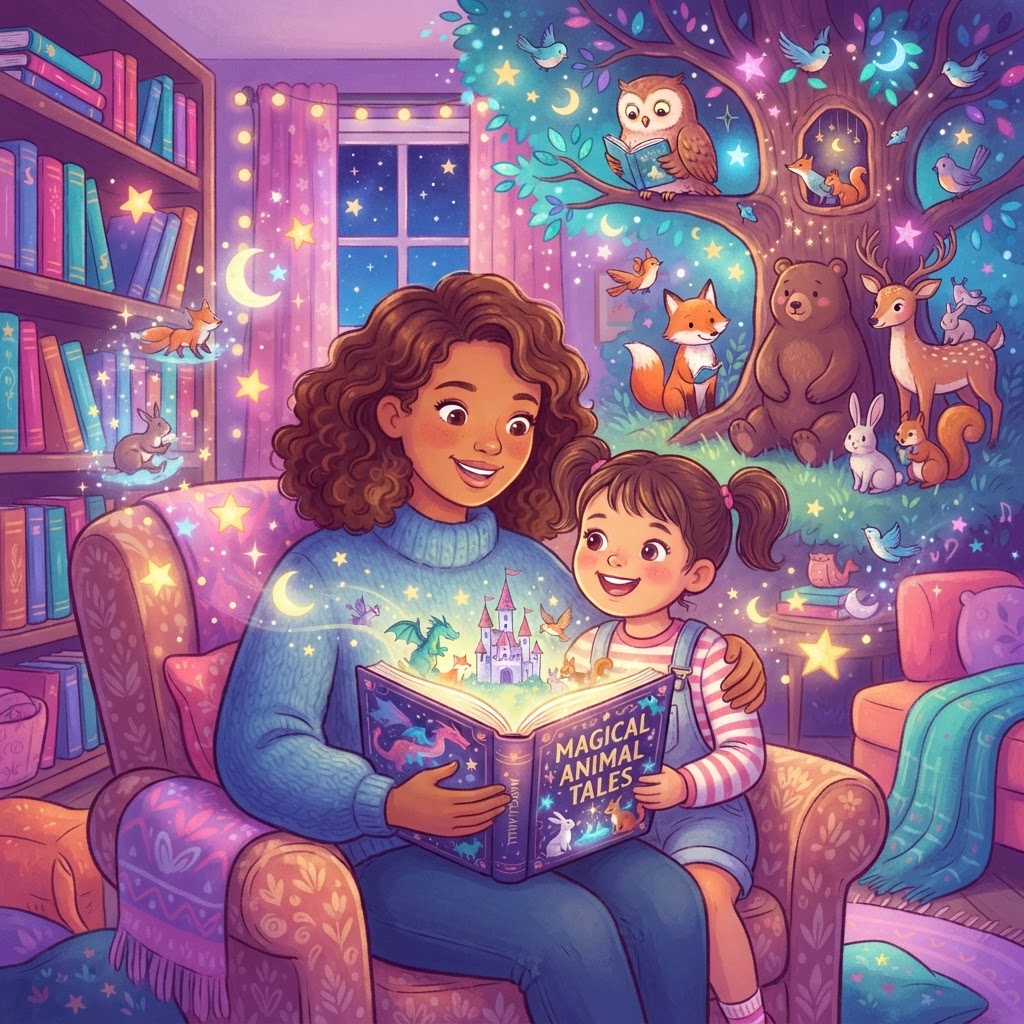
Need fresh animals story ideas for tonight’s bedtime routine? You’re in the right place. Below, you’ll find 15 creative animals stories for kids, grouped by age, with simple concepts and ready-to-use animals story prompts you can paste into InstaTales to generate a full personalized story in seconds. If you want even more inspiration after this list, explore more animal story ideas on the InstaTales blog.
Why are animal stories so powerful for children?
Animal stories help children feel safe, curious, and emotionally connected. They let kids explore big feelings through characters that feel playful rather than threatening, which is one reason so many classic bedtime tales feature bears, rabbits, birds, and foxes.
From a child development perspective, animal tales support language, empathy, and imagination. The American Academy of Pediatrics recommends reading aloud from infancy, and the Harvard Center on the Developing Child highlights how warm back-and-forth interactions build strong foundations for learning. In practice, I’ve found that kids animals stories work especially well because children can project their own worries and wishes onto an animal hero, then watch that hero solve a problem safely.
For toddlers, the best animal stories use repetition and comfort. For preschoolers, humor and gentle problem-solving matter most. For older children, mystery, teamwork, and adventure keep them engaged.
Which animals story ideas are best for ages 1-3?
For ages 1-3, the best animal stories are simple, rhythmic, and soothing. Choose gentle plots, familiar routines, and happy endings that support calm bedtime reading.
The Sleepy Koala’s Moon Pillow
A little koala cannot fall asleep until she discovers cozy bedtime “pillows” in moonlight, leaves, and her parent’s hug. This story works well for toddlers because it repeats soft bedtime language.
- AI prompt: “Write a gentle illustrated bedtime story for a 2-year-old about a sleepy koala named Kiki who tries different moonlit things as a pillow before falling asleep in her mama’s arms. Use simple repetition, warm sensory details, and a calm happy ending.”
Bunny’s Missing Blanket
A tiny bunny searches the garden for a favorite blanket, only to learn it was tucked safely in the stroller all along. The plot is small and reassuring, which helps very young children follow along.
- AI prompt: “Create a short bedtime story for a toddler about a bunny named Pip looking for a soft blue blanket in the garden. Use short sentences, gentle repetition, pastel illustrations, and end with Bunny feeling safe and sleepy.”
Duckling’s Rainy Puddle Parade
A cheerful duckling invites animal friends to splash through tiny puddles after a warm spring rain. This makes a lovely read-aloud because the repeated sounds and motions encourage participation.
- AI prompt: “Generate a playful animal story for a 3-year-old about a duckling leading a puddle parade with frog, turtle, and chick friends. Include repeating splashy phrases, bright illustrations, and a peaceful bedtime ending.”
Baby Fox and the Quiet Stars
A curious baby fox wants to count every star but grows sleepy before reaching the end. Counting, night imagery, and gentle pacing make this perfect for bedtime.
- AI prompt: “Write a soft, sleepy bedtime story for a 1-3 year old about a baby fox counting stars with a parent. Include numbers 1 to 5, simple language, cuddly forest illustrations, and a soothing final page.”
Penguin’s First Goodnight Song
A young penguin feels nervous at bedtime until the whole iceberg joins in a simple goodnight song. This idea supports emotional regulation through rhythm and connection.
- AI prompt: “Create a calming story for toddlers about a little penguin who learns a goodnight song from family and sea-animal friends. Make it musical, repetitive, emotionally warm, and visually cozy.”
Which animals stories for kids work well for ages 4-6?
For ages 4-6, children enjoy animal stories with a clear problem, a funny twist, and one gentle lesson. These readers love imaginative play, but they still need simple structure and an emotionally safe ending.
The Squirrel Who Stored Laughter
A squirrel tries to collect laughter in acorns to cheer up the forest on a gloomy day. It’s whimsical, easy to picture, and teaches kindness without sounding preachy.
- AI prompt: “Write an illustrated story for a 5-year-old about a squirrel who believes laughter can be stored in acorns and shared with sad forest friends. Make it funny, magical, and heartwarming.”
The Turtle Who Wanted to Dance Fast
A slow turtle dreams of winning the meadow dance party by moving in her own special style. This story helps children see that confidence matters more than speed.
- AI prompt: “Generate a fun animal bedtime story for ages 4-6 about a turtle who wants to dance fast but discovers a beautiful slow spinning dance that everyone loves. Include colorful party scenes and a positive message about being yourself.”
The Hedgehog Mail Carrier
A helpful hedgehog delivers letters across the woods and accidentally solves a misunderstanding between two friends. This is a strong choice for social-emotional learning.
- AI prompt: “Create a sweet story for young kids about a hedgehog mail carrier who delivers important letters and helps two animal friends make up. Use simple dialogue, gentle humor, and bright woodland illustrations.”
The Parrot Who Forgot Her Colors
A parrot wakes up gray and must visit different habitats to remember where each bright color belongs. It supports color recognition while adding a mini adventure.
- AI prompt: “Write a colorful children’s story about a parrot who forgets her rainbow feathers and travels to flowers, oceans, and sunsets to remember them. Make it imaginative, educational, and easy for a 4-6 year old to follow.”
The Beaver’s Tiny Bridge Team
A young beaver wants to build a bridge alone but learns teamwork makes the job easier and more fun. If your child likes problem-solving, this is a great pick.
- AI prompt: “Generate an illustrated story for a preschooler about a beaver building a small bridge with help from rabbit, otter, and duck friends. Include teamwork, simple obstacles, and a cozy ending by the river.”
Children who enjoy these playful plots often also love adventure story ideas for kids, especially when the animal hero has a mission to complete.
Which kids animals stories keep ages 7-10 engaged?
For ages 7-10, the best animal stories add mystery, world-building, and stronger character growth. Older children still love animal protagonists, but they want higher stakes and richer plots.
The Wolf Who Guarded the Library
A shy wolf protects a hidden moonlit library where every book whispers a different forest secret. This concept blends suspense, magic, and a love of reading.
- AI prompt: “Write a longer illustrated story for a 7-10 year old about a gentle wolf who guards a secret forest library and must help a child solve a mystery hidden inside the books. Include atmosphere, clues, and a brave ending.”
The Dolphin and the Storm Map
A clever dolphin discovers an ancient map that predicts ocean storms and must use it to save her pod. This works well for kids who like action with a touch of science.
- AI prompt: “Create an adventurous animal story for older kids about a dolphin who finds a glowing storm map and races across the sea to protect her pod. Include teamwork, ocean facts, and vivid illustrations.”
The Crow Detective Club
Three crows open a detective agency to solve the case of disappearing shiny treasures in the village. It’s funny, smart, and perfect for children who enjoy puzzles.
- AI prompt: “Generate a mystery story for ages 8-10 about three crows running a detective club to solve missing treasure cases. Make it clever, humorous, and full of small clues children can follow.”
The Snow Leopard’s Mountain Promise
A brave snow leopard cub promises to return a lost prayer bell to a distant village high in the mountains. This story brings in perseverance and compassion.
- AI prompt: “Write an emotional adventure story for a child about a snow leopard cub crossing icy mountains to return a sacred bell. Include resilience, beautiful snowy scenes, and a meaningful lesson about keeping promises.”
The Elephant Who Remembered Tomorrow
An unusually thoughtful elephant begins dreaming of tomorrow’s problems and uses those visions to help the savannah. The premise invites discussion about choices, responsibility, and courage.
- AI prompt: “Create a thoughtful illustrated story for a 9-10 year old about an elephant who has dreams that show tomorrow’s challenges and must decide how to help others. Use rich description, gentle suspense, and a hopeful ending.”
For older readers ready for longer bedtime plots, you may also like our picks for best animal bedtime stories for 9-year-olds. Literacy experts at Reading Rockets also note that strong story discussion helps children build vocabulary and comprehension, so these richer tales are worth talking about after reading.
How can you use InstaTales to create personalized animal stories?
Using InstaTales is simple: pick a story idea, paste the prompt, and personalize it for your child. Small details like your child’s name, favorite animal, bedtime fear, or favorite color can make a story feel deeply special.
Here’s a practical way to use these animals story prompts:
- Choose a story idea that matches your child’s age and mood.
- Paste the prompt into InstaTales and add your child’s name, age, and favorite themes.
- Adjust the tone: sleepy, silly, adventurous, or educational.
- Generate the story, then save it in your story library for easy rereading.
- If you want to start right away, create your own personalized bedtime story in just a few clicks.
A quick educator tip: keep toddler stories under 400 words, preschool stories around 500-700 words, and older-kid stories slightly longer. Personalized repetition, familiar routines, and one clear emotional arc usually work better than complicated plots.
Frequently Asked Questions
What makes good animals story ideas for kids?
Good animals story ideas match a child’s age, attention span, and emotional needs. The best ones combine a lovable animal character, a small challenge, and a comforting or satisfying resolution.
Are animal stories good for bedtime?
Yes, especially when they use calm pacing, soft imagery, and reassuring endings. For bedtime, avoid overly intense danger and choose stories that end with safety, rest, or belonging.
How do I turn these ideas into full AI stories?
Start with one of the prompts above, then personalize it with your child’s name, age, favorite animal, and preferred tone. InstaTales can then generate a full illustrated version you can read immediately.
Which animal stories work best for toddlers?
Toddlers usually respond best to repetition, simple plots, and familiar routines like bedtime, counting, or finding a comfort object. Stories with one main problem and a very gentle ending are ideal.
Can teachers use kids animals stories in class?
Absolutely. Animal stories are excellent for vocabulary work, prediction, sequencing, and social-emotional discussions, especially in early years classrooms. They also make strong writing prompts for retelling and creative response activities.
Get a new bedtime story every week
Free, personalized, and delivered to your inbox. No spam, ever.
Ready to Create a Personalized Bedtime Story?
Use our free AI bedtime story generator to create a personalized illustrated story for your child in 30 seconds — no credit card needed.
Popular story types:
Maya Rodriguez
Lead Content Editor & Early Literacy Specialist
Maya is a former early childhood educator and literacy specialist with over a decade of experience helping children develop a love of reading. She leads content at InstaTales, where she writes about the science of storytelling, child development, and how families can use personalized AI stories to build literacy and emotional resilience.
instatales.ai